Car Window Tint Laws in Arizona: Essential Guide for Drivers
When driving through Arizona, you’ll notice many cars with tinted windows. The desert sun is strong, so tinting is popular for comfort and protection. But not every tint is legal. Arizona has clear rules about how dark or reflective your car windows can be. If you don’t follow these rules, you could face fines or even have to remove your tint. Many drivers don’t realize these laws exist until they’re stopped by police or fail an inspection. Understanding car window tint laws in Arizona helps you avoid trouble and makes your driving safer.
What Is Window Tint?
Window tint is a thin film added to car windows. The main goals are to block sunlight, reduce heat, and give more privacy. Tinted windows can also protect your eyes from glare and your skin from UV rays. There are different types of tints: dyed, metalized, ceramic, and hybrid. Each type has its own benefits and cost.
Arizona’s laws focus on two main points:
- How much visible light passes through the tint (called Visible Light Transmission or VLT).
- How reflective the tint is.
Arizona’s Tint Laws: Key Rules
Arizona’s tint laws are found in Arizona Revised Statutes Section 28-959.01. Let’s break down the main rules for each window.
| Window | Allowed VLT (%) | Reflectivity Limit (%) |
|---|---|---|
| Front Side Windows | 33% or more | 35% or less |
| Back Side Windows | No limit | 35% or less |
| Rear Window | No limit | 35% or less |
| Windshield | Top 5 inches only | No reflective tint |
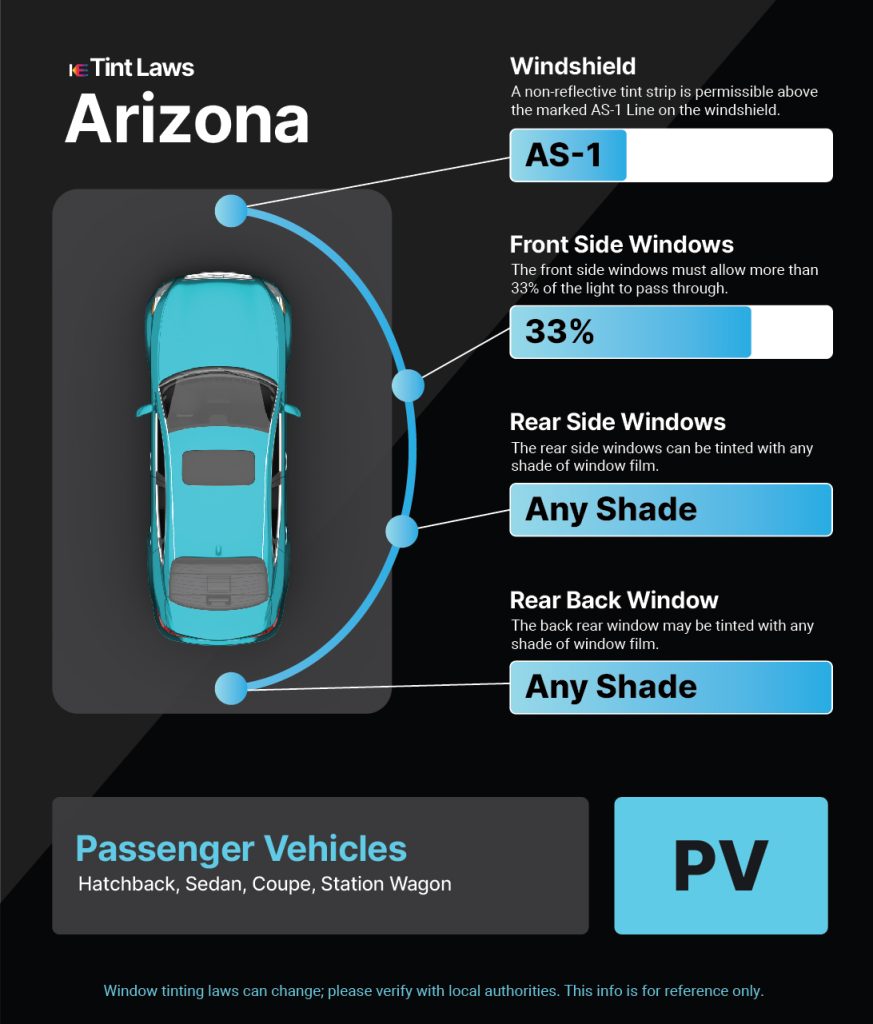
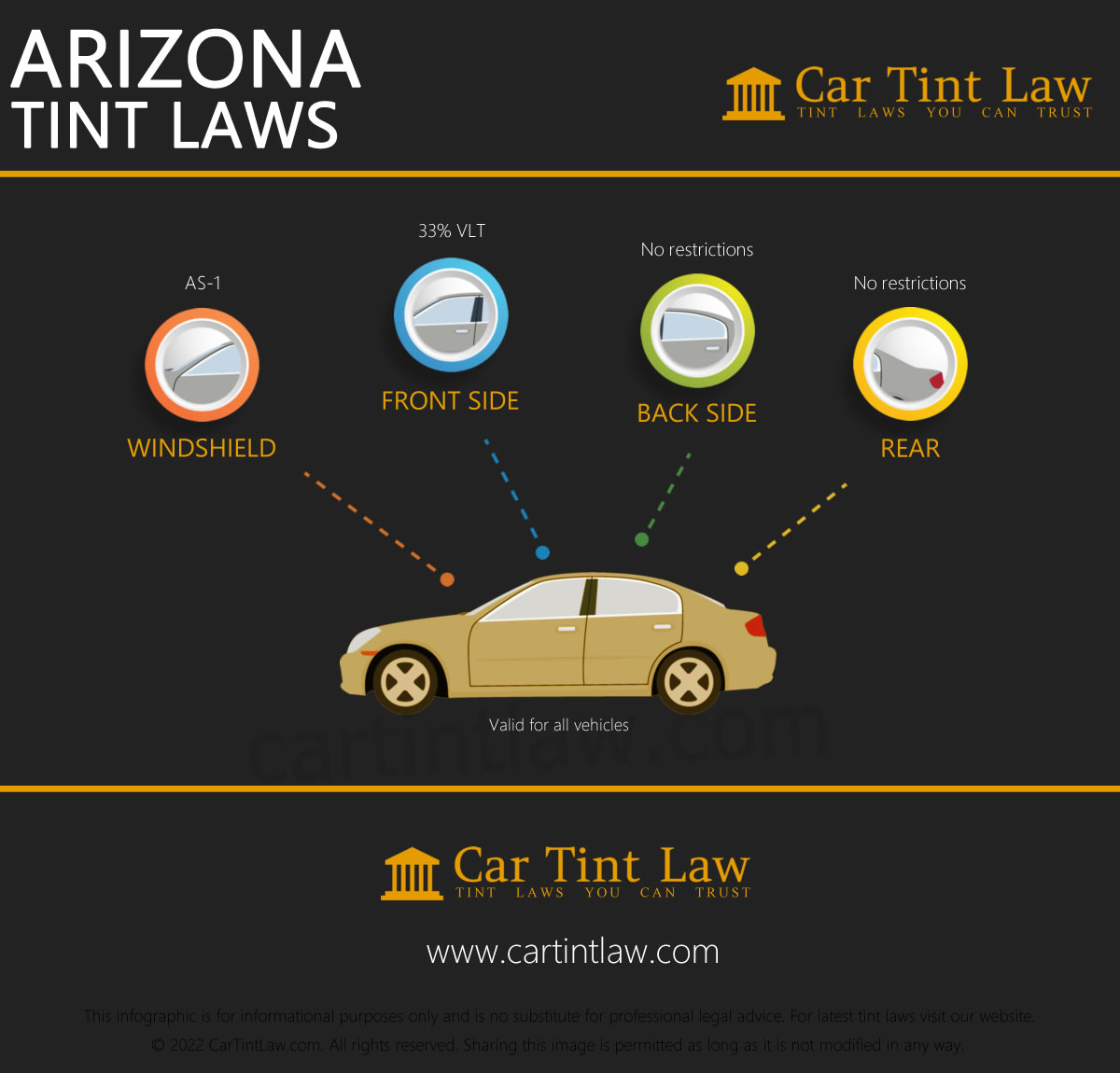
Front Side Windows
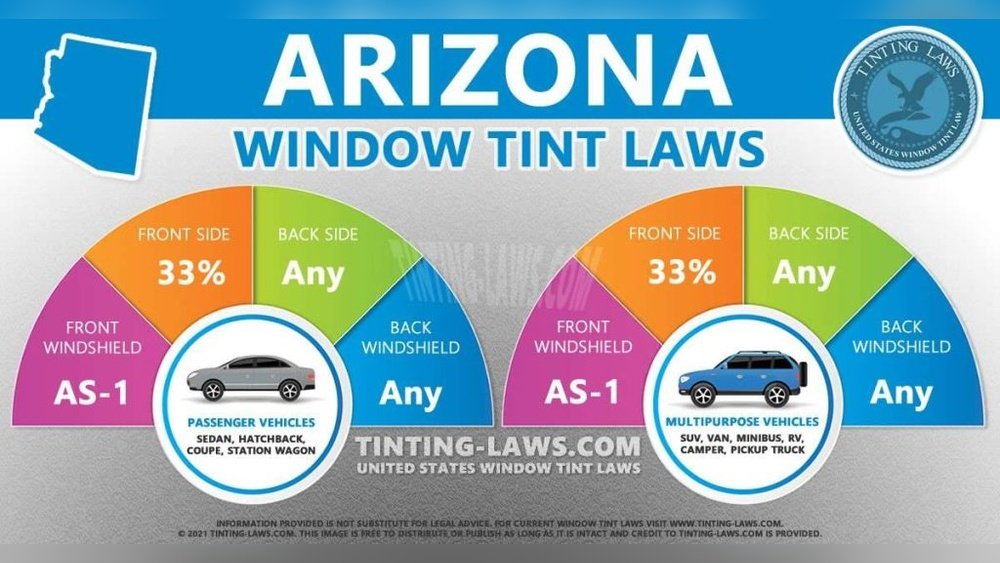
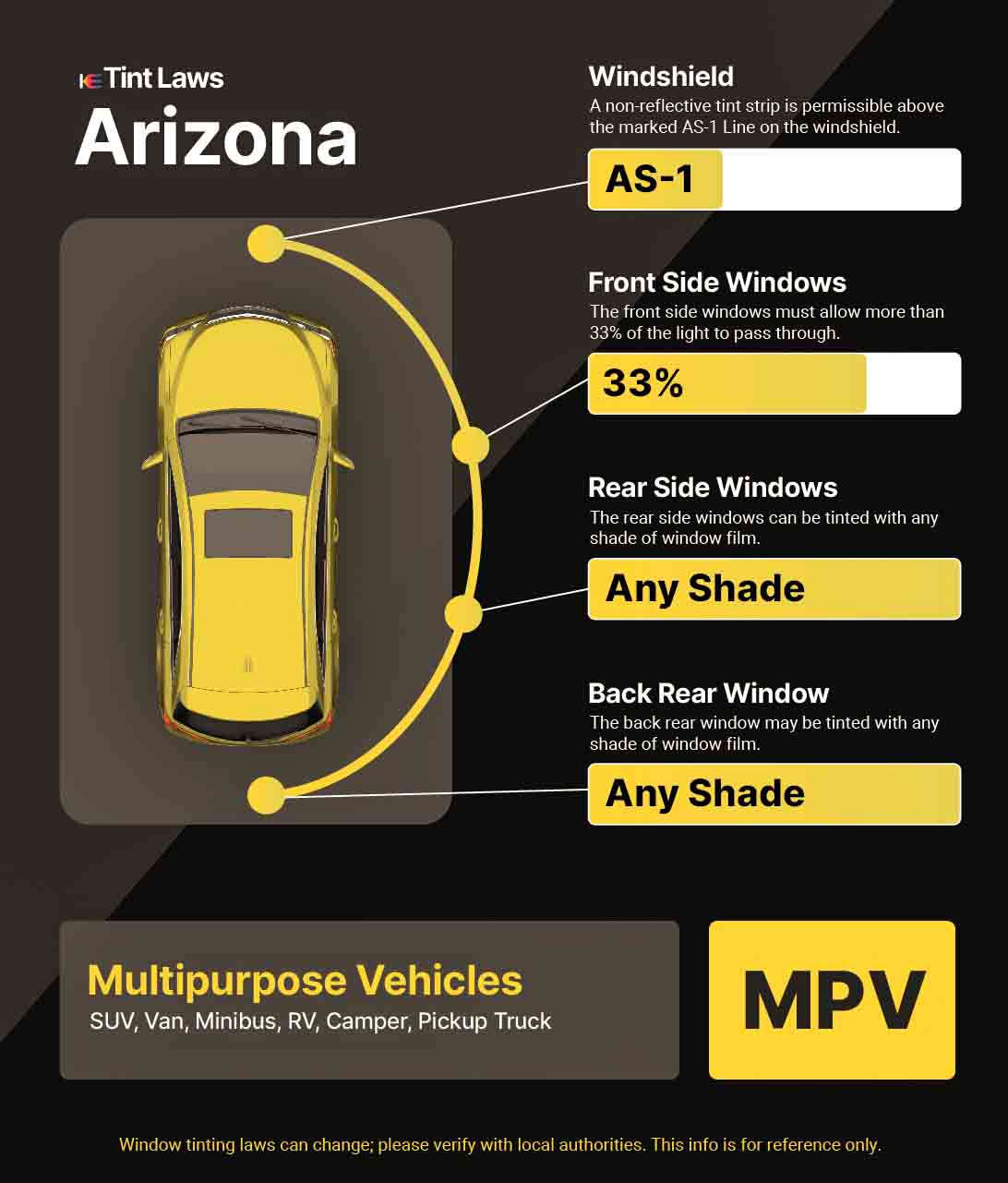
The front side windows must let at least 33% of visible light pass through. If your tint is darker, you risk a ticket.
Back Side And Rear Windows
There is no VLT limit for back side and rear windows. You can use any darkness, but reflectivity must be 35% or less.
Windshield
Only the top 5 inches of your windshield can be tinted. The tint must not be reflective, and it can’t extend below the AS-1 line marked on the glass.
Credit: kepler-dealer.com
What Does Vlt Mean?
Visible Light Transmission (VLT) is a percentage. It measures how much light gets through the tinted glass. A higher VLT means more light; lower VLT means the tint is darker.
For example:
- 70% VLT: 70% of light passes through, so the tint is light.
- 33% VLT: Only 33% of light passes, so the tint is much darker.
Arizona sets 33% as the lowest VLT allowed for front side windows. Many beginners confuse VLT with privacy. Darker tint gives more privacy, but may break the law.
How Arizona’s Laws Compare To Other States
If you drive between states, it’s important to know that tint laws can change. Arizona’s front window limit is more relaxed than some states, but stricter than others.
| State | Front Window VLT (%) | Windshield Tint |
|---|---|---|
| Arizona | 33% | Top 5 inches |
| California | 70% | Top 4 inches |
| Texas | 25% | Above AS-1 line |
| Nevada | 35% | Top 6 inches |
Arizona allows darker tint than California, but not as dark as Texas. If you travel, check local laws before changing your tint.
Medical Exemptions
Some people need darker window tint for medical reasons, such as skin conditions or eye sensitivity. Arizona allows medical exemptions for these cases.
To get an exemption:
- Ask your doctor to fill out the Arizona Department of Transportation medical exemption form.
- Submit the form to ADOT.
- Wait for approval before installing darker tint.
With an exemption, you can use darker tint than the standard law allows. But you must carry proof in your car at all times.
Reflective Tint Limits
Arizona allows some reflective tint, but only up to 35% reflectivity for all windows except the windshield. Reflective tints are made with metal to bounce sunlight. Too much reflectivity can make it hard for others to see your car or create glare.
If your tint is too shiny, you risk a fine and may have to remove it.
Penalties For Illegal Tint
If your tint breaks Arizona’s laws, you can face:
- A fine (usually $250 or more)
- A “fix-it” ticket, meaning you must remove or replace the tint and show proof to the court
Police often carry VLT meters to check tint. If your tint fails, you may be stopped even if you didn’t know it was illegal. Repeat violations can lead to higher fines.
Common Mistakes When Tinting Windows
Many drivers make mistakes that lead to tickets or wasted money. Here are some common errors:
- Tinting the windshield too much: Only the top 5 inches can be tinted.
- Using too dark tint on front windows: Anything below 33% VLT is illegal.
- Ignoring reflectivity: Shiny, mirror-like tint is not allowed.
- Not checking medical exemption rules: Exemptions must be approved before installing.
- Buying tint online without knowing the law: Not all products meet Arizona’s standards.
Professional installers know Arizona’s rules, but always ask to see VLT and reflectivity numbers before paying.
Credit: notorioustint.com
Benefits Of Legal Window Tint
Legal window tint offers many advantages for Arizona drivers:
- Heat reduction: Keeps your car cooler in the summer.
- UV protection: Blocks up to 99% of harmful UV rays.
- Glare reduction: Makes driving safer, especially in bright sunlight.
- Privacy: Makes it harder for thieves to see inside.
- Protects interior: Reduces fading of seats and dashboard.
If you stay within the law, you get these benefits without risk.
Tips For Choosing Window Tint In Arizona
Picking the right tint is not just about style—it’s about safety and legality. Here’s how to make a smart choice:
- Know the VLT rating: Always check the percentage before buying. For front windows, 33% or higher is required.
- Check reflectivity: Avoid tints with a mirror-like finish.
- Ask for certification: Some installers provide a sticker or certificate showing VLT and reflectivity.
- Consider ceramic tint: Ceramic tints block heat and UV, but are less reflective and usually legal.
- Get professional installation: Experts know the law and have tools to measure VLT accurately.
Many beginners forget to ask about VLT and end up with illegal tint. Another common oversight is not knowing that window tint can fade or change over time, especially with Arizona’s strong sun. Always check tint regularly, even after installation.
How Police Check Tint
Arizona police use VLT meters to measure window tint during traffic stops. These devices clamp onto the glass and show the exact VLT percentage. If your tint fails, the officer can issue a ticket on the spot.
Police usually check:
- Front side windows (most common)
- Windshield tint strip
- Reflectivity (less common, but possible)
It’s rare for police to check back side or rear windows unless the tint is extremely dark or reflective.
Arizona Vehicle Inspection And Tint
When you register your car or get an emissions test, inspectors may check your tint, especially if it looks very dark. If your tint is illegal, you may be asked to remove it before passing inspection.
This catches many drivers off guard, especially if they bought a used car with existing tint. Always check the tint before buying a car in Arizona.
Credit: www.cartintlaw.com
Real Examples: Arizona Tint Law In Action
Consider these scenarios:
- A driver installs 20% VLT on front windows after moving from Texas. In Arizona, this is illegal, so they get a ticket and must replace the tint.
- Another driver adds reflective tint to all windows. Police stop them because the tint creates glare. They receive a fine and must change the tint.
- A car owner with a skin condition gets a medical exemption and uses 15% VLT. Police stop them, but they show their exemption card and avoid a ticket.
These examples show why it’s important to know and follow the law.
Arizona Tint Law Updates
Arizona’s tint laws have not changed much in recent years, but it’s wise to check for updates. Some products, like colored or patterned tints, may become popular but are not legal. The main rules—33% VLT for front windows and 35% reflectivity—remain the same.
For the latest information, visit the Arizona Department of Transportation.
Frequently Asked Questions
Can I Tint My Windshield In Arizona?
You can tint only the top 5 inches of your windshield. The tint must not be reflective, and it cannot cover the entire glass.
Do Police Check Window Tint During Traffic Stops?
Yes. Police use VLT meters to measure tint. If your tint is too dark or reflective, you may get a ticket.
What Is The Penalty For Illegal Window Tint In Arizona?
Penalties include a fine (often $250 or more) and sometimes a fix-it ticket. You must remove or replace the illegal tint and show proof.
Is There A Medical Exemption For Window Tint In Arizona?
Yes. If you have a medical need for darker tint, you can apply for an exemption. You must carry proof in your car at all times.
Are Colored Or Patterned Tints Legal In Arizona?
No. Arizona law allows only neutral tint colors. Bright or patterned tints are not legal and can lead to fines.
Window tint makes life in Arizona easier, but only if you follow the rules. Knowing the laws keeps your car safe, legal, and comfortable—no matter how bright the sun gets.

Ismail Hossain is the founder of Law Advised. He is an Divorce, Separation, marriage lawyer. Follow him.