Labor Laws in Pennsylvania Breaks: Essential Rights Every Worker Must Know
Are you aware of your rights when it comes to breaks during work in Pennsylvania? Knowing the labor laws that protect your break times can make a big difference in your daily routine and overall well-being.
If you’ve ever wondered how long your breaks should be, when you’re entitled to them, or what your employer is required to provide, this article is for you. Keep reading to uncover the essential facts about Pennsylvania’s labor laws on breaks—so you can make sure you’re getting the rest you deserve while staying protected at work.
Break Time Requirements In Pennsylvania
Break time rules in Pennsylvania protect workers’ health and comfort. These laws set clear standards for meal and rest breaks. Knowing your rights helps you work better and stay safe.
Employers must follow these rules to keep breaks fair and consistent. Here is what Pennsylvania law says about break times for adult employees.
Meal Breaks For Adult Employees
Pennsylvania law does not require employers to give meal breaks. But, if breaks last 20 minutes or more, they usually count as unpaid meal breaks.
Most employers provide a 30-minute meal break for shifts over five hours. This break is often unpaid if the employee is free to leave work.
Meal breaks help employees rest and eat. They reduce fatigue and improve focus.
Rest Breaks And Short Breaks
Short breaks of 5 to 20 minutes are common in Pennsylvania. These breaks are paid and count as work time.
Employers often give one 10-minute break for every four hours worked. These breaks help workers stay alert and healthy.
Rest breaks allow employees to stretch and relax briefly. They improve productivity and reduce stress.
Exceptions And Special Cases
Some jobs have different rules for breaks. For example, workers in hospitals or factories may have special schedules.
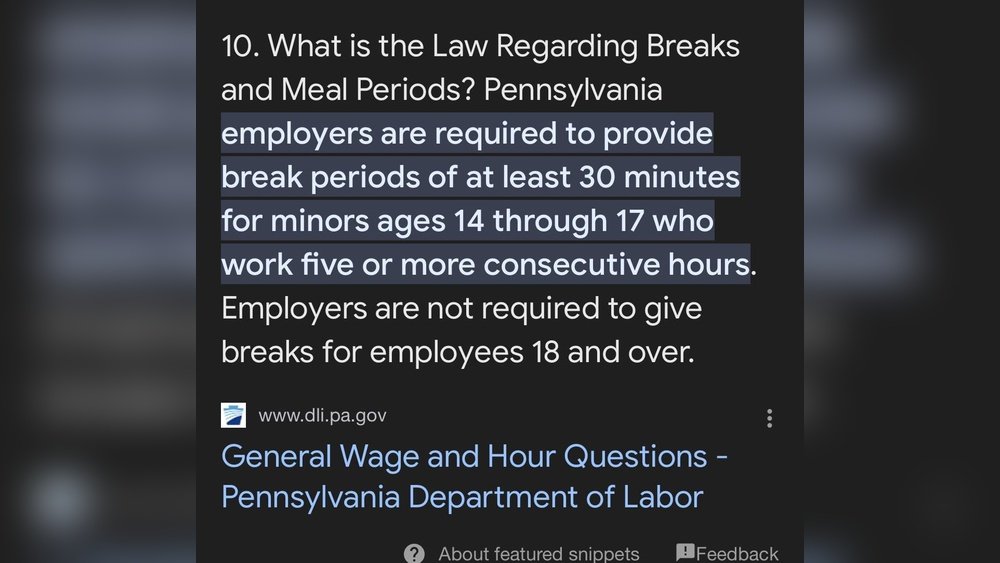
Employees under 18 have stronger break rights. They must get a 30-minute meal break after five hours of work.
Check your job’s specific rules. Some employers offer more breaks than the law requires.
Credit: swartz-legal.com
Federal Vs. State Break Laws
Understanding break laws can be confusing because both federal and state rules apply. Federal laws set basic standards that affect all workers in the U.S. But states like Pennsylvania can have their own rules that provide extra rights. Knowing the difference helps employees and employers follow the right guidelines.
How Federal Laws Affect Pennsylvania Workers
The federal government sets minimum break rules through the Fair Labor Standards Act (FLSA). This act does not require employers to give breaks or lunch periods. But if breaks under 20 minutes are given, they must be paid. Longer meal breaks, usually 30 minutes or more, can be unpaid if the worker is free to leave.
Federal laws protect workers across all states, including Pennsylvania. These rules apply in workplaces with employees who handle interstate commerce or work for large companies. Many small businesses might not be covered, but federal rules serve as a baseline for worker rights.
Differences Between State And Federal Rules
Pennsylvania does not have specific state laws requiring breaks or meal periods. This means state law mostly follows federal rules. Employers in Pennsylvania are not legally required to provide breaks or lunches. But if they do, breaks under 20 minutes must be paid, matching federal standards.
Some states have stronger laws that require breaks or meal periods. Pennsylvania’s laws are more relaxed, giving employers more flexibility. Workers should know their rights under both federal and state laws to understand what breaks they can expect.
Rights For Minors Regarding Breaks
Minors in Pennsylvania have specific rights to rest breaks during work hours. Employers must follow rules that protect young workers’ health and safety. These laws ensure minors get proper time to rest and avoid long continuous work periods.
Mandatory Breaks For Young Workers
Minors in Pennsylvania have specific rights to breaks during work hours. Employers must provide breaks to young workers to ensure their health and safety. For every 5 hours worked, minors must get a 30-minute break. This break must be uninterrupted and away from work duties. It helps young workers rest and eat. Employers should clearly schedule these breaks and follow the law strictly.
Work Hour Restrictions For Minors
Pennsylvania limits the hours minors can work to protect them from exhaustion. Workers under 18 cannot work more than 8 hours in a day. They are also limited to 40 hours in a week during school holidays. On school days, minors may work fewer hours to focus on studies. Night work is restricted, usually not allowed past 9 PM for younger teens. These rules help balance work and education for young workers.

Credit: www.reddit.com
Enforcing Break Rights And Reporting Violations
Employees in Pennsylvania have rights to breaks during work hours. These rights help protect health and improve focus. Enforcing these break rights ensures fair treatment at work. Knowing how to report violations is key. It keeps workplaces safe and fair for everyone.
How To Report Break Law Violations
Employees can report break violations to the Pennsylvania Department of Labor. It helps to keep a record of missed breaks. Note the date, time, and details of each violation. Reporting can be done online or by phone. The department investigates claims to enforce the law. Workers can also talk to their employer first. Sometimes issues get fixed without formal reports.
Legal Protections Against Retaliation
Workers who report break violations have legal protections. Employers cannot punish or fire employees for reporting. Retaliation is against the law in Pennsylvania. If retaliation happens, workers can file a complaint. The law supports safe reporting without fear. This encourages workers to stand up for their rights.

Credit: www.postercompliance.com
Frequently Asked Questions
What Are The Basic Labor Laws In Pennsylvania?
Pennsylvania labor laws cover wages, hours, and workplace safety. They protect employee rights in state workplaces. Both state and federal laws apply here.
How Many Hours Define Overtime In Pennsylvania?
Overtime starts after 40 hours of work per week. Employers must pay 1. 5 times the regular wage. This rule follows federal Fair Labor Standards Act.
What Is Pennsylvania’s Minimum Wage Rate?
The minimum wage in Pennsylvania is $7. 25 per hour. This matches the federal minimum wage. Some cities or employers may pay more.
Are Breaks Or Meal Periods Required By Law?
Pennsylvania law does not require breaks or meals. Employers can choose their own policies. Many companies still provide breaks voluntarily.
How Can Employees Report Labor Law Violations?
Workers can file complaints with the Pennsylvania Department of Labor. Complaints can also be made to the U. S. Department of Labor. Both agencies investigate and enforce laws.
Conclusion
Understanding Pennsylvania labor laws helps workers know their rights and duties. These laws protect employees and set clear rules for employers. Staying informed can prevent job disputes and unfair treatment. Knowing your rights leads to safer and fairer work conditions.
Always check for updates, as laws can change. Being aware helps both workers and businesses work better together. This knowledge empowers you in the workplace every day.

Ismail Hossain is the founder of Law Advised. He is an Divorce, Separation, marriage lawyer. Follow him.