Labor Laws in Virginia for Salaried Employees: Essential Guide 2026
Are you a salaried employee working in Virginia? Understanding your rights under Virginia’s labor laws is crucial to protecting your paycheck and ensuring fair treatment at work.
Whether you’re curious about how overtime rules apply to you, what deductions your employer can legally make, or what paid leave you’re entitled to, this guide will clear up the confusion. You’ll learn exactly what the law says about your salary, work hours, and benefits — so you can confidently know where you stand.
Keep reading to uncover the key labor protections that affect your job and how to take action if something isn’t right. Your paycheck and peace of mind depend on it.
Credit: www.postercompliance.com
Exempt Vs Non-exempt Salaried Employees
In Virginia, salaried employees fall into two main categories: exempt and non-exempt. This classification affects how they are paid and their rights under labor laws. Understanding these differences is vital for both employers and employees. The distinction hinges on specific criteria set by the Fair Labor Standards Act (FLSA) and state regulations. It influences overtime pay eligibility and how salary relates to hours worked.
Criteria For Exemption
An exempt employee typically performs executive, administrative, or professional duties. Their salary must meet a minimum threshold set by federal and Virginia law. Job duties are carefully defined to qualify for exemption. Employees paid by the hour or below the salary threshold usually do not qualify. Proper classification depends on both salary level and job responsibilities.
Overtime Eligibility
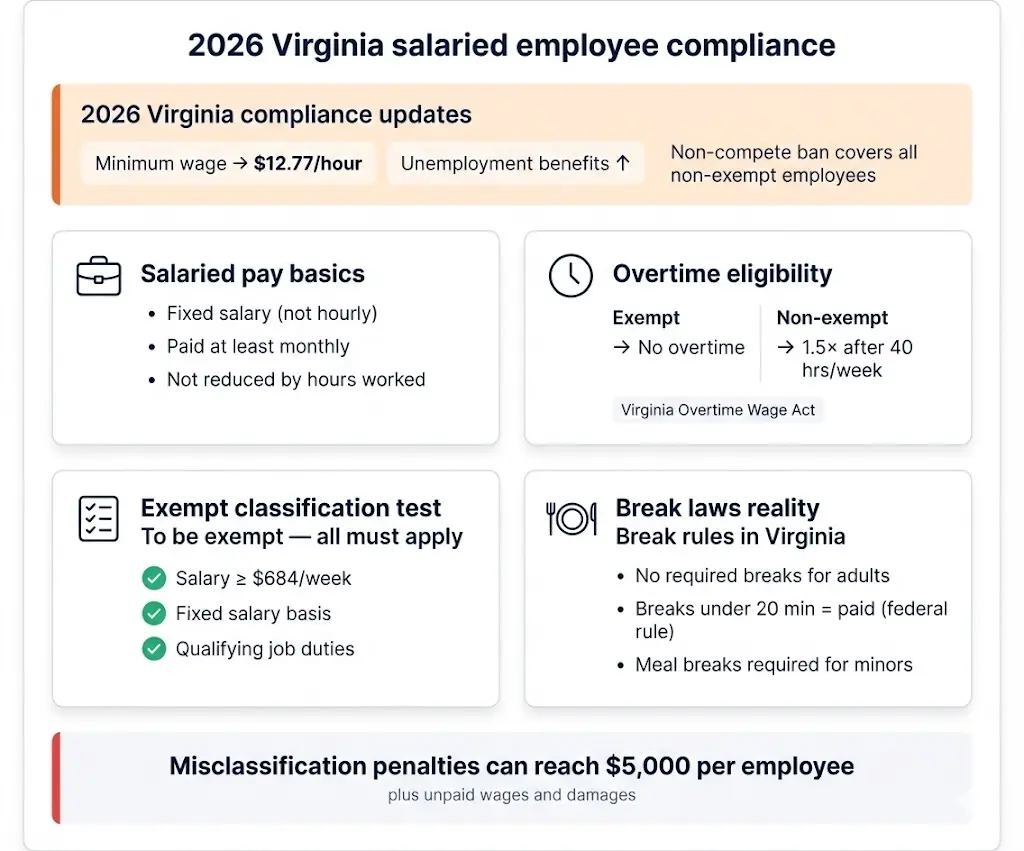
Non-exempt salaried employees qualify for overtime pay. They receive time and a half for hours worked over 40 per week. Exempt employees do not get overtime, regardless of extra hours worked. Employers must track hours accurately for non-exempt workers. Overtime rules protect workers from excessive work without proper compensation.
Impact On Salary And Hours
Exempt employees receive a fixed salary regardless of hours worked. They may work more than 40 hours without extra pay. Non-exempt employees’ pay depends on hours worked, including overtime. Employers can deduct pay only under specific conditions for exempt employees. Non-exempt employees must be paid for all hours worked, including overtime.
Credit: timeero.com
Salary Requirements And Permissible Deductions
Understanding salary requirements and permissible deductions is essential for salaried employees in Virginia. These rules ensure employees receive fair wages while allowing employers to make lawful adjustments. Clear knowledge of these aspects helps avoid wage disputes and promotes workplace fairness.
Virginia follows federal and state laws that define salary thresholds and outline acceptable deductions. Employers must comply with these regulations to protect employee rights and maintain transparent payroll practices.
Minimum Salary Thresholds
Virginia requires salaried employees to meet a minimum salary level to qualify as exempt from overtime pay. As of 2024, the federal minimum salary threshold is $684 per week or $35,568 annually. Salaried workers earning below this amount are generally entitled to overtime pay under the Fair Labor Standards Act (FLSA).
Employers must carefully classify employees based on salary and job duties. Misclassification can lead to legal penalties and back wage claims.
Allowed Salary Deductions
Employers can only make specific deductions from an exempt employee’s salary without violating wage laws. These include taxes, Social Security, and other legally required withholdings. Voluntary deductions like health insurance premiums are allowed if authorized by the employee.
Any other deductions must not reduce the employee’s pay below the minimum salary threshold. Unauthorized deductions risk wage violation claims.
Disciplinary And Absence Deductions
Deductions for disciplinary reasons or absences are strictly limited under Virginia law. Employers may deduct full-day absences for personal reasons, excluding sickness or disability. Suspensions for workplace misconduct may also justify salary deductions if properly documented.
Partial-day deductions are generally prohibited for exempt salaried employees. Employers must ensure deductions comply with the FLSA to avoid penalties.
Wage Payment And Frequency Rules
Virginia’s labor laws require employers to follow clear rules about paying wages to salaried employees. These rules ensure workers receive their pay regularly and on time. Employers must also provide written details about wages to employees. Understanding these wage payment and frequency rules helps employees know their rights and employers meet legal standards.
Regular Pay Periods
Employers in Virginia must set regular pay periods. Pay periods usually occur weekly, biweekly, semimonthly, or monthly. Salaried employees should receive payment each pay period without unnecessary delay. Regular pay periods help employees plan their finances better. Employers cannot change pay periods without notifying employees in advance.
Timely Payment Regulations
Virginia law requires timely wage payments after each pay period ends. Employers must pay all earned wages on the scheduled payday. Late payments can lead to penalties or legal action. If an employee leaves the job, the employer must pay all wages owed by the next payday or within 30 days. Timely payments protect workers from financial hardship.
Written Wage Statements
Employers must provide written wage statements to salaried employees each pay period. These statements include gross wages, deductions, and net pay. Written statements help employees verify correct payment. They also assist in resolving payment disputes. Employers can provide these statements on paper or electronically, but employees must easily access them.

Credit: www.laterredargence.fr
Leave Policies And Worker Protections
Virginia’s labor laws provide important protections and leave policies for salaried employees. Understanding these rules helps workers know their rights and available benefits. The state balances employer needs with fair treatment for employees.
Leave policies cover both paid and unpaid time off. Worker protections include rights against unfair termination and ways to report wage violations. These laws help create a fair workplace environment for salaried employees.
Paid And Unpaid Leave Laws
Virginia does not require employers to offer paid vacation or sick leave. Some employers provide these benefits voluntarily. Federal laws like the Family and Medical Leave Act (FMLA) apply to eligible employees. FMLA grants unpaid leave for serious health conditions or family care.
Employees may take unpaid leave for reasons covered under FMLA. Job protection applies during this leave, meaning employees can return to their position. Virginia workers should check their employer’s leave policies carefully.
Rights Against Unfair Termination
Virginia follows an “at-will” employment rule. Employers can terminate employees at any time, for any reason, except illegal ones. Illegal reasons include discrimination or retaliation for protected activities.
Salaried employees have the right to challenge terminations if they violate laws. Retaliation for reporting labor violations or exercising legal rights is prohibited. Workers should keep records of their employment and communications.
Reporting Wage Violations
Employees can report wage violations to the Virginia Department of Labor and Industry (DOLI). This includes unpaid wages, missed overtime, or improper deductions. DOLI investigates claims and enforces labor laws.
Workers may file complaints confidentially. Employers found violating wage laws face penalties. Reporting violations helps protect employee rights and ensures fair pay practices in Virginia.
Frequently Asked Questions
What Is The 3-hour Rule In Virginia?
The 3-hour rule in Virginia requires employers to pay non-exempt employees for at least three hours if called in but worked less. This ensures minimum compensation despite short shifts or cancellations.
What Is The New Salary Law In Virginia?
Virginia’s new salary law requires employers to pay salaried employees at least once each month. Non-exempt salaried workers must receive overtime pay. Employers can only deduct full-day absences for personal reasons, not sickness. Paid leave is not legally required under this law.
How Many Hours Can You Legally Work On Salary?
Salaried employees classified as exempt have no legal limit on work hours. Non-exempt salaried workers must receive overtime pay for hours over 40 per week.
Do Salaried Employees Actually Work 40 Hours?
Salaried employees often work around 40 hours weekly, but actual hours can vary based on job demands. Some work more without extra pay.
Conclusion
Virginia’s labor laws protect salaried employees with clear rules. Employers must follow wage and overtime guidelines carefully. Knowing your rights helps ensure fair treatment at work. Always check official resources for updates and details. Staying informed supports a safe and fair workplace environment.

Ismail Hossain is the founder of Law Advised. He is an Divorce, Separation, marriage lawyer. Follow him.