Security Camera Laws in California: What You Must Know Today
Are you thinking about installing security cameras around your home or business in California? Before you do, it’s important to know the laws that protect your privacy and the privacy of others.
Understanding California’s security camera laws can save you from costly legal trouble and help you use your cameras the right way. You’ll discover what’s allowed, what’s not, and how to keep your property safe while staying within the law. Keep reading to make sure your security setup is both effective and legal.
Credit: www.security101.com
California Privacy Rules
California has strict rules about privacy and security cameras. These laws protect people’s rights to privacy. They explain where and how cameras can be used. Understanding these rules helps you avoid legal trouble. It also respects others’ privacy.
Consent Requirements
In California, you must get permission before recording audio. This means all people involved must agree. Recording conversations without consent is illegal. For video, the rules depend on where the camera is placed. Cameras in private areas need clear consent. Consent protects personal privacy and avoids lawsuits.
Public Vs Private Spaces
Public spaces are areas open to everyone. Cameras in public places usually have fewer restrictions. People have less expectation of privacy there. Private spaces include homes and offices. Cameras in these places need more careful use. Recording private areas without permission is against the law. Knowing the difference helps you follow the rules correctly.
Audio Recording Restrictions
Audio recording laws in California are strict and must be followed carefully. Recording sound without permission can lead to legal trouble. This is important for anyone using security cameras with audio features. Understanding these rules helps protect your privacy and others’ rights.
Two-party Consent Law
California requires all parties to agree before recording audio. This is called a two-party consent law. Both people in a conversation must know and agree to the recording. Secret audio recording is illegal, even with security cameras. This law applies in homes, businesses, and public spaces.
Penalties For Violations
Breaking the two-party consent law carries serious consequences. You may face fines and criminal charges. Civil lawsuits can also result from illegal recordings. Courts may order you to pay damages to the affected people. Following the law avoids these costly and stressful problems.
Placement And Usage Limits
California has clear rules about where you can place security cameras. These rules protect people’s privacy while allowing property owners to keep their homes and businesses safe. Knowing where cameras are allowed and where they are not helps avoid legal problems.
Prohibited Locations
Cameras cannot record inside private spaces like bathrooms or bedrooms. These areas are private and must stay that way. Recording in places where people expect privacy is illegal and can lead to serious penalties.
Security cameras also cannot point at neighbors’ private property. Spying on others without permission breaks privacy laws. This includes capturing footage beyond your property line.
Permitted Surveillance Areas
Cameras can monitor the outside of your home or business. Front doors, driveways, and yards are common spots. These areas help prevent theft and vandalism.
Public spaces like sidewalks or parking lots can be recorded if cameras do not invade privacy. Always keep cameras focused on your property. Proper placement balances safety and respect for privacy.
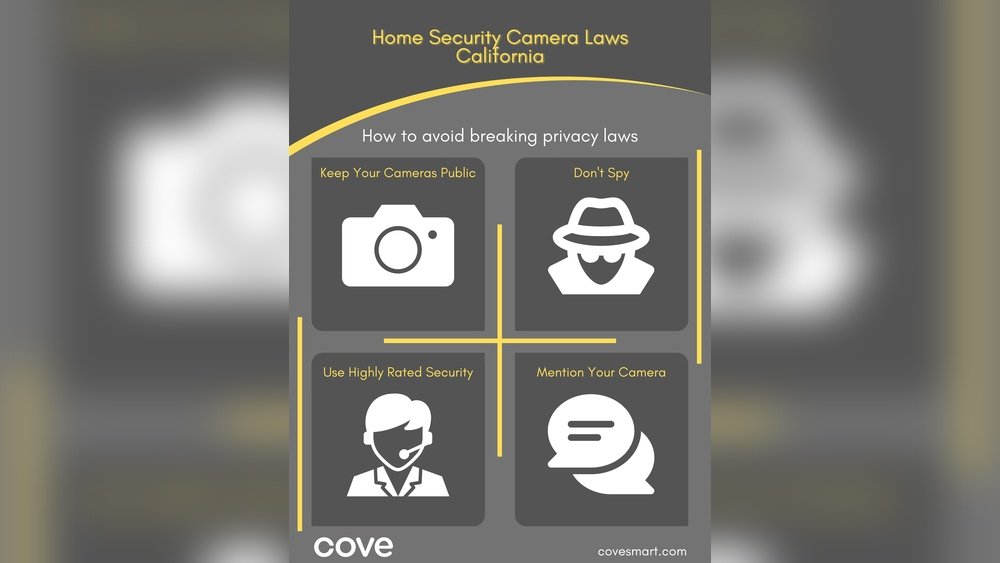
Credit: www.covesmart.com
Legal Consequences And Compliance
California has strict rules about security cameras. These rules protect people’s privacy and guide how cameras can be used. Breaking these laws can lead to serious trouble. Knowing the legal consequences helps you avoid fines and legal problems. Following the rules also builds trust with your neighbors and customers.
Civil And Criminal Penalties
Violating security camera laws in California can cause civil penalties. You may have to pay fines or damages to those affected. Courts can order you to stop using cameras illegally. In some cases, criminal charges can apply. These may include misdemeanors or felonies. Penalties depend on how serious the violation is. Recording in private places without consent often leads to harsher penalties.
Tips For Staying Compliant
Place cameras only in public or allowed areas. Avoid recording where people expect privacy. Always inform people if cameras are in use. Use clear signs to show camera presence. Check local city or county rules too. Store recorded footage securely and limit access. Delete recordings after a reasonable time. Stay updated on any law changes. Consulting a legal expert can help ensure compliance.

Credit: getsafeandsound.com
Frequently Asked Questions
Can I Legally Install Security Cameras On My Property In California?
Yes, you can install security cameras on your property in California. Ensure cameras do not record audio without consent, and avoid filming areas where people expect privacy.
Are Audio Recordings From Security Cameras Allowed In California?
California requires consent from all parties before recording audio. Without consent, audio recording is illegal and may lead to penalties.
Can I Record My Neighbors With A Security Camera?
You may record your neighbors only if the camera captures public areas, not private spaces like inside homes or yards. Respect privacy boundaries to avoid legal issues.
Do I Need To Inform Guests About Security Cameras In My Home?
You do not have to notify guests about security cameras if they are in common areas. Avoid placing cameras in private spaces like bathrooms or bedrooms.
Conclusion
Understanding California’s security camera laws helps protect your privacy and rights. Cameras can keep you safe but must follow the rules. Avoid recording in private places like bathrooms or bedrooms. Always respect others’ privacy while using your cameras. Knowing the law prevents legal trouble and ensures safe use.
Stay informed and use cameras responsibly for peace of mind. Simple steps can keep your home secure and legal. Safety and respect go hand in hand with cameras.

Ismail Hossain is the founder of Law Advised. He is an Divorce, Separation, marriage lawyer. Follow him.