What are the Divorce Laws in Arkansas: Essential Facts You Must Know
Are you facing the difficult decision of divorce in Arkansas? Understanding the divorce laws in your state is the first step to protecting your rights and making informed choices.
Whether you want to know how long the process takes, what grounds you need, or how child custody is decided, this guide will give you clear answers. Keep reading to discover what you need to know about Arkansas divorce laws and take control of your situation with confidence.

Credit: www.bundylawoffice.com
Residency Requirements
Residency requirements are an important part of divorce laws in Arkansas. They determine if the state has the right to handle a divorce case. Without meeting these rules, the court may not accept the case.
Arkansas sets clear rules about who can file for divorce in the state. These rules help protect both parties and ensure proper legal process.
Who Must Meet Residency Requirements
At least one spouse must live in Arkansas before filing for divorce. This person is called the petitioner. The residency shows a real connection to the state.
How Long Must Residency Last
The petitioner must have lived in Arkansas for at least 60 days. This time period must be continuous. It proves the person truly resides in Arkansas.
Proof Of Residency
Courts ask for documents to prove residency. Examples include a driver’s license, utility bills, or lease agreements. This evidence helps the court confirm residency.
Grounds For Divorce
Understanding the grounds for divorce is important for anyone considering ending their marriage in Arkansas. The law sets specific reasons that allow couples to legally separate. Knowing these grounds helps individuals prepare their case and understand the process better.
Arkansas offers both fault and no-fault grounds for divorce. This means couples can choose to end their marriage without proving wrongdoing or by showing specific faults.
No-fault Divorce
Arkansas allows a no-fault divorce based on “incompatibility.” This means the couple cannot get along or live together peacefully. No need to prove any bad behavior. The couple just states the marriage is broken beyond repair.
Fault-based Grounds
Fault grounds require showing one spouse caused the marriage to fail. Examples include adultery, cruelty, or abandonment. These reasons must be proven with evidence. Fault grounds can affect property division and support decisions.
Separation Period
Arkansas requires couples to live apart for 60 days before finalizing a no-fault divorce. This separation must be continuous and without reconciliation. It gives both spouses time to reflect before the divorce is final.
Filing Process
The filing process is the first step in an Arkansas divorce. It starts with submitting legal papers to the court. These papers tell the court you want a divorce and explain why. Understanding the filing process helps you prepare your documents correctly.
Arkansas law requires certain rules to follow during filing. The process includes specific forms and filing fees. Knowing these details can save time and avoid mistakes.
Filing The Petition For Divorce
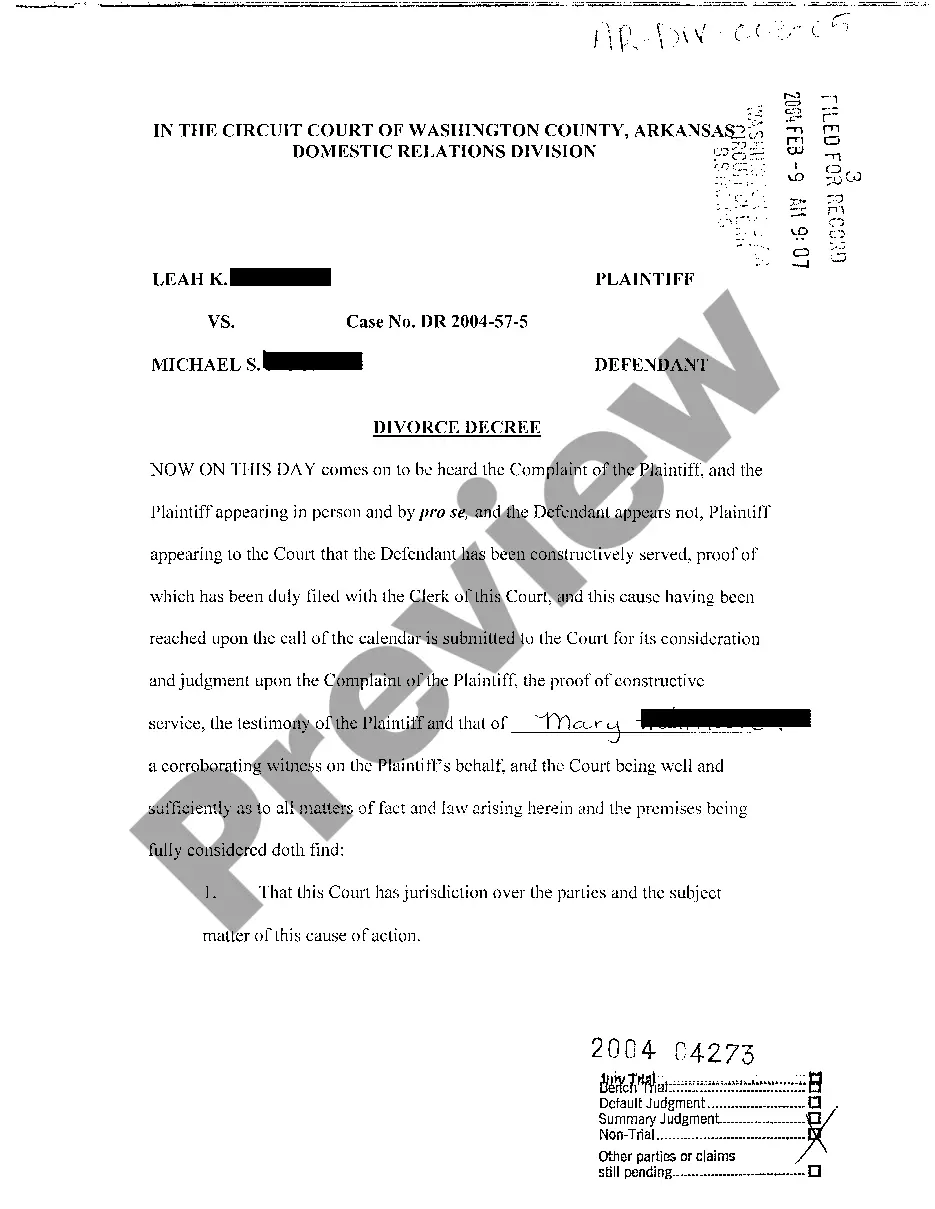
The process begins by filing a Petition for Divorce. This petition states your grounds for divorce. It can be filed in the county where you or your spouse live. The court will assign a case number after filing.
Serving The Divorce Papers
After filing, the other spouse must receive the papers. This is called “service of process.” It informs them about the divorce case. The papers can be served by a sheriff or a private process server.
Response From The Spouse
The spouse has 30 days to respond. They can agree or disagree with the petition. A response is filed with the court. If no response is given, the case may proceed as uncontested.
Credit: www.uslegalforms.com
Property Division
Arkansas divorce laws focus on fair property division between spouses. The state follows equitable distribution, dividing assets fairly but not always equally. Courts consider many factors to decide who gets what during a divorce.
Understanding Property Division In Arkansas
Property division is a key part of divorce in Arkansas. The court splits assets and debts between spouses. This process aims to be fair, not always equal. Arkansas follows an “equitable distribution” rule. It means the court divides property fairly based on several factors.
Both married and non-married couples may have different rules. Only property acquired during the marriage is usually divided. Property owned before marriage or given as a gift may stay with the original owner.
Marital Vs. Separate Property
Marital property includes things bought or earned during marriage. Separate property includes items owned before marriage or received as gifts. The court only divides marital property. Separate property usually remains with each spouse.
Factors Affecting Property Division
The court looks at many factors to decide fairness. These include each spouse’s income, health, and age. The length of the marriage matters too. The court may consider who has custody of children. Contributions made by each spouse also count. Both financial and non-financial contributions matter.
Debts And Property Division
Debts are also divided in the divorce process. The court decides who pays which debts. Debts related to marital property are split fairly. Separate debts usually stay with the person who owes them.
How To Protect Your Property
Spouses can protect property by signing agreements. A prenuptial or postnuptial agreement helps. These agreements clarify property ownership before divorce. Clear records of property and debts help too. This makes the division process smoother and faster.
Child Custody And Support
Child custody and support are vital parts of divorce cases in Arkansas. These laws focus on protecting children’s best interests. Courts decide custody and support to ensure children’s needs are met.
Arkansas law aims to provide a stable environment for children. Parents share responsibilities based on the child’s welfare. The court often encourages cooperation between parents.
Types Of Child Custody In Arkansas
There are two main custody types: physical and legal. Physical custody means where the child lives most of the time. Legal custody means the right to make important decisions about the child’s life. Parents can share both types or one parent may have sole custody.
Factors Influencing Custody Decisions
Court decisions focus on the child’s safety and happiness. Judges consider each parent’s ability to care for the child. The child’s age and health also matter. Courts look at the child’s relationship with each parent. Abuse or neglect can affect custody awards.
Child Support Guidelines In Arkansas
Child support helps cover living and educational costs. Arkansas uses a formula based on parents’ income. The court sets support amounts to meet the child’s needs fairly. Payments continue until the child turns 18 or graduates high school.
Modifying Custody And Support Orders
Custody and support can change if circumstances shift. Parents must show a significant change to ask for modification. Courts review the child’s best interests before approving changes. This ensures ongoing protection and care for the child.
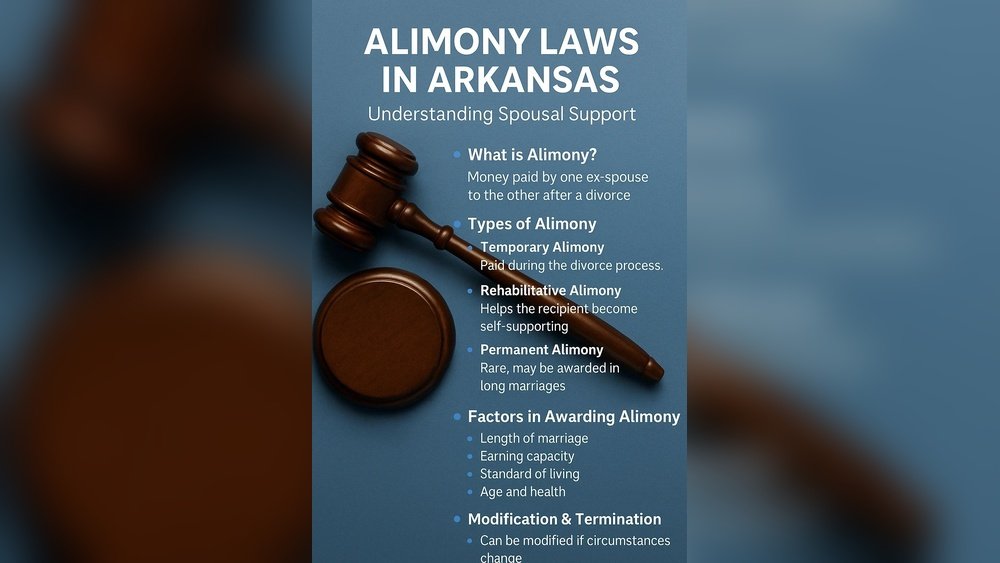
Spousal Maintenance
Spousal maintenance in Arkansas helps one spouse support the other after divorce. It is money paid from one partner to the other to help with living costs. This support is not automatic and depends on specific rules.
The goal is to make sure both spouses can manage financially after separation. Courts decide if spousal maintenance is needed based on many factors. The amount and length of payments vary case by case.
When Does Spousal Maintenance Apply?
Arkansas courts grant spousal maintenance only in certain cases. The spouse asking for support must show they cannot meet basic needs alone. This may happen if one spouse has low income or health issues.
The court also checks if the other spouse can pay without hardship. Maintenance is not meant to punish but to help during tough times. It usually lasts for a limited period or until conditions change.
Factors Courts Consider
Court decisions depend on many factors. These include the length of the marriage and each spouse’s age. The health and earning capacity of both spouses also matter.
Courts review each spouse’s financial needs and resources. The standard of living during the marriage is important too. If one spouse gave up work to care for children, that counts.
Types Of Spousal Maintenance In Arkansas
Arkansas offers temporary and long-term spousal maintenance. Temporary support helps during the divorce process. Long-term support may be ordered after the divorce is final.
The court decides what type fits the situation best. Spousal maintenance stops if the recipient remarries or if the payer dies. Each case is unique and depends on the court’s judgment.
Waiting Period And Finalization
The waiting period and finalization are important steps in Arkansas divorce law. They set the timeline before the divorce is official. Understanding these steps helps manage expectations during the process.
The state requires a minimum time before the divorce can be finalized. This time allows both parties to consider their decisions carefully. It also gives a chance to settle issues like property and child custody.
Waiting Period Requirements
Arkansas law requires a 60-day waiting period after filing for divorce. This period starts once the court accepts the divorce petition. The waiting period applies to most uncontested divorces.
This time is meant to give couples a chance to reconcile or settle disputes. The court will not grant a divorce before 60 days have passed. No exceptions exist for shortening this waiting time.
Finalization Process
After the waiting period, the court reviews the case details. Both parties must complete all paperwork and agreements. The judge then decides if the divorce can be finalized.
If everything is in order, the judge signs the divorce decree. This decree officially ends the marriage. The date on the decree is the legal end of the marriage.
For contested divorces, the finalization may take longer. Court hearings and additional steps may be necessary. The waiting period still applies before final approval.

Credit: a.arlawhelp.org
Frequently Asked Questions
What Is The Residency Requirement For Divorce In Arkansas?
You must live in Arkansas for at least 60 days before filing for divorce. This rule ensures the court has the right to handle your case.
How Does Arkansas Handle Child Custody In Divorce Cases?
Child custody decisions focus on the child’s best interest. Courts consider the child’s safety, health, and emotional needs.
What Are The Grounds For Divorce In Arkansas?
Arkansas allows no-fault divorce, meaning you can end the marriage without proving wrongdoing. Fault grounds like adultery or cruelty are also accepted.
How Is Property Divided During Divorce In Arkansas?
Arkansas uses equitable distribution to divide property fairly, not always equally. The court looks at many factors to decide what’s fair.
Can Spouses Get Alimony After Divorce In Arkansas?
Spousal support may be awarded based on income, marriage length, and each spouse’s needs. It is not guaranteed in every case.
How Long Does It Take To Finalize A Divorce In Arkansas?
The divorce process usually takes at least 60 days due to the state’s waiting period. Complex cases with disputes may take longer to resolve.
Conclusion
Divorce laws in Arkansas set clear rules to guide couples through separation. Knowing the basics helps you handle the process smoothly. The state requires residency and grounds for divorce. Property division and child custody follow specific laws. Understanding these points reduces stress and confusion.
Each case differs, so seeking legal advice is wise. Stay informed to protect your rights and interests. Divorce is tough, but knowledge makes it easier. Take one step at a time and focus on moving forward.

Ismail Hossain is the founder of Law Advised. He is an Divorce, Separation, marriage lawyer. Follow him.