Car Seat Laws in Arkansas 2027 Expert Step-by-Step Guide
Arkansas car seat laws require specific restraints based on a child’s age, weight, and height. Rear-facing car seats are legally mandated for infants and toddlers, transitioning to forward-facing harnesses, booster seats, and eventually standard seat belts as children grow.
Arkansas car seat laws require children to remain in a rear-facing child safety seat until they are at least one year old and weigh 20 pounds, though current 2027 best practices strongly recommend keeping them rear-facing much longer. Once a child outgrows the rear-facing limits, they must transition to a forward-facing harness seat until age four and 40 pounds. From there, children must use a belt-positioning booster seat until they reach age six or weigh 60 pounds. Finally, standard seat belts are legally required for all passengers until they turn 16.
Navigating these progressive milestones keeps your child legally protected on Arkansas roadways and drastically reduces injury risks during accidents. Law enforcement officers actively issue citations for non-compliance, making it essential to match your child’s exact age, weight, and height to the correct restraint device. Failing to follow these specific mandates exposes your family to preventable safety hazards and unexpected fines.
Key Takeaways
- Rear-facing car seats are mandatory for children under age two in Arkansas.
- Children must ride in a booster seat until they reach age six or weigh 60 pounds.
- Standard seat belts are required once children outgrow booster seat height and weight limits.
- The back seat is the legally safest and required location for children under 12.
- Non-compliance with Arkansas child passenger safety laws results in heavy fines.
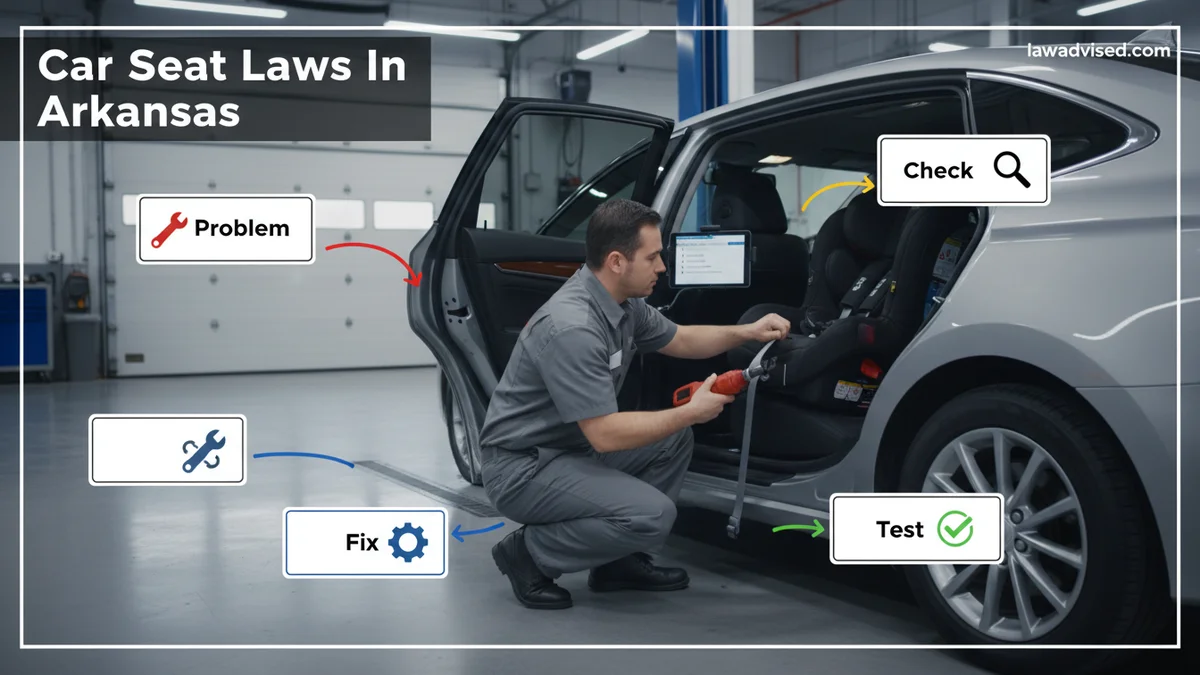
What Causes Non-Compliance With Arkansas Car Seat Laws
Transitioning Children Too Early
Many parents rush to move their children into the next seat category before the child actually meets the legal thresholds. You might be tempted to turn a car seat forward-facing when your toddler turns one, but waiting until they hit the maximum height or weight limit of a rear-facing seat is far safer. Similarly, jumping out of a booster seat prematurely because your child feels mature leads to dangerous seat belt positioning across the abdomen and neck.
Misunderstanding Weight and Height Limits
Arkansas regulations rely on a dual requirement of both age and physical measurements for younger children. Confusion often arises because modern 2027 car seats feature complex weight maximums for harnesses versus booster modes. If you rely solely on your child’s age while ignoring their weight or height milestones, you risk accidental non-compliance. Always check the manufacturer labels stamped directly onto your car seat shell to verify current limits.
How to Fix Incorrect Car Seat Installations and Restraint Choices
Correcting Harness and Seat Belt Placement
A properly installed car seat means nothing if the harness straps do not fit your child snugly. For rear-facing seats, the harness straps must sit at or just below your child’s shoulders. For forward-facing seats, the straps need to sit at or just above the shoulders. When using a booster seat, ensure the lap belt rests low across the upper thighs and the shoulder belt crosses the center of the chest, never cutting across the neck.
Utilizing Professional Inspection Stations
Fixing installation errors starts with securing the base tightly using either the LATCH system or the vehicle seat belt, ensuring it moves less than one inch side-to-side. If you feel uncertain about your setup, you do not have to guess. Arkansas features numerous certified child passenger safety technicians who inspect and correct installations for free. Take advantage of local fire stations, hospitals, or community safety events in 2027 to get hands-on verification before taking your next road trip.
Step-by-Step Guide to Transitioning Between Car Seat Stages
Navigating the transition phases under Arkansas car seat laws requires strict adherence to height, weight, and age milestones. According to safety guidelines from the American Academy of Pediatrics (AAP), rushing a child to the next seat level significantly compromises their protection in a crash.
Moving from Rear-Facing to Forward-Facing
- Verify that your child has reached the maximum height or weight limit specified by the rear-facing car seat manufacturer.
- Ensure the child is at least two years of age, though experts strongly recommend keeping children rear-facing until age four or until they outgrow the seat’s limits.
- Install the forward-facing car seat using both the vehicle seat belt or LATCH system and the top tether, which reduces head movement by up to eight inches in a collision.
- Adjust the harness straps so they are at or slightly above the child’s shoulders, ensuring a snug pinch-test fit at the collarbone.
Moving from Forward-Facing to a Booster Seat
- Confirm the child has outgrown the top height or weight capacity of their forward-facing five-point harness seat, which typically occurs between 40 and 65 pounds.
- Check that the child is at least four years old and possesses the maturity to sit properly without slouching or leaning over for the entire duration of the ride.
- Select a high-back or backless belt-positioning booster seat that elevates the child so the vehicle seat belt crosses the correct areas.
- Route the lap belt flat across the upper thighs and position the shoulder belt snugly across the center of the child’s chest and collarbone.
What If Your Child Still Doesn’t Fit Standard Legal Requirements?
If your growing child fails to meet the specific physical benchmarks required for the next car seat stage, standard solutions may fall short. When standard setups fail to provide a safe, secure fit, parents must pursue specialized troubleshooting steps.
- Consult an officially certified Child Passenger Safety Technician (CPST) for a hands-on vehicle inspection. Local fire stations, hospitals, and Safe Kids Worldwide coalitions offer these services, with many providing inspections free of charge or for a nominal community donation of $10 to $25.
- Invest in specialized positioning accessories or manufacturer-approved harness padding if the standard straps slip off narrow shoulders, typically costing between $15 and $40.
- Research extended-capacity car seats with higher weight and height limits, such as heavy-duty harnessed seats that accommodate children up to 90 pounds, with retail prices ranging from $150 to $350.
- If a medical condition or unique physical development prevents standard restraint use, obtain a specialized prescription car bed or medical transport seat evaluated by a pediatric physical therapist.
Conclusion
Complying with Arkansas car seat laws protects young passengers and aligns with modern vehicular safety standards. Transitioning children through rear-facing, forward-facing, and booster stages at the correct developmental milestones drastically lowers the risk of severe injury. According to verified research and expert sources from the National Highway Traffic Safety Administration, properly used child safety seats reduce fatal injury risk by 71 percent for infants and 54 percent for toddlers. Take action today by scheduling a professional car seat inspection at your nearest certified fitting station to ensure total compliance and optimal protection.
❓ Frequently Asked Questions
What are the exact age and weight milestones for Arkansas car seat laws?
Arkansas requires rear-facing seats until age two. Forward-facing harnessed seats are used next until outgrown, followed by booster seats until the child turns six years old or reaches 60 pounds.
Are there exemptions to the Arkansas car seat laws?
Exemptions apply if a medical condition prevents the use of a standard child safety seat, verified by a licensed physician’s written statement, or in emergency transport situations.
Who is legally responsible for ensuring a child is buckled up in Arkansas?
The driver of the vehicle is legally responsible for ensuring that all passengers under the age of 15 are properly restrained according to state law.
Do Arkansas car seat laws apply to out-of-state visitors?
Yes, all motorists driving within the state borders of Arkansas must comply with local child passenger safety laws, regardless of where their vehicle is registered.
Where can I get my child safety seat inspected for free in Arkansas?
Many local fire departments, police stations, and health units offer free car seat inspections conducted by certified child passenger safety technicians.
What should I do if my child exceeds the booster seat requirements before age six?
If a child reaches 60 pounds or outgrows the height limits of a booster seat before turning six, they may transition to a standard seat belt if it fits properly across the shoulder and lap.

Ismail Hossain is the founder of Law Advised. He is an Divorce, Separation, marriage lawyer. Follow him.