Truancy Laws in Arkansas 2027 A Step-by-Step Guide
Navigating truancy laws in Arkansas requires understanding strict state thresholds for unexcused absences. Accumulating too many missed days triggers mandatory school interventions and potential legal penalties for parents, including fines and court appearances.
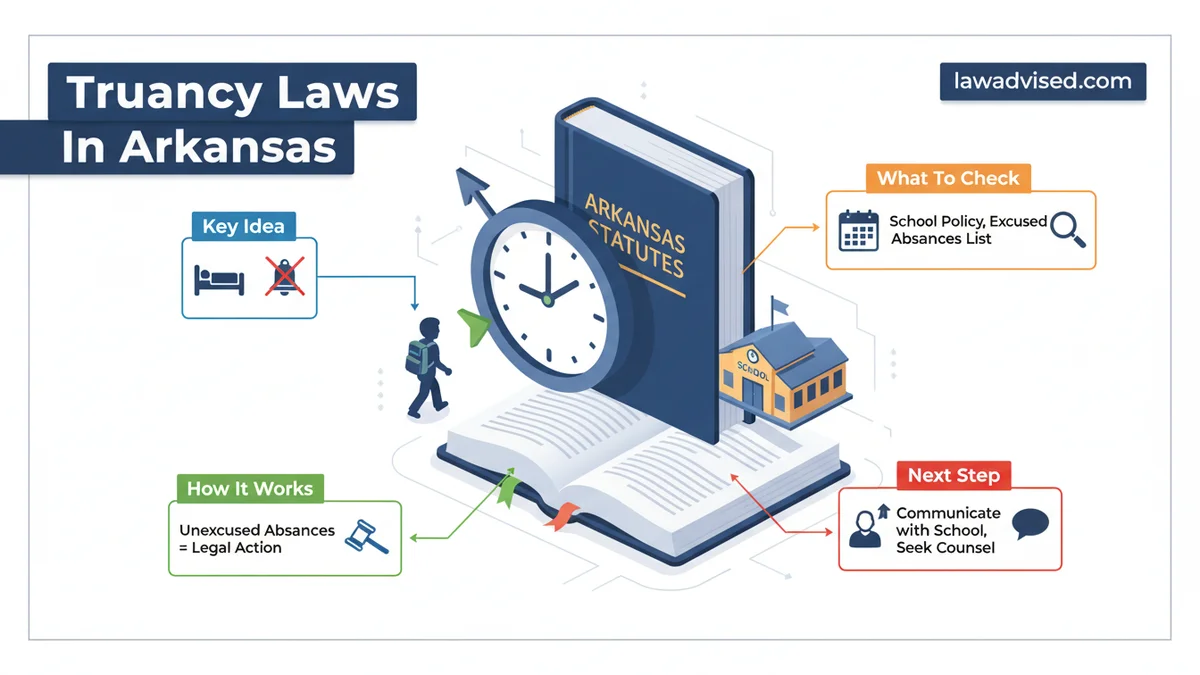
In Arkansas, truancy laws define a student as habitually truant if they accumulate five unexcused absences in a single semester or ten unexcused absences in a school year. When a student hits these specific statutory thresholds, school districts must legally intervene, which can eventually trigger court proceedings or educational neglect charges against parents in 2027.
Navigating these legal boundaries requires you to understand exact school district procedures, notification timelines, and the compounding penalties for missed days. Staying ahead of these thresholds protects your family from formal court intervention and steep legal fines.
Key Takeaways
- Arkansas law defines legal truancy based on specific unexcused absence thresholds set per semester.
- Schools must notify parents and develop an attendance intervention plan before filing court charges.
- Parents can face misdemeanor fines, community service, or educational neglect charges for persistent truancy.
- Valid excuses include personal illness, medical appointments, and pre-approved educational absences.
- Chronic absenteeism tracks all missed days, while legal truancy specifically penalizes unexcused absences.
What Causes Truancy Legal Actions and Absence Penalties in Arkansas
Arkansas education code draws a strict line between excused and unexcused absences. Knowing how the state calculates these totals prevents sudden legal escalation.
Defining Unexcused Absences Under Arkansas Law
An absence is legally unexcused when a student misses school without a documented doctor’s note, court summons, religious observance, or prior principal approval. State guidelines mandate that schools track these cumulative infractions carefully.
- Five unexcused absences: Triggers the initial mandatory school-level conference and intervention plan.
- Ten unexcused absences: Marks the statutory threshold where schools must escalate the case to state agencies or juvenile authorities.
- Consecutive absences: Missing multiple days in a row without contact often speeds up the district’s legal reporting timeline.
Statutory Consequences and Penalties for Parents and Students
When unexcused absences cross legal limits, both parents and older students face severe statutory penalties in 2027. Educational neglect is a real charge with tangible outcomes.
- Parental fines: Parents can face fines starting at $100 for a first offense, escalating for subsequent violations.
- Educational neglect charges: Persistent truancy can result in misdemeanor charges filed against parents or guardians in district court.
- Juvenile court involvement: Students over a certain age may be required to appear before a juvenile judge, leading to mandated community service or loss of driving privileges.
How to Fix Attendance Issues and Navigate Arkansas School Intervention Steps
Before any criminal or civil charges are filed, Arkansas law requires school districts to follow a structured notification and remediation process.
Mandatory School Notification and Conference Requirements
Schools cannot legally blindside you with court papers without first attempting intervention. You have specific rights regarding notice and support during the 2027 school year.
- Written notice: The school must notify parents in writing after a specified number of unexcused absences accumulate.
- Attendance conference: Districts are required to invite parents to a conference to draft a formal Family Attendance Agreement.
- Resource connection: Schools should offer support services, counseling, or academic adjustments to resolve underlying barriers to attendance.
Steps to Appeal and Resolve Attendance Disputes
If you believe the school marked your child absent in error, you must act quickly to correct the official district records. Documentation is your primary defense.
- Submit medical proof: Provide backdated doctor notes or official medical excuses within the district’s strict submission window, usually three to five days.
- Request a formal review: File a written appeal with the building principal to contest specific unexcused dates.
- Escalate to the superintendent: If the principal denies your correction request, petition the district superintendent or school board for a secondary review.
Step-by-Step Guide to Responding to School Notices and Court Warnings
Receiving an official attendance notice under Arkansas truancy laws in 2027 requires immediate, calculated action from parents and guardians. Ignoring these communications accelerates the legal process, turning standard administrative interventions into court summons.
Immediate Actions Upon Receipt
- Review the attendance record immediately: Cross-reference the dates listed in the school notice with your own family calendar and doctor notes to identify potential administrative errors.
- Schedule a conference: Contact the designated school attendance officer or guidance counselor within 48 hours of receiving the warning letter to discuss underlying causes.
- Establish a corrective action plan: Collaborate with school administration to draft a formal attendance contract, which often halts the progression of legal filings if adhered to strictly.
According to educational compliance experts, proactive communication reduces the likelihood of formal court referral by over 60 percent. Document every interaction, email, and phone call with school officials to maintain a clear record of your cooperation.
What If It Still Doesn’t Work and Legal Charges Are Filed Against Parents
When administrative interventions fail and unexcused absences continue to accumulate, the school district or prosecuting attorney may escalate the matter to family or juvenile court. In Arkansas, parents can face legal charges for educational neglect if a student accumulates excessive unexcused absences.
Escalation Protocol and Legal Consequences
- Receive the court summons: A formal citation will be issued requiring both the parent and the student to appear before a judge.
- Attend the preliminary hearing: The court reviews the attendance history and may order court-monitored probation, community service, or mandatory family counseling.
- Face potential fines or penalties: Under current guidelines, persistent educational neglect can result in fines up to $500, mandatory parenting classes, or further legal scrutiny.
If standard school-level interventions fail, families must consider specialized support. Fallback steps include hiring a family law attorney, utilizing private educational advocates, or engaging professional clinical counseling. Private educational advocacy services typically range from $1,500 to $3,500 depending on the complexity of the case and court representation required.
Conclusion
Navigating Arkansas truancy laws in 2027 demands vigilance, organization, and prompt communication with school authorities before unexcused absences trigger severe legal penalties. By understanding the statutory thresholds and responding to initial warnings with structured corrective plans, families can protect their legal standing and get students back on track. According to verified research and educational policy sources, early intervention remains the single most effective tool for preventing long-term academic disengagement. Your immediate next step is to request a comprehensive attendance report from your child’s school office today to verify their current standing.
❓ Frequently Asked Questions
What are the exact legal penalties for parents under Arkansas truancy laws?
Parents of chronically truant children can face misdemeanor charges of educational neglect. Penalties often begin with fines, court costs, and mandatory parenting classes, but can escalate to community service or probation for repeat offenses.
At what age do Arkansas compulsory attendance laws apply?
Arkansas compulsory attendance laws apply to children between the ages of 5 and 17. Parents or legal guardians are legally responsible for ensuring these minors attend school regularly.
What steps must a school take before referring a truant student to court?
Before court referral, the school must document unexcused absences, issue written notices to parents, hold a conference to establish an intervention plan, and provide reasonable opportunities for the student to improve attendance.
Can excessive excused absences also cause legal problems in Arkansas?
While excessive excused absences do not trigger traditional truancy court filings, they can lead to academic retention, loss of credit, or required doctor’s notes for future absences if chronic illness impacts academic progress.
How can parents appeal a truancy notice or fine in Arkansas?
Parents can appeal truancy notices and court filings by providing official documentation of excused absences, medical records, or proof that the school failed to follow required statutory notification procedures.
Are online or homeschool students subject to Arkansas truancy laws?
Students enrolled in public virtual academies are subject to state attendance laws based on login times and assignment completion. Traditional homeschoolers operate under separate state guidelines governed by a notice of intent to homeschool.

Ismail Hossain is the founder of Law Advised. He is an Divorce, Separation, marriage lawyer. Follow him.