Maternity Leave Laws in Alabama: What Every Mom Needs to Know
If you’re expecting a baby or planning for one soon, understanding your maternity leave rights in Alabama is crucial. You might be wondering: Will you get paid time off?
How long can you take? What protections do you have at work? Navigating maternity leave laws can feel overwhelming, especially with a mix of state and federal rules. This guide breaks down exactly what Alabama law says about your maternity leave, so you can make informed decisions for you and your family.
Keep reading to learn how to protect your job, your paycheck, and your peace of mind during this important time.
Maternity Leave Eligibility In Alabama
Maternity leave eligibility in Alabama depends on several factors. Both federal and state laws affect your rights. Knowing these rules helps you plan your leave better.
Alabama does not require private employers to offer paid maternity leave. However, some employees qualify for unpaid leave under federal laws. Understanding eligibility is key to accessing these benefits.
Maternity Leave Under The Family And Medical Leave Act (fmla)
The FMLA applies to Alabama workers at companies with 50 or more employees. You must have worked there for at least 12 months. You also need at least 1,250 hours of work in the past year. Eligible employees get up to 12 weeks of unpaid leave.
State Laws And Paid Leave
Alabama recently introduced some paid parental leave benefits. Female employees receive eight weeks of paid leave for childbirth or miscarriage. Male employees may also get paid leave under certain conditions. These rules apply mostly to state government workers.
Employer Policies And Private Benefits
Some employers offer maternity leave benefits beyond the law. These can include paid leave or extended unpaid leave. Check your company’s policy or employee handbook. Your eligibility for these benefits depends on your employer’s rules.
Protections Against Pregnancy Discrimination
The Pregnancy Discrimination Act protects pregnant workers in Alabama. Employers cannot fire or demote you due to pregnancy. They must provide accommodations similar to those for other medical conditions. This law helps ensure fair treatment at work during pregnancy.
Paid Vs. Unpaid Leave Options
Maternity leave in Alabama includes options for both paid and unpaid leave. Understanding the difference helps expecting mothers plan better. The state law and federal regulations affect these options. Employers may offer paid leave, but it is not required by Alabama law for most private employees. Unpaid leave is more common, especially under federal rules.
Paid leave means you receive your regular salary or part of it during your time off. Unpaid leave means you take time off without pay but keep your job. Each option has its own rules and benefits. Knowing them helps you make the best choice for your family and job situation.
Paid Maternity Leave In Alabama
Alabama does not require private employers to provide paid maternity leave. Few companies offer paid leave voluntarily. Some public employers and large companies may have paid leave policies. State employees recently gained access to paid parental leave. It usually covers eight weeks for mothers after childbirth or miscarriage.
Paid leave helps cover expenses during the first weeks at home. It reduces financial stress and allows time to recover and bond with the baby. Check with your employer about any paid leave benefits available to you.
Unpaid Maternity Leave And Fmla
The Family and Medical Leave Act (FMLA) protects unpaid leave rights. It applies if your employer has 50 or more employees. Eligible employees can take up to 12 weeks of unpaid leave. Your job is protected during this time. Health insurance must continue while you are on FMLA leave.
Unpaid leave means no salary, but job security remains. You can use this time to care for your newborn without fear of losing your position. Smaller employers may not be covered by FMLA, so check your company’s policies.
Additional State Protections And Benefits
Some laws protect pregnant workers beyond leave rights. The Pregnancy Discrimination Act prohibits firing or demoting due to pregnancy. Employers must offer the same sick leave for pregnancy as for other illnesses. Alabama also requires employers to provide break time and a private space to express breast milk.
These protections support working mothers before, during, and after maternity leave. Knowing your rights helps ensure fair treatment at work throughout your pregnancy and early motherhood.
Family And Medical Leave Act (fmla) Rules
The Family and Medical Leave Act (FMLA) is a federal law that protects workers in Alabama. It gives eligible employees the right to take unpaid, job-protected leave for family and medical reasons. This includes maternity leave for new mothers.
FMLA applies to employers with 50 or more employees within a 75-mile radius. Workers must have worked at least 1,250 hours in the past 12 months to qualify. Eligible employees can take up to 12 weeks of leave in a 12-month period.
Eligibility Requirements For Fmla Leave
To qualify for FMLA, you must work for a covered employer. You also need to have worked at least 12 months for that employer. The 1,250 hours of work must be completed in the 12 months before the leave.
Reasons For Taking Fmla Leave
FMLA leave covers the birth and care of a newborn child. It also includes adoption or foster care placement. Employees can take leave to care for a family member with a serious health condition.
Job Protection During Fmla Leave
Employers must keep your job position open during FMLA leave. They must restore you to the same or an equivalent job after leave ends. Your health benefits must also continue during the leave.
Paid Vs. Unpaid Leave Under Fmla
FMLA leave is unpaid. Some employers may offer paid maternity leave separately. You can use accrued paid leave, like sick or vacation days, during FMLA leave.
Credit: baxleymaniscalco.com
State-specific Paid Parental Leave Benefits
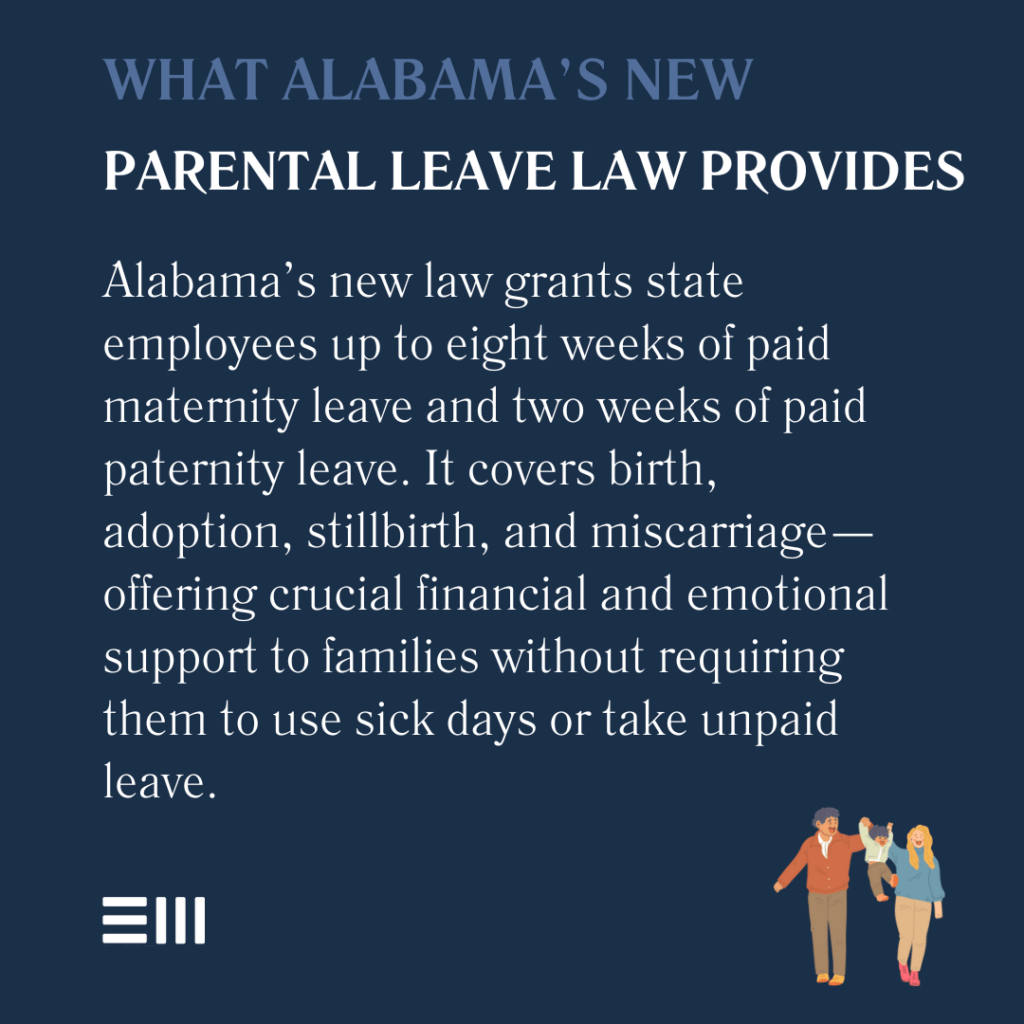
Alabama has recently introduced state-specific paid parental leave benefits that provide financial support to new parents. These benefits aim to help families during the critical first weeks after childbirth. Unlike many states, Alabama now offers paid leave beyond federal protections.
These new laws apply to certain public employees, giving them paid time off for parental bonding. Private sector employees may not have the same guaranteed benefits yet. Understanding these distinctions helps parents plan their leave and finances.
Paid Parental Leave For Public Employees
Alabama grants eight weeks of paid parental leave to eligible public employees. This leave covers birth, stillbirth, or miscarriage. The benefit supports recovery and family bonding without losing income. It applies to female employees, with some provisions extending to male employees as well.
Private Sector Paid Leave Policies
Private employers in Alabama are not required to provide paid maternity leave. Many companies follow federal Family and Medical Leave Act rules, which offer unpaid leave. Some employers choose to offer paid leave voluntarily. Workers should check their company’s policies for details.
Legal Protections During Parental Leave
Alabama law protects employees from discrimination based on pregnancy or parental leave. Employers cannot fire or demote workers for taking approved leave. Health insurance coverage must continue during leave under federal rules. These protections ensure job security for new parents.
Pregnancy Discrimination Protections
Pregnancy discrimination protections ensure fair treatment for pregnant employees in Alabama. These laws prevent employers from treating pregnant workers unfairly or differently. They apply to hiring, firing, promotions, and job assignments.
The Pregnancy Discrimination Act (PDA) is a key federal law. It prohibits discrimination based on pregnancy, childbirth, or related medical conditions. Alabama follows these federal rules and adds some protections of its own.
What The Pregnancy Discrimination Act Covers
The PDA covers all employers with 15 or more employees. It protects pregnant workers from being fired or demoted due to pregnancy. Employers must treat pregnancy like any other temporary disability.
If an employer offers sick leave for other illnesses, they must offer the same for pregnancy. This includes leave for prenatal care, childbirth, and recovery after birth.
Employer Obligations In Alabama
Alabama employers cannot refuse to hire someone because she is pregnant. They must provide reasonable accommodations if needed. This can include lighter duties or more frequent breaks.
Employers must also keep health insurance benefits during pregnancy leave. This helps women keep coverage without extra cost.
Rights To Reasonable Accommodations
Pregnant employees can ask for changes to their work conditions. Examples include sitting instead of standing or avoiding heavy lifting. Employers must provide these accommodations unless it causes undue hardship.
These protections help pregnant women stay safe and healthy at work. They also support women in continuing their careers during pregnancy.
Breastfeeding Rights At Work
Breastfeeding rights at work protect new mothers in Alabama. These laws help women continue breastfeeding while working. Employers must provide time and space to express milk.
These protections support health for both mother and baby. They encourage breastfeeding without job loss or penalties.
Legal Requirements For Employers
Alabama law requires all employers to give reasonable break time. This time is for mothers to pump breast milk during work hours. Breaks must be private and not in a bathroom.
This right lasts for up to one year after childbirth. Employers of any size must follow this rule. It helps women balance work and family needs.
Private Space For Expressing Milk
Employers must provide a private room or area. The space cannot be a bathroom. It should be clean, safe, and shielded from view.
This room allows mothers to pump milk comfortably. It supports continued breastfeeding and protects privacy.
Protection From Discrimination
Alabama law forbids employers from punishing women for breastfeeding. Employers cannot fire, demote, or refuse to hire due to breastfeeding needs.
The Pregnancy Discrimination Act also protects breastfeeding mothers. It ensures fair treatment and equal opportunity at work.
Resources For Legal Help And Guidance
Understanding maternity leave laws in Alabama can feel confusing. Many expectant mothers need clear legal help. Various resources exist to guide you through your rights and employer responsibilities.
These resources offer free or low-cost advice. They help explain state and federal rules. You can learn how to protect your job and benefits during maternity leave.
Legal Aid Organizations In Alabama
Legal aid groups provide support for low-income workers. They offer advice about maternity leave rights and discrimination. Some also represent clients in court cases. Contact these organizations for confidential help.
Government Agencies For Employment Rights
The Alabama Department of Labor enforces workplace laws. They answer questions about unpaid leave and job protection. The U.S. Department of Labor also handles Family and Medical Leave Act (FMLA) issues. These agencies guide you on filing complaints.
Nonprofit Groups Focused On Family And Work
Nonprofits like A Better Balance help pregnant workers understand their rights. They provide legal helplines and online resources. These groups work to ensure fair treatment at work during pregnancy and after birth.
Private Employment Lawyers Specializing In Maternity Leave
Private attorneys can offer personalized legal advice. They review your case and explain complex laws. Hiring a lawyer may be helpful if you face employer retaliation or discrimination.
Credit: governor.alabama.gov

Credit: alarise.org
Frequently Asked Questions
Do You Get Paid For Maternity Leave In Alabama?
Alabama does not require private employers to provide paid maternity leave. Some female employees may get eight weeks of paid parental leave under specific state benefits. Federal laws like FMLA offer unpaid leave with job protection but no guaranteed pay during maternity leave.
Do You Get 9 Months Of Maternity Leave?
No, Alabama does not guarantee 9 months of maternity leave. Federal FMLA provides up to 12 weeks unpaid leave. Some employers offer paid leave.
Will Fmla Pay Me For Maternity Leave?
The FMLA does not pay you for maternity leave. It provides up to 12 weeks of unpaid, job-protected leave. Some employers may offer paid leave separately.
Is Maternity Leave 3 Months Or 6 Months?
Maternity leave duration varies by employer and state. In Alabama, paid leave often lasts about 8 weeks, not typically 3 or 6 months. Federal FMLA allows up to 12 weeks unpaid leave, but paid leave policies differ widely. Check your employer’s specific maternity leave policy.
What Maternity Leave Laws Apply In Alabama?
Alabama follows federal laws like FMLA for unpaid leave. The state has no separate paid maternity leave law. Some employers offer additional benefits voluntarily.
Conclusion
Maternity leave laws in Alabama offer some protections but limited paid leave. Federal laws like FMLA provide unpaid leave for eligible employees. State rules require employers to support breastfeeding at work. New policies now grant some paid leave for mothers after childbirth.
Knowing your rights helps you plan your time off well. Always check with your employer about specific benefits available. Legal advice can clarify your situation if needed. Taking the right steps ensures better support during this important time.

Ismail Hossain is the founder of Law Advised. He is an Divorce, Separation, marriage lawyer. Follow him.