Turkey Hunting Laws in Alabama: Essential Rules Every Hunter Must Know
If you’re planning to go turkey hunting in Alabama, knowing the laws is your first step to a successful and legal hunt. You don’t want to miss out because of a simple permit issue or accidentally break a rule that could cost you dearly.
From the licenses you need to the seasons and bag limits, every detail matters when you’re out in the woods. This guide will walk you through the essential turkey hunting laws in Alabama so you can focus on the hunt with confidence.
Ready to learn what you must know before heading out? Keep reading to make sure your next turkey hunting trip is smooth, safe, and fully compliant.
Licensing Requirements
Hunters must have a valid Alabama All-Game Hunting License to hunt turkey. Both residents and nonresidents need this license. It is required during spring and fall hunting seasons.
Alabama All-game Hunting License
Every hunter must have a valid Alabama All-Game Hunting License. This license allows hunting of big game, including wild turkey. Both residents and nonresidents must obtain this license before hunting.
The license is mandatory for all spring and fall turkey hunting seasons. Without it, hunting turkey is illegal in Alabama. Hunters can buy this license online or at authorized vendors.
Turkey Harvest Record Requirements
Hunters must carry a turkey harvest record during the hunt. This record can be on paper or an approved app. It tracks the turkey taken and must be filled out immediately after the kill.
Moving or transporting a turkey before recording it is against the law. This rule helps manage turkey populations effectively and ensures legal hunting.
Special Permits And Youth Licenses
Youth hunters under 16 may need special permits for turkey hunting. Alabama offers youth hunting licenses at a lower cost. These allow young hunters to participate legally under supervision.
Check the latest guidelines for youth hunting seasons and permit requirements. These rules protect young hunters and promote safe, responsible hunting practices.
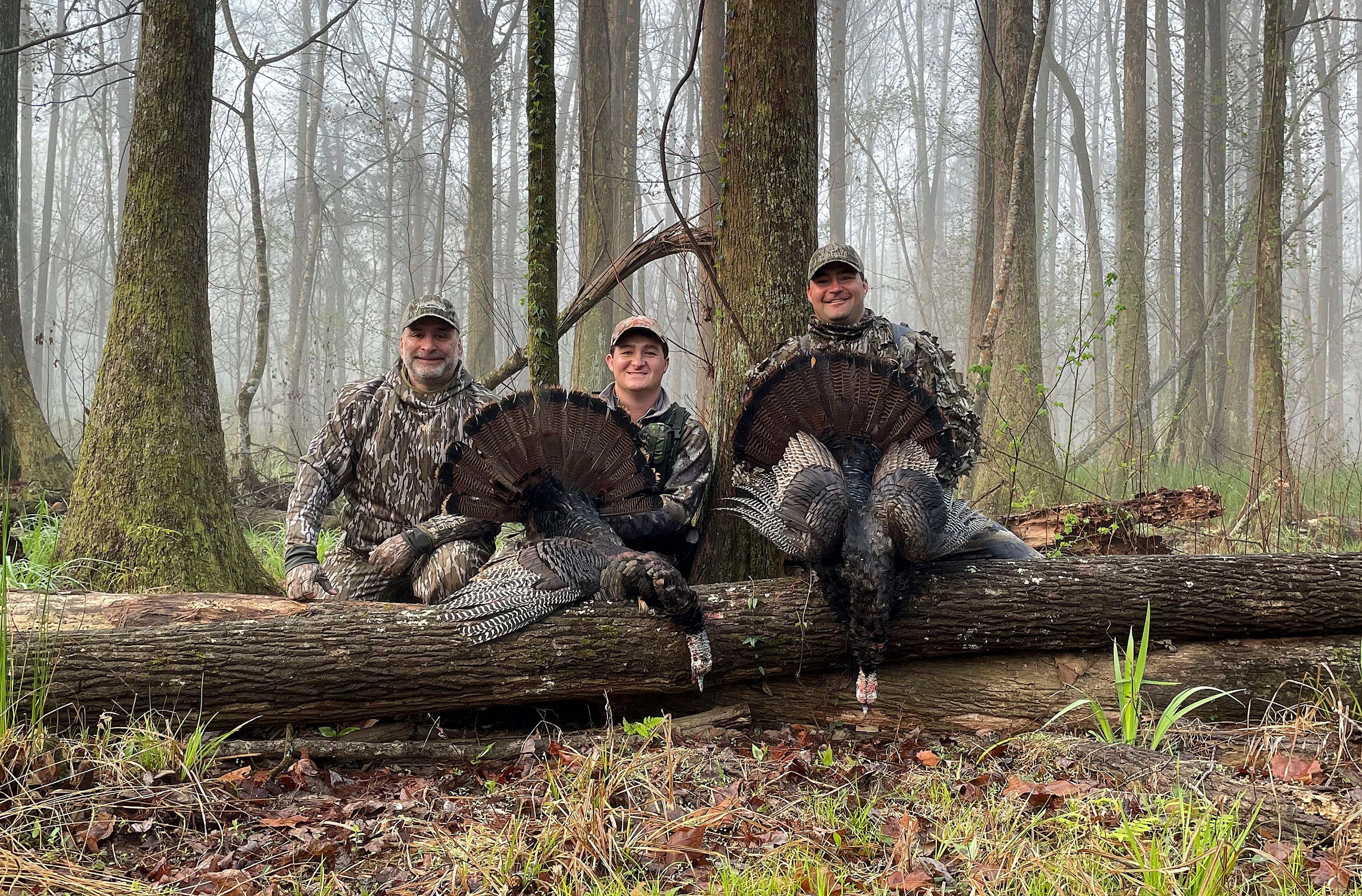
Credit: www.outdooralabama.com
Hunting Seasons
Alabama offers specific hunting seasons for wild turkey to ensure sustainable wildlife management. These seasons provide hunters with clear time frames to pursue turkeys legally. Following these seasons helps protect the turkey population and the environment.
Spring Turkey Hunting Season
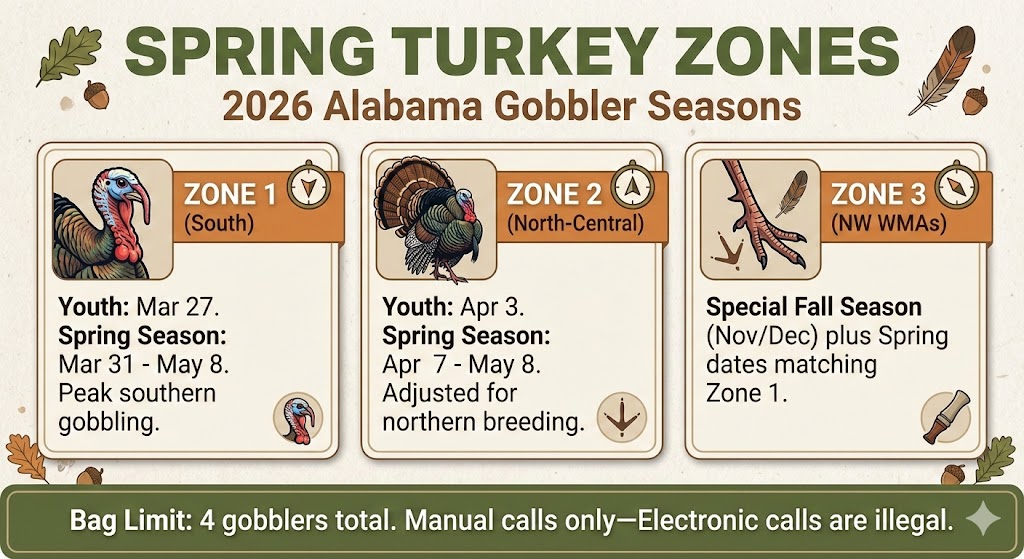
The spring turkey hunting season in Alabama usually runs from mid-March to mid-May. This season targets male turkeys, known as gobblers. Hunters often use calls and decoys to attract gobblers during this time. The spring season is popular because turkeys are more active and easier to locate.
Fall Turkey Hunting Season
The fall turkey hunting season typically begins in early November and ends in late December. This season allows hunting of both gobblers and hens. Fall hunting offers a different challenge as turkeys are less active than in spring. Hunters must adjust their strategies to be successful during this period.
Special Youth Turkey Hunting Season
Alabama provides a special youth turkey hunting season before the regular spring season. It usually lasts a few days in late February or early March. This season helps young hunters gain experience in a controlled setting. Adult supervision is required to ensure safety and compliance with laws.
Bag Limits
Bag limits control how many turkeys hunters can take in Alabama. These rules help keep turkey populations healthy. Hunters must follow these limits strictly to avoid penalties.
Daily Bag Limit
Hunters may take one gobbler each day during the season. This means only one male turkey per day is allowed. It helps maintain a balanced turkey population.
Season Bag Limit
Each hunter can harvest up to four gobblers per year. This total includes both spring and fall seasons combined. Hunters must track their harvests carefully to follow this rule.
Permit And License Requirements
All turkey hunters need a valid Alabama All-Game Hunting License. This license is required for residents and nonresidents alike. Without it, hunting turkeys is illegal in Alabama.
Allowed Hunting Methods
Alabama allows specific methods for turkey hunting to ensure safety and fairness. Hunters must follow these rules closely to enjoy a legal hunting experience.
Understanding allowed hunting methods helps avoid fines or license loss. These rules protect wildlife and promote ethical hunting practices.
Shotguns And Ammunition
Only shotguns are permitted for turkey hunting in Alabama. Hunters must use shot sizes of 2, 4, 5, or 6.
Use of slugs or buckshot is illegal during turkey season. These restrictions keep hunting safe for all participants.
Bows And Crossbows
Bows are legal during spring and fall turkey seasons. Crossbows are allowed only for hunters with disabilities.
Archers must use broadhead arrows with at least two blades. This ensures a quick, humane kill.
Prohibited Hunting Methods
Using electronic or mechanical turkey calls is banned statewide. This rule keeps the hunt fair and natural.
Hunting from a vehicle or using bait is illegal. These methods give unfair advantages and disturb wildlife.
Hunting Hours And Locations
Turkey hunting is only allowed from 30 minutes before sunrise to sunset. Night hunting is strictly forbidden.
Hunting is restricted to designated public lands or private lands with permission. Always check local regulations before hunting.
Calling Restrictions
Calling restrictions play a key role in turkey hunting laws in Alabama. They ensure fair play and protect wildlife. Knowing these rules helps hunters avoid penalties and enjoy a safe hunting experience.
Alabama has clear rules about what types of calls hunters can use. These rules apply during both spring and fall turkey seasons. Hunters must follow these restrictions closely to stay legal.
Prohibition Of Electronic Calls
Electronic or mechanical turkey calls are not allowed in Alabama. This means no battery-powered or recorded calls can be used. The law aims to keep hunting challenging and natural.
Allowed Calling Methods
Hunters may use hand-held calls made from wood, slate, or other natural materials. Simple box calls, pot calls, and diaphragm calls are permitted. These calls must be operated manually without any power source.
Purpose Of Calling Restrictions
These restrictions help maintain a fair hunting environment. They prevent overuse of technology that could give hunters an unfair advantage. Protecting wild turkey populations is the main goal.
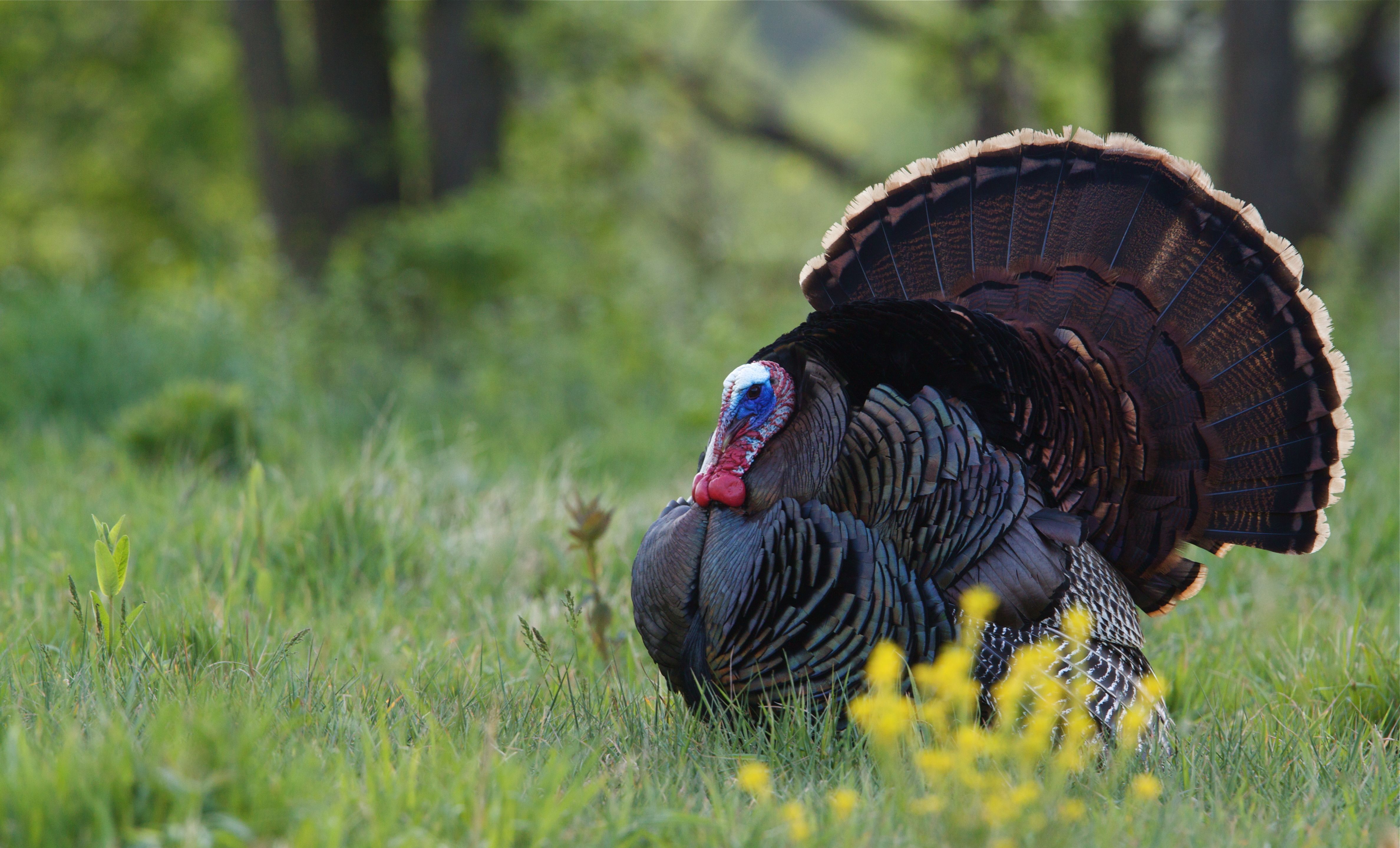
Credit: huntwise.com
Tagging And Reporting
Tagging and reporting are vital parts of turkey hunting in Alabama. Hunters must follow specific rules to tag their turkeys properly. Reporting ensures wildlife agencies track harvests and manage turkey populations. These rules help maintain fair and safe hunting practices.
Proper Tagging Procedures
Immediately after harvesting a turkey, hunters must tag it on site. The tag must be attached to the turkey before moving it. Use the official harvest record tag provided with the hunting license. Write your name, date, and hunting zone on the tag clearly. This step confirms the turkey was legally taken during the season.
Harvest Record Requirements
Hunters must carry a harvest record while hunting. This can be a paper tag or an electronic version if allowed. The record must be on hand to show game wardens upon request. Moving or transporting a turkey without tagging or the harvest record is illegal. Always keep the record with the turkey until it reaches your final destination.
Reporting Your Harvest
Alabama requires hunters to report their turkey harvests. Reporting can be done online or by phone within 48 hours of the hunt. Provide details such as date, location, and number of turkeys taken. This information helps wildlife officers monitor turkey populations and hunting success. Failure to report can result in fines or loss of hunting privileges.
Public And Private Land Rules
Understanding the rules for hunting on public and private land in Alabama is vital for turkey hunters. These rules ensure safety, respect for property, and legal compliance. Knowing where you can hunt and what permissions you need helps prevent fines or conflicts.
Public lands include wildlife management areas and national forests. These places are open to hunters but have specific regulations. Private lands belong to individuals or companies. Hunters must get permission before entering private property. Each type of land has different rules for turkey hunting.
Public Land Hunting Rules
Hunters must have a valid Alabama hunting license to hunt turkeys on public land. Specific seasons and bag limits apply. Certain areas may require additional permits or have restrictions on hunting times. Check the Alabama Department of Conservation and Natural Resources for updates. Using electronic turkey calls is not allowed on public lands. Always follow posted signs and stay within designated hunting zones.
Private Land Hunting Rules
Hunting on private land requires written permission from the landowner. Without it, hunting is illegal and considered trespassing. Landowners may have their own rules on hunting hours and methods. Hunters should respect private property boundaries and any posted signs. Sharing information about hunting locations or landowner details without consent is discouraged. Always carry proof of permission while hunting on private land.
Credit: huntinglocator.com
Frequently Asked Questions
Do You Need A Permit To Hunt Turkey In Alabama?
Yes, you need a valid Alabama All-Game Hunting License to hunt turkey in Alabama. This applies to residents and nonresidents during the designated seasons.
Are There Bag Limits For Turkey Hunting In Alabama?
Alabama hunters may harvest one gobbler per day. The combined spring and fall season bag limit is four gobblers total.
Do Turkeys Respond To Owl Calls?
Turkeys often respond to owl calls, especially during low light. They perceive owls as predators and become alert or silent. Hunters use owl calls to locate or pattern turkeys effectively. This tactic increases chances of spotting or attracting turkeys during hunting.
What Dates Are Considered Turkey Season In Alabama?
Alabama’s spring turkey season runs from mid-March to mid-May. The fall season lasts from mid-October to late November. Hunters must follow specific zone dates and regulations. Check Outdoor Alabama for exact dates and license requirements before hunting.
Do I Need A Special License To Hunt Turkey In Alabama?
All hunters must have a valid Alabama All-Game Hunting License. This license applies to residents and nonresidents. It is required during spring and fall turkey seasons.
Conclusion
Understanding Alabama’s turkey hunting laws ensures a safe, legal hunt. Hunters must get the right licenses before hunting. Respecting season dates and bag limits protects turkey populations. Using allowed hunting methods helps maintain fair play. Always check current regulations before heading out.
Following these rules supports sustainable turkey hunting in Alabama. Stay informed, hunt responsibly, and enjoy the outdoors.

Ismail Hossain is the founder of Law Advised. He is an Divorce, Separation, marriage lawyer. Follow him.