Child Labor Laws in Georgia: What Parents Need to Know
Child labor is a serious topic in Georgia and across the United States. Parents, employers, and even young workers must understand the rules that protect minors from unsafe conditions, long hours, and unfair treatment. Georgia’s child labor laws are designed to keep children safe and help them balance work and education.
This guide explains the key rules, exceptions, and penalties, so you can avoid costly mistakes and protect young workers’ rights.
What Are Child Labor Laws In Georgia?
Child labor laws in Georgia set limits on how and when minors can work. These rules apply mostly to children under 18 years old. The main goal is to prevent dangerous work and make sure school comes first.
Georgia uses both state and federal laws. Sometimes, state law is stricter than federal law. For example, Georgia’s rules about work hours are tighter for some age groups. The Fair Labor Standards Act (FLSA) also applies, but Georgia has extra requirements.
Minimum Age Requirements
Georgia law says children must be at least 14 years old to work in most jobs. There are some exceptions:
- Under 14 years old: Not allowed to work, except for jobs like babysitting, newspaper delivery, farm work, or acting.
- 14–15 years old: Can work in approved jobs with limits on hours.
- 16–17 years old: Can work more hours and in more types of jobs, but still not in hazardous work.
Here’s a quick comparison of minimum age and job types:
| Age | Allowed Jobs | Restricted Jobs |
|---|---|---|
| Under 14 | Babysitting, acting, farm work | All other jobs |
| 14–15 | Retail, office work, food service | Hazardous, manufacturing, mining |
| 16–17 | Most jobs except hazardous | Hazardous jobs (e.g. roofing, demolition) |
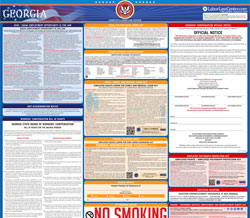
Credit: www.minimum-wage.org
Hour Restrictions For Minors
Georgia has strict rules about work hours for minors, especially during school days.
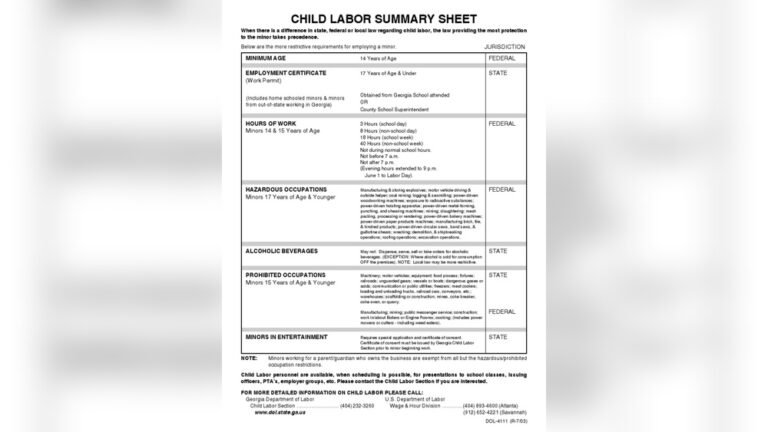
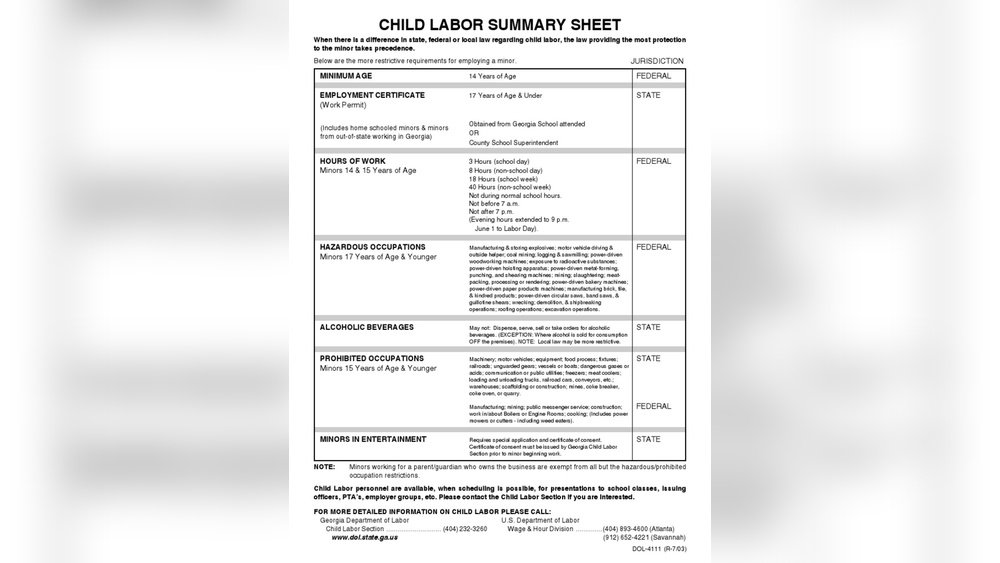
For 14 and 15-year-olds:
- School days: Maximum 4 hours per day
- School weeks: Maximum 18 hours per week
- Non-school days: Maximum 8 hours per day
- Non-school weeks: Maximum 40 hours per week
- Work hours: Only between 7 a.m. and 7 p.m. (until 9 p.m. from June 1 to Labor Day)
16 and 17-year-olds have fewer limits, but cannot work in hazardous jobs.
Here’s a summary:
| Age Group | School Days | School Weeks | Non-School Days | Non-School Weeks |
|---|---|---|---|---|
| 14–15 | 4 hours | 18 hours | 8 hours | 40 hours |
| 16–17 | No limit (except hazardous) | No limit (except hazardous) | No limit (except hazardous) | No limit (except hazardous) |
Note: Minors must also get a 30-minute break after 5 hours of work.
Types Of Jobs Minors Can And Cannot Do
Some jobs are completely off-limits to minors in Georgia, especially those considered hazardous. Here are common examples:
Prohibited for all minors under 18:
- Operating heavy machinery
- Roofing and demolition
- Mining
- Driving a motor vehicle
Allowed for minors 14–15:
- Cashier
- Office assistant
- Food prep (no open flames or deep fryers)
- Bagging groceries
Many people miss that Georgia bans minors from even indirectly dangerous jobs, not just obvious ones. For example, working in a warehouse near forklifts is not allowed.
Work Permits And Documentation
All minors under 16 must have a work permit in Georgia. The permit comes from the Georgia Department of Labor.
Steps to get a permit:
- The minor gets the permit application at school or online.
- The employer fills out part of the application.
- The minor returns the completed form to school officials.
- The school approves and issues the permit.
Employers must keep permits on file. If not, they risk fines and penalties.
Here’s a comparison of permit requirements:
| Age | Permit Needed? | Where to Get? |
|---|---|---|
| Under 16 | Yes | School or online |
| 16–17 | No (unless required by employer) | N/A |
Penalties For Violating Child Labor Laws
Georgia enforces child labor laws with fines and even criminal charges. Employers can face:
- Fines up to $5,000 per violation
- Suspension of business license
- Criminal charges for repeat offenders
Minors and parents should also know that working without a permit can lead to losing job opportunities and future legal issues.
Non-obvious insight: Some employers wrongly believe federal law alone applies. In Georgia, state law can be stricter and must always be checked.

Credit: alabamareflector.com
Exceptions And Special Cases
There are some exceptions to Georgia’s child labor rules:
- Family businesses: Minors can work for their parents in non-hazardous jobs.
- Agricultural work: Fewer restrictions, but hazardous work is still banned.
- Entertainment industry: Special permits are needed for child actors and performers.
Many families miss that even in family businesses, hazardous jobs are still banned for minors. Always check job duties carefully.
Tips For Employers And Parents
- Always check both Georgia and federal rules before hiring minors.
- Keep work permits and records up to date.
- Make sure minors get breaks and do not work overtime.
- Never assign dangerous tasks, even in family-owned shops.
- Ask questions if unsure—penalties are costly.
For more details on specific Georgia laws, see the Georgia Department of Labor.

Credit: georgiarecorder.com
Frequently Asked Questions
What Is The Minimum Age To Work In Georgia?
The minimum age is 14 years old for most jobs. Some tasks like babysitting or acting have lower age limits.
Do Minors Need A Work Permit In Georgia?
Yes, minors under 16 must have a work permit from their school or the Department of Labor. Employers must keep the permit on file.
Are There Hour Restrictions For 16–17-year-olds?
Yes, but fewer than for younger workers. They cannot work in hazardous jobs and should still avoid late-night shifts during school days.
What Jobs Are Considered Hazardous For Minors?
Jobs like operating heavy machinery, roofing, demolition, mining, and driving are hazardous and not allowed for anyone under 18.
Can Minors Work For Family Businesses In Georgia?
Yes, but only in non-hazardous jobs. All other rules still apply, including breaks and maximum hours.
Georgia’s child labor laws protect young workers and help them focus on school. Employers and parents must know these rules to avoid mistakes and keep children safe. If you need more information or help, contact the Georgia Department of Labor or check their official website for updates.

Ismail Hossain is the founder of Law Advised. He is an Divorce, Separation, marriage lawyer. Follow him.