Labor Laws in Georgia Breaks: What Employees Need to Know
Understanding Labor Laws In Georgia: Breaks And Employee Rights
Every worker values their break time. In Georgia, the rules around employee breaks can be confusing. Some people think there are strict laws, while others believe it is up to the employer. If you work in Georgia or manage employees, knowing the real facts can help you avoid problems and protect your rights.
This guide explains what Georgia labor laws say about breaks, including meal times, rest periods, and special rules for young workers. We’ll also look at how Georgia’s laws compare to federal rules and share tips for both employees and employers.
Are Breaks Required By Law In Georgia?
Georgia is known for its “employment-at-will” policy, which gives employers a lot of flexibility. But when it comes to breaks, things get more complex.
There is no specific Georgia state law that forces employers to give meal breaks or rest breaks to adult workers. This means most breaks are not required by state law. However, there are some exceptions, and federal law still matters.
Federal Law And Breaks
The Fair Labor Standards Act (FLSA) is a federal law that covers wage and hour issues, including breaks. The FLSA does not require employers to provide meal or rest breaks for adults. But if an employer chooses to offer short breaks (usually 5 to 20 minutes), these must be paid.
Meal breaks, typically 30 minutes or more, do not have to be paid if the worker is fully relieved from duty.
Comparing Georgia And Federal Rules
It helps to see how Georgia’s break policies line up with federal rules. The table below shows the main points:
| Break Type | Georgia Law | Federal Law (FLSA) |
|---|---|---|
| Meal Breaks (Adults) | Not required | Not required |
| Rest Breaks (Adults) | Not required | Not required |
| Short Paid Breaks | Not required | Must be paid if offered |
| Breaks for Minors | Required for some ages | Covered by child labor rules |

Credit: www.workyard.com
Special Rules For Minors
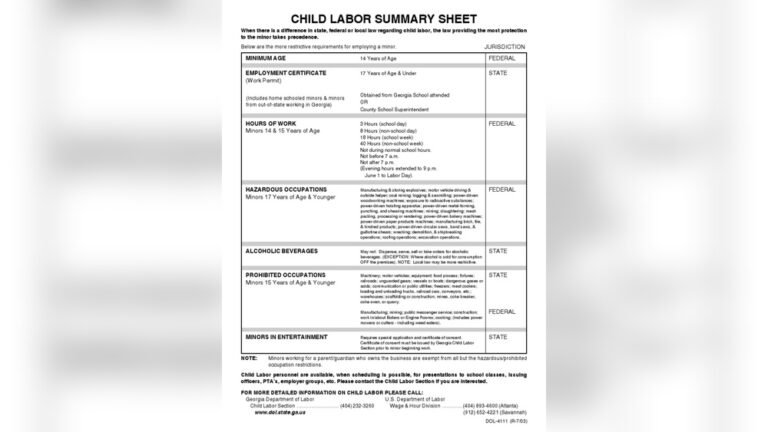
Georgia does have stricter rules for workers under 16. These rules aim to protect young employees.
- Workers under 16 must get a 30-minute break if working more than 5 hours at a time.
- This rule applies to most jobs, but there can be exceptions.
Employers should always check the latest child labor laws, as violations can result in fines.
Paid Vs. Unpaid Breaks
Understanding whether a break is paid or unpaid depends on its length and purpose.
- Short breaks (5–20 minutes): Must be paid if the employer offers them.
- Meal breaks (usually 30+ minutes): Can be unpaid if the worker is not doing any work tasks.
If you are required to keep working during your break—answering phones, staying at your post—the law says this should be a paid break.

Credit: www.workyard.com
Break Policies In The Workplace
Even though the law does not require breaks for adults, many Georgia employers choose to offer them. Common reasons include:
- Employee morale: Breaks help reduce stress and boost productivity.
- Health and safety: Rest can reduce workplace injuries.
- Competition: Offering breaks can help attract and keep good workers.
Here’s a look at typical workplace break policies in Georgia:
| Industry | Common Break Policy | Typical Length |
|---|---|---|
| Retail | One meal break, two short breaks | 30 min meal, 2 x 10 min short |
| Manufacturing | One meal break, one short break | 30 min meal, 10 min short |
| Offices | Flexible; may vary | 30–60 min meal, 1–2 short |
Common Mistakes And How To Avoid Them
Many employers and workers make mistakes about breaks in Georgia. Here are some to watch out for:
- Assuming all breaks must be paid: Only short breaks required by the FLSA are paid. Meal breaks can be unpaid.
- Not posting break policies: Always share your policy in writing to avoid confusion.
- Not tracking breaks for minors: Failing to give proper breaks to workers under 16 can lead to penalties.
- Requiring work during unpaid breaks: If someone is working, the break must be paid.

Credit: www.laborlawcenter.com
Practical Tips For Employers And Employees
For employers:
- Have a clear, written break policy.
- Train managers on state and federal break rules.
- Track breaks for minor employees carefully.
For employees:
- Know your workplace policy and your rights.
- Speak up if you’re being asked to work during an unpaid break.
- If you are under 16, remind your employer about your required breaks.
What To Do If Your Rights Are Violated
If you think your employer is not following break laws, start by talking to your HR department. If that does not solve the issue, you can contact the U.S. Department of Labor Wage and Hour Division or the Georgia Department of Labor.
You can learn more about federal break rules at the official U.S. Department of Labor website.
Frequently Asked Questions
What Is The Legal Break Time For Adults In Georgia?
There is no state law requiring employers to give breaks to adult employees in Georgia. Any breaks provided are at the employer’s choice.
Do Minors In Georgia Get Mandatory Breaks?
Yes. Workers under 16 must get a 30-minute break if they work more than 5 hours at once.
Does My Employer Have To Pay Me For My Break?
Short breaks (5–20 minutes) must be paid if offered. Meal breaks (about 30 minutes) can be unpaid if you are not working during the break.
Can My Boss Make Me Work During My Meal Break?
If you are required to work during your meal break, it should be paid time. If you are truly relieved of all duties, it can be unpaid.
Where Can I Get Help If My Employer Does Not Follow The Law?
You can contact the U.S. Department of Labor or the Georgia Department of Labor for help. Keep records of your hours and breaks as proof.
Georgia’s break laws may seem simple, but there are important details everyone should know. Whether you are an employee or employer, understanding your rights and responsibilities helps create a fair and safe workplace. If you are unsure, always check reliable resources or talk to a legal expert.

Ismail Hossain is the founder of Law Advised. He is an Divorce, Separation, marriage lawyer. Follow him.