Knife Laws in Arizona 2027 Expert Legal Guide
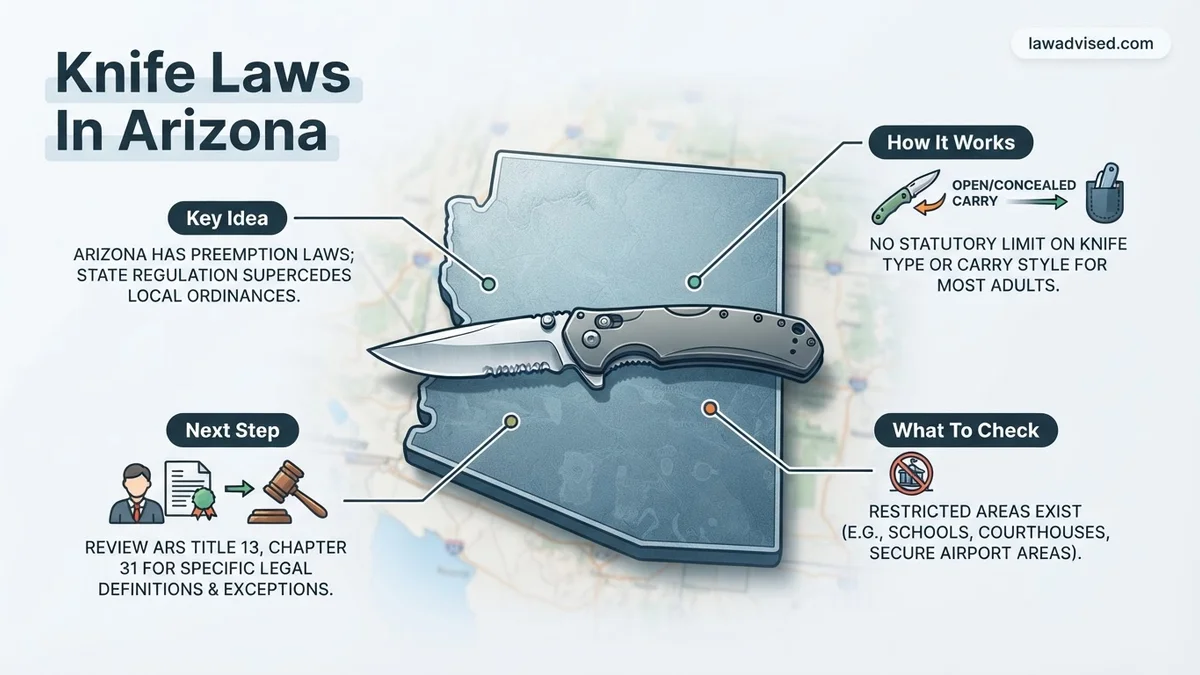
Navigating knife laws in Arizona requires understanding that the state imposes no blade length limits and permits both open and concealed carry for adults. However, carrying specific weapons into prohibited locations like schools and government buildings remains strictly illegal under state statute.
Arizona stands as one of the most permissive states in the country for knife owners in 2027. You can legally carry almost any type of knife, including switchblades, daggers, and bowie knives, without worrying about maximum blade length restrictions or rigid permit requirements. State statutes protect your right to carry edged weapons openly or concealed, provided you follow basic age rules and avoid specific sensitive zones.
Navigating these freedoms still requires knowing the exact boundaries of the law. Local city ordinances cannot override state statutes, but federal properties and specific public spaces enforce strict prohibitions that can catch you off guard. Understanding these nuances keeps you fully compliant with Arizona law.
Key Takeaways
- Arizona has no state-mandated restrictions on maximum blade lengths for knives.
- Both open carry and concealed carry of legal knives are permitted for adults.
- State preemption laws prevent local cities from passing stricter knife ordinances.
- Carrying any knife on school grounds or in secure airport areas is prohibited.
- Minors under 21 face specific restrictions regarding concealed deadly weapons.
What Causes Legal Confusion Regarding Knife Laws in Arizona
Legal confusion usually stems from outdated myths, misunderstanding federal rules, or mixing up knife regulations with Arizona firearm statutes. Many people assume that automatic knives or long blades remain illegal because neighboring states enforce strict bans.
Legality of Specific Blade Types
- Switchblades and Automatics: Fully legal to own, carry, and purchase in Arizona with no restrictions on opening mechanisms.
- Daggers and Dirks: Treated the same as standard pocket knives, allowing for unrestricted personal carry.
- Bowie Knives and Large Fixed Blades: Completely legal regardless of overall size or blade length.
The Myth of Blade Length Restrictions
Unlike many jurisdictions that cap pocket knife blades at three inches, Arizona law sets no maximum length for knives. You can carry a three-inch folder or a twelve-inch hunting knife under the exact same legal framework. The absence of length limits surprises many newcomers, but the state legislature intentionally removed these caps to simplify ownership.
How to Comply with Arizona Open and Concealed Carry Rules
Carrying a knife in Arizona is straightforward, but you must know how the state views different carry methods and minor restrictions. The transition from open carry to concealed carry does not require a special permit for knives.
Open Carry vs. Concealed Carry
- Open Carry: You can carry any legal knife in plain sight on your belt, in a sheath, or clipped to a pocket without restriction.
- Concealed Carry: You can legally carry knives hidden inside your pocket, under a jacket, or inside a bag without needing a concealed weapons permit.
- State Preemption: Local municipalities like Phoenix or Tucson cannot pass laws banning switchblades or setting local blade length limits. Arizona state law completely preempts local knife ordinances.
Age Restrictions and Prohibited Possessors
While adults enjoy nearly total freedom, minors face specific limitations. Juveniles under the age of 21 face restrictions regarding concealed deadly weapons in public, though standard pocket knives for camping or scouting are generally accommodated. Additionally, convicted felons and prohibited possessors cannot legally carry deadly weapons, including certain knives, under Arizona criminal statutes.
Step-by-Step Guide to Identifying Prohibited Locations and Restrictions
Even with Arizona’s progressive preemption statutes, certain sensitive zones remain strictly off-limits for carrying any edged weapon. Navigating these exceptions requires a methodical approach to ensure total compliance with state and federal regulations.
Step 1: Check Federal and State Property Statutes
According to federal security frameworks and Arizona Revised Statutes Title 13, specific government properties maintain absolute bans on all weapons. Federal buildings, military installations, and secure areas of commercial airports strictly prohibit both concealed and open carry. Violating these federal parameters can result in felony charges, overriding standard state privileges.
Step 2: Review Educational Facility Guidelines
Carrying a knife on school grounds involves strict statutory definitions. Under Arizona law, bringing a deadly weapon onto the grounds of any public or private school, college, or university is generally prohibited. However, standard pocketknives with non-locking blades under specific lengths may sometimes fall under narrow exceptions, but legal experts strongly advise against carrying any edged weapon onto campus property to avoid severe felony prosecution.
Step 3: Assess Private Property Rights
Private business owners and event organizers retain the absolute legal right to restrict weapons on their premises. If a property displays clear signage prohibiting knives, visitors must comply. Refusing to leave or carrying concealed past a posted notice transforms a policy violation into criminal trespassing under Arizona law.
What If Local Ordinances or Special Circumstances Apply to Your Carry
Municipalities in Arizona cannot create independent knife laws due to strict state preemption statutes. However, prosecutors and law enforcement frequently evaluate special circumstances, such as intent to commit a crime, which can complicate standard legal carry protections.
Understanding Intent-Based Statutes
While possessing a large bowie knife or a switchblade is entirely legal under Arizona statutes, carrying that same tool during the commission of a misdemeanor or felony dramatically escalates potential penalties. Law enforcement officers examine the immediate context of the encounter. If a carrier uses or brandishes a legal knife in a threatening manner, disorderly conduct or assault charges will immediately supersede normal weapons freedoms.
Navigating Minor Restrictions
Minors under the age of 21 face distinct restrictions regarding concealed carry within the state. While open carry remains largely accessible, carrying a concealed weapon without a permit requires meeting specific age thresholds. Minors must exercise heightened caution regarding blade types, public visibility, and proximity to restricted zones.
What If It Still Doesn’t Work?
If legal confusion persists regarding a specific blade style, local property status, or an unexpected law enforcement encounter, standard self-interpretation is insufficient. Consider these verified fallback steps to resolve legal uncertainties:
- Consult a Licensed Defense Attorney: Contact a criminal defense lawyer specializing in Arizona weapons charges for personalized legal counsel. Professional consultations typically range from $200 to $500 per hour.
- Contact Local Law Enforcement Public Information Officers: Reach out to municipal police departments or county sheriff non-emergency lines to clarify specific transit or park regulations.
- Review Official State Statutes Online: Access the direct text of Arizona Revised Statutes Title 13 through the official Arizona Legislature portal to read exact statutory definitions.
- Retain Legal Protection Services: Invest in specialized self-defense legal coverage programs, which often provide immediate access to attorney networks for expert guidance on knife carry laws.
Conclusion
Navigating knife laws in Arizona requires balancing broad state preemption rights against strict federal properties and private establishment rules. According to verified research and legal experts, thoroughly understanding statutory definitions and maintaining transparent compliance prevents costly legal disputes. The most actionable next step is to audit your everyday carry items against current 2027 state statutes and local property policies today.
❓ Frequently Asked Questions
What are the age restrictions for carrying a knife in Arizona?
While adults of any legal carrying age can open carry, individuals generally must be 21 to legally carry concealed deadly weapons without a permit, though minors have limited exceptions for hunting or parental consent.
Where is it strictly illegal to carry a knife in Arizona?
Carrying any knife is prohibited on K-12 school grounds, university campuses (with specific exceptions), polling places on election days, and secure areas of commercial airports.
Does Arizona law differentiate between folding knives and fixed-blade knives?
No, Arizona statute does not distinguish between folders and fixed blades regarding legality of carry, meaning both types follow the exact same rules.
Can a convicted felon carry a pocket knife in Arizona?
Generally, individuals convicted of felony offenses are prohibited from possessing any deadly weapons, which can include certain knives depending on the specific legal status and terms of probation.
Are ballistic knives or belt-buckle knives legal in Arizona?
Arizona state law removed many historical weapon restrictions, making unconventional items like ballistic or belt-buckle knives legal to own and carry outside of prohibited zones.
What happens if a business or private property owner bans knives?
Private property owners and businesses can legally prohibit weapons on their premises. If asked to leave or if clear signage is posted, refusing to do so can result in trespassing charges.

Ismail Hossain is the founder of Law Advised. He is an Divorce, Separation, marriage lawyer. Follow him.