Tax Rates for Head of Household 2026 Expert Guide
Navigating the tax rates for head of household requires understanding federal income tax brackets and higher standard deductions designed for single taxpayers supporting dependents. This guide breaks down the precise income thresholds, tax percentages, and eligibility rules to help you accurately calculate your tax liability for 2026.
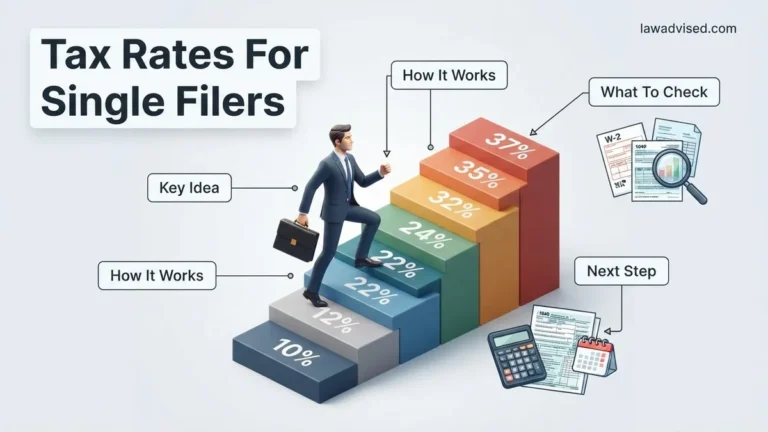
For the 2026 tax year, the federal income tax brackets for the Head of Household filing status span seven marginal rates: 10%, 12%, 22%, 24%, 32%, 35%, and 37%. Choosing this filing status gives you a significantly larger standard deduction and wider tax brackets than single filers, lowering your overall tax liability.
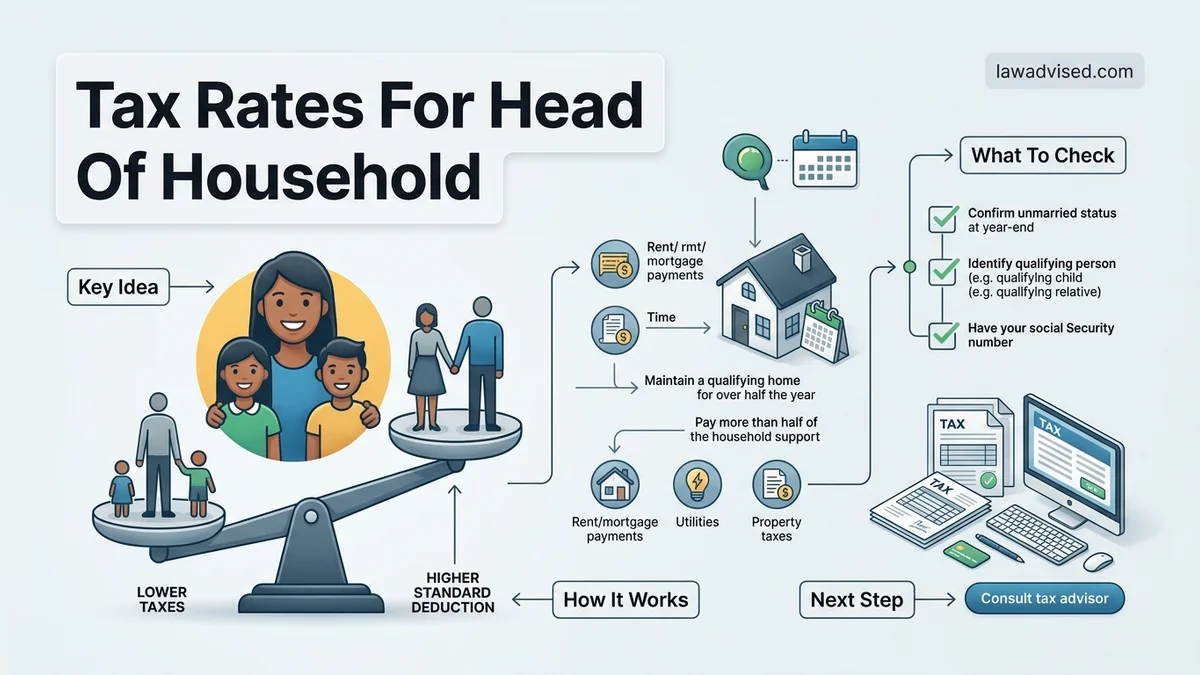
Qualifying for Head of Household requires paying more than half the cost of maintaining a home for a qualifying dependent. Using the wrong tax rates or miscalculating your brackets can trigger IRS audits, delays in your refund, or costly underpayment penalties as you file your 2026 return.
Key Takeaways
- Head of household offers significantly lower tax rates and a higher standard deduction than single filing status.
- You must pay more than half the cost of maintaining a home for a qualifying dependent.
- Tax brackets are progressive, meaning different portions of your income are taxed at different rates.
- Standard deduction amounts adjust annually for inflation to lower your taxable income.
- Qualifying widow(er)s and married individuals filing separately have different bracket structures.
What Causes Incorrect Tax Bracket Calculations for Head of Household
Misunderstanding Qualifying Dependent Rules
The most common trigger for incorrect tax bracket calculations is claiming Head of Household status with a dependent who does not meet IRS tests. You must pay more than half the upkeep costs for a qualifying person who lived with you for more than half the year. If your child or relative moved out for college or another reason without meeting strict temporary absence rules, you lose the filing status entirely.
- Failing the more-than-half-year residency test for your qualifying child.
- Claiming a dependent parent who does not live in your primary home, without meeting specific dependent parent support exceptions.
- Failing to provide more than 50% of the total household maintenance costs, such as rent, utilities, and groceries.
Overlooking Income Thresholds and Bracket Creep
Marginal tax rates apply to portions of your income, not your entire salary. Taxpayers frequently miscalculate their liabilities by applying a single flat rate to their gross income rather than stepping through the 2026 progressive brackets. Inflation adjustments for 2026 shift bracket thresholds upward, meaning failure to update your tax software or withholding tables results in misapplied rates.
- Applying marginal rates to gross income instead of taxable income after taking the 2026 standard deduction.
- Forgetting to include side-hustle or freelance income, which pushes your total earnings into a higher tax bracket.
- Miscalculating pre-tax deductions like traditional IRA contributions or 401(k) withholdings that reduce your taxable income.
How to Fix Your Filing Status and Apply the Correct 2026 Tax Rates
Correcting Errors on Your Return Before Filing
If you catch a filing status error before submitting your 2026 tax return, you must immediately recalculate your taxable income using the exact Head of Household thresholds. Start by verifying your adjusted gross income (AGI) and subtracting the correct 2026 standard deduction for your status. Re-run your numbers through the IRS tax table to ensure every dollar falls into the proper 10% to 37% marginal bracket.
- Review your Form 1040 to ensure the checking box aligns strictly with Head of Household criteria.
- Re-verify dependent Social Security numbers and relationship codes to prevent automated IRS rejections.
- Utilize IRS-approved tax preparation software that automatically applies the updated 2026 bracket limits.
Amending a Previously Submitted Return
If you already filed using the wrong status or applied incorrect tax rates, you need to file Form 1040-X, Amended U.S. Individual Income Tax Return. Wait until the IRS processes your original return before submitting your amendment. You will need to attach corrected schedules that clearly prove you qualified for Head of Household status during the 2026 tax year.
- Gather your original 2026 Form 1040, W-2s, 1099s, and documentation proving household support costs.
- Complete Form 1040-X, showing the numeric differences between your original filing and your corrected Head of Household calculation.
- Mail the paper amendment or submit it electronically if your tax software supports e-filing for amended returns.
What If It Still Doesn’t Work and You Face an IRS Audit or Rejection
Filing under the head of household status in 2026 carries strict scrutiny from the Internal Revenue Service. If your return is rejected or selected for an audit regarding your dependency claims or residency requirements, you must act methodically to protect your lower tax rates and standard deductions.
Handling an IRS Notice
Taxpayers who receive an audit notice or status rejection concerning their head of household filing status should not panic. According to IRS compliance data, roughly two percent of individual returns face examination, with head of household filings targeted at a slightly higher frequency due to complex household composition rules. Gather your primary lease agreements, school records, and utility bills immediately.
- Review the specific IRS notice or Form 886-A to identify exactly which qualification criteria—such as the half-cost-of-maintenance test or qualifying person residency—the agency is questioning.
- Compile contemporaneous records covering the entire 2026 tax year, including canceled rent checks, day-care receipts, and joint medical bills that prove financial support thresholds.
- Respond to the IRS correspondence by the specified deadline, typically 30 days from the notice date, to avoid statutory tax adjustments and automatic rate reclassifications.
- Escalate the matter to a licensed tax professional if the IRS auditor continues to deny the filing status after initial document submissions.
Seeking Professional Representation
When internal appeals fail or documentation disputes escalate, hiring a Certified Public Accountant or Enrolled Agent becomes essential. Professional representation ensures your rights are protected during formal tax disputes. According to industry fee surveys, engaging a qualified tax expert or CPA for audit defense or status reinstatement generally costs between $1,500 and $4,000, depending on the complexity of your financial records and the duration of the audit.
Conclusion
Navigating the 2026 tax rates for head of household requires strict adherence to dependency rules, maintenance cost calculations, and accurate income brackets. When filing errors or IRS rejections threaten your financial standing, systematic documentation and timely escalation resolve most discrepancies. According to verified research and expert tax sources, maintaining meticulous records throughout the tax year remains the single most effective defense against costly status reclassifications. Your immediate actionable next step is to audit your 2026 household expense logs today to ensure they definitively satisfy the IRS cost-of-maintenance threshold.
❓ Frequently Asked Questions
How do tax rates for head of household compare to single filing status?
Head of household tax brackets are wider than single brackets, meaning you can earn more money before being pushed into a higher tax bracket. Additionally, the standard deduction is considerably higher for head of household filers.
What constitutes paying more than half the cost of keeping up a home?
Costs include rent, mortgage interest, real estate taxes, insurance, repairs, utilities, and groceries consumed in the home. Personal expenses like clothing and education are excluded from this calculation.
Can I claim head of household if my dependent is a qualifying relative?
Yes, but qualifying relatives other than your children generally must live with you all year and be related to you in a specific way defined by IRS dependency rules.
What happens if my income crosses into a higher tax bracket?
Only the income that falls within the higher bracket is taxed at that higher rate, while your lower income remains taxed at the previous, lower percentages.
Are state tax rates the same as federal tax rates for head of household?
No, state income tax rates are determined entirely by your state of residence. Many states recognize head of household status, but their brackets and standard deductions vary significantly from federal rules.
How can I ensure I am withholding the correct amount from my paycheck?
You should complete a new Form W-4 with your employer, specifically checking the box for head of household and utilizing the Deductions Worksheet if you have multiple income sources.

Ismail Hossain is the founder of Law Advised. He is an Divorce, Separation, marriage lawyer. Follow him.