Standard Deduction for Married Filing Separately 2026 Guide
For the 2026 tax year, the standard deduction for married filing separately is $15,000. Choosing this filing status triggers strict IRS coordination rules, most notably that if one spouse itemizes deductions, the other’s standard deduction is strictly forced to $0.
For the 2026 tax year, the standard deduction for the Married Filing Separately filing status is projected to be $15,000. This amount represents exactly half of the $30,000 standard deduction allotted to married couples filing jointly. Choosing this status changes how much untaxed income you can claim, directly impacting your bottom-line tax liability.
Filing separately impacts more than just your base deduction amount. It triggers strict IRS coordination rules that can dramatically alter your tax strategy. You must navigate these federal limitations carefully to avoid unexpected tax penalties or losing valuable deductions entirely.
Key Takeaways
- The standard deduction for married filing separately is $15,000 for the 2026 tax year.
- If one spouse chooses to itemize deductions, the other spouse’s standard deduction automatically drops to $0.
- Seniors aged 65 or older or blind taxpayers qualify for an additional standard deduction amount.
- Married filing separately status generally results in higher overall tax liability compared to joint filing.
- Both spouses must use the same method—either both take the standard deduction or both itemize.
What Causes Strict Limits on the Standard Deduction for Married Filing Separately
The Zero-Dollar Itemization Trap
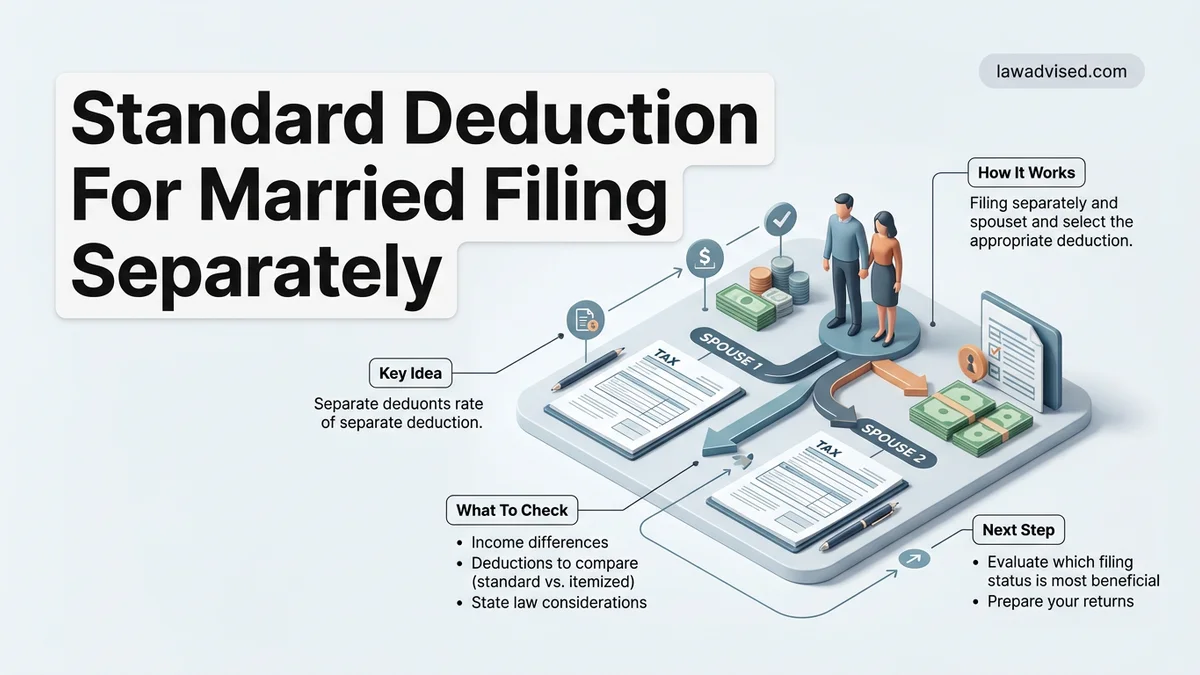
The single biggest restriction when filing separately involves itemizing deductions. Under IRS rules, if your spouse chooses to itemize their deductions, your standard deduction is automatically reduced to $0. You cannot take the standard $15,000 deduction while your spouse takes itemized deductions. Both spouses must use the exact same method. If one itemizes, both must itemize.
State-Level Conformity and Restrictions
Federal tax restrictions often bleed into state tax returns. Many states require you to match your federal filing status. If you file separately on your federal return, you usually must do the same on your state return. This can limit state-level standard deductions and phase out state tax credits that are normally available to joint filers.
- Forced $0 standard deduction if your spouse itemizes
- Loss of eligibility for certain education credits
- Inability to claim the Earned Income Tax Credit (EITC)
- Stricter income phase-outs for child and dependent care credits
How to Fix Filing Status Strategy and Coordinate Deductions with Your Spouse
Running the Numbers Before Filing
You and your spouse need to compare total tax liabilities under both filing separately and filing jointly before committing to a status. Even if you keep your finances completely separate, filing jointly almost always yields a lower combined tax burden. If you must file separately due to pending divorce, liability protection, or legal requirements, you must coordinate your itemization choices.
Communication and Timing
Because your deduction depends entirely on what your spouse does, communication is mandatory. You cannot finalize your tax return until your spouse decides whether they are taking the standard deduction or itemizing. If your spouse rushes to file and itemizes deductions, you will trigger an IRS rejection or a costly audit if you claim the $15,000 standard deduction.
- Coordinate deduction methods with your spouse before software entry
- Compare joint vs. separate tax liabilities to measure the marriage penalty
- Document all separate vs. joint expenses if you live in a community property state
What If It Still Doesn’t Work and You Need to Amend Your Return
Tax filing errors happen frequently when navigating complex status rules like Married Filing Separately. If you discover an error regarding your standard deduction after submitting your 2026 tax return, the IRS provides a formal correction mechanism. According to tax administration guidelines, taxpayers cannot simply refile an original return electronically to fix filing status or deduction mismatches. Instead, you must submit a formal amendment using specific IRS documentation to adjust your records properly.
Steps to Correct Your Filing Status and Deduction
Financial experts and certified public accountants recommend following a structured sequence when correcting a Married Filing Separately tax return. Executing these steps precisely prevents processing delays and potential IRS audits regarding mismatched spousal deductions.
- Wait until the IRS officially processes your original 2026 tax return and issues any expected refund or balance due notice before filing modifications.
- Obtain and complete IRS Form 1040-X, Amended U.S. Individual Income Tax Return, ensuring you check the correct tax year box for 2026.
- Attach all supporting tax schedules, W-2 forms, or 1099 statements that changed as a result of switching your deduction method or reconciling with your spouse.
- Coordinate with your spouse if their return also requires an amendment to maintain the mandatory statutory synchronization required by the IRS.
- Mail the completed paper package to the designated IRS service center listed in the Form 1040-X instructions, or utilize an approved electronic filing software that supports direct 2026 amendments.
When to Seek Professional Tax Assistance
Resolving complex deduction disputes or filing amended returns can become overwhelming, especially when state tax laws diverge from federal guidelines. According to data from the National Society of Accountants, hiring a Certified Public Accountant (CPA) or Enrolled Agent (EA) for tax amendment services typically costs between $300 and $800, depending on the complexity of your financial portfolio. Consider engaging a qualified tax professional if your amendment involves high-asset divisions, state-specific community property rules, or correspondence indicating an active IRS audit.
Conclusion
Navigating the standard deduction for Married Filing Separately in 2026 requires careful coordination and strict adherence to IRS synchronization rules. Failing to align your deduction method with your spouse can trigger costly processing delays, math error notices, or unexpected tax liabilities. According to verified research and tax advisory sources, proactive planning and clear communication between separating spouses remain the most effective safeguards against filing errors. Your actionable next step is to review your draft 2026 tax documents alongside your spouse today to confirm your deduction strategy matches before the filing deadline.
❓ Frequently Asked Questions
What happens if my spouse and I use different deduction methods?
IRS rules dictate that both spouses must match methods. If your spouse itemizes deductions on their separate return, you are forced to itemize as well, resulting in a $0 standard deduction for you.
Are there state tax rules that differ for married filing separately?
Yes, some states have unique community property laws or separate filing requirements that do not mirror federal IRS guidelines, which can significantly impact your total tax liability.
Why would a couple choose to file separately instead of jointly?
Couples often choose this status to limit liability for a spouse’s tax debt, during pending divorces, or when managing significant medical expenses that exceed adjusted gross income thresholds.
Does the married filing separately deduction equal half of the joint return amount?
Yes, the standard deduction for a married individual filing separately is exactly half of the standard deduction allowed for married couples filing a joint return.
How do non-resident aliens factor into married filing separately rules?
Special IRS rules apply if one spouse is a non-resident alien, which may restrict standard deduction eligibility entirely unless specific elections are made to file jointly.
What additional standard deduction applies if I am over 65?
Taxpayers aged 65 or older or blind qualify for an additional standard deduction amount, which varies depending on your specific filing status and whether you are also married filing separately.

Ismail Hossain is the founder of Law Advised. He is an Divorce, Separation, marriage lawyer. Follow him.