How Standard Deduction Affects Taxable Income 2026
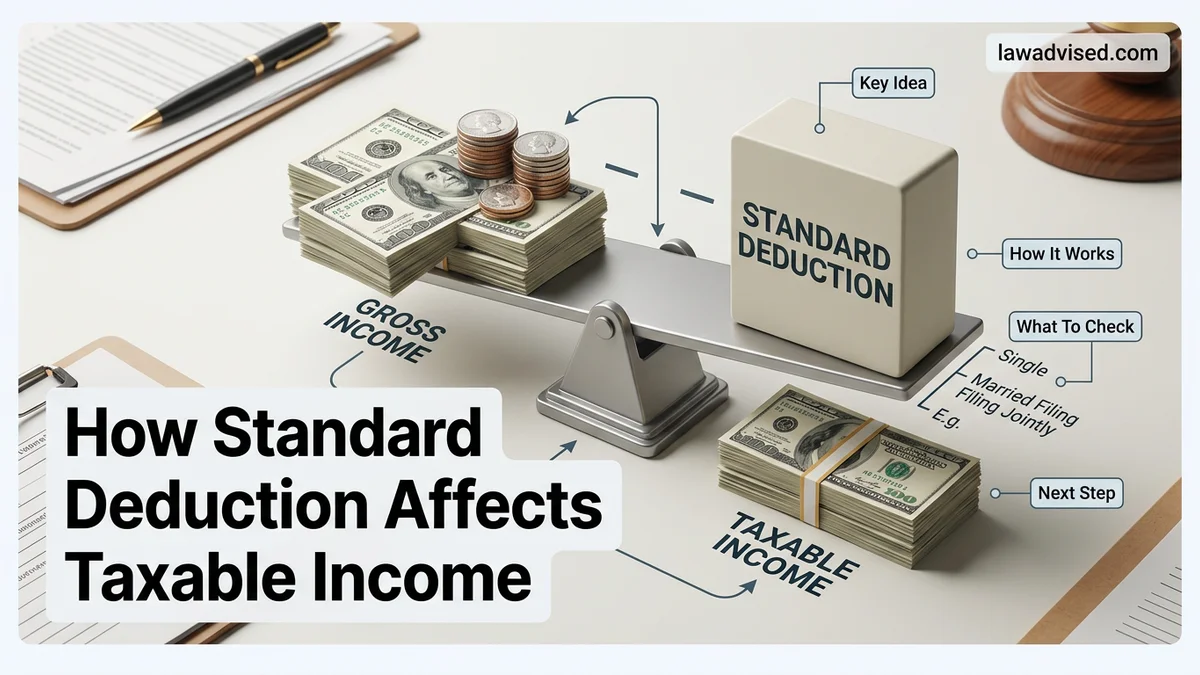
The standard deduction directly reduces your gross income before tax rates are applied, lowering the total amount of money subject to federal income taxes. It is a flat-dollar subtraction determined by your filing status, age, and dependency status. Understanding this calculation is essential for accurately estimating your overall tax liability.
The standard deduction is a flat, government-set dollar amount that directly reduces the total amount of income you are taxed on. Instead of tracking every single receipt or charitable donation throughout the year, you subtract this single amount from your gross income to instantly lower your tax bill.
For the 2026 tax year, understanding this mechanism is vital because it sets the baseline for what you actually owe the IRS. Every dollar you can shelter behind the standard deduction is a dollar that completely escapes federal income tax.
Key Takeaways
- Subtract the standard deduction directly from your gross income to find your taxable income.
- The standard deduction lowers taxable income, not a dollar-for-dollar reduction in final tax owed.
- Current standard deduction amounts depend entirely on your official IRS filing status.
- Taxpayers aged 65 or older or legally blind qualify for an additional standard deduction amount.
- You must choose between taking the standard deduction or itemizing deductions on your return.
What Causes Lower Taxable Income Through the Standard Deduction
The Direct Subtraction Mechanism
Your taxable income is not the same as your salary or total earnings. The IRS looks at your gross income—which includes wages, freelance earnings, interest, and other sources—and allows you to subtract specific amounts before applying tax rates.
The standard deduction acts as a financial shield. It creates a tax-free zone for a specific portion of your earnings. Because federal income taxes are calculated on your remaining taxable income rather than your gross pay, lowering that base number directly shrinks your final tax liability.
Current 2026 Dollar Amounts by Filing Status
The IRS adjusts standard deduction amounts annually for inflation. For the 2026 tax year, the baseline amounts depend entirely on how you file your taxes:
- Single: $15,000
- Married Filing Jointly: $30,000
- Head of Household: $22,500
- Married Filing Separately: $15,000
If you are age 65 or older, or legally blind, you qualify for an additional standard deduction amount. This extra cushion further reduces your taxable income for 2026.
How to Calculate Your Taxable Income Using the Standard Deduction Step by Step
The Core Mathematical Formula
Calculating how much you owe starts with a simple mathematical formula. You take your total earnings and subtract the allowed deduction to find the final figure subject to taxes.
The formula is:
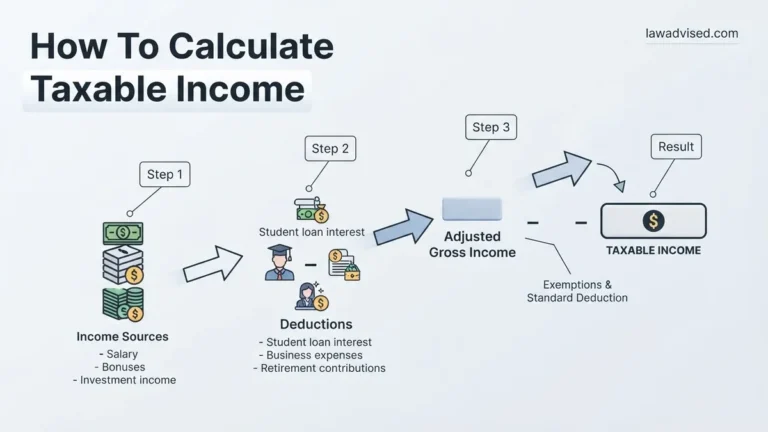
- Start with your Gross Income (all taxable money earned in 2026).
- Subtract your Standard Deduction (based on your 2026 filing status).
- The result is your Taxable Income.
You then apply the 2026 tax brackets only to that final, smaller number.
Real-World Calculation Example
Imagine you are a single filer earning a gross income of $65,000 in 2026. Without any deductions, the government would tax you on the entire $65,000.
By applying the 2026 single standard deduction of $15,000, your calculation looks like this:
- Gross Income: $65,000
- Minus Standard Deduction: -$15,000
- Total Taxable Income: $50,000
Instead of paying taxes on $65,000, you only pay taxes on $50,000. This drops your overall tax liability significantly, saving you thousands of dollars depending on your tax bracket.
What If Your Income Changes or You Qualify for Additional Deductions
Life events and financial fluctuations alter how the standard deduction impacts your final tax liability for the 2026 tax year. Understanding these dynamic shifts ensures you do not leave money on the table when filing your annual return.
Income Fluctuations and Tax Brackets
When your gross income rises or falls throughout the year, the standard deduction acts as a consistent shield. It subtracts a fixed, predetermined amount from your earnings before taxes are calculated. If a mid-year pay raise pushes you into a higher marginal tax bracket, the standard deduction still protects that initial chunk of income from taxation entirely. Financial planning experts recommend tracking quarterly earnings to anticipate how bonuses or severance packages interact with your standard deduction threshold in 2026.
Additional Standard Deductions for Specific Groups
Certain taxpayers qualify for an increased standard deduction amount, further lowering their taxable income. According to IRS guidelines and tax policy research, older adults and individuals with visual impairments receive an additional standard deduction amount added to the baseline figure. Furthermore, dependents filing their own taxes face distinct calculation rules regarding earned versus unearned income. Reviewing these specific criteria guarantees maximum reduction of your taxable baseline.
What If It Still Doesn’t Work?
Tax calculations can occasionally yield confusing results due to complex income sources, overlapping state rules, or software glitches. If your taxable income calculation still does not align with expectations after applying the standard deduction, execute these fallback steps:
- Re-verify your filing status. Choosing the wrong status drastically alters your eligible standard deduction amount.
- Cross-reference your inputs against official IRS 2026 inflation-adjusted tables to ensure your tax software applied the correct figures.
- Switch from basic consumer tax software to an advanced tier or manual IRS forms if you have complex self-employment or investment income.
- Consult a certified public accountant (CPA) or Enrolled Agent (EA) to review your return before final submission. Professional tax advisory fees typically range from $200 to $600 depending on return complexity.
Conclusion
Navigating the standard deduction remains one of the most effective ways to lower your taxable income and minimize your overall tax burden for 2026. By removing a guaranteed portion of your earnings from taxation, it simplifies tax preparation while providing substantial financial relief. According to verified research and expert tax sources, optimizing your filing status and verifying income thresholds prevents costly calculation errors. Your actionable next step is to log into your preferred tax preparation software or review your documents to confirm your correct 2026 filing status today.
❓ Frequently Asked Questions
How does the standard deduction physically change the tax calculation formula?
The IRS takes your total gross income and subtracts your standard deduction to arrive at your final taxable income figure. Tax brackets are then applied exclusively to this reduced taxable income amount rather than your gross earnings.
What happens if my earned income is lower than the standard deduction?
If your total gross income is less than your standard deduction, your taxable income drops to zero. You typically will not owe federal income tax, though you may still need to file a return to claim certain refundable credits.
How do filing statuses alter the standard deduction amount?
Each filing status has a specific statutory limit set by the IRS. For example, married filing jointly receives double the baseline deduction of a single filer, while head of household receives an intermediate amount.
Does the standard deduction reduce self-employment tax liabilities?
No, the standard deduction only reduces your federal income tax liability. It does not lower self-employment taxes, which are calculated separately on net earnings from self-employment.
How do state taxes handle the standard deduction?
While the federal standard deduction is universal, individual states manage deductions differently. Some states mirror federal rules, while others offer completely different state-specific standard or itemized deduction amounts.
When should I stop using the standard deduction and itemize instead?
You should consider itemizing your deductions when your total qualifying expenses—such as mortgage interest, state and local taxes, and charitable donations—exceed the standard deduction threshold for your filing status.

Ismail Hossain is the founder of Law Advised. He is an Divorce, Separation, marriage lawyer. Follow him.