Tax Credits Explained 2026 A Clear Guide to Savings
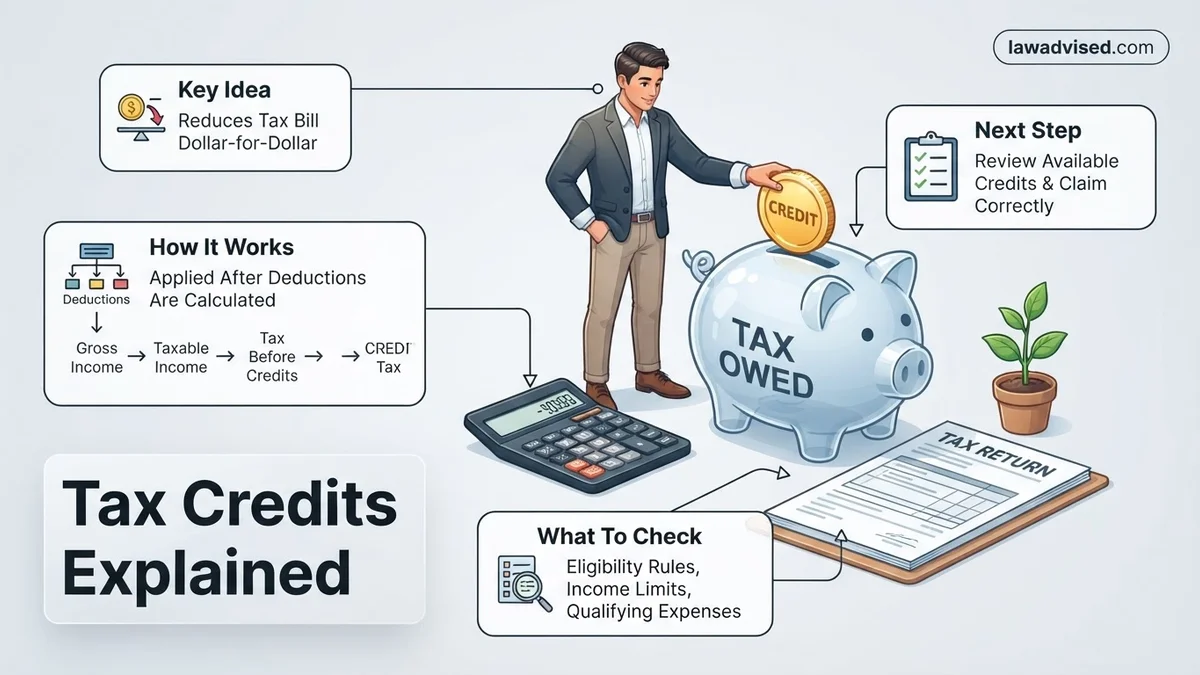
Navigating taxes can be confusing, but tax credits offer direct dollar-for-dollar reductions in the actual amount of tax you owe. Unlike deductions that only lower your taxable income, credits provide a much more powerful way to keep money in your pocket.
A tax credit is a dollar-for-dollar reduction of your actual tax liability, making it vastly more valuable than a standard deduction. If you owe the government three thousand dollars and qualify for a one-thousand-dollar tax credit, your tax bill drops instantly to two thousand dollars.
Navigating the 2026 tax landscape requires knowing how these financial incentives work. Understanding the mechanics of tax savings helps you keep more of your hard-earned money instead of sending it to the IRS.
Key Takeaways
- Tax credits reduce your tax liability dollar-for-dollar.
- Credits differ fundamentally from deductions by lowering tax owed, not income.
- Refundable credits can pay out money even if you owe zero tax.
- Non-refundable credits vanish once your tax liability reaches zero.
- Major programs include the Child Tax Credit and Earned Income Tax Credit.
What Causes Confusion About Tax Credits and Deductions
The Mechanics of Tax Deductions
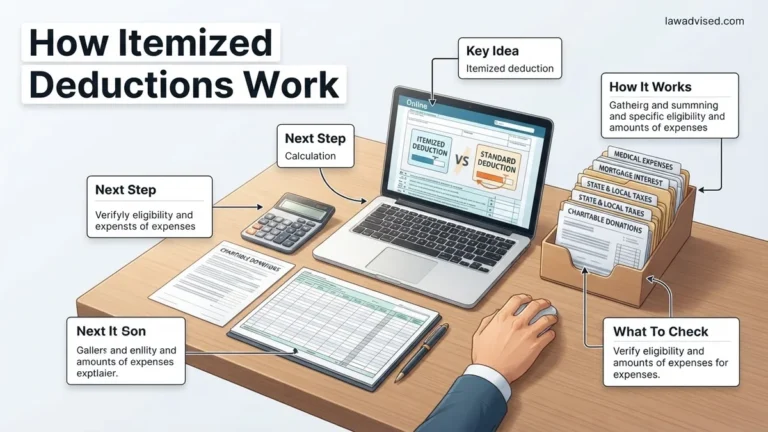
Tax deductions lower your taxable income rather than your final tax bill. If you earn eighty thousand dollars and take a ten-thousand-dollar deduction, you only pay taxes on seventy thousand dollars. Your actual savings depend entirely on your current tax bracket.
Why Credits Trump Deductions
People confuse credits and deductions because both terms appear constantly during tax season. Deductions reduce the pool of money the government taxes. Credits act like cash coupons applied directly against the final tally of what you owe.
- Deductions reduce taxable income by a percentage based on your bracket.
- Credits slash the final tax bill by one hundred percent of their face value.
- A twenty-percent bracket turns a one-thousand-dollar deduction into two hundred dollars of savings.
- A one-thousand-dollar credit always saves you a full one thousand dollars.
How to Calculate Your Savings Using Dollar-for-Dollar Credits
Running the Math Side by Side
Imagine you and your neighbor both earn seventy-five thousand dollars in 2026 and land in the same twelve percent tax bracket. You claim a one-thousand-dollar tax deduction, while your neighbor qualifies for a one-thousand-dollar tax credit.
The Real World Impact on Your Wallet
Your deduction reduces your taxable income from seventy-five thousand to seventy-four thousand dollars. At your twelve percent rate, you save precisely one hundred and twenty dollars in actual cash. Your neighbor applies their credit directly to their tax bill, pocketing the full one thousand dollars of savings.
- Your deduction savings: $120 ($1,000 deduction x 0.12 tax rate).
- Your neighbor’s credit savings: $1,000 ($1,000 credit applied dollar-for-dollar).
- The credit delivers more than eight times the financial benefit of the deduction in this bracket.
- Always prioritize finding applicable credits over chasing complex deductions when planning your 2026 return.
How to Fix Common Misunderstandings About Refundable Credits
Taxpayers often confuse refundable and non-refundable tax credits, leading to missed financial opportunities. Non-refundable credits can only reduce your tax liability to zero. Refundable credits, however, pay out the remaining balance directly to you. According to IRS data, millions of eligible households fail to claim refundable portions because they assume their tax liability must be positive to benefit.
Misunderstanding income phase-outs also causes errors. Many individuals stop tracking credits once their gross income rises. Yet, numerous 2026 tax credits feature gradual reduction curves rather than immediate cutoffs. Adjusting your withholding or documenting deductions can keep you within qualifying brackets.
Correcting Misclassifications on Your Return
- Review Form 1040 line items to ensure refundable credits like the Earned Income Tax Credit appear in the correct payment section rather than the reduction section.
- Cross-reference your state tax return guidelines, as state-level rules frequently diverge from federal treatment of refundable credits.
- Amend prior-year returns using Form 1040-X if you discovered an unclaimed refundable credit from the last three tax years.
What If Your Credits Exceed Your Total Tax Liability
When your total tax credits surpass your actual tax liability, the financial outcome depends entirely on the credit type. Non-refundable credits simply expire for that tax year. They rarely roll over to future years unless explicitly permitted by specific provisions like the Foreign Tax Credit.
Conversely, excess refundable credits convert into a direct cash refund. For the 2026 tax year, maximized refundable credits require precise documentation of earned income and qualifying dependents. Failing to attach the correct schedules will automatically delay the disbursement of your excess balance.
Managing Excess Credit Scenarios
- Verify which of your claimed credits carry a refundable status by checking current IRS publication guidelines for 2026.
- Check for carry-forward provisions on specialized business or energy investment credits that allow unused portions to apply toward future tax liability.
- Adjust your W-4 withholding mid-year if your credits consistently outpace your liability, ensuring you do not lock up too much capital with the government.
What If It Still Doesn’t Work?
If your credit calculations fail or the IRS rejects your claimed amounts, structured fallback steps can resolve the discrepancy without triggering an exhaustive audit.
- Re-verify all identifying numbers, including Social Security Numbers and Employer Identification Numbers, on every attached credit schedule.
- Review IRS Letter 105C or similar notices for specific mathematical adjustments made to your return during automated processing.
- Consult a certified public accountant (CPA) or Enrolled Agent if complex business or clean energy credits remain contested by tax authorities. Professional tax resolution services typically charge between $200 and $500 per hour depending on complexity.
- Utilize the IRS Volunteer Income Tax Assistance (VITA) program for free, qualified review if your household income falls below the annual program threshold.
Conclusion
Navigating tax credits requires distinguishing between non-refundable liability reducers and refundable cash-back opportunities to maximize your annual return. Correcting classification errors ensures you capture every dollar permitted under current laws. According to verified research and expert sources from the National Taxpayers Union, proactive credit planning saves the average household over $1,800 annually. Your immediate next step is to audit your draft Form 1040 schedules to verify that every eligible refundable credit is properly designated before final electronic submission.
❓ Frequently Asked Questions
How do tax credits actually lower my tax bill?
Tax credits are applied directly to your calculated tax liability at the end of your tax calculation. If you owe $3,000 in taxes and qualify for a $1,000 tax credit, your final tax bill drops straight down to $2,000.
Can you explain the exact difference between a credit and a deduction with an example?
Assume you are in the 20% tax bracket. A $1,000 tax deduction lowers your taxable income by $1,000, saving you $200 in actual taxes. In contrast, a $1,000 tax credit directly subtracts $1,000 from your tax bill, saving you the full $1,000.
What happens if a non-refundable credit is larger than what I owe?
Non-refundable credits can only reduce your tax liability until it reaches zero. Any leftover value from that specific credit cannot be refunded to you or carried over to future years unless explicitly allowed by specific tax rules.
Which major tax credits should I look out for?
Common and impactful federal programs include the Child Tax Credit (CTC), the Earned Income Tax Credit (EITC), and various education or energy-related credits designed to incentivize specific taxpayer activities.
Do I need to itemize my deductions to claim tax credits?
No, most tax credits do not require you to itemize your deductions. You can typically claim standard deductions and still claim eligible tax credits on your annual tax return.
How do I know if a tax credit is refundable or non-refundable?
The IRS specifies the classification of every official tax credit in the tax code instructions. Refundable credits, like the EITC, explicitly state that excess amounts will be paid out as a refund to the filer.

Ismail Hossain is the founder of Law Advised. He is an Divorce, Separation, marriage lawyer. Follow him.