What Happens If Two People Claim Same Dependent 2026 Guide
When two people file tax returns claiming the same dependent, the IRS system flags the duplicate Social Security Number and typically rejects the electronically filed return of the second filer. The agency then investigates both claims, applies strict tie-breaker rules, and can audit both parties to recover improper tax credits.
When two taxpayers accidentally or intentionally claim the same dependent on their federal tax returns, the IRS flags the duplication immediately. The first person to file electronically gets accepted, while the second person faces an instant rejection—usually with IRS Reject Code IND-507 or a similar notice. If you are the second filer, your return will not process automatically, and your expected refund will be delayed.
Resolving this conflict requires understanding how the IRS determines who actually holds the legal right to the exemption. In 2026, automated IRS systems use strict matching protocols based on Social Security numbers to catch duplicate claims. If both you and another filer have legitimate connections to the dependent, the IRS relies on specific statutory tie-breaker rules to award the tax benefits to only one party.
Key Takeaways
- E-filed returns are immediately rejected if a dependent’s SSN was already claimed.
- The IRS applies statutory tie-breaker rules based on custody, residency, and AGI.
- The person who loses the claim must file an amended return (Form 1040-X).
- Paper filing is required if your e-file is rejected due to a duplicate dependent.
- Willful fraudulent dependent claims can trigger severe IRS penalties and audits.
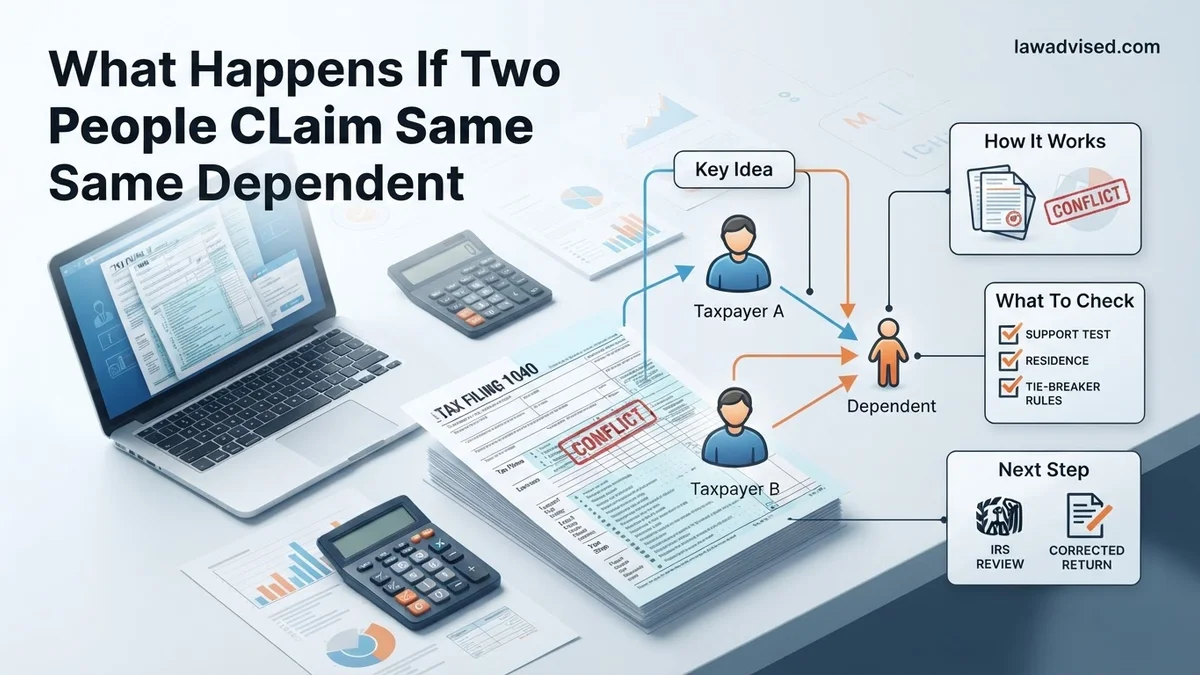
What Causes Duplicate Dependent Claims and IRS Rejections
The Mechanics of E-Filing Rejections
Modern tax software relies on the Social Security Administration database. When you submit your return, the IRS checks the dependent’s Social Security number against returns already processed or queued. If a match occurs, the electronic system blocks the second return. This automated gatekeeping means paper filers often beat e-filers if they mail their documents first, creating massive headaches for the blocked taxpayer.
Common Scenarios Leading to Duplication
Most duplicate claims stem from life changes rather than fraud. Common situations include:
- Divorced or separated parents who failed to update their Form 8332 or divorce decree terms.
- Uncommunicative co-parents who both assume they have the right to claim the child for the 2026 tax year.
- Grandparents or other relatives raising a child who file before the parents realize the error.
- Adult children or aging parents being claimed by multiple working family members.
How the IRS Applies Tie-Breaker Rules to Resolve Claims
When Parents Claim the Same Child
When both parents claim the same qualifying child and cannot agree, the IRS applies explicit tie-breaker rules to see who wins the claim. If you fall into this dispute, the IRS evaluates your situation using this exact order:
- The Parent-Child Relationship: If only one person is the child’s parent, that parent wins the claim.
- The Residency Test: If both are parents, the parent with whom the child lived for the longest time during the 2026 calendar year wins.
- Adjusted Gross Income (AGI): If the child lived with both parents for the exact same amount of time, the parent with the highest AGI wins the claim.
When Non-Parents Claim the Same Dependent
If the dispute involves a parent and a non-parent, or two non-parents, the rules shift away from custody time. The parent always beats the non-parent if the parent is eligible to claim the child. If two non-parents claim the same individual, the person with the highest AGI generally wins, provided the dependent meets all other qualifying relative criteria under current 2026 tax code standards.
How to Fix a Rejected Tax Return When a Dependent Was Already Claimed
When an electronic tax return faces rejection due to a duplicate dependent claim, immediate action is required to resolve the discrepancy with the IRS. According to tax administration guidelines, taxpayers cannot bypass the electronic filing system once a dependent’s Social Security Number has already been processed by the agency.
Step-by-Step Resolution Process
- Verify the Rejection Code: Check your tax software or IRS notification for specific rejection codes, such as IRS Error Code IND-516, which explicitly indicates that the primary taxpayer ID or dependent SSN has already been used on a previously accepted return.
- Confirm Eligibility Rules: Review the IRS tie-breaker rules for 2026 to ensure you hold the legal right to claim the dependent based on residency, relationship, and financial support thresholds.
- Paper File Your Return: If you are legally entitled to claim the dependent and the other filer refuses to amend their return, you must print and mail your complete tax return by paper. The IRS e-file system will continue to reject the electronic submission.
According to the IRS, paper-filed returns take significantly longer to process. While electronic returns typically issue refunds within 21 days, mailed paper returns can experience processing windows of six to twelve months during peak 2026 filing seasons.
What If Neither Party Backs Down and the IRS Investigates Further
If both competing taxpayers mail in their returns claiming the same dependent, the IRS initiates a formal audit process known as a duplicate dependent examination. Both parties will receive official IRS correspondence requesting documentation to substantiate their legal claim.
The IRS Audit and Investigation Procedure
- Notice Issuance: The IRS issues formal inquiry notices to both taxpayers, typically within four to six months after the conflicting paper returns enter the processing queue.
- Document Submission: Taxpayers must submit proof of residency, school records, medical bills, and financial support records demonstrating that the dependent lived with them for more than half of the 2026 tax year.
- Final Determination: The IRS applies statutory tie-breaker rules. If one party fails to provide adequate proof or lacks legal eligibility, the IRS disallows their claim, assesses back taxes, and adds applicable interest and accuracy penalties.
Tax experts note that resolving an IRS dependent audit can be an extensive administrative burden. Maintaining meticulous records throughout the calendar year remains the single most effective defense against conflicting claims.
What If It Still Doesn’t Work?
If navigating the IRS paper-filing process and subsequent audit notices becomes overly complex, or if the conflicting claim involves contentious custody disputes, alternative escalation steps are required.
- Consult a Licensed Tax Professional: Engage a Certified Public Accountant (CPA) or Enrolled Agent (EA) specializing in IRS dispute resolution. Professional representation costs generally range from $200 to $500 per hour depending on geographic market rates.
- Utilize the Low Income Taxpayer Clinic (LITC): Taxpayers meeting specific income thresholds can access free or low-cost legal assistance through federally funded LITCs to help resolve federal tax disputes.
- File Form 14039 if Identity Theft is Suspected: If the duplicate claim is not the result of a family disagreement, but rather unauthorized use of a dependent’s SSN, file an Identity Theft Affidavit immediately with the IRS.
Conclusion
Discovering that another person has claimed your dependent on a tax return creates immediate filing hurdles, but statutory IRS guidelines provide clear paths to resolution. According to verified research and tax administration data, paper filing remains the mandatory fallback when electronic rejections occur. The most critical next step is to gather definitive proof of residency and financial support to defend your legal claim against potential IRS audits.
❓ Frequently Asked Questions
What happens if both parents file separate returns claiming the same child?
The IRS will send out letters to both parties requesting documentation. If neither party amends their return, the IRS applies tie-breaker rules based primarily on physical custody during the tax year.
What are the IRS tie-breaker rules for parents who do not live together?
If parents cannot agree, the child is treated as the qualifying child of the parent with whom the child lived for the longer period during the year. If the time was equal, it goes to the parent with the higher adjusted gross income.
Can non-parents claim a tie-breaker over a parent?
Yes, under IRS rules, a parent always wins over a non-parent (like a grandparent) if both claim the child. However, if no parent claims the child, the tie-breaker goes to the person with the highest adjusted gross income.
What if an ex-spouse claims our child in violation of our custody agreement?
Family court custody agreements dictate state law and civil matters, but the IRS follows federal tax law. If the agreement grants the exemption to the noncustodial parent, that parent must attach Form 8332 to their tax return.
How long does the IRS take to resolve a duplicate dependent claim dispute?
The IRS resolution process can take anywhere from several weeks to several months. Both taxpayers will receive notices asking for proof of residency and qualification before a final determination is made.
What penalties apply if someone intentionally claims an ineligible dependent?
Filing a false claim can result in the repayment of all fraudulent credits, statutory interest, accuracy-related penalties, and a potential ban from claiming certain tax credits like the Earned Income Tax Credit for up to 10 years.

Ismail Hossain is the founder of Law Advised. He is an Divorce, Separation, marriage lawyer. Follow him.