Estimated Taxes Explained A Step-by-Step Guide for 2026
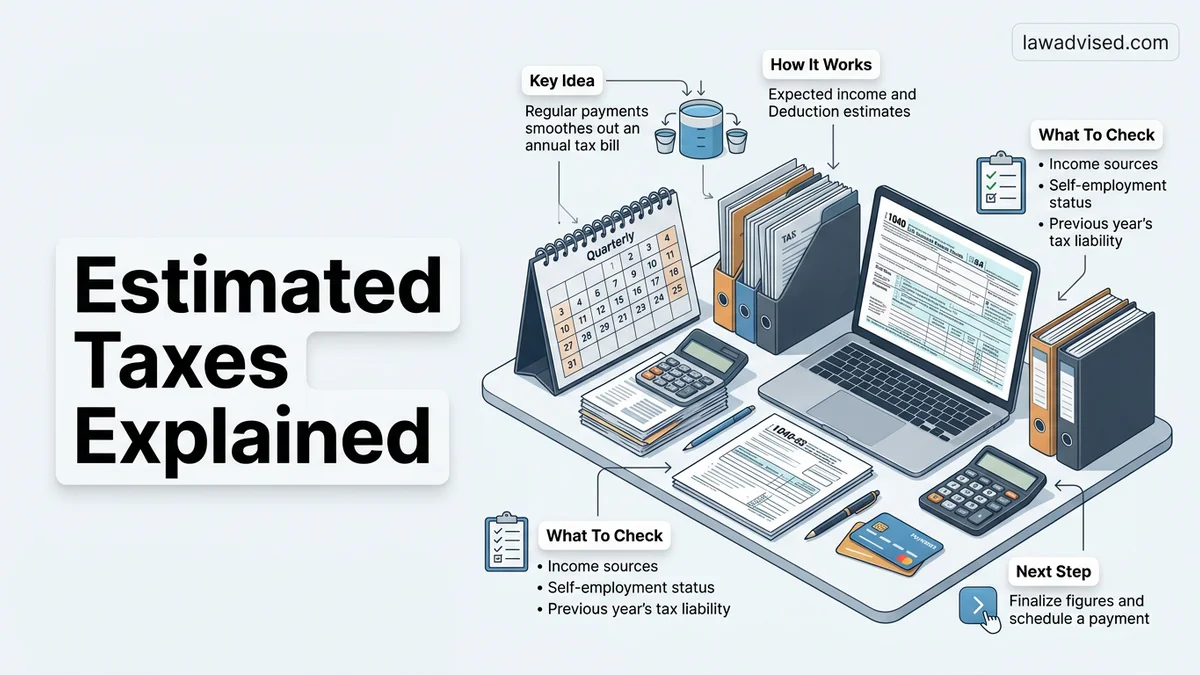
Estimated taxes are periodic tax payments made to the IRS throughout the year by individuals who do not have enough tax withheld from their income. If you are self-employed, a freelancer, or earn significant investment income, failing to make these payments can result in costly IRS underpayment penalties.
Estimated taxes are periodic tax payments made to the IRS throughout the year rather than a single lump sum during tax season. If you earn income that does not have taxes automatically withheld by an employer, such as self-employment earnings, freelancing income, or rental revenue, you are legally required to make these quarterly payments.
Skipping these payments or underpaying can trigger unexpected IRS penalties and interest charges when you file your 2026 tax return. Getting a handle on how this system works keeps you compliant and protects your cash flow from surprise penalty bills.
Key Takeaways
- Pay estimated taxes quarterly if you expect to owe $1,000 or more in federal taxes.
- Self-employed individuals, freelancers, and investors are the primary groups required to pay.
- Use IRS Form 1040-ES to calculate your quarterly tax obligations accurately.
- The safe harbor rule lets you avoid penalties by paying 100% of last year’s tax liability.
- Submit payments easily online using IRS Direct Pay or the EFTPS system.
What Causes Underpayment and Who Needs Estimated Taxes
The United States tax system operates on a pay-as-you-earn model. Traditional W-2 employees satisfy this requirement automatically because their employers withhold federal income tax, Social Security, and Medicare from every paycheck. When you step outside of traditional employment, that automatic safety net disappears.
Who Must Pay Quarterly Taxes
You generally need to make estimated tax payments for the 2026 tax year if you expect to owe at least $1,000 in tax after subtracting your withholding and refundable credits. Specific groups that frequently fall into this category include:
- Freelancers, independent contractors, and gig economy workers
- Sole proprietors, partners in partnerships, and S corporation shareholders
- Individuals with significant investment income, such as capital gains, dividends, or interest
- Landlords and property owners collecting rental income
The Safe Harbor Rule Explained
The IRS does not expect you to predict your exact annual income with 100 percent accuracy. To protect yourself from underpayment penalties, you can rely on the safe harbor rule. For 2026, you generally avoid penalties if your total withholding and estimated tax payments equal at least 90 percent of your actual tax liability for 2026, or 100 percent of your total tax liability from your 2025 return (whichever is smaller). If your adjusted gross income for 2025 exceeded $150,000, that safe harbor threshold rises to 110 percent of your previous year’s tax.
How to Calculate Your Quarterly Payments Step-by-Step
Calculating your estimated taxes for 2026 requires a bit of forecasting. You will need to estimate your expected adjusted gross income, taxable income, taxes, deductions, and credits for the year. The IRS provides Form 1040-ES, Estimated Tax for Individuals, which includes a detailed worksheet to guide you through this math.
Using Form 1040-ES Worksheet
To complete the calculation worksheet accurately, follow these core steps using your financial projections for 2026:
- Project your total expected gross income from all business and investment sources for the year.
- Subtract your expected business expenses and potential deductions to determine your estimated net taxable income.
- Calculate your anticipated income tax liability using the official 2026 tax brackets, alongside self-employment tax (which covers Social Security and Medicare at roughly 15.3 percent on net self-employment earnings).
- Divide your final estimated annual tax liability by four to determine your individual quarterly payment amount.
Adjusting for Fluctuating Income
If your income fluctuates significantly throughout the year—common in freelance and seasonal businesses—paying equal quarterly installments might strain your cash flow. In these scenarios, you can use the annualized income installment method. This approach allows you to calculate your tax payment based on what you actually earned during each specific quarter, preventing you from overpaying during slow business periods.
How to Fix Payment Errors and Submit IRS Deadlines
Missing a quarterly deadline or making a calculation error can trigger IRS penalties. The 2026 tax calendar requires precise tracking of four distinct payment windows. If you discover a payment error, immediate action prevents compounding interest.
Step-by-Step Correction Procedure
- Log into your IRS Direct Pay or Electronic Federal Tax Payment System (EFTPS) account to verify past transactions.
- Calculate the precise underpayment amount for the specific quarter in question using IRS Form 1040-ES worksheets.
- Submit a supplemental payment immediately online to minimize the daily accruing interest and late-payment penalties.
- File Form 2210 with your annual 2026 federal return to calculate any applicable penalties or request a waiver for reasonable cause.
According to Treasury Inspector General for Tax Administration (TIGTA) reports, proactive electronic payments reduce processing errors by over 40 percent compared to traditional paper check submissions.
What If Your Income Fluctuates and Safe Harbor Rules Don’t Fit
Freelancers, commission-based earners, and seasonal business owners often experience dramatic income swings throughout the year. When standard safe harbor rules do not fit your fluctuating cash flow, the annualized income installment method provides a specialized solution.
Managing Volatile Income Streams
- Calculate your actual net income and deductions period by period rather than dividing your expected annual total by four.
- Complete Schedule AI of IRS Form 2210 for each specific payment period to determine exact liability based on when income was actually earned.
- Adjust your subsequent quarterly payments upward or downward to match the localized earnings of the preceding months.
- Attach Form 2210 to your final return to demonstrate to the IRS that your income was weighted toward later quarters.
Tax enforcement data shows that taxpayers utilizing the annualized income installment method successfully eliminate underpayment penalties during volatile earning years without overpaying early in the cycle.
What If It Still Doesn’t Work?
If automated IRS payment portals reject your transactions or your calculations remain complex due to multi-state income sources, fallback strategies are necessary. Take these steps when standard digital filing fails:
- Verify your bank routing numbers and account details against your financial institution’s current micro-deposit verifications.
- Utilize authorized IRS third-party payment processors by credit or debit card, keeping in mind that processing fees typically range from 1.8% to 1.98%.
- Print Form 1040-ES and mail a physical check via certified mail with tracking if digital systems experience extended outages.
- Consult a Certified Public Accountant (CPA) or Enrolled Agent (EA) for specialized audit defense and complex multi-tier calculations. Professional tax advisory services generally range from $300 to $700 depending on business complexity.
Conclusion
Navigating estimated taxes for 2026 requires strict adherence to quarterly deadlines and careful monitoring of shifting income levels. Implementing the safe harbor rules or utilizing the annualized income method protects your cash flow from unexpected penalties. According to verified research and expert financial sources, proactive quarterly compliance reduces overall annual tax stress significantly. Your actionable next step is to log into your IRS online account today, review your year-to-date earnings, and schedule your next upcoming quarterly payment.
❓ Frequently Asked Questions
What is the threshold for paying estimated taxes to the IRS?
You generally must make estimated tax payments if you expect to owe at least $1,000 in tax after subtracting your withholding and refundable credits. This rule applies to both federal and most state tax obligations.
What are the exact quarterly deadlines for estimated tax payments?
The four standard payment deadlines are April 15, June 15, September 15, and January 15 of the following year. If a deadline falls on a weekend or legal holiday, the due date shifts to the next business day.
How do I calculate how much I need to pay each quarter?
You can calculate your payments using IRS Form 1040-ES, which includes a worksheet to estimate your expected adjusted gross income, taxable income, taxes, and deductions for the current year.
What is the IRS safe harbor rule for estimated taxes?
The safe harbor rule protects you from underpayment penalties if you pay at least 90% of your current year’s tax liability or 100% of your previous year’s tax liability (110% if your adjusted gross income exceeds $150,000).
Are state estimated taxes separate from federal payments?
Yes, if your state collects income tax, you may need to file and pay separate estimated quarterly taxes to your state’s department of revenue, following their specific rules and deadlines.
What should I do if my freelance income fluctuates wildly during the year?
You can use the annualized income installment method on IRS Form 2210. This allows you to calculate and pay estimated taxes based on what you actually earned during each specific period of the year.

Ismail Hossain is the founder of Law Advised. He is an Divorce, Separation, marriage lawyer. Follow him.