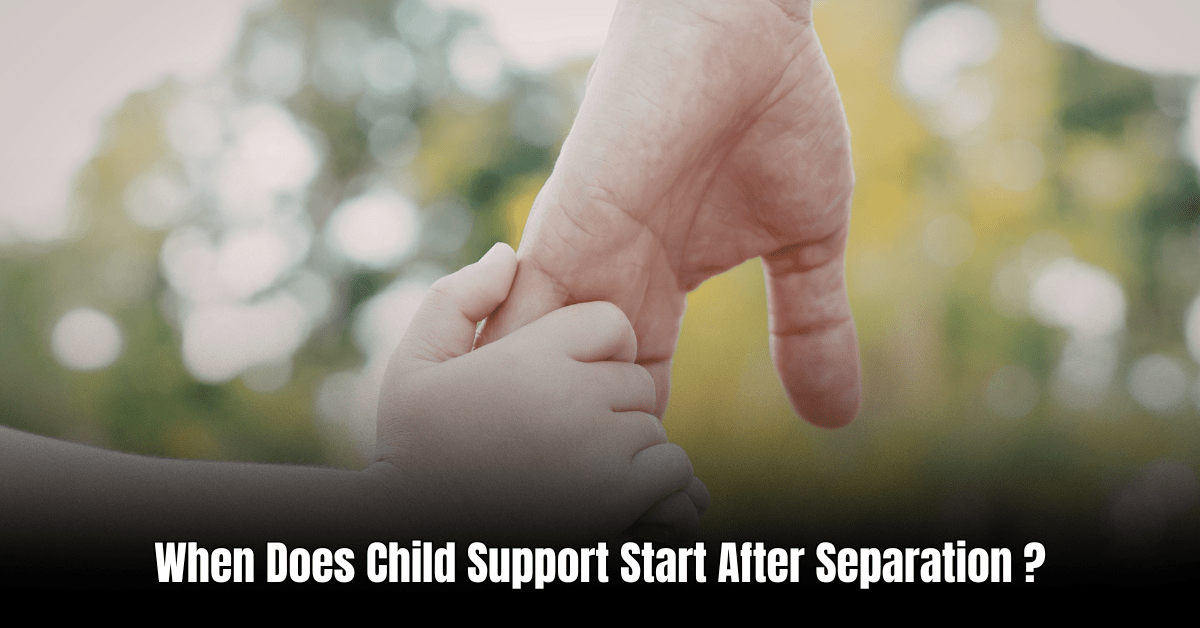
When Does Child Support Start After Separation : Answers & Timelines
Child support typically starts after separation, either when a parent files for it or a court order is issued.
Child Support Laws And Guidelines
Understanding child support laws is crucial for both parents involved in a separation or divorce. Knowing when child support starts and the guidelines for calculating payments can help ensure that children receive the financial support they need.
Child support guidelines vary from state to state, but they generally consider several factors in determining the amount of support to be paid. These factors include the income of both parents, the number of children, and the custody arrangement. Some jurisdictions also consider the healthcare and educational expenses of the child.
Understanding child support laws is important for both the custodial and noncustodial parent. The custodial parent relies on child support payments to cover the child’s day-to-day expenses, such as food, clothing, and shelter. The noncustodial parent needs to know their financial obligations and rights to ensure that child support payments are fair and sustainable.
By familiarizing themselves with child support laws and guidelines, parents can navigate the separation process more effectively and ensure the well-being of their children.
Child Support Timeline
After the initial separation, the legal processes for child support begin. This includes filing for separation or divorce. Once this is done, the next step is to establish temporary child support arrangements. These arrangements are crucial to ensure the financial well-being of the child during the separation period.
To determine child support payments, both parties need to gather financial documentation. This includes providing details of income and expenses. It is important to understand the child support formulas that are used to calculate the appropriate amount to be paid.
Once all the necessary information is gathered, the court will issue a court order for child support. It is essential to comply with this order to ensure the financial support of the child. Any agreements reached outside of court should be finalized by legal means to ensure their enforceability.
Non-payment or non-compliance with child support orders can have serious consequences. This can include fines, wage garnishment, or even imprisonment. Both parents need to understand their rights and responsibilities regarding child support.
Changes In Child Support Obligations
Child support obligations can undergo modifications in various circumstances. One significant factor that can lead to changes is a change in financial circumstances. If either parent experiences a significant increase or decrease in income, it can impact child support payments. Another factor that can trigger modifications is a change in custody or visitation arrangements. If the custodial parent’s living situation alters or if there are changes in visitation rights, child support may need to be adjusted accordingly. Additionally, termination of child support obligations can occur when the child reaches the age of emancipation or other circumstances deemed appropriate by the court. It is important to note that each jurisdiction may have its own rules regarding the emancipation age.
When it comes to modifications in child support arrangements, it is advisable to consult with a family law attorney who can guide you through the legal process. Attorneys can assist in evaluating the applicable laws and presenting the relevant evidence to support a modification request. By understanding the circumstances and requirements for modification, parents can ensure that child support obligations are appropriately adjusted.
| Subheading | Description |
|---|---|
| Change in financial circumstances | A significant increase or decrease in income can lead to adjustments in child support payments. |
| Change in custody or visitation arrangements.. | Altered living situations or changes in visitation rights may require modifications in child support. |
| Termination of child support obligations | Child support may cease upon the child reaching the age of emancipation or other relevant circumstances. |
| Age of emancipation | The age at which a child is legally considered emancipated can vary by jurisdiction. |
| Other circumstances for termination | There may be additional circumstances where child support obligations can be terminated as deemed appropriate by the court. |
Frequently Asked Questions: When Does Child Support Start After Separation
When Does Child Support Start After Separation?
Child support typically starts after the separation when the legal process is completed and a court order is issued.
Conclusion
Child support can be a complex and sensitive issue after separation. Understanding when child support starts is crucial for both parents involved. By following the guidelines and regulations set by the legal system, parents can ensure they receive or provide the necessary financial support for their children.
It is important to consult with a lawyer or seek professional advice to navigate the child support process effectively.

Ismail Hossain is the founder of Law Advised. He is an Divorce, Separation, marriage lawyer. Follow him.