Landlord Laws in Arkansas 2027 Expert Step-by-Step Guide
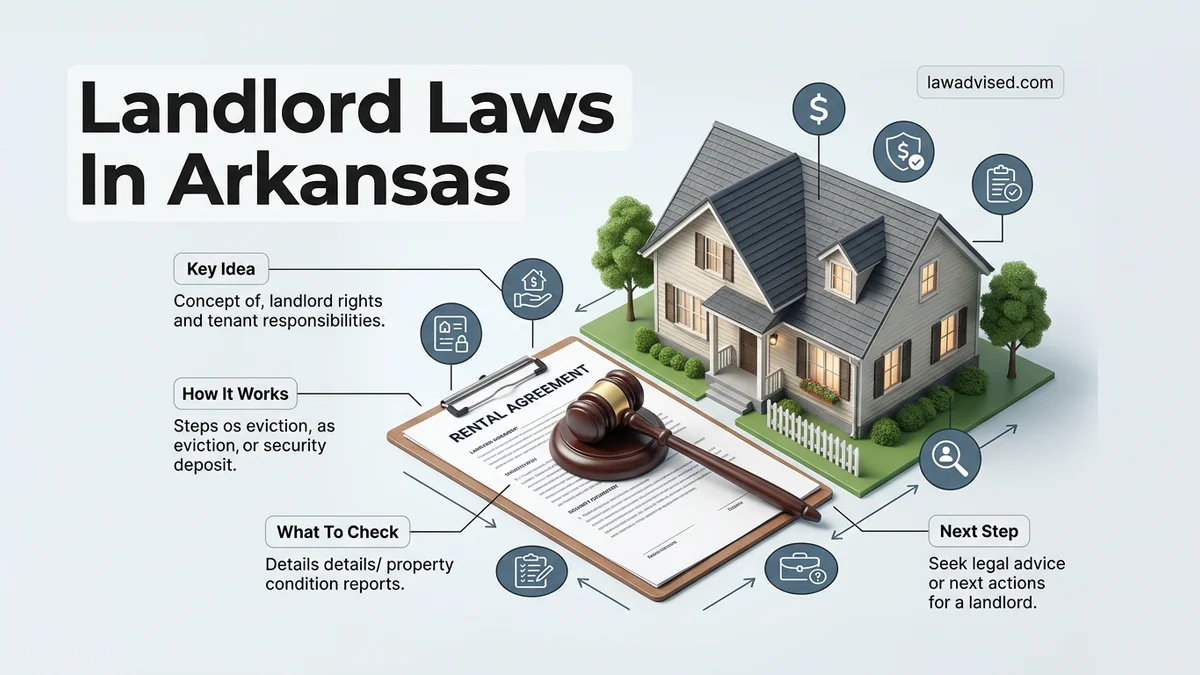
Navigating landlord laws in Arkansas requires strict adherence to state-specific rules regarding evictions, security deposits, and property maintenance. Arkansas is unique for having a criminal eviction statute and lacking an implied warranty of habitability for standard residential rentals. Landlords and tenants must understand these distinct legal boundaries to avoid costly mistakes.
Arkansas stands alone as the only state in the U.S. that classifies a tenant’s failure to pay rent as a criminal offense, making compliance with local statutes uniquely critical for landlords operating in 2027. Navigating the legal landscape here requires mastering specific notice periods, strict security deposit timelines, and the precise boundaries of criminal eviction procedures to avoid costly liability.
Whether you manage a single rental home or a growing portfolio, knowing the precise intersection of civil lease terms and state statutes protects your investment. Failing to follow Arkansas landlord-tenant laws can quickly turn a routine tenancy issue into an expensive legal battle or procedural misstep.
Key Takeaways
- Arkansas landlords must return security deposits within 60 days of lease termination.
- Failure to pay rent allows landlords to issue a 10-day notice to quit.
- Arkansas features a unique criminal eviction statute under ACA 5-39-201.
- State law does not recognize an implied warranty of habitability for tenants.
- Self-help evictions like turning off utilities are strictly illegal in Arkansas.
What Causes Legal Disputes in Arkansas Landlord-Tenant Relationships
Nonpayment of Rent and Lease Violations
The vast majority of landlord-tenant disputes in Arkansas stem from missed rent payments and unresolved lease infractions. Unlike standard civil eviction processes found elsewhere, Arkansas law relies heavily on statutory notices that trigger strict legal timelines.
- Failure to Pay Rent: Under standard leases, landlords must issue a formal notice when rent is late, though the state’s unique criminal framework changes how you handle delinquent accounts.
- Lease Breaches: Unauthorized pets, property damage, or unauthorized occupants require clear written notice outlining the specific lease violation and a reasonable cure period.
- The Notice Dilemma: Arkansas law historically lacks a mandatory statutory cure period for standard month-to-month nonpayment other than the immediate notice required for criminal eviction filings.
The Criminal Eviction Statute Overview
Arkansas Code Annotated Section 5-39-201 governs the state’s notorious criminal eviction statute, which often surprises out-of-state landlords and tenants alike. This law treats intentional holdover after notice as a criminal misdemeanor rather than a purely civil matter.
- Statute Mechanics: If a tenant fails to vacate after receiving proper notice to quit, they may face criminal trespassing charges.
- Strict Requirements: You must issue a rigorous 10-day notice to quit for failure to pay rent before involving local law enforcement or the courts under this statute.
- Prohibited Actions: Self-help evictions—such as shutting off utilities or changing locks without a court order—remain strictly illegal, even under Arkansas’s unique statutory framework.
How to Fix Security Deposit and Eviction Compliance Issues
Security Deposit Regulations and Deadlines
Managing security deposits incorrectly is a fast track to financial penalties under Arkansas law. In 2027, statutory caps and strict return timelines govern every single residential lease agreement across the state.
- Deposit Limit: Arkansas law caps residential security deposits at a maximum of two months’ rent for properties that are not exempt.
- The 60-Day Return Rule: You must return the security deposit, along with a full itemized list of deductions, within 60 days after the tenancy terminates.
- Itemization Requirements: Every single deduction for property damage or unpaid rent must be explicitly detailed in writing, or you risk owing the tenant double the withheld amount plus court costs.
Step-by-Step Eviction Compliance
Executing an eviction in Arkansas demands absolute adherence to statutory procedures to avoid civil rights lawsuits or dismissed cases. Follow this practical framework to keep your operations fully compliant:
- Document the Breach: Gather explicit proof of the nonpayment or lease violation, including bank records and written communications.
- Serve Proper Notice: Deliver the 10-day notice to quit via certified mail or hand delivery in accordance with state guidelines.
- File the Action: If the tenant fails to vacate or cure the issue, proceed immediately through the appropriate local court or invoke the correct statutory procedures.
How to Execute Proper Notice Periods and Lease Terminations
Navigating lease terminations and notice periods in Arkansas requires strict adherence to state statutes, particularly because Arkansas law historically favors landlords in specific dispute mechanisms. Understanding the precise timelines for 2027 is critical to avoiding wrongful eviction claims or unlawful holdover penalties.
Month-to-Month Tenancy Terminations
For standard month-to-month rental agreements without a fixed end date, Arkansas Code Annotated Section 18-17-701 dictates specific notification rules. Either party must provide written notice at least 30 days prior to the next rental due date to successfully terminate the occupancy.
Fixed-Term Lease Expirations
Fixed-term leases automatically expire on the designated end date written in the contract. Unless the lease agreement specifically outlines an automatic renewal clause, no additional notice is legally required by Arkansas statute for a standard move-out upon expiration.
- Review the original lease document to confirm the exact termination date or renewal provisions.
- Draft a formal written notice of non-renewal or termination clearly stating the intended final date of occupancy.
- Deliver the notice via certified mail with a return receipt requested, or hand-deliver it with a signed acknowledgment from the tenant.
- Document the delivery date meticulously to ensure compliance with the mandatory 30-day pre-expiration window.
What If Rental Disputes and Habitability Conflicts Still Persist
When informal negotiations stall and habitability disputes remain unresolved, landlords and tenants must pivot to formal administrative or legal remedies. Arkansas remains unique because it is the only state with a criminal eviction statute (failure to vacate), making precision in resolving conflicts paramount for both parties.
Escalation Protocols for Unresolved Conflicts
If direct communication breaks down over repairs or unpaid balances, utilizing third-party intervention helps prevent costly litigation. Document every interaction, payment receipt, and written notice regarding the contested property.
- File a formal complaint with the Arkansas Attorney General’s Consumer Protection Division if unfair trade practices or severe habitability violations occur.
- Consult with a licensed real estate attorney specializing in Arkansas landlord-tenant law to review lease compliance and statutory rights.
- Initiate formal court proceedings in the local district or circuit court depending on the financial damages or eviction relief sought.
- Participate in court-mandated mediation sessions if the local jurisdiction offers alternative dispute resolution programs for housing cases.
What If It Still Doesn’t Work?
If standard legal notices and initial dispute resolution attempts fail to resolve Arkansas rental conflicts, more aggressive interventions are necessary. Property owners and renters facing persistent gridlock should consider these fallback steps:
- Hire a specialized real estate attorney: Retain legal counsel to issue formal demand letters or file formal forcible entry and detainer actions. Estimated legal fees range from $1,500 to $3,500 depending on court appearances and contested hearings.
- Engage a licensed property management firm: Transition operations to professional managers who possess deep familiarity with 2027 Arkansas statutory updates and local court procedures. Management fees typically cost 8% to 12% of the monthly collected rent.
- Utilize professional mediation services: Retain a certified mediator to broker a voluntary move-out agreement or payment plan, bypassing lengthy court dockets. Mediation sessions generally cost between $300 and $800 split between the parties.
- File through small claims court: For financial disputes under $5,000, file a pro se claim to recover unpaid rent or withheld security deposits without extensive legal overhead. Filing fees average $50 to $100 plus service costs.
Conclusion
Mastering landlord laws in Arkansas for 2027 requires meticulous attention to statutory notice periods, strict adherence to lease terms, and prompt handling of habitability disputes. Failing to follow precise state frameworks exposes both parties to severe legal and financial liabilities. According to verified research and expert legal sources, proactive documentation and early mediation remain the most effective defenses against prolonged housing litigation. Review your specific lease agreement today and consult with a qualified legal professional to ensure full compliance with current Arkansas housing statutes.
❓ Frequently Asked Questions
What makes Arkansas eviction laws unique compared to other states?
Arkansas is famously the only state that allows a criminal eviction process under statute ACA 5-39-201, where intentional failure to vacate after notice can result in misdemeanor criminal charges for the tenant.
What are the rules for entering a tenant’s rental unit in Arkansas?
Unlike many states, Arkansas law does not specify a required advance notice period for landlord entry, though lease agreements commonly outline a 24- to 48-hour courtesy notice.
What must be included in an itemized security deposit deduction statement?
The statement must detail the exact charges for damages beyond normal wear and tear along with the remaining balance of the deposit, delivered within the 60-day window.
Can an Arkansas landlord raise the rent during a fixed-term lease?
No, a landlord cannot increase the rent or change lease terms during an active fixed-term lease unless the agreement explicitly allows for it.
What happens if an Arkansas landlord fails to return the security deposit in 60 days?
If the landlord wrongfully withholds the deposit past the 60-day limit, the tenant may sue to recover actual damages and potential financial penalties.
Are oral lease agreements legally binding in Arkansas?
Yes, oral lease agreements are legally valid in Arkansas for terms of one year or less, though written leases are strongly recommended to clearly establish rights and responsibilities.

Ismail Hossain is the founder of Law Advised. He is an Divorce, Separation, marriage lawyer. Follow him.