Dumbest Laws in Arkansas Real Bizarre Rules Guide 2027
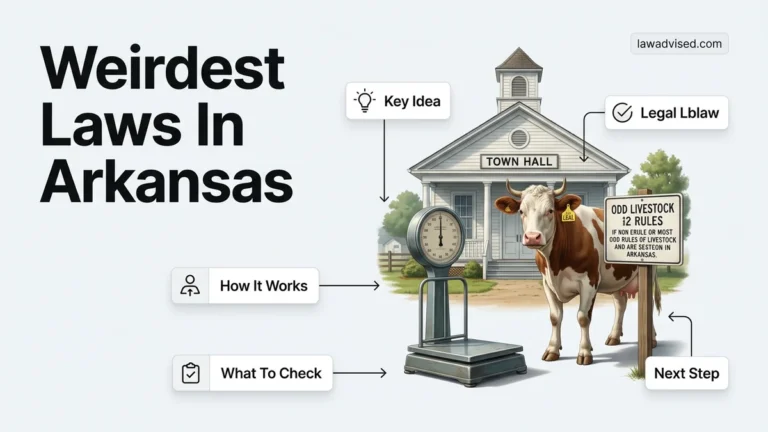
Many states have strange old statutes, but Arkansas features some of the most hilarious and bizarre legal oddities in the country. This guide explores the real history and truth behind these famous and seemingly ridiculous laws.
Arkansas is home to some of the most bizarre, baffling, and downright hilarious legal statutes in the United States. As we navigate 2027, internet forums and viral social media lists still love to mock the Natural State for rules about whispering in church or handling livestock. But where do these strange regulations actually come from?
Understanding the reality behind these quirky ordinances matters because it separates harmless urban legends from actual legal traps. If you plan to visit, move around, or just understand Arkansas heritage, sorting through the legal fiction will save you from believing you can get arrested for mispronouncing the state’s name.
Key Takeaways
- Discover the actual origins of weird Arkansas legal myths.
- Learn which bizarre rules are entirely fictional creations.
- Understand why obsolete language remains on the books.
- Explore historical context for strange regional ordinances.
- Separate internet urban legends from real state statutes.
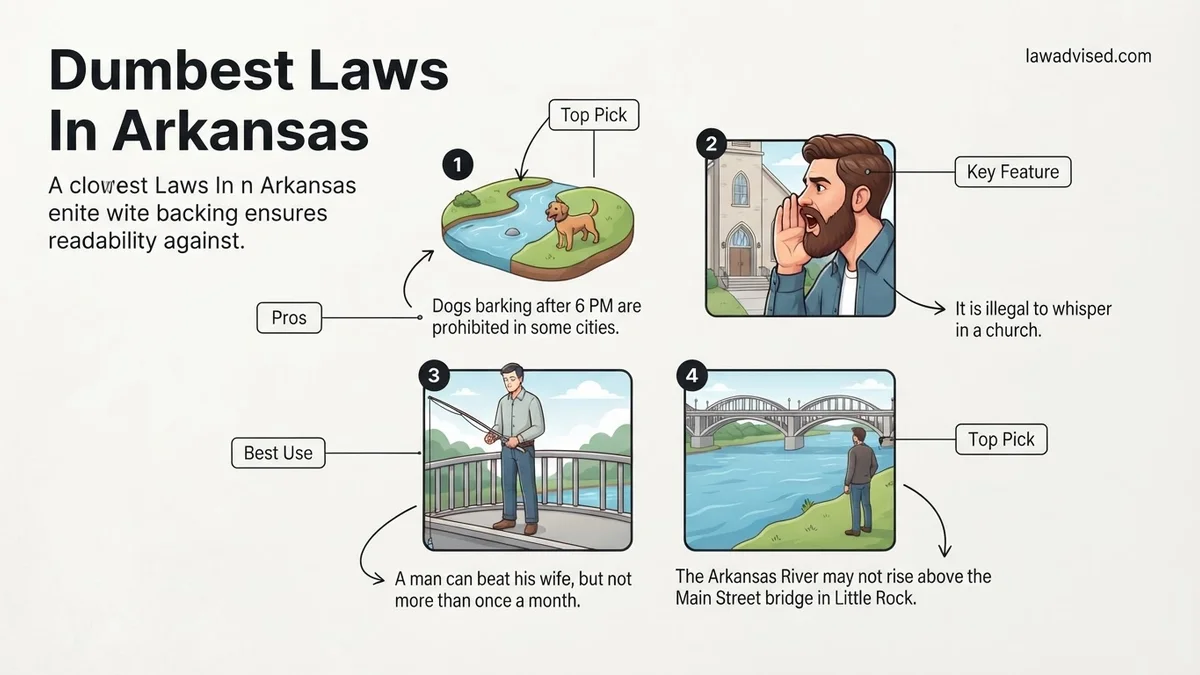
What Causes the Myth of Dumbest Laws in Arkansas
Most of the bizarre rules you read online about Arkansas stem from two main sources: misunderstood local ordinances and outdated historical relics. When towns draft hyper-specific rules to solve a temporary problem from a century ago, those rules often stay on the books forever.
The Problem With Misinterpreted Municipal Ordinances
Many viral laws are actually just old city codes taken wildly out of context. Legislators and city councils in places like Little Rock or Fort Smith sometimes passed weird restrictions to target very specific nuisances of the era.
- Local councils often targeted specific public annoyances, like loud livestock or dangerous driving, using oddly specific phrasing.
- Over decades, the original context vanishes, leaving behind a weird sentence that sounds ridiculous to modern residents in 2027.
- Internet listicles exaggerate these city codes, making them sound like statewide felonies when they were barely enforceable parking fines.
Old Legal Language That Refuses to Die
Another major driver of these myths is the sheer volume of unrepealed text resting inside state archives. Lawmakers rarely spend time hunting down and erasing obsolete laws unless those laws actively interfere with daily life.
- The Arkansas General Assembly focuses its energy on modern economic and infrastructure bills rather than deleting dead laws.
- Outdated moral codes from the Victorian era remain untouched because everyone already knows they hold zero legal weight today.
- Publishers and media outlets capitalize on these ghost laws to drive clicks and laughs every year.
How to Fix Misconceptions About Bizarre State Statutes
Clearing up the confusion requires looking past the sensational headlines. When you examine how the American legal system actually operates, you realize that half of these viral Arkansas laws were never even real in the first place.
Separating Urban Legends From Real Statutes
If a law sounds too absurd to be true, it is usually a complete fabrication invented by early internet bloggers. You need a reliable framework for checking whether an Arkansas law actually exists.
- Always check the official Arkansas Code Annotated rather than trusting a random meme on social media.
- Look for actual statutory numbers and enforcement clauses, which fake laws always seem to lack.
- Remember that no prosecutor in 2027 is going to waste court time on a century-old prank ordinance.
Understanding Enforceability and Preemption
Even if an odd law somehow remains technically printed on a municipal website, that does not mean you can be prosecuted. Modern constitutional law and higher court rulings routinely override old local rules.
- State laws generally override conflicting local city ordinances under the principle of preemption.
- Constitutional protections regarding personal freedom make many old moral restrictions entirely unconstitutional today.
- Law enforcement officers use common sense and current departmental priorities, not obsolete joke statutes, to keep communities safe.
Step-by-Step Guide to Verifying Real Arkansas Legislation
Navigating historical statutes and modern codes in Arkansas requires a systematic legal research approach. When analyzing bizarre mandates or urban legends heading into 2027, researchers must rely on primary sources rather than internet folklore.
Consulting the Official Code
The Arkansas Code Annotated serves as the definitive repository for state laws. Legal scholars and curious citizens alike should bypass secondary summaries to examine the actual text passed by the General Assembly.
- Navigate to the official Arkansas Legislature or LexisNexis public access portal for state statutes.
- Locate the specific title and chapter governing the subject matter, such as municipal ordinances or wildlife regulations.
- Examine the history notes appended to the statute to determine its original enactment date and subsequent amendments.
- Cross-reference the statute with current Attorney General opinions to see if enforcement has been legally restricted or superseded by federal rulings.
Evaluating Municipal Code Variations
Statewide laws often tell only half the story regarding peculiar local restrictions. Individual cities across Arkansas maintain their own ordinances that may produce unusual legal scenarios.
- Identify the specific municipality or county where the ordinance supposedly applies.
- Access the city’s digital code hosting service, such as Municode or Code Publishing, updated through 2027.
- Search the local code using targeted keywords related to the restriction in question.
- Verify whether the local ordinance conflicts with preemptive state statutes or constitutional protections.
What If It Still Doesn’t Work?
When standard legal research methods fail to clarify whether an unusual statute remains active or enforceable, users must employ advanced troubleshooting steps. Here are reliable fallback options to resolve persistent legislative ambiguities:
- Contact the Arkansas State Library‘s reference desk for assistance in tracing historical legislative intent and repealed acts.
- Submit a formal inquiry to the Arkansas Attorney General’s office regarding the constitutionality or active enforcement status of a specific antiquated law.
- Consult with a licensed local attorney specializing in municipal law or civil rights to interpret complex jurisdictional overlaps. Professional legal consultations for statutory interpretation typically range from $150 to $350 per hour depending on the firm.
- Review the Arkansas Code Revisor’s reports for recent legislative sessions to check if the specific statute was targeted for elimination during routine code cleanup bills.
Conclusion
Distinguishing between genuine historical statutes and widespread internet myths in Arkansas prevents the spread of legal misinformation. According to verified research and legal scholars from the University of Arkansas School of Law, many seemingly absurd rules are either misconstrued municipal ordinances, long-repealed relics, or total fabrication. The most reliable path forward is to verify questionable mandates directly through the Arkansas Code Annotated. Review the official state legislative database today to confirm the exact legal status of any statute before repeating unverified claims.
❓ Frequently Asked Questions
Why do states like Arkansas still have weird laws on the books?
Legislatures rarely prioritize cleaning up obsolete or superseded language because it requires passing formal repeal bills for laws that already hold zero legal weight.
How can you tell if a viral law on social media is real?
Always check official state code databases or consult legal historians rather than relying on unsourced internet listicles and memes.
Did Arkansas really outlaw the mispronunciation of its name?
Yes, a 1881 legislative resolution officially declared that the state should be pronounced ‘Ar-kan-saw’, though it was never a criminal offense.
Are local ordinances different from state laws?
Yes, city councils often pass hyper-specific municipal codes that target local nuisances, which sometimes turn into bizarre historical anomalies.
Do police officers enforce these silly old rules?
No modern law enforcement agency actively targets citizens for violating obsolete or nonsensical historical statutes.
What is the most famous fake Arkansas law?
The alleged law allowing a man to beat his wife once a month on the courthouse steps is completely fictitious.

Ismail Hossain is the founder of Law Advised. He is an Divorce, Separation, marriage lawyer. Follow him.