Alcohol Laws in Arkansas 2027 Expert Guide to Rules & Hours
Navigating alcohol laws in Arkansas requires understanding a patchwork of county regulations, specific retail purchase hours, and strict state consumption limits. Local ordinances dictate whether you can buy alcoholic beverages, making it essential to check municipal rules before purchasing.
Arkansas enforces a complex framework of alcohol regulations governed heavily by a county-by-county local option system. Navigating purchase hours, dry jurisdictions, and possession limits requires careful preparation because rules change drastically once you cross municipal or county lines.
Whether you are planning a weekend trip or settling into a new home in the state, understanding these 2027 statutory requirements prevents legal trouble. Knowing where and when you can legally purchase and consume alcoholic beverages ensures a smooth experience across the Natural State.
Key Takeaways
- Arkansas has a mix of wet and dry counties determining alcohol sales.
- The legal drinking age is strictly 21 across the entire state.
- Retail purchase hours vary significantly by municipality and day of the week.
- Open container laws prohibit open alcohol in the passenger areas of vehicles.
- Home brewing is permitted for personal use within specific gallon limits.
What Causes Confusion With Alcohol Laws in Arkansas
The Legacy of Local Option Laws
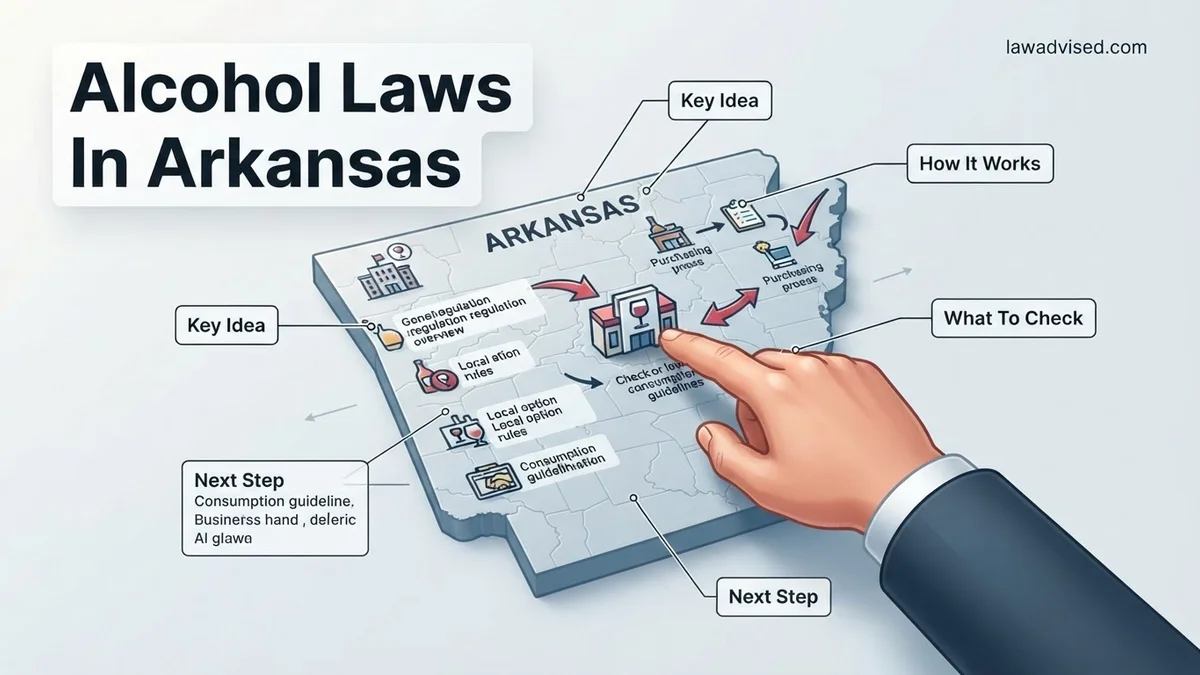
The primary source of confusion for residents and visitors stems from the state constitution’s allowance of local option elections. Voters in individual counties and townships decide whether the area permits alcohol sales. While the state sets baseline parameters, local municipalities hold the ultimate authority to authorize or ban commercial transactions entirely.
Complex Classification Tiers
Arkansas does not use a simple binary system for alcohol legality. Jurisdictions can fall into several distinct regulatory categories that dictate your purchasing options:
- Dry counties: Absolutely no retail package sales of alcoholic beverages are permitted.
- Wet counties: Both package stores and on-premise consumption venues operate legally under standard state schedules.
- Limited wet jurisdictions: Areas that allow private clubs, restaurants, or specific percentages of alcohol by volume while banning traditional retail liquor stores.
How to Navigate Wet and Dry Counties and Sales Hours
Checking County Status Before You Travel
You cannot assume that a neighboring town or county shares the same alcohol availability as your current location. Even within wet counties, specific dry townships exist. Always verify the local municipal status before planning a purchase:
- Consult the Arkansas Beverage Control (ABC) administration directory for updated municipal classifications.
- Look for local signage near city limits indicating dry territory rules.
- Remember that possessing alcohol in a dry county for personal consumption is generally legal, but transporting large commercial quantities or selling it illegally carries severe penalties.
Standard Retail and On-Premise Sales Hours
When you are in a wet jurisdiction, state law dictates the windows during which licensed package stores, grocery stores, and restaurants can operate. The 2027 statutory guidelines regulate commerce according to strict schedules:
- Package stores: Generally permitted to operate Monday through Saturday, typically between 7:00 AM and 11:00 PM.
- Sunday sales: Prohibited statewide by default, though local option elections allow individual cities or counties to authorize Sunday retail and restaurant sales starting at 10:00 AM.
- Bars and restaurants: On-premise consumption hours usually run until 2:00 AM, depending on local municipal ordinances and the specific class of liquor license held by the establishment.
Step-by-Step Guide to Compliance with Purchase and Public Laws
Navigating the legal framework of Arkansas requires strict adherence to identification mandates and open container restrictions. According to the Arkansas Alcoholic Beverage Control (ABC) Division, retailers face severe penalties for serving underaged patrons, making verification protocols extremely rigid across all 75 counties in 2027.
Sub-step 1: Verify Valid Identification Requirements
- Present a valid, unexpired government-issued photo ID featuring your date of birth, such as a state driver’s license, passport, or military identification card.
- Ensure the identification is physically intact; digital IDs on smartphones are frequently rejected by local package stores unless explicitly approved by store policy.
- Understand that Arkansas establishments maintain a strict “ID everyone” policy regardless of apparent age, particularly during holiday weekends and special events.
Sub-step 2: Comply with Public Consumption and Open Container Regulations
- Never consume alcoholic beverages in an unpermitted public space, municipal park, or downtown entertainment district unless local ordinances specifically grant a designated social district exemption.
- Keep all open containers of alcohol securely stored in the trunk of a vehicle, or in an area not readily accessible to the driver and passengers, pursuant to state motor vehicle safety statutes.
- Verify that your designated driver maintains a blood alcohol concentration (BAC) strictly below the legal limit of 0.08%, as Arkansas law enforces zero tolerance for commercial drivers and strict penalties for standard operators.
What If Your Local Rules Are Unclear or Restrictions Change
Because Arkansas operates under a patchwork system of dry counties, damp territories, and moist municipalities, local option elections can alter legal sale boundaries unexpectedly. If you encounter conflicting information regarding retail hours or wet status in a newly visited township, execute the following troubleshooting steps to ensure absolute compliance.
- Consult the official Arkansas ABC Division interactive county status map online to verify the current statutory classification of your exact municipality for 2027.
- Contact the local city clerk or county tax collector’s office directly to inquire about recently passed local ordinances affecting Sunday sales or restaurant licensing quotas.
- Speak with the manager of a licensed local package store or wholesale distributor, as commercial operators track zoning adjustments and municipal code updates daily.
- Consult a licensed legal professional specializing in Arkansas administrative or liquor licensing law if you are opening a business or facing regulatory disputes; legal consultations typically range from $250 to $500 per hour depending on complexity.
Conclusion
Mastering the intricacies of Arkansas alcohol laws in 2027 requires constant vigilance regarding county wet statuses, purchasing hours, and public consumption boundaries. By verifying local municipal codes and adhering strictly to state identification mandates, consumers and business operators can avoid costly violations. According to verified research and expert sources from the Arkansas Alcoholic Beverage Control Division, proactive compliance remains the single most effective strategy for navigating the state’s unique regulatory landscape. Make your next actionable step checking the interactive ABC county status map before planning any retail purchases or social events in unfamiliar jurisdictions.
❓ Frequently Asked Questions
How do wet and dry counties affect alcohol purchases in Arkansas?
Arkansas operates under local option laws where individual counties and cities vote to determine if alcohol can be sold. Some areas are completely dry, while others permit package sales, on-premise consumption, or both depending on local ordinances.
What are the standard hours for retail liquor stores to operate?
Retail liquor store hours are regulated by local governments, but state law generally permits sales between specific morning and late-night hours, often restricting operations heavily or entirely on Sundays.
What happens if a minor attempts to purchase alcohol?
Attempting to purchase alcohol with a fake ID or under the age of 21 results in severe legal penalties, including fines, community service, and mandatory driver’s license suspension.
Can restaurants and bars serve alcohol every day of the week?
On-premise consumption depends on the local wet status of the municipality. Permitted establishments can serve alcohol during approved hours, which frequently include Sundays in larger cities and designated entertainment districts.
Is public consumption of alcohol legal in Arkansas?
Public consumption of alcohol is generally prohibited outside of licensed premises, special events, or designated entertainment districts approved by local municipalities.
What are the limits for home brewing in Arkansas?
State law allows adults to produce a specific amount of beer or wine annually for personal use without a commercial license, provided it is not sold commercially.

Ismail Hossain is the founder of Law Advised. He is an Divorce, Separation, marriage lawyer. Follow him.