Liquor Laws in Arkansas 2027 A Step-by-Step Guide
Navigating liquor laws in Arkansas can be challenging due to a mix of state regulations, local option laws, and historically dry counties. Understanding purchase ages, sales hours, and county classifications ensures you stay compliant when buying or consuming alcohol in the state.
Navigating Arkansas alcohol regulations in 2027 requires understanding a complex patchwork of state statutes and local-option laws that vary significantly by county, city, and even township. While the legal drinking and purchasing age remains strictly 21 across the state, where, when, and how you can buy beer, wine, and spirits depends entirely on local ordinances.
If you are planning an event, moving to the state, or traveling through, knowing these rules prevents accidental legal trouble. Arkansas is unique because it lacks uniform statewide retail hours, leaving municipalities and counties to set their own parameters for alcohol sales.
Key Takeaways
- The legal drinking and purchasing age in Arkansas is strictly 21 years old.
- Grocery stores can sell beer and wine, but hard liquor requires a licensed package store.
- Arkansas still permits dry counties and local option laws that restrict alcohol sales.
- Sunday sales are regulated locally, meaning some cities allow alcohol while others do not.
- Open container laws and public intoxication carry strict fines and potential misdemeanor charges.
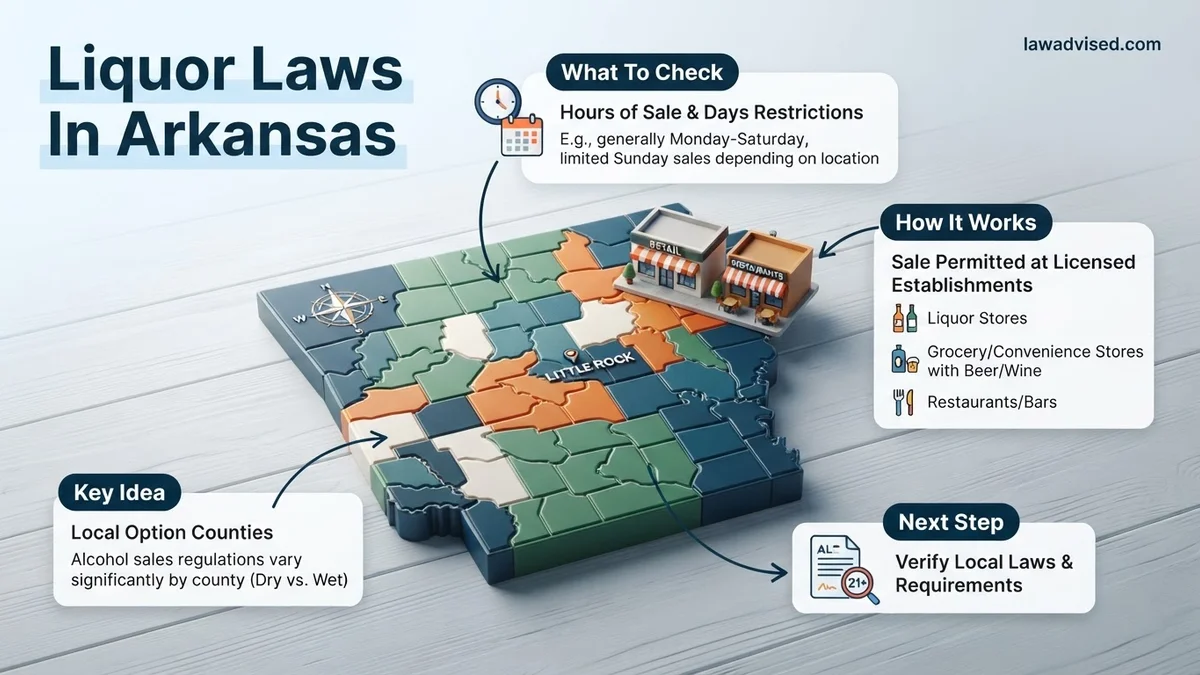
What Causes Confusion With Liquor Laws in Arkansas
The primary reason people struggle with Arkansas alcohol laws is the heavy reliance on local control. State law provides a baseline, but local jurisdictions hold the ultimate authority on whether alcohol can be sold at all.
Dry Counties and Local Option Laws
Arkansas has a long-standing tradition of local option elections. Counties and cities can vote to be completely dry, completely wet, or somewhere in between.
- Dry jurisdictions: No retail sales of alcoholic beverages are permitted.
- Wet jurisdictions: Packaged liquor stores, bars, and restaurants can operate under state guidelines.
- Hybrid rules: Some areas permit the sale of beer and wine in grocery stores but prohibit standalone liquor stores, or vice versa.
Because these boundaries change via local elections, checking the current status of a specific town in 2027 is essential before searching for a drink.
Grocery Store Sales Versus Liquor Stores
Another common point of confusion involves where you can purchase specific types of alcohol. Since voter approval allowed widespread retail sales, many major grocery and convenience stores sell beer and wine. However, spirits like whiskey, vodka, and tequila must still be purchased exclusively at licensed retail liquor stores in most wet counties.
Step-by-Step Guide to Purchasing and Transporting Alcohol Legally
Buying and moving alcohol within Arkansas involves straightforward rules once you verify your local jurisdiction’s status. Follow these practical steps to stay compliant with state regulations in 2027.
Step 1: Verify the Local Jurisdiction Status
Before you head out to buy drinks for a gathering, confirm whether your specific destination permits alcohol sales.
- Check the Arkansas Alcoholic Beverage Control (ABC) Division website for active local permits.
- Look for local signage in rural towns where dry status may still apply.
- Remember that restaurants in wet cities may serve liquor by the drink even if package stores are restricted.
Step 2: Understand Sale Hours and Days
State law sets default parameters, but local cities and counties dictate exact operating hours.
- Monday through Saturday: Most package liquor stores operate between 7:00 AM and 11:00 PM, though local ordinances frequently shorten these windows.
- Sunday Sales: Sunday sales depend entirely on local voter approval. Many major metro areas like Little Rock and Fayetteville permit Sunday retail sales, while rural counties prohibit them completely. Restaurants and bars often have separate, restricted Sunday serving hours.
Step 3: Transporting Alcohol Legally
Once you make your purchase, you must follow basic transport laws. Keep unopened containers in the trunk of your vehicle or in an area not readily accessible to the driver. Open container laws apply to vehicle interiors in Arkansas, meaning neither drivers nor passengers can consume alcohol while the vehicle is in motion on public roadways.
How to Fix Local Compliance Issues in Dry and Wet Counties
Navigating municipal boundaries across Arkansas requires strict adherence to local option laws that dictate alcohol sales down to the township level. Even in 2027, several jurisdictions maintain strict dry status or impose complex hybrid rules regarding private clubs and Sunday restrictions.
Assessing Your Current Jurisdiction Status
Determining whether a specific address falls within a wet, damp, or dry zone prevents costly legal missteps during business or event planning. Regulatory authorities enforce strict penalties for unauthorized distribution.
- Contact the Arkansas Alcoholic Beverage Control (ABC) Enforcement Division to verify the exact district classification of the property.
- Review the local county clerk records to identify any recent local option elections or pending wet-county ballot initiatives for 2027.
- Examine municipal ordinances for specific zoning constraints that prohibit alcohol sales near schools, churches, or daycare facilities.
- Consult with a licensed local attorney specializing in Arkansas liquor control board regulations to interpret ambiguous municipal boundaries.
Applying for Special Permits and Private Club Status
If the location sits within a restricted or damp territory, alternative licensing pathways such as private club permits offer a viable workaround for legal compliance.
- Submit a formal application for a Private Club Permit through the ABC online portal, ensuring all membership roster protocols are established.
- Publish the required public notice of intent to sell alcohol in a local newspaper of general circulation for two consecutive weeks.
- Complete background checks and fingerprinting for all principal stakeholders, officers, and majority shareholders listed on the corporate charter.
- Await the mandatory 30-day public comment and investigation period conducted by ABC enforcement agents before final permit issuance.
What If It Still Doesn’t Work?
When standard compliance steps fail or permit applications face rejection from the Arkansas Alcoholic Beverage Control board, businesses and individuals must escalate their approach. According to state administrative law experts, persistent regulatory hurdles require targeted intervention to avoid severe operational delays.
- File a formal appeal through the Alcoholic Beverage Control Board hearing process within the statutory 30-day window following a permit denial.
- Engage a specialized Arkansas liquor license attorney to review application discrepancies and represent your case during administrative hearings. Estimated legal fees for administrative appeals typically range from $2,500 to $7,500 depending on case complexity.
- Petition for a local option election by gathering verified signatures from registered voters within the specific precinct, meeting the legal threshold of 38% of qualified electors.
- Explore alternative business structuring, such as relocating operations across municipal lines into an established wet county where permits are readily available.
Conclusion
Mastering Arkansas liquor laws in 2027 demands meticulous attention to county classifications, municipal boundaries, and strict ABC licensing procedures. Failing to navigate these legal frameworks properly can result in substantial fines, injunctions, or the immediate suspension of business operations. According to verified research and regulatory data from the Arkansas Alcoholic Beverage Control Division, proactive legal compliance remains the single most effective safeguard against costly administrative penalties. Take the essential next step today by auditing your current location’s municipal zoning status and consulting directly with an ABC-certified licensing professional.
❓ Frequently Asked Questions
How do local option laws affect alcohol sales in Arkansas counties?
Arkansas allows individual counties and cities to vote on whether they want to be wet, dry, or permit specific types of alcohol sales. This means regulations can change dramatically just by crossing a municipal boundary.
What are the standard hours for purchasing alcohol in Arkansas?
State law allows retail package stores to sell alcohol Monday through Saturday, typically from 7:00 AM to 11:00 PM. Sunday hours, if permitted by local ordinance, often have restricted time windows.
What are the penalties for possessing an open container of alcohol in a vehicle?
Having an open container of alcohol in the passenger area of a motor vehicle is illegal in Arkansas and can result in traffic fines and a moving violation record.
Can minors consume alcohol under parental supervision in Arkansas?
Arkansas law does not provide a general parental consent exception for minors consuming alcohol in public or private unmonitored settings, making underage possession illegal.
How can I check if a specific city or county in Arkansas allows alcohol sales?
You can check local municipal codes, contact the Arkansas Alcoholic Beverage Control (ABC) Division, or look up county-specific election results regarding local option wet/dry statuses.
Are private clubs required for alcohol consumption in dry areas?
Historically, some dry areas permitted private clubs to serve alcohol to members, though widespread local option changes have made standard wet sales more common across the state.

Ismail Hossain is the founder of Law Advised. He is an Divorce, Separation, marriage lawyer. Follow him.