Drinking And Boating Laws in Florida: Essential Rules You Must Know
If you’re planning to enjoy Florida’s beautiful waterways, understanding the drinking and boating laws is essential for your safety and legal peace of mind. You might think it’s okay to have a few drinks while out on the water, but Florida has strict rules that you need to know before you take the wheel.
Whether you’re the boat operator or a passenger, knowing what’s allowed—and what’s not—can protect you from hefty fines, legal trouble, or worse. Keep reading to discover the key laws that affect your time on the water, so you can relax, have fun, and stay on the right side of the law every time you boat in Florida.
Boating Under The Influence Laws
Florida strictly enforces boating under the influence (BUI) laws to keep waterways safe. Operating a boat while impaired by alcohol or drugs is illegal. The state treats BUI similarly to driving under the influence (DUI) on roads. Authorities regularly patrol waters to check for impaired boaters. Violations can lead to serious legal consequences and endanger lives.
Legal Blood Alcohol Limits
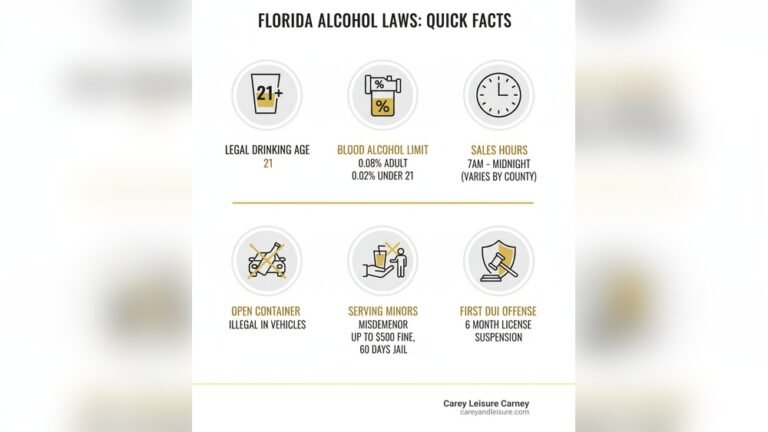
Florida sets clear blood alcohol concentration (BAC) limits for boat operators. The legal limit is 0.08% BAC for adults aged 21 and older. For those under 21, any detectable alcohol can result in penalties. Commercial vessel operators must keep their BAC below 0.04%. These limits apply anytime you are in control of a boat.
Penalties For Violations
Penalties for boating under the influence in Florida are severe. First offenses can bring fines, jail time, and license suspension. Repeat offenses lead to harsher fines and longer jail sentences. Courts may also require community service or alcohol education programs. Confiscation of the vessel is possible in some cases. Enforcement aims to prevent accidents and protect everyone on the water.
Alcohol Consumption Rules On Boats
Drinking alcohol while boating in Florida is regulated to keep everyone safe. The state has clear rules about alcohol use on boats. These laws cover both those who operate the boat and the passengers. Understanding these rules helps prevent accidents and legal trouble. Knowing what is allowed and what is not makes boating more enjoyable for all on board.
Rules For Boat Operators
Boat operators in Florida must not be impaired by alcohol. The legal limit is a blood alcohol concentration (BAC) of 0.08% or higher. Operating a boat under the influence is illegal and can lead to serious penalties. Law enforcement can stop boats to check for impairment. If found impaired, operators face fines, license suspension, and even jail time. Operators must stay alert and sober to ensure safety on the water.
Rules For Passengers
Passengers on boats in Florida may consume alcohol but must do so responsibly. Open containers of alcohol are allowed on boats. However, passengers should avoid interfering with the operator’s duties. Drinking should not lead to unsafe behavior or distractions. Everyone on board shares the responsibility to keep the boat safe. Passengers under 21 years old are prohibited from drinking alcohol on boats.
Boating Safety Education Requirements
Boating safely in Florida requires knowledge and following specific education rules. These rules help prevent accidents and keep everyone safe on the water. Florida has set clear standards for boating safety education. These standards apply to all boat operators, especially those born after January 1, 1988. Understanding these requirements is vital before taking control of any vessel.
Boating Safety Id Card
Florida requires many boaters to have a Boating Safety Education ID Card. This card proves the boater has completed a state-approved boating safety course. The card is mandatory for operators of vessels powered by motors of 10 horsepower or more. Carrying the card while boating is the law. It helps law enforcement verify that boaters know safe boating rules.
Mandatory Training Courses
Boaters must complete approved training courses to get their ID card. These courses teach essential safety practices, navigation rules, and emergency procedures. Options include online classes and in-person sessions. The courses focus on preventing accidents and handling dangerous situations. They also cover Florida’s boating laws and environmental protection. Passing the course test is necessary to receive the certificate.
Credit: recademics.com
Boat Registration And Equipment Laws
Florida sets clear rules for boat registration and required equipment. These laws help keep all boaters safe on the water. Understanding these rules is important before you take your boat out.
Registration Renewal Process
Boat owners must renew their registration each year. The Florida Fish and Wildlife Conservation Commission handles this. You can renew online, by mail, or in person. Make sure to renew before the expiration date. Carry your registration certificate on the boat at all times. Failure to register or renew can lead to fines.
Required Safety Gear
Boats must carry specific safety equipment according to state law. Every passenger needs a life jacket on board. The life jackets must fit and be in good condition. Boats must have a fire extinguisher if they have an engine. A sound-producing device like a horn or whistle is required. Navigation lights are mandatory for night boating. Carrying a throwable flotation device is also necessary. Check all equipment before heading out on the water.
Navigation And Operational Rules
Navigation and operational rules help keep Florida waters safe. These laws guide boaters on how to drive, pass, and share space on the water. Following these rules reduces accidents and ensures smooth travel. Understanding speed limits, right-of-way, and other regulations is essential for every boater.
Florida’s boating laws also set limits for night travel and control how boats operate in different conditions. Boaters must know these laws to avoid fines and keep everyone safe. The rules apply to all types of boats, including small vessels and large yachts.
Speed And Right-of-way Regulations
Speed limits vary by area and waterway type in Florida. Many zones have “no wake” rules to protect shorelines and swimmers. Boaters must slow down near docks, swimming areas, and other boats. The law requires all operators to maintain a safe speed at all times.
Right-of-way rules help avoid collisions. Boats under power must yield to sailboats. Vessels leaving a dock have priority over those arriving. When two boats meet head-on, both should turn starboard (right). Overtaking boats must pass on the left side safely.
Nighttime Boating Restrictions
Boating after dark requires proper lighting on all vessels. Navigation lights must be visible from all directions. These include red and green sidelights and a white stern light. Boats without lights cannot operate between sunset and sunrise.
Operators should reduce speed and stay alert at night. Visibility is lower, and obstacles are harder to see. Florida law forbids reckless or careless operation during nighttime. Always follow lighting rules to avoid accidents and legal trouble.
Credit: www.boatsmartexam.com
Credit: www.miamiherald.com
Frequently Asked Questions
What Is The 2 2 2 Drinking Rule?
The 2 2 2 drinking rule means drinking two drinks, waiting two hours, then consuming two more drinks. It helps pace alcohol intake safely.
What Is The 1/3 Rule In Boating?
The 1/3 rule in boating divides fuel use into three equal parts: one-third out, one-third back, and one-third reserve. It ensures safe fuel management and prevents running out during trips.
Can I Walk The Strip With A Beer?
No, walking the Las Vegas Strip with an open beer is illegal. Open containers are prohibited in public areas.
Why Does One Beer On A Boat Equal 2?
One beer on a boat affects you like two due to motion amplifying alcohol’s impact and faster intoxication while boating.
What Is The Legal Blood Alcohol Limit For Boating In Florida?
Florida law sets the blood alcohol concentration (BAC) limit at 0. 08% for boat operators. Exceeding this limit can lead to a boating under the influence (BUI) charge. This is the same BAC limit as for driving cars.
Conclusion
Boating safely in Florida means knowing and following the laws. Operators must stay sober to avoid penalties and keep everyone safe. Passengers of legal age may drink, but always act responsibly. Understanding these rules helps prevent accidents and legal trouble.
Stay informed, respect the water, and enjoy your time boating the right way. Safety comes first on Florida’s waterways.

Ismail Hossain is the founder of Law Advised. He is an Divorce, Separation, marriage lawyer. Follow him.