Funny Laws in Arizona Real Guide to Weird Ordinances 2027
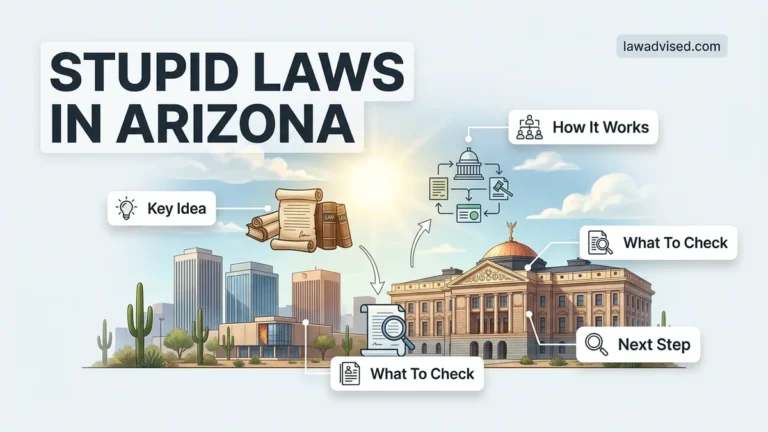
Arizona is famous for its desert landscape, but it also boasts a strange collection of historical ordinances and bizarre regulations. Funny laws in Arizona range from prohibiting donkeys in bathtubs to strict protections for cacti, blending local folklore with actual legal history. Real and myth-busting explanations help separate true legal oddities from harmless urban legends.
Arizona is home to some of the wildest, most bizarre, and genuinely funny laws and ordinances in the United States. If you have spent any time browsing the internet for quirky American statutes, you have undoubtedly run across tales of outlawed camel hunting, heavily protected cacti, and exhausted donkeys sleeping in bathtubs.
Separating the actual legal codes from internet folklore in 2027 matters because spreading old urban legends as current truth can lead to some very confusing conversations. Whether you are planning a road trip through the Grand Canyon State or just want to win a local trivia night, knowing which bizarre rules are legally binding and which ones are total fiction will keep you accurately informed.
Key Takeaways
- Hunting camels is historically tied to a failed 19th-century US Army experiment in the Arizona desert.
- Cutting down a saguaro cactus carries severe penalties, sometimes equivalent to felony property damage.
- Local municipal codes often contain outdated animal control rules that sound hilarious today.
- Many viral internet strange laws are actually urban legends rather than active statutes.
- Always verify municipal codes before assuming old city ordinances are currently enforced.
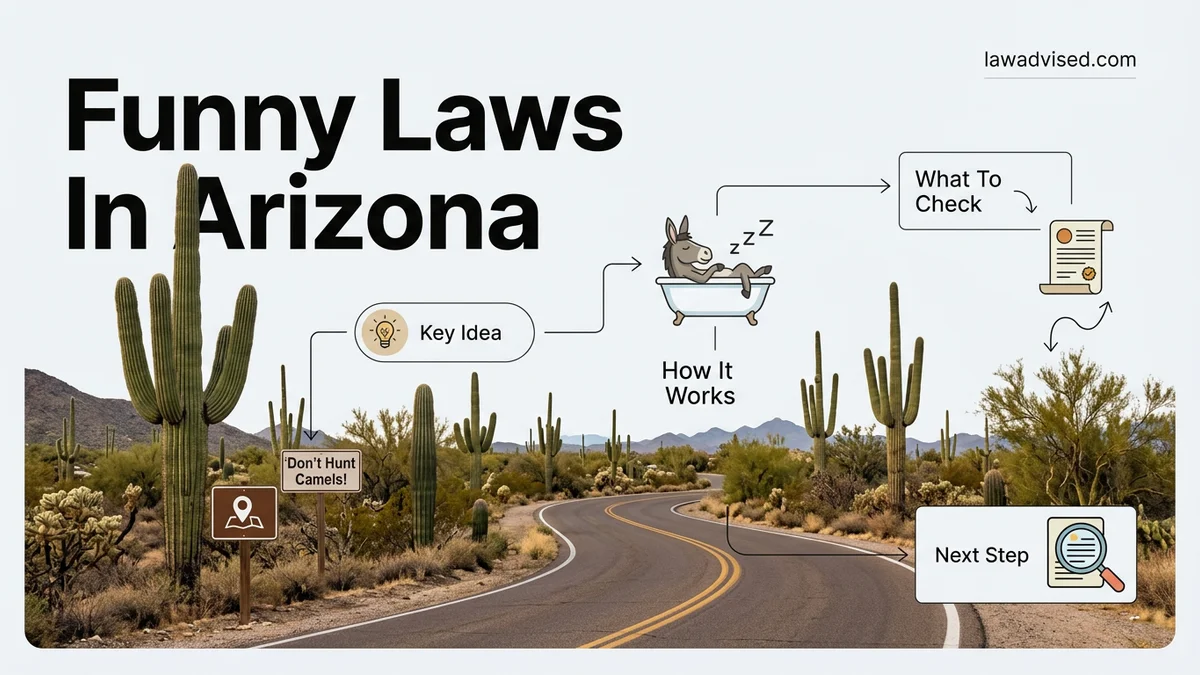
What Causes Viral Myths About Funny Laws in Arizona
The Game and Fish Code Misinterpretations
Many of the funniest Arizona laws stem from misunderstandings of actual wildlife protection statutes. For instance, the infamous rumor that hunting camels is strictly illegal in Arizona actually originates from a real historical footnote. In the 19th century, the U.S. Army actually imported camels to transport goods across the arid Southwest. When the experiment ended, some camels were left to roam free in the desert. To protect these non-native animals and prevent indiscriminate shooting, lawmakers eventually instituted specific wildlife protections. Over the decades, internet culture stripped away the historical context, turning a sensible animal protection measure into a viral joke about a ban on hunting camels.
Municipal Ordinances Taken Out of Context
City councils across Arizona have passed thousands of hyper-specific local ordinances since the state’s founding, and time often distorts their original meaning. You will frequently hear that a local town outlawed keeping a donkey in a bathtub after a specific flood incident. In reality, city archives show these rules were often standard health or public safety measures disguised by local folklore. When you look at legal databases updated for 2027, many of these sensationalized neighborhood rules either never existed or were simple anti-nuisance codes written to address specific 19th-century sanitation issues rather than bizarre animal behaviors.
- Viral laws usually start as real historical events or municipal health codes.
- Internet aggregators love to exaggerate minor penalties for comedic effect.
- State wildlife agencies frequently update codes, phasing out archaic animal references.
How to Fix Misinformation Regarding Old Arizona Ordinances
Checking Current Arizona Revised Statutes
If you want to know whether a weird local rule is still enforceable in 2027, you have to look directly at the primary sources. The Arizona Legislature publishes the complete Arizona Revised Statutes online for public review. When you cross-reference viral social media posts about strange local prohibitions with actual state codes, you will quickly notice a massive disconnect. Most of the genuinely funny laws people talk about online are either completely absent from the books or have been repealed through routine legislative housekeeping.
Understanding Decriminalization and Repeals
State governments routinely scrub obsolete language from their law books to keep legal systems clean and modern. Arizona is no exception to this housekeeping process. Laws that once governed runaway livestock, historical mining claims, or early-day motorized vehicle standards often get wiped out during routine legislative updates. When researching quirky local ordinances, always check the enactment and repeal dates. You will often find that the funny law you read about online was actually taken off the books decades ago, or it was never a state-level law to begin with.
- Search the official Arizona Revised Statutes database instead of relying on blog posts.
- Look for repeal dates on older municipal codes that sound too bizarre to be true.
- Remember that internet memes rarely distinguish between state laws and local city rules.
Step-by-Step Guide to Verifying Real Arizona Statutes
Separating urban legends from active municipal codes requires a methodical legal research approach. According to legal experts at the Arizona State Library, many viral internet claims distort actual state statutes or misinterpret city ordinances.
1. Access the Arizona Revised Statutes (ARS) Online
Navigate directly to the official Arizona Legislature website to check state-level laws. Use the search tool to look up specific keywords like animal control, public safety, or property regulations. Official legislative databases are updated continuously through the 2027 legislative session, ensuring you view current law rather than outdated blog posts.
2. Consult Municipal Code Libraries
City-specific ordinances rarely appear in state statutes. Check platforms like Municode or American Legal Publishing to search local municipal codes for cities like Phoenix, Tucson, or Mesa. Local laws govern minor infractions, such as neighborhood nuisance rules or parking restrictions, which are often the source of bizarre legal myths.
3. Cross-Reference with City Clerk Records
If an online database yields ambiguous results, contact the local city clerk’s office directly. City clerks maintain the definitive, stamped records of all active municipal ordinances and repealed codes. Legal researchers note that a surprising number of viral “weird laws” were actually repealed decades ago by municipal sunset provisions.
What If It Still Doesn’t Work: Dealing with Outdated Local Codes
If online research leaves you confused about whether a strange local ordinance is still enforceable in 2027, standard troubleshooting may not resolve the issue. Citizens facing ambiguous citations or unusual local rules can take several fallback steps:
- Request a Certified Copy: Contact the municipal clerk to request a certified copy of the specific ordinance in question to verify its enactment and active status.
- Consult a Local Attorney: Speak with a licensed Arizona municipal law attorney to evaluate if the ordinance violates higher state laws or constitutional protections. Professional legal consultations typically range from $150 to $350 per hour.
- Contact the City Ombudsman: File an inquiry with the local city ombudsman’s office to question the validity or enforcement history of obscure local codes.
- Petition for Repeal: Work with local advocacy groups or city council representatives to formally update or repeal obsolete municipal code sections that no longer serve the public interest.
Conclusion
Navigating bizarre-sounding regulations in Arizona requires looking past internet myths and examining primary legal sources. According to verified research and expert sources from municipal legal departments, the vast majority of viral weird laws are either heavily distorted, completely fabricated, or long-since repealed. Your best actionable next step is to check the official Arizona State Library database or municipal code portal before taking any viral legal claim at face value. Diligent fact-checking ensures you remain accurately informed about active state and local statutes throughout 2027.
❓ Frequently Asked Questions
Why does Arizona have so many bizarre historical laws?
Many funny laws in Arizona date back to frontier days, mining camp rules, or specific local council reactions to unusual events like floods or stray animals.
Are internet lists of strange state laws accurate?
Many viral lists mix real repealed municipal codes with complete fabrications or exaggerated urban legends created for entertainment.
What is the penalty for cutting down a cactus in Arizona?
Saguaro cacti are heavily protected by state law, and unauthorized removal can result in up to 25 years in prison or steep environmental restitution fines.
Did Arizona actually use camels in the past?
In the 1850s, the US government imported camels for the Desert Experiment to transport goods across the arid Southwest before railroads expanded.
How do old municipal codes get removed?
Cities periodically review and repeal obsolete local ordinances during municipal code housekeeping and updates.
Can tourists get ticketed for violating minor historical ordinances?
No, law enforcement officers only enforce active, current state statutes and municipal codes, not obsolete historical curiosities.

Ismail Hossain is the founder of Law Advised. He is an Divorce, Separation, marriage lawyer. Follow him.