Wacky Laws in Arizona The Best Real Guide for 2027
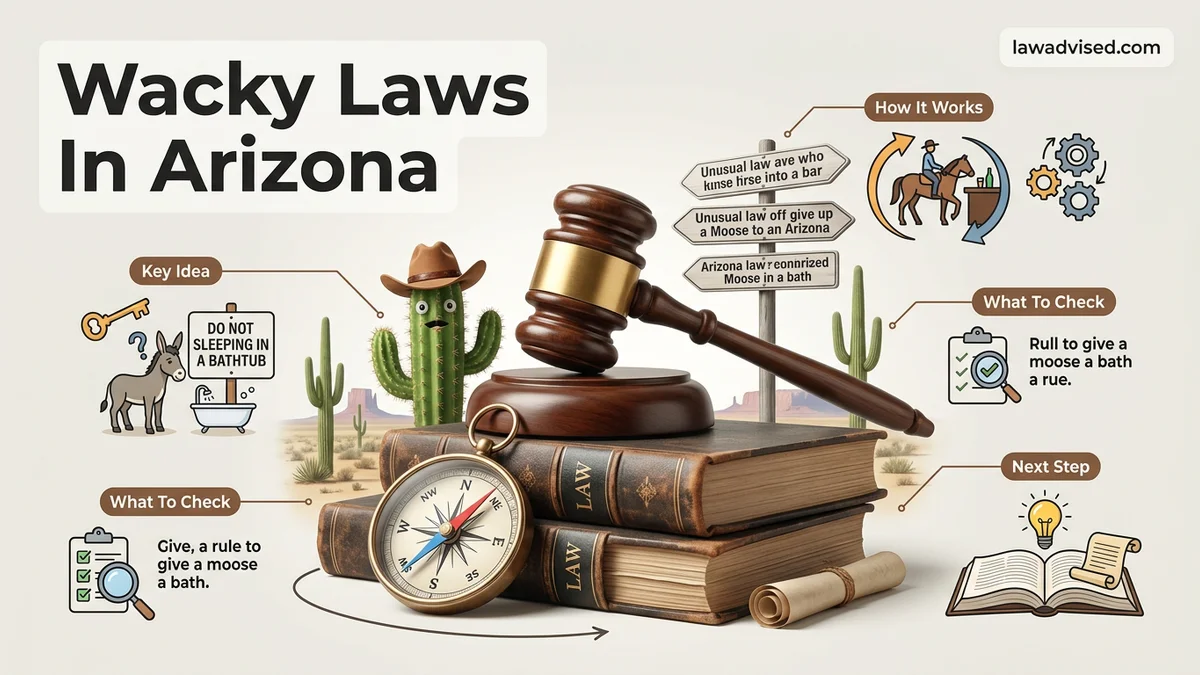
Arizona is famous for a collection of bizarre local regulations and historical ordinances that baffle modern residents. Many of these quirky rules are actually viral urban legends, while others stem from genuine 19th-century legislative history.
Arizona is home to some of the strangest, most bizarre legislation in the United States. As you navigate the legal landscape in 2027, you might be surprised to learn that many antiquated statutes still technically exist on the books. From protecting the desert flora to regulating animal behavior, these quirky regulations offer a hilarious glimpse into the state’s eccentric past.
Understanding these weird laws matters practically because locals and tourists alike love to swap them as trivia. However, separating actual enforced statutes from internet urban legends keeps you informed and saves you from believing total nonsense. Let’s dive straight into the weird world of Grand Canyon State legislation.
Key Takeaways
- Hunting camels in Arizona is technically prohibited under old historical statutes.
- Cutting down a saguaro cactus carries severe legal and environmental penalties.
- Several popular weird laws are internet myths rather than actual statutes.
- Local municipalities often create idiosyncratic ordinances regarding animals and property.
- Historical context explains why many archaic laws were originally enacted.
What Causes Wacky Laws in Arizona and Historical Origins
The Wild West Legacy and Frontier Survival
Many of Arizona’s most bizarre laws originated from a time of rugged frontier survival and early 20th-century commerce. Lawmakers often drafted hyper-specific statutes to solve very temporary, niche problems that happened to plague a specific town or county decades ago. Once the crisis passed, the legislature rarely wasted time repealing minor rules, leaving them buried in state archives for modern residents to discover.
- Protecting the Saguaro: Cutting down a giant cactus can carry severe penalties due to 1960s conservation efforts.
- Livestock Regulations: Early cattle and donkey laws prevented public nuisances in growing desert towns.
- Evolving Standards: Rules created in the territorial days often clash wildly with modern 2027 sensibilities.
Specific Niche Legislation
You will find that most wacky laws target very improbable scenarios that probably never happened twice. For instance, regulations regarding camels date back to the mid-1800s when the U.S. Army actually tested the U.S. Camel Corps in the Arizona desert. When the experiment ended, local authorities had to figure out how to regulate these massive, spitting beasts wandering near civilian settlements.
- The Camel Ban: Hunting camels in specific jurisdictions remains a famously cited historical oddity.
- Property Protections: Laws governing what animals can sleep in batrooms emerged from sanitation panics.
How to Fix Misconceptions About Arizona Legal Myths Step-by-Step
Identifying Internet Urban Legends
Not everything you read on social media about Arizona law is actually true. In fact, many popular quirky laws are completely fabricated internet myths designed to generate clicks and viral shares. You need a reliable method to verify whether a weird law is a real statute or a total hoax.
- Search the official Arizona Revised Statutes (ARS): Always look for a real title and section number rather than accepting a viral headline at face value.
- Check for repeals: Many laws did exist briefly in the 1900s but were officially wiped clean during code revisions.
- Evaluate plausibility: Ask yourself if a modern police officer would actually issue a citation for the quirky behavior in question.
Distinguishing Real Statutes from Old Ordinances
Another common mix-up involves confusing state-level statutes with local city ordinances. A town in northern Arizona might have passed a temporary rule in 1920 regarding livestock, but that does not mean state troopers enforce it statewide today. Local municipal codes change constantly, and outdated city rules often linger on municipal websites long after they stop being enforceable.
- State vs. City: Always check if a weird rule is tied to a specific municipality rather than the whole state.
- Prosecutorial Discretion: Even if an archaic law technically exists, prosecutors in 2027 will not waste public resources trying to enforce it.
- Common Sense Check: If a law sounds too ridiculous to be real, it is usually an old myth blown out of proportion.
What If It Still Doesn’t Work and You Can’t Verify a Statute
Navigating the labyrinth of Arizona legislative history in 2027 can sometimes lead to dead ends. When digital databases return conflicting results or municipal codes clash with state statutes, standard verification methods fail. Legal researchers and local archivists outline specific fallback protocols to resolve these discrepancies definitively.
Consulting the Arizona State Library
When online municipal codes lack proper historical context, the Arizona State Library, Archives and Public Records division provides direct access to primary source materials. Archivists maintain physical legislative journals and historical ordinances dating back to territorial days. Visiting the research floor in Phoenix or submitting an official public records request ensures access to authenticated statutory language.
Engaging Local Legal Counsel
If statutory ambiguity threatens a business operation or personal project, municipal law specialists offer definitive interpretations. According to data from the State Bar of Arizona, consultation fees for municipal code compliance typically range from $250 to $500 per hour. Certified legal professionals can issue formal opinion letters regarding the actual enforcement status of antiquated or unusual local ordinances.
- Submit a formal public records request through the Arizona Legislative Council portal to obtain the exact drafting history of the disputed statute.
- Contact the specific city clerk’s office where the ordinance was enacted to verify if a repeal or sunset clause was omitted from the digital database.
- Schedule a consultation with an Arizona-licensed administrative law attorney if the statute involves local business licensing or zoning regulations.
- Review the Arizona Revised Statutes (A.R.S.) Title 13 and Title 14 indices to confirm state preemption over conflicting local municipal codes.
Conclusion
Separating urban legends from actual Arizona law requires diligent cross-referencing of official state databases and municipal codes. According to verified research and legal experts from the Arizona Legislative Council, many widely shared “wacky laws” are merely misinterpreted statutes or defunct ordinances that no longer carry legal weight in 2027. Always verify municipal codes directly through official government portals before altering behavior or business operations. Take the next step today by bookmarking the official Arizona Revised Statutes portal to conduct your own primary source research.
❓ Frequently Asked Questions
What are the most famous wacky laws in Arizona?
Popular mentions include bans on hunting camels, restrictions on donkeys sleeping in bathtubs, and strict rules regarding the theft of citrus fruit. While some are real historical artifacts, others are purely internet fabrications.
Did Arizona actually use camels for transportation?
In the mid-19th century, the U.S. Army imported camels for the U.S. Camel Corps to navigate arid desert terrain, which inspired later legislative jokes and restrictions.
Are penalties for cutting down saguaro cacti severe?
Yes, the Arizona Native Plant Law protects the saguaro cactus. Damaging or removing one without a permit can result in a class 4 felony charge.
Can you be arrested for refusing someone a glass of water in Arizona?
While public safety campaigns emphasize hydration in the extreme heat, there is no literal criminal statute forcing homeowners to provide water to strangers.
Why do states like Arizona have so many weird laws on record?
Rapid territorial growth, unique environmental challenges, and localized municipal governance during the 1800s led to many hyper-specific community rules.
How can you tell if an Arizona law is real or an urban legend?
Checking the official Arizona Revised Statutes (ARS) database or consulting municipal code libraries is the only definitive way to verify active legislation.

Ismail Hossain is the founder of Law Advised. He is an Divorce, Separation, marriage lawyer. Follow him.