Alcohol Laws in Arizona 2027 Expert Guide to Rules
Navigating alcohol laws in Arizona requires understanding strict state regulations regarding purchase hours, public consumption, and driving limits. Knowing these rules ensures you stay legally compliant while buying or consuming alcohol across the state.
Navigating alcohol laws in Arizona requires knowing precise purchasing hours, strict age limits, and consumption regulations that apply across the Grand Canyon State in 2027. Whether you are stocking up at a grocery store or enjoying a night out in Phoenix, state statutes dictate exactly when, where, and how you can legally buy and consume alcoholic beverages.
Understanding these rules prevents costly fines, misdemeanor charges, or the loss of a liquor license for local businesses. Because Arizona updates its enforcement priorities annually, staying informed on current time limits and identification mandates keeps your social outings entirely legal and hassle-free.
Key Takeaways
- Retail alcohol sales are legal daily from 6:00 AM to 2:00 AM.
- The legal drinking age is 21, with strict zero-tolerance policies for minors.
- Open containers of alcohol are strictly prohibited in the passenger area of a vehicle.
- Standard DUI limit for adults is 0.08% BAC, while any detectable alcohol applies to minors.
- Bars and restaurants must cease alcohol service by 2:00 AM daily.
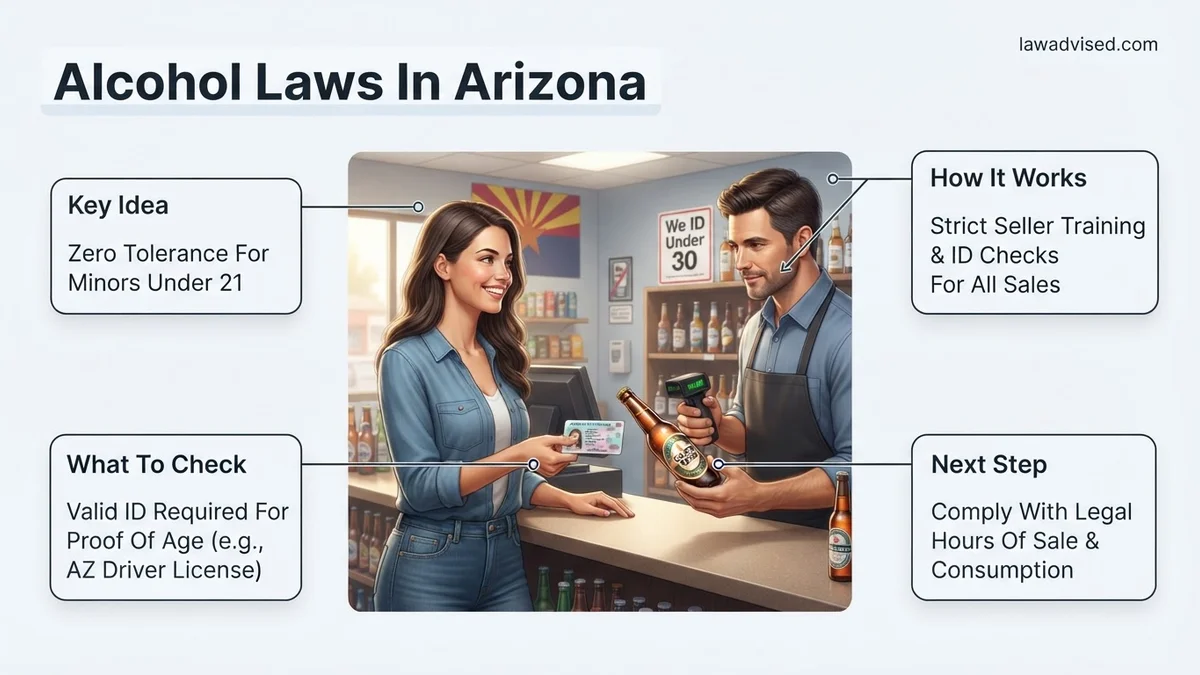
What Causes Compliance Violations of Alcohol Laws in Arizona
Most legal infractions regarding alcohol in Arizona stem from simple timing errors, improper identification checks, or misunderstanding where open containers are allowed. Law enforcement agencies strictly monitor both retail establishments and individual consumers to ensure absolute adherence to state statutes.
Purchasing and Consumption Hour Violations
Retail sales of packaged liquor at grocery and convenience stores are permitted daily from 6:00 AM to 2:00 AM. Bars, restaurants, and clubs must also halt alcohol service and clear patrons by 2:00 AM. Selling or consuming alcohol outside these designated windows is a common trigger for police citations.
ID and Underage Compliance Failures
Arizona operates under strict zero-tolerance policies for minors. Accepting expired, altered, or borrowed identification during a sale results in severe penalties for both the server and the establishment.
- Serving anyone under the age of 21 constitutes a class 1 misdemeanor.
- Accepting out-of-state IDs that lack required security features often leads to failed compliance stings.
- Failing to card patrons who appear under the age of 30 violates internal store protocols and state guidelines.
How to Fix Purchasing and Consumption Habits to Stay Legal
Adjusting your purchasing routine ensures you never run afoul of Arizona’s rigid time schedules or open container laws. By adopting proactive habits, you can enjoy social gatherings without risking legal penalties.
Mastering the Retail and Bar Timelines
Plan your retail grocery runs and convenience store purchases well before the 2:00 AM cutoff. Restaurants and bars will stop pouring drinks shortly before closing time to ensure all glasses are cleared by 2:00 AM sharp.
Navigating Open Container and Public Consumption Rules
Arizona permits open containers in specific public areas, but driving with an open container is strictly illegal. Keep these boundaries clear:
- Never possess an open alcoholic beverage in the passenger area of any moving motor vehicle.
- Check local municipal codes before consuming alcohol in public parks, as city ordinances often override state allowances.
- Ensure any unfinished wine from a restaurant is properly resealed and placed in the trunk or rear cargo area before driving home.
Step-by-Step Guide to Understanding Arizona DUI and Vehicle Rules
Arizona enforces some of the strictest driving under the influence (DUI) laws in the United States. Navigating these statutes requires absolute precision. According to verified research from the Arizona Governor’s Office of Highway Safety, law enforcement maintains a zero-tolerance approach to impaired operation heading into 2027.
Standard Versus Extreme DUI Thresholds
The state measures blood alcohol concentration (BAC) through rigorous scientific testing procedures. Drivers face different classifications based on specific numerical brackets. Standard DUI applies at a BAC of 0.08% or higher for non-commercial drivers. Extreme DUI triggers at 0.15% to 0.199%. Super Extreme DUI activates at a BAC of 0.20% or greater. Each tier escalates mandatory jail sentences and financial penalties exponentially.
Administrative Vehicle Impoundment Procedures
Vehicles face immediate physical seizure under specific statutory triggers in Arizona. Drivers must understand the exact protocol following a roadside stop involving suspected impairment. Review the mandated administrative steps below:
- Officers issue an immediate administrative suspension of driving privileges on behalf of the Arizona Motor Vehicle Division (MVD).
- The arresting agency orders an immediate 30-day vehicle impoundment, placing the automobile in an authorized storage yard.
- The registered owner receives a formal impound notice detailing retrieval requirements and associated storage fees.
- The owner or a designated representative must settle all towing and daily storage costs directly with the impound facility before the 30-day window expires.
- The owner petitions the local jurisdiction or court for a formal release order if contesting the impoundment validity within statutory timeframes.
What If Legal Issues Still Arise Despite Precautions
Even with careful adherence to Arizona statutes, complications or misunderstandings can result in sudden legal citations or permit denials. Swift action mitigates long-term consequences. Review the necessary steps to take if an alcohol-related citation or MVD dispute occurs:
- Request an administrative hearing with the Arizona MVD within 15 days of receiving a citation to contest an implied consent suspension.
- Consult immediately with a specialized defense attorney licensed in Arizona to review the calibration records of the breathalyzer or blood draw equipment.
- Prepare for mandatory ignition interlock device (IID) installation costs, which typically range from $700 to $1,500 annually depending on the certified vendor and hardware specifications.
- Retain all court documentation, bail receipts, and communication logs with administrative agencies to present during legal proceedings.
Conclusion
Mastering Arizona alcohol laws prevents costly citations, vehicle impoundments, and severe criminal penalties. Compliance requires strict adherence to purchase limits, identification mandates, and the state’s uncompromising zero-tolerance driving statutes. According to verified research and expert sources from the Arizona Department of Public Safety, staying fully informed remains the single best defense against legal infractions. Review the updated 2027 MVD guidelines today to ensure complete personal and professional compliance.
❓ Frequently Asked Questions
What time do bars and restaurants stop serving alcohol in Arizona?
Licensed establishments must stop serving alcohol and have patrons clear open drinks by 2:00 AM every day of the week, including weekends.
Can you carry open containers of alcohol in public spaces in Arizona?
Public consumption laws vary by municipality. While some cities designate specific entertainment districts where open containers are allowed, drinking in standard public parks or streets is generally illegal.
What forms of identification are accepted to purchase alcohol in Arizona?
Retailers and establishments accept a valid driver’s license or state ID card issued by any U.S. state, a valid U.S. passport, or a military ID containing a photograph and birth date.
Is it legal to brew your own beer or wine at home in Arizona?
Yes, adults aged 21 and older may produce limited amounts of beer or wine at home for personal or family use without obtaining a federal or state license.
What happens if a minor is caught with alcohol in Arizona?
Possession of alcohol by a minor is classified as a Class 1 misdemeanor, which can result in fines, community service, and mandatory suspension of driving privileges.
Are grocery stores and gas stations allowed to sell liquor in Arizona?
Yes, licensed grocery stores, convenience stores, and gas stations are permitted to sell beer, wine, and spirits during standard legal operating hours.

Ismail Hossain is the founder of Law Advised. He is an Divorce, Separation, marriage lawyer. Follow him.