How to Know If You Need to File Taxes in 2026 Expert Guide
Determining whether you must submit a tax return depends entirely on your gross income, filing status, and age for the tax year. Even if your earnings fall below the legal IRS threshold, you may still want to file voluntarily to claim valuable refunds and tax credits.
Whether you need to file a federal tax return with the IRS in 2026 depends primarily on your total gross income, your filing status, and your age. If your income stays below the mandatory IRS thresholds for the 2025 tax year (which you file in early 2026), you generally are not legally required to file a return.
Knowing your exact obligation saves you from unnecessary paperwork, but missing a filing requirement can trigger penalties and interest. More importantly, filing even when you are not required is often the only way to claim valuable refundable tax credits or get a refund of tax withheld from your paychecks.
Key Takeaways
- Check IRS gross income thresholds tailored to your specific filing status and age.
- Self-employed individuals must file if net earnings reach $400 or more.
- Dependents earning unearned income above specific limits are legally required to file.
- Filing voluntarily is necessary to claim withheld income taxes or refundable credits.
- Special rules apply if you owe specific taxes like the Alternative Minimum Tax.
What Causes IRS Tax Filing Obligations to Trigger
Standard Income Thresholds by Filing Status
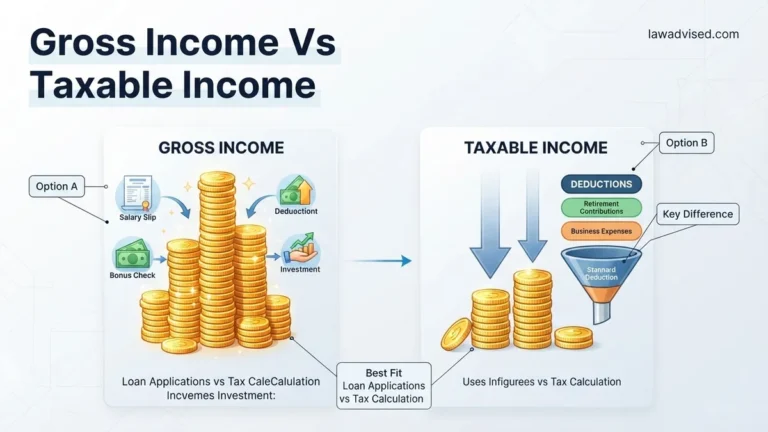
The IRS sets specific baseline gross income amounts every year. If your gross income meets or exceeds these numbers, filing a tax return becomes mandatory. Gross income means all income you receive in the form of money, goods, property, and services that isn’t exempt from tax.
- Single: $15,000 if under age 65; $16,950 if 65 or older.
- Married Filing Jointly: $30,000 if both spouses are under 65; $31,600 if one spouse is 65 or older; $33,200 if both are 65 or older.
- Head of Household: $22,500 if under age 65; $24,450 if 65 or older.
- Married Filing Separately: $5 for all ages.
- Qualifying Surviving Spouse: $30,000 if under age 65; $31,600 if 65 or older.
Self-Employment and Special Trigger Rules
Standard wage thresholds do not apply if you earn money outside of a traditional W-2 job. If you have net earnings from self-employment, independent contracting, or gig work, your filing trigger drops drastically.
- Self-Employment Income: You must file a tax return if your net self-employment earnings are $400 or more, regardless of your age or total gross income.
- Church Employee Income: A strict $108.28 threshold applies if you received wages from a church or qualified church-controlled organization that is exempt from employer Social Security taxes.
- HSA Distributions: Taking distributions from a Health Savings Account, Archer MSA, or Medicare Advantage MSA automatically triggers a filing requirement to report the distribution properly.
Master Tax Filing Requirements in 8 Simple Steps
Figuring out whether Uncle Sam is expecting paperwork from you can feel like navigating a maze blindfolded. Missing a required tax return can lead to unwanted penalties and interest, while filing when you do not need to might mean you are leaving your hard-earned money sitting on the table. This comprehensive walkthrough is designed to clear up the confusion. By following this systematic approach, you will analyze your income, filing status, and unique financial situations to determine your exact tax obligations for the current tax year.
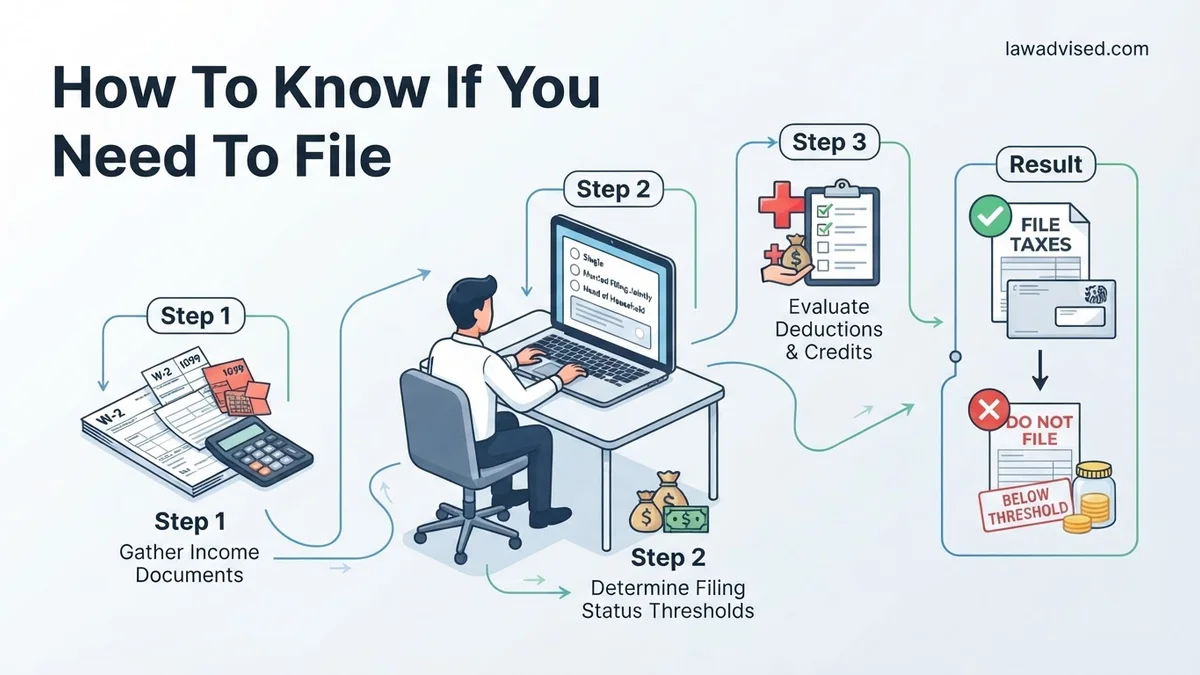
Step 1: Determine Your Gross Income Threshold
What you need: Your total earnings statements, including W-2s, 1099s, and records of any miscellaneous income received during the calendar year.
Instructions: Start by calculating your total gross income, which is the sum of all money you received before taxes and deductions. The IRS sets specific minimum income thresholds each year based on your age and filing status. For instance, if you are a single filer under age 65, you generally only need to file if your gross income exceeds the standard deduction for that year (which typically hovers around $14,600 for single filers). Compare your cumulative earnings against the current IRS threshold for your specific filing status to see if you cross the baseline requirement.
Pro Tip: Do not just look at your primary job. Gross income includes unemployment benefits, tips, investment dividends, and even rental income.
Step 2: Identify Your Correct Filing Status
What you need: Knowledge of your marital status and living arrangements as of December 31st of the tax year.
Instructions: Your filing status dictates the income thresholds, standard deduction amounts, and tax brackets that apply to you. The five official IRS categories are Single, Married Filing Jointly, Married Filing Separately, Head of Household, and Qualifying Surviving Spouse. Each status carries a different gross income requirement. For example, the income threshold for Head of Household is higher than for a Single filer, meaning you can earn more before a tax return becomes mandatory. Review the official definitions for each category to ensure you select the one that legally applies to your year-end situation.
Pro Tip: If you were unmarried on the last day of the year but paid more than half the cost of keeping up a home for a qualifying dependent, always check if you qualify for Head of Household to maximize your financial benefits.
Step 3: Evaluate Self-Employment and Freelance Earnings
What you need: All 1099-NEC or 1099-MISC forms, plus your own profit and loss ledgers or bank statements tracking side-hustle revenue.
Instructions: The rules change dramatically if you run a business, work as an independent contractor, or participate in the gig economy (like rideshare driving or freelance writing). Even if your overall income is relatively low, if your net earnings from self-employment are $400 or more, federal law mandates that you must file a tax return. This requirement exists because self-employment income triggers the self-employment tax, which covers Social Security and Medicare obligations for independent workers. Calculate your net profit by subtracting your ordinary and necessary business expenses from your gross self-employment receipts.
Pro Tip: Keep meticulous receipts for all business expenses. Lowering your net self-employment income below $400 can sometimes eliminate the requirement to file, provided you have no other traditional income sources.
Step 4: Check for Special Income Situations
What you need: Statements related to retirement distributions, health savings accounts, digital asset transactions, or premium tax credits.
Instructions: Certain types of financial transactions act as automatic triggers for tax filing, regardless of your total gross income. Did you take an early distribution from a traditional IRA or 401(k)? Did you buy health insurance through the marketplace and receive advance payments of the premium tax credit? Did you buy, sell, or trade cryptocurrency or other digital assets? If you answered yes to any of these scenarios, you are typically required to file a federal tax return to report the activity, reconcile health credits, or pay applicable penalty taxes on early withdrawals.
Pro Tip: Cryptocurrency transactions are heavily scrutinized by tax authorities. Even simple crypto-to-crypto trades count as taxable events that require reporting.
Step 5: Assess Your Status as a Dependent
What you need: Communication with parents or guardians regarding whether they plan to claim you on their tax return.
Instructions: If someone else—such as a parent or guardian—can legally claim you as a dependent on their taxes, the rules regarding your own filing requirements change completely. Generally, a dependent must file a tax return if their earned income exceeds the standard deduction for dependents, or if they have unearned income (like interest or investments) above a much lower threshold (typically around $1,300). Review the IRS dependency tests to see if you qualify as a qualifying child or qualifying relative, and coordinate with the person claiming you to avoid misreporting.
Pro Tip: If you earned a modest paycheck as a college student, check the dependent rules carefully. You might not be required to file, but you should still file if taxes were withheld from your paycheck so you can get that money refunded.
Step 6: Investigate State and Local Tax Obligations
What you need: Your residential address history for the tax year and details on where you earned your income.
Instructions: Federal tax rules are only part of the equation. You must also determine if you need to file state and local income tax returns. State tax thresholds often differ significantly from federal guidelines, and some states require a return even if your income falls below the federal minimum. Furthermore, if you lived in one state but worked in another, you may have a filing requirement in both jurisdictions. Check the revenue department website for every state where you lived or earned income during the year to understand their specific filing minimums.
Pro Tip: Some states have no income tax at all, but they may still require returns or filings if you owe specific local property taxes or special assessments.
Step 7: Search for Hidden Refund Opportunities
What you need: Form W-2 showing federal income tax withheld, or records of eligible expenses for credits like the Earned Income Tax Credit (EITC).
Instructions: Even if your calculations in the previous steps prove that you are completely exempt from a mandatory filing requirement, you should still check if filing voluntarily benefits you. If your employer withheld federal income tax from your paychecks throughout the year, the only way to get that money back from the government is to file a tax return and claim your refund. Additionally, low- to moderate-income workers may qualify for valuable refundable credits like the EITC, meaning the government will send you money even if you owe zero tax.
Pro Tip: You generally have up to three years from the original filing deadline to claim a tax refund. If you miss that window, the money becomes property of the U.S. Treasury.
Step 8: Finalize Your Filing Decision and Plan Your Next Move
What you need: Your completed checklist of income, dependency status, and state requirements.
Instructions: Synthesize all the data you gathered in the previous seven steps. If you crossed any federal or state income thresholds, engaged in self-employment earning over $400, or triggered a special tax event, you are officially required to file. Select your preferred method of filing—such as IRS Free File software, commercial tax preparation programs, or a certified public accountant. If you determine you do not need to file, securely store your financial documents for your records and enjoy the peace of mind knowing you are fully compliant with the law.
Pro Tip: Mark your calendar for the standard federal filing deadline (typically April 15th) to ensure you submit your required documents on time and avoid accidental late-filing penalties.
✅ Final Checklist
- Calculated total gross income and compared it against the IRS threshold for your filing status.
- Verified whether you qualify as a dependent on someone else’s tax return.
- Checked self-employment and gig economy earnings to see if net profit exceeds $400.
- Reviewed special tax triggers including crypto transactions, early retirement withdrawals, and health insurance marketplace forms.
- Investigated state and local tax laws for every state where you lived or worked.
Important Notes:
- Failing to file a required tax return can result in failure-to-file penalties, late payment fees, and accumulating interest charges.
- Seek professional help from a CPA or Enrolled Agent if you have complex investments, foreign accounts, or complicated business structures.
- Estimated time to complete this evaluation is 30 to 60 minutes, with zero financial cost if using free IRS resources.
How to Fix and Check Your Income Against 2026 Thresholds Step-by-Step
Calculating Your Total Gross Income
To determine if you cross the 2026 IRS limits, you need to aggregate every dollar you earned over the course of the tax year. Do not rely solely on your final pay stub without verifying other income sources.
- Gather your W-2 forms: Collect all wage statements from any employers you worked for during the year.
- Add non-employee compensation: Sum up all 1099-NEC, 1099-MISC, and cash or platform payouts from freelance, gig, or side-hustle work.
- Include passive income: Add taxable interest, ordinary dividends, capital gains, retirement distributions, and unemployment benefits.
- Compare the total: Match your final gross income sum against the specific IRS threshold for your exact filing status.
Accounting for Dependents and Special Overrides
If someone else can claim you as a dependent on their tax return, your rules change entirely. The standard income thresholds do not apply to you in the same way.
- Dependent Earned Income: If you are a dependent, you generally must file if your earned income exceeds the standard deduction amount for dependents (projected at $15,000 for 2025/2026, or your earned income plus $450, whichever is smaller).
- Dependent Unearned Income: If you only have investment or passive income (like interest or dividends), your threshold is much lower, typically triggering at $1,350.
- Premium Tax Credit Checks: If anyone in your household enrolled in health insurance through the Marketplace and received advance premium tax credits, you must file a return to reconcile those subsidies, even if your income is below the standard threshold.
What to Do If You Have Self-Employment or Special Dependent Income
Navigating tax obligations changes dramatically when you earn money outside of a traditional W-2 job. According to Internal Revenue Service guidelines for 2026, independent contractors, freelancers, and gig economy workers face a much lower filing threshold than traditional employees. If you earned net earnings of $400 or more from self-employment, federal law mandates that you file a tax return, regardless of your total gross income.
Special rules also apply to dependents and unearned income streams. Financial experts emphasize that investment dividends, capital gains, or rental income can trigger filing requirements even if your overall earnings are modest. Reviewing the exact source of your revenue prevents unexpected penalties from the IRS.
Steps for Self-Employment and Dependent Filers
- Calculate your net self-employment earnings by subtracting legitimate business expenses from your total gross receipts.
- Check if your unearned income, such as interest or trust distributions, exceeds the 2026 unearned income threshold of $1,300 for dependents.
- Gather all Form 1099s, digital payment platform summaries, and receipts for business deductions to ensure accurate reporting.
What If Your Income Is Below the Threshold But You Still Need to File
Earning less than the standard deduction limit does not automatically mean you should skip filing your taxes. Tax research from consumer advocacy groups shows that millions of eligible taxpayers miss out on thousands of dollars by failing to file a return when they are not technically required to do so.
If federal income tax was withheld from your paychecks throughout 2026, filing a return is the only way to claim your refund. Furthermore, refundable tax credits like the Earned Income Tax Credit require a formal tax submission to disburse funds directly to you, even with zero tax liability.
Scenarios Requiring Voluntary Filing
- Claiming refundable federal tax credits, such as the Earned Income Tax Credit or the Additional Child Tax Credit.
- Recovering income taxes that an employer withheld from your paychecks during the 2026 tax year.
- Qualifying for state-specific property tax or renter credits that mandate a baseline federal return attachment.
What If It Still Doesn’t Work?
Determining your exact filing status can occasionally present complex edge cases that standard guidelines do not fully cover. If you remain uncertain about your obligation after reviewing income thresholds, utilize these fallback steps to resolve your status:
- Run the official IRS Interactive Tax Assistant tool online to receive an automated determination based on your specific 2026 financial profile.
- Consult the Volunteer Income Tax Assistance program if your household income falls below $64,000 for free, certified tax preparation support.
- Hire a Certified Public Accountant or Enrolled Agent for complex multi-state or investment scenarios, with professional fees typically ranging from $200 to $500.
Conclusion
Knowing whether you need to file taxes in 2026 depends on accurately comparing your gross income, filing status, and self-employment earnings against current IRS thresholds. According to verified research and expert financial sources, filing proactively protects you from audits and ensures you claim valuable refunds. Your actionable next step is to gather all 2026 income documents today and run them through a reputable tax estimation tool to confirm your exact filing requirement.
❓ Frequently Asked Questions
What counts as gross income when determining if I need to file?
Gross income includes all income you receive in the form of money, goods, property, and services that is not exempt from tax. This encompasses wages, tips, business income, and gains from property sales.
How do standard deduction limits affect my filing requirement?
The IRS filing thresholds are generally tied to the standard deduction for your filing status. If your gross income equals or exceeds that standard deduction amount, a tax return is mandatory.
Do I need to file if I received advance payments for premium tax credits?
Yes, anyone who received advance payments of the premium tax credit through the Health Insurance Marketplace must file a tax return to reconcile those payments, regardless of income.
What happens if I am not required to file but do so anyway?
Filing voluntarily when you are below the income threshold carries no penalty. In fact, it is the only way to receive refunds for withheld taxes or claim refundable credits like the Earned Income Tax Credit.
Does unemployment compensation count toward my filing threshold?
Yes, unemployment benefits are considered taxable income by the IRS and must be included when calculating your total gross income to determine if a return is required.
Are social security benefits counted toward gross income limits?
Social security benefits are only partially taxable if your total income exceeds certain base amounts, which may trigger a requirement to file depending on your combined income level.

Ismail Hossain is the founder of Law Advised. He is an Divorce, Separation, marriage lawyer. Follow him.