Child Custody Laws in Iowa for Unmarried Parents: Essential Guide
If you’re an unmarried parent in Iowa, understanding child custody laws can feel overwhelming and confusing. You want what’s best for your child, but you might not know where to start or what your rights are.
This article will guide you through the key facts about custody, helping you make informed decisions that protect your child’s future. Keep reading to learn exactly what you need to know to navigate Iowa’s child custody laws with confidence.
Child Custody Basics In Iowa
Understanding child custody laws in Iowa helps unmarried parents protect their children’s best interests. The state focuses on fairness and the child’s well-being. Knowing the basics can ease the process and reduce stress.
Each custody case is unique. Iowa courts look at many factors to decide what works best for the child. Unmarried parents have specific rights and responsibilities under state law.
Types Of Custody
Iowa recognizes two main types of custody: physical and legal. Physical custody means where the child lives. Legal custody means the right to make important decisions for the child. Parents can share both types or have them separately.
Legal Vs Physical Custody
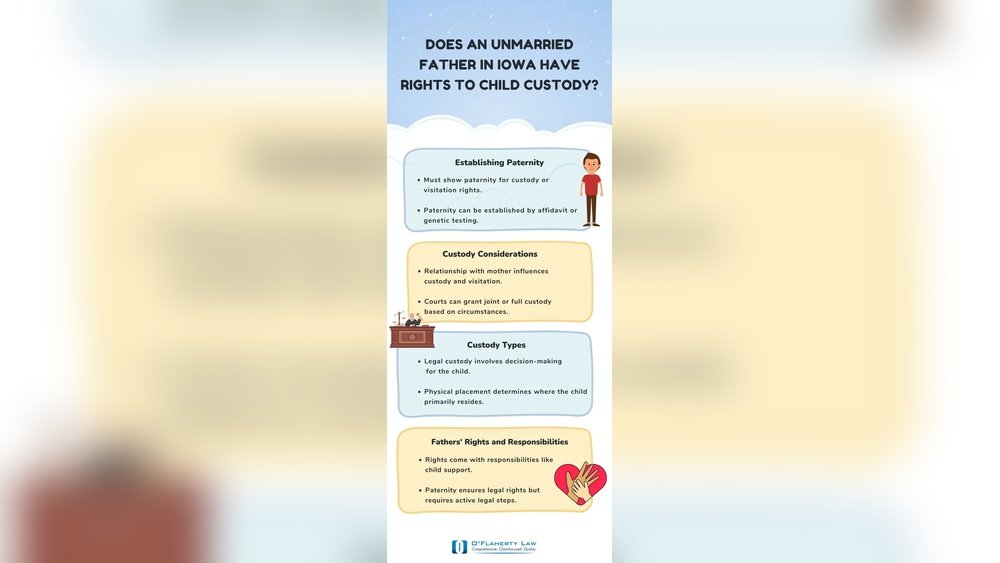
Legal custody allows parents to decide on schooling, health care, and religion. Physical custody determines the child’s home and daily care. One parent may have physical custody while both share legal custody. Courts choose arrangements that serve the child best.
Custody Rights For Unmarried Parents
Unmarried parents have the right to seek custody and visitation. The mother usually has custody unless the father establishes paternity. Fathers must prove paternity to gain custody rights. Courts encourage both parents to stay involved in the child’s life.
Establishing Paternity
Establishing paternity is a key step for unmarried parents in Iowa. It means legally naming the father of a child. This process helps protect the rights of both parents and the child. It sets a foundation for custody, support, and inheritance matters.
Without paternity, a father may have limited legal rights. The child may miss out on benefits like health insurance or social security. Understanding how to establish paternity is important for all unmarried parents.
Why Paternity Matters
Paternity proves who the child’s father is by law. It gives the father legal rights and responsibilities. This includes custody and visitation rights. The child gains the right to inherit from the father.
Establishing paternity also helps secure child support. It can provide access to medical benefits from the father’s insurance. It builds a legal bond that supports the child’s well-being.
Methods To Establish Paternity
Iowa allows several ways to prove paternity. The simplest is signing an acknowledgment form. Both parents can sign this voluntary document at the hospital or later. Courts may order genetic testing if paternity is disputed.
Genetic testing uses DNA to confirm fatherhood with high accuracy. If tests confirm paternity, the court issues an order. This order legally names the father and assigns rights and duties.
Impact On Custody Rights
Once paternity is established, the father can seek custody or visitation. The court treats both parents equally in custody decisions. The child’s best interest guides custody arrangements.
Without paternity, the father may have no legal say in custody matters. Establishing paternity helps fathers build a relationship with their child. It also provides the child with stability and support from both parents.
Filing For Custody
Filing for custody in Iowa is a key step for unmarried parents seeking legal rights to their child. The process helps the court decide who will care for the child and make important decisions. Understanding where and how to file can make this step easier and less stressful.
Where To File
Custody cases in Iowa are filed at the district court in the county where the child lives. If the child lives in different counties, file in the county where the child has lived the longest. Each county court has a family law division that handles custody matters.
Required Documents
You must fill out specific forms to start a custody case. These include a petition for custody and a summons. The petition states your request and reasons for custody. Other documents may be needed, such as proof of paternity or financial information. Check with the court for exact requirements.
Filing Process Steps
First, complete all required forms carefully. Next, submit the forms to the court clerk’s office. You will need to pay a filing fee or ask for a fee waiver. The court will then send a copy to the other parent. A hearing date will be set for both parents to present their case.
Factors Influencing Custody Decisions
Child custody decisions in Iowa focus on many important factors. These factors help courts decide what is best for the child. The court looks at each situation carefully. The goal is to protect the child’s well-being and happiness.
Every case is different. The court considers many details about the parents and the child. This section explains the key factors that influence custody decisions.
Child’s Best Interests
The court’s main focus is the child’s best interests. This means the child’s safety, health, and happiness. The court thinks about the child’s daily needs. It checks if the home is safe and stable. The child’s emotional and physical growth matters too.
Parental Fitness
The court looks at each parent’s ability to care for the child. This includes mental and physical health. The court checks for any history of abuse or neglect. Parents who provide a stable environment have a stronger case. The court wants parents who can meet the child’s needs well.
Child’s Preferences
The child’s wishes may be considered if the child is old enough. The court listens to what the child wants. This helps the court understand the child’s feelings. The child’s preference is one part of the decision. The court still looks at what is best overall.
Parental Cooperation
Parents who work well together have an advantage. The court favors parents who share responsibilities. Cooperation helps the child adjust better to custody arrangements. Fighting parents can create stress for the child. Courts want parents to communicate and support each other.
Custody Arrangements
Custody arrangements define how parents share responsibilities for their child. Iowa law cares most about the child’s best interests. Courts decide custody based on many factors. These include the child’s needs and each parent’s ability to care for them. Unmarried parents have the same rights as married ones in custody cases. Understanding the types of custody helps parents know what to expect.
Sole Custody
Sole custody means one parent has full legal and physical custody. This parent makes all major decisions for the child. The child lives mostly with this parent. The other parent may have visitation rights but limited decision power. Courts award sole custody if one parent is unfit or unable to care for the child. This arrangement gives stability to the child’s daily life.
Joint Custody
Joint custody lets both parents share legal and physical custody. Parents work together on important decisions like education and health. The child spends significant time with both parents. This arrangement encourages cooperation and shared responsibility. Courts prefer joint custody to support ongoing relationships with both parents. It balances the child’s need for care and parental involvement.
Visitation Rights
Visitation rights allow the non-custodial parent to spend time with the child. Courts set a schedule based on the child’s best interests. Visitation helps maintain the parent’s bond with the child. It can be supervised if safety is a concern. Parents can agree on flexible visitation plans. Regular visits promote healthy emotional growth for the child.

Credit: www.familylawsolutionsofiowa.com
Modifying Custody Orders
Modifying custody orders in Iowa involves changing existing agreements about child care. These changes happen when the current order no longer fits the needs of the child or parents. Understanding the rules helps parents take the right steps to protect their child’s best interests.
When Changes Are Allowed
Court allows custody changes if there is a big change in life. Examples include moving to a new city or changes in child’s health. The change must affect the child’s well-being. Parents must prove the current order is not working well.
Process For Modification
Parents start by filing a request with the court. The court will review the facts and listen to both parents. A judge may order a hearing to discuss the case. Both parents can present evidence and speak about the child’s needs. After review, the judge decides if the order will change.
Legal Considerations
The court focuses on the child’s best interest in all decisions. Stability and safety for the child are top priorities. Courts look at each parent’s ability to care for the child. Legal advice can help parents understand their rights and duties. Parents should keep records of any important changes affecting custody.
Common Challenges For Unmarried Parents
Unmarried parents in Iowa face unique challenges with child custody laws. The law treats married and unmarried parents differently. This difference can create confusion and stress for unmarried parents seeking custody or visitation rights. Understanding these challenges helps parents protect their rights and their children’s well-being.
Establishing Custody Without Marriage
Unmarried parents must establish custody through legal steps. Marriage automatically grants both parents rights. Unmarried fathers need to take extra actions to gain custody or visitation. Filing a paternity petition is often the first step. Without legal recognition of paternity, fathers may have no custody rights.
Navigating Legal Complexities
The legal process can be complex and slow for unmarried parents. Courts focus on the child’s best interests. Proving parental fitness and involvement can require documentation and testimony. Custody disputes often involve mediation or court hearings. Understanding Iowa’s specific rules is crucial for parents.
Resources And Support
Iowa offers resources for unmarried parents facing custody issues. Legal aid organizations provide free or low-cost help. Parenting classes and counseling can support healthy co-parenting. Local child support agencies assist with establishing and enforcing support orders. These resources help parents navigate the legal system more easily.
Role Of Mediation And Court
In Iowa, the role of mediation and court is crucial for unmarried parents dealing with child custody. Both options help decide custody and parenting time. The goal is to protect the child’s best interest. Mediation tries to find agreement outside court. Courts step in when parents cannot agree.
Mediation Benefits
Mediation helps parents talk with a neutral person. It is faster and less costly than court. Parents keep more control over decisions. It reduces stress for both parents and children. Agreements made in mediation are more likely to be followed. Mediation encourages cooperation and better communication.
Court Proceedings
Court cases start when mediation fails or is not chosen. A judge listens to both parents and reviews evidence. The judge decides custody based on the child’s best interest. Court decisions are formal and legally binding. Proceedings can be longer and more expensive. The judge focuses on safety, stability, and the child’s needs.
Legal Representation
Parents can hire lawyers to help in court or mediation. Lawyers explain legal rights and guide through the process. They prepare documents and represent parents in hearings. Legal advice helps parents make informed decisions. Having a lawyer can reduce confusion and stress. It ensures parents’ voices are heard clearly.
Child Support And Custody
Child support and custody are closely linked in Iowa for unmarried parents. Courts focus on the child’s best interests. Custody decisions impact support obligations and visitation rights. Both parents share responsibilities for the child’s well-being.
Understanding how custody affects support, how payments are calculated, and the rules for enforcement helps parents navigate their rights and duties.
How Custody Affects Support
Custody arrangements influence how much child support is paid. The parent with physical custody often receives support. This money helps cover the child’s needs like food, clothes, and school supplies.
Shared custody can change the support amount. Courts look at the time each parent spends with the child. More time with one parent might reduce that parent’s support payments.
Calculating Support Payments
Iowa uses a formula to figure out support payments. It considers both parents’ incomes and the child’s needs. The number of children also affects the amount. The goal is fair support for the child’s daily life.
Parents can agree on a different amount. But the court must approve it. This ensures the child’s needs are met properly.
Enforcement And Modifications
Support orders must be followed by both parents. If payments stop, the court can enforce them. Methods include wage garnishment and property liens. Enforcement protects the child’s financial stability.
Support orders can change if circumstances change. Parents can ask the court to modify payments. Changes in income or custody often lead to adjustments. The court reviews evidence before making changes.

Credit: www.oflaherty-law.com

Credit: www.familylawrights.net
Frequently Asked Questions
How Is Custody Determined For Unmarried Parents In Iowa?
Iowa courts focus on the child’s best interests when deciding custody. They consider each parent’s ability to care, support, and provide a stable environment.
Can Unmarried Parents Share Legal Custody In Iowa?
Yes, unmarried parents can share legal custody if both agree and the court finds it beneficial for the child.
What Rights Does A Father Have Without Marriage In Iowa?
An unmarried father must establish paternity to gain custody and visitation rights legally in Iowa.
How To Establish Paternity For Custody In Iowa?
Paternity can be established voluntarily by both parents signing a form or through court-ordered genetic testing.
Conclusion
Child custody laws in Iowa focus on the child’s best interest. Both parents have rights, even if they are unmarried. Establishing paternity is key to gaining custody or visitation. Courts look at many factors to decide what is best for the child.
Parents should try to agree on custody and support. If disagreements arise, the court steps in to help. Knowing the laws can reduce stress and confusion. Staying informed helps protect your parental rights. Every child deserves a safe, loving home with involved parents.

Ismail Hossain is the founder of Law Advised. He is an Divorce, Separation, marriage lawyer. Follow him.