Custody Laws in Iowa Unmarried Parents: Essential Guide to Rights
If you’re an unmarried parent in Iowa, you might be wondering how custody laws affect your rights and your child’s future. Understanding these laws can feel confusing and overwhelming, but it’s crucial for making the best decisions for your family.
This guide will clear up the basics and give you the confidence you need to protect your relationship with your child. Keep reading to discover what you need to know about custody laws in Iowa for unmarried parents—and how to navigate this important part of your life.
Custody Basics For Unmarried Parents
Understanding custody basics helps unmarried parents protect their children’s well-being. Iowa law treats custody with the child’s best interest in mind. Parents need to know key terms and options. This section explains legal and physical custody and the difference between joint and sole custody.
Legal Custody Defined
Legal custody means the right to make important decisions about a child. These decisions include education, health care, and religion. Both parents can share legal custody or one parent may have it alone. The parent with legal custody guides the child’s upbringing.
Physical Custody Explained
Physical custody refers to where the child lives most of the time. The parent with physical custody cares for the child daily. Physical custody can be shared or given to one parent. The child’s routine and comfort are key in deciding physical custody.
Joint Vs Sole Custody
Joint custody means both parents share legal or physical custody. It encourages cooperation and involvement from both parents. Sole custody gives one parent full legal or physical custody. Courts choose the custody type that best supports the child’s needs.

Credit: www.oflaherty-law.com
Establishing Paternity In Iowa
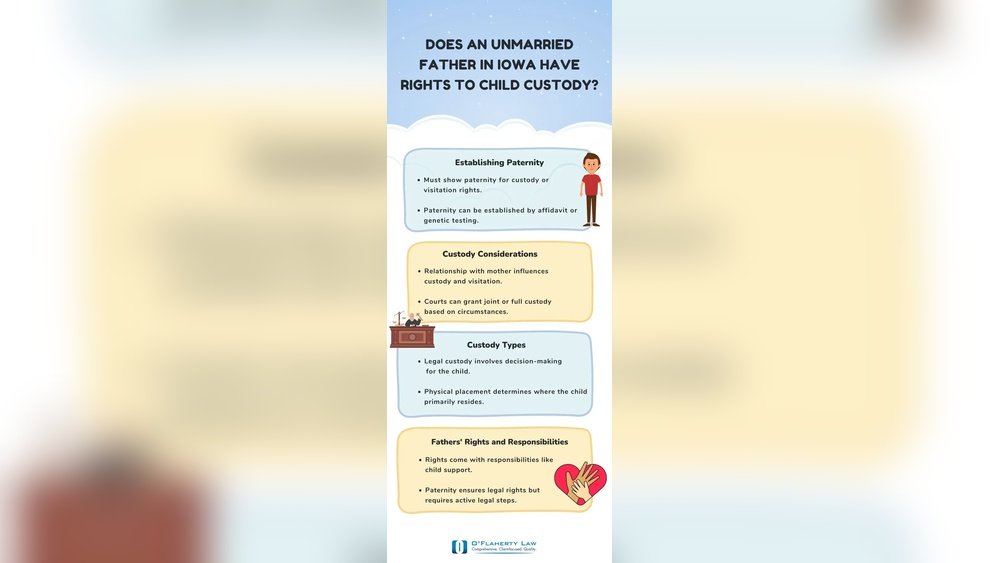
Establishing paternity is a key step for unmarried parents in Iowa. It legally identifies the father of a child. This process affects custody, visitation, and child support rights. Without paternity, fathers may not have legal rights or responsibilities. Mothers benefit too, gaining access to support and decision-making help.
Voluntary Acknowledgment Process
Parents can sign a voluntary acknowledgment form at the hospital. This form states who the father is. It is simple and quick. Both parents must agree and sign the paper. Once signed, it has the same effect as a court order. This step avoids court involvement and speeds up paternity establishment.
Court-ordered Paternity Tests
If parents disagree about paternity, courts may order tests. DNA tests are the most common method. The court arranges the test and pays for it if needed. Results are very accurate. Positive results help the court decide custody and support. Refusing to take the test can lead to legal consequences.
Rights Gained After Paternity Establishment
Once paternity is established, fathers gain legal rights. They can seek custody or visitation with the child. Fathers also take on financial responsibilities. Mothers gain access to child support payments. Both parents share in making important decisions for the child. Establishing paternity creates a stronger family support system.
Filing For Custody In Iowa
Filing for custody in Iowa involves a clear legal process. Unmarried parents must follow state rules to establish custody rights. The court decides based on the child’s best interest. Understanding the filing steps helps parents prepare and act confidently.
Required Documentation
Parents need several documents for custody cases. Proof of paternity is essential for unmarried fathers. This can be a signed affidavit or a court order. A completed custody petition form is also required. Parents should gather any evidence showing their relationship with the child. This might include school records, medical records, or proof of financial support.
Filing Procedures
Start by filing a custody petition at the county courthouse. The petition states the type of custody requested. Submit all required documents with the petition. The court will notify the other parent about the case. Both parents may need to attend mediation before the hearing. This step aims to help parents agree without a trial.
Timeline And Court Hearings
The timeline varies depending on the case complexity. After filing, the court schedules a hearing date. Mediation usually happens within a few weeks. If parents agree, the judge approves the custody plan quickly. If no agreement occurs, the court holds a trial. The judge listens to both sides and decides custody. This process can take several months to complete.

Credit: www.familylawrights.net
Factors Influencing Custody Decisions
Custody decisions in Iowa for unmarried parents depend on many factors. Courts focus on what benefits the child most. Each case gets unique attention based on facts and circumstances.
Judges look beyond legal rights. They seek to create a stable and loving environment for the child. Several key points guide their decisions.
Best Interests Of The Child Standard
The court’s main rule is the child’s best interests. This means safety, health, and happiness matter most. Judges think about how each parent can meet these needs. They also consider the child’s relationship with each parent.
Parental Fitness And Lifestyle
Parents must show they can care well for the child. Courts check if parents provide a safe home and stable life. Issues like substance abuse or neglect affect decisions. A parent’s lifestyle matters if it impacts the child’s wellbeing.
Child’s Preferences
The child’s wishes may influence custody decisions. Courts listen more as children grow older. Judges consider if the child can express clear, reasonable preferences. The child’s comfort and feelings are important to the court.
Visitation Rights For Noncustodial Parents
Visitation rights allow noncustodial parents to spend time with their children. These rights support a child’s need for both parents. Iowa law ensures fair visitation schedules for unmarried parents. Courts focus on the child’s best interests. Noncustodial parents can maintain strong bonds through visitation.
Types Of Visitation Schedules
Visitation can be flexible or fixed by court order. Common types include weekend visits, holiday sharing, and summer breaks. Some parents agree on informal visits without court involvement. Supervised visitation occurs when safety concerns arise. The court decides the schedule based on the child’s needs.
Modifying Visitation Orders
Life changes may require altering visitation plans. Parents can request a modification through the court. Changes must prove they benefit the child. Examples include moving to a new city or changes in work hours. The court reviews each case carefully before approving changes.
Enforcing Visitation Rights
Noncustodial parents may face challenges enforcing visitation. Courts provide legal tools if visitation is denied. Contempt of court can result if one parent breaks the order. Mediation helps resolve conflicts without court battles. Enforcing visitation protects a parent’s right to see their child.
Child Support Obligations
Child support obligations ensure that children receive financial care from both parents. In Iowa, unmarried parents must share responsibility for their child’s needs. These obligations cover basics like food, clothing, education, and healthcare. The law sets clear rules to calculate, enforce, and modify support payments. Understanding these rules helps parents fulfill their duties fairly and avoid legal trouble.
Calculating Support Payments
Iowa uses a formula based on both parents’ incomes. The court considers each parent’s earnings, the child’s needs, and healthcare costs. Expenses like daycare and special education also play a role. The goal is to balance support so the child’s needs are met. The court may adjust payments if one parent has more custody time.
Enforcement Mechanisms
When parents miss payments, Iowa has ways to enforce support orders. The state can withhold wages directly from paychecks. It may also suspend licenses or intercept tax refunds. Courts can hold parents in contempt for not paying. These steps encourage consistent financial support for the child.
Modifications And Termination
Support orders can change if circumstances shift. Parents can ask the court to lower or raise payments. Changes might include job loss or increased child expenses. Support usually ends when the child turns 18 or graduates high school. Sometimes, support continues for special needs or college costs.
Resolving Custody Disputes
Resolving custody disputes in Iowa can be challenging for unmarried parents. The law focuses on the child’s best interest while trying to maintain fairness for both parents. Several paths exist to settle disagreements about custody and parenting time.
Parents often try to avoid court battles. These can be costly, stressful, and take a long time. Instead, many choose alternative methods to reach an agreement peacefully. If these fail, courts step in to decide the matter.
Mediation And Alternative Dispute Resolution
Mediation involves a neutral third party helping parents talk through their issues. The goal is to find common ground and create a parenting plan both agree on. This process is less formal, faster, and less expensive than court.
Alternative dispute resolution (ADR) includes other options like arbitration or collaborative law. ADR focuses on cooperation and communication. It helps reduce conflict and stress for everyone involved.
Court Intervention
If parents cannot agree, the court will decide custody. Judges look at many factors to protect the child’s welfare. This includes the child’s relationship with each parent and each parent’s ability to care for the child.
The court may order evaluations or interviews. It aims for a fair decision based on facts, not emotions. Court decisions are legally binding and enforceable.
Role Of Guardians Ad Litem
A guardian ad litem (GAL) is a court-appointed advocate for the child. The GAL investigates the child’s situation and reports back to the court. This helps the judge understand what is best for the child.
The GAL talks with the child, parents, and others involved. Their goal is to protect the child’s interests during custody disputes. The GAL’s input often influences the final custody decision.
Rights Of Unmarried Fathers
Unmarried fathers in Iowa have specific rights regarding their children. These rights ensure they can be involved in their child’s life. Understanding these rights helps fathers protect their bond with their child. Knowing the law is important for active parenting.
Establishing Legal Rights
Unmarried fathers do not automatically have legal rights. They must take steps to establish paternity. Signing a voluntary acknowledgment of paternity is one way. A court order can also confirm fatherhood. Establishing paternity gives fathers legal standing.
Participating In Decision-making
Once legal rights are established, fathers can join in key decisions. These include education, health care, and religion. Courts encourage shared decision-making for the child’s benefit. Fathers can request custody or visitation rights. Being part of decisions supports the child’s well-being.
Protecting Parental Rights
Fathers must protect their rights by acting early. Delaying can affect custody or visitation chances. Attending court hearings and filing necessary documents is essential. Fathers should seek legal advice if unsure. Protecting rights helps maintain a strong parent-child relationship.
Special Considerations In Custody Cases
Custody cases involving unmarried parents often have unique challenges. The court looks beyond standard rules to protect the child’s best interest. Some special factors strongly affect custody decisions in Iowa.
Understanding these considerations helps parents prepare for what lies ahead. Courts take these issues seriously to ensure the child’s safety and well-being.
Domestic Violence Impact
Domestic violence greatly affects custody outcomes. Courts prioritize child safety above all else. Evidence of abuse can limit or end visitation rights. Protective measures ensure the child does not face harm. Judges may order supervised visits or no contact.
Relocation Issues
Moving far from the other parent complicates custody agreements. Courts assess how relocation affects the child’s relationship with both parents. A parent must prove the move benefits the child. The court tries to keep the child connected to both parents. Relocation without court approval may change custody terms.
Impact Of Parental Substance Abuse
Substance abuse raises serious concerns in custody cases. The court seeks evidence of stable and safe parenting. Drug or alcohol problems can reduce custody rights. Parents may need to complete treatment programs. Courts focus on protecting the child from harm.
Resources For Unmarried Parents
Unmarried parents in Iowa face unique challenges with custody laws. Many resources exist to guide and support them. These resources help parents understand their rights and responsibilities. They also provide legal and emotional support during difficult times.
Legal Aid And Support Organizations
Legal aid groups offer free or low-cost help to unmarried parents. They explain custody laws and assist with paperwork. These organizations often provide advice on child support and visitation rights. They help parents prepare for court hearings. Local family law clinics and nonprofits are valuable sources of help.
Parenting Classes And Counseling
Parenting classes teach skills to improve child care and communication. These classes focus on co-parenting and conflict resolution. Counseling services help parents manage stress and emotions. They support healthy relationships between parents and children. Many community centers offer affordable or free sessions.
Online Tools And Information
Websites provide easy-to-understand guides about custody laws. Online forms and checklists help parents complete legal processes. Virtual support groups connect parents with similar experiences. These tools save time and clarify complex legal terms. Reliable online resources make information accessible anytime.

Credit: www.familylawsolutionsofiowa.com
Frequently Asked Questions
How Is Custody Determined For Unmarried Parents In Iowa?
In Iowa, custody is based on the child’s best interests. Both parents have equal rights once paternity is established. Courts consider factors like the child’s needs, parental abilities, and home environment.
Can Unmarried Fathers Gain Custody Rights In Iowa?
Yes, unmarried fathers must legally establish paternity to gain custody rights. Once paternity is confirmed, fathers can seek joint or sole custody, just like married parents.
What Factors Influence Custody Decisions For Unmarried Parents?
Custody decisions focus on the child’s best interests, including emotional ties, parental fitness, stability, and the ability to provide care. Courts avoid favoritism toward either parent.
How Can Unmarried Parents In Iowa Share Custody?
Unmarried parents can agree on custody arrangements through mediation or court orders. Shared custody involves joint decision-making and time spent with the child, ensuring both parents stay involved.
Conclusion
Custody laws in Iowa treat unmarried parents with fairness. Both parents have rights and responsibilities. Courts focus on the child’s best interest. Establishing paternity is key for legal custody. Parents should work together to create a parenting plan. Clear communication helps avoid conflicts.
Knowing the law protects your family’s future. Seek legal advice if unsure about your rights. Understanding custody rules makes the process easier. Always keep the child’s well-being as the top priority.

Ismail Hossain is the founder of Law Advised. He is an Divorce, Separation, marriage lawyer. Follow him.