How Much of My Mortgage Payment Goes to Principal: The Complete Guide
When making mortgage payments, many homeowners wonder how much of their payment is going toward the principal balance of their loan. Understanding this allocation can help you budget and plan for the future. In this article, we will break down the components of a mortgage payment and explain how much goes toward paying off the principal balance.
Components of a Mortgage Payment
In order to understand how much of your mortgage payment goes toward the principal, it’s important to know the various components of your payment. A typical mortgage payment consists of four parts:
- Principal: This is the portion of your payment that goes toward paying down the actual loan amount.
- Interest: The interest is the cost of borrowing money from the lender. It is calculated based on the outstanding loan balance.
- Taxes: Property taxes are often escrowed into your mortgage payment, and the lender pays them on your behalf.
- Insurance: Homeowners insurance is also often included in your mortgage payment to protect both you and the lender.
Amortization Schedule
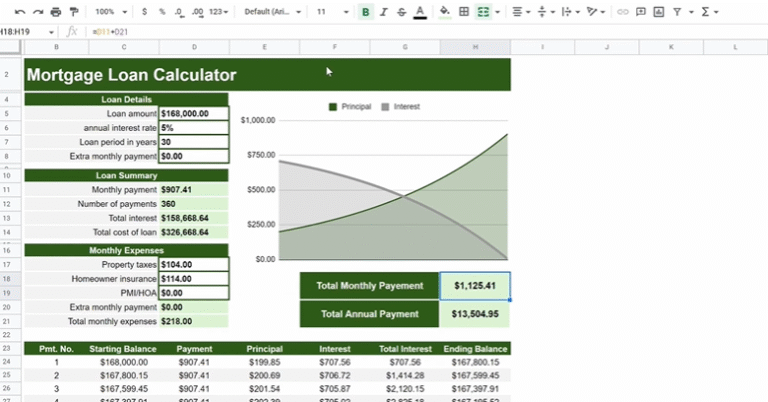
An amortization schedule is a table that shows the breakdown of each mortgage payment over the term of the loan. It outlines the portion of the payment that goes toward the principal, interest, taxes, and insurance.
For example, let’s say you have a monthly mortgage payment of $1,500. In the early years of the loan, a significant portion of the payment will go toward paying interest. As the loan progresses, more of the payment will be applied to the principal.
| Payment Number | Principal | Interest | Taxes | Insurance |
|---|---|---|---|---|
| 1 | $300 | $700 | $200 | $300 |
| 2 | $350 | $650 | $200 | $300 |
In this example, for the first payment, $300 goes toward the principal, $700 toward interest, $200 toward taxes, and $300 toward insurance. As you can see, the amount allocated to the principal gradually increases over time.
How to Pay Down the Principal Faster
If you want to pay down your mortgage principal faster, there are a few strategies you can consider:
- Make extra payments: By making additional principal payments each month or making one-time lump sum payments, you can reduce the principal balance and save on interest over the long term.
- Biweekly payments: Instead of making monthly payments, you can switch to biweekly payments. As a result, you’ll make 26 half-payments, equivalent to 13 full payments per year, which can help you pay off your mortgage faster.
- Refinance to a shorter term: If you can afford higher monthly payments, refinancing to a shorter loan term, such as from a 30-year to a 15-year mortgage, can allow you to pay off your mortgage faster and save on interest.
By employing one or a combination of these strategies, you can significantly reduce the amount of interest paid and shorten the term of your mortgage.
In Conclusion
Understanding how your mortgage payment is allocated can help you make informed decisions and plan for the future. By knowing how much goes toward the principal, you can better strategize and potentially pay off your mortgage faster. Consider employing additional payment strategies to save on interest and reduce your overall loan term. Always consult with appropriate professionals before making any financial decisions.
Frequently Asked Questions On How Much Of My Mortgage Payment Goes To Principal: The Complete Guide
How Does A Mortgage Payment Break Down?
A mortgage payment typically consists of two main components: principal and interest. The principal is the amount that goes towards reducing the loan balance, while the interest is the cost of borrowing. Other potential components include property taxes and insurance.
How Much Of My Mortgage Payment Goes To Principal?
The exact portion of your mortgage payment that goes towards the principal depends on various factors such as the loan amount, interest rate, and length of the loan term. Generally, a higher monthly payment allocated toward the principal will help reduce the loan balance faster.
What Factors Affect The Amount Going Towards Principal?
The key factors that affect the amount of your mortgage payment going towards the principal are the interest rate, loan term, and whether you have made any additional principal payments. Higher interest rates and longer terms tend to allocate a smaller portion towards principal repayment.
Are There Any Benefits To Paying More Towards Principal?
Yes, making additional principal payments can have several benefits. Firstly, it helps reduce the overall interest paid over the life of the loan, potentially saving you money. Secondly, it helps you build equity in your home faster, which can be useful if you plan to sell or refinance in the future.

Ismail Hossain is the founder of Law Advised. He is an Divorce, Separation, marriage lawyer. Follow him.