Labor Laws in Kentucky Breaks: Essential Rights Every Worker Must Know
Are you aware of how labor laws in Kentucky could impact your job or business? Understanding these laws is crucial to protect your rights and avoid costly mistakes.
Whether you’re an employee wanting to know what you’re entitled to, or an employer aiming to stay compliant, this guide will break down the essential rules you need to know. Keep reading to discover how Kentucky’s labor laws affect you and what steps you can take to stay informed and prepared.

Credit: www.laborposters.org
Break Types In Kentucky
Kentucky labor laws cover several types of breaks employees may receive during their workday. Understanding these breaks helps workers know their rights. Employers must follow state rules about breaks to keep work fair and safe.
Meal Breaks
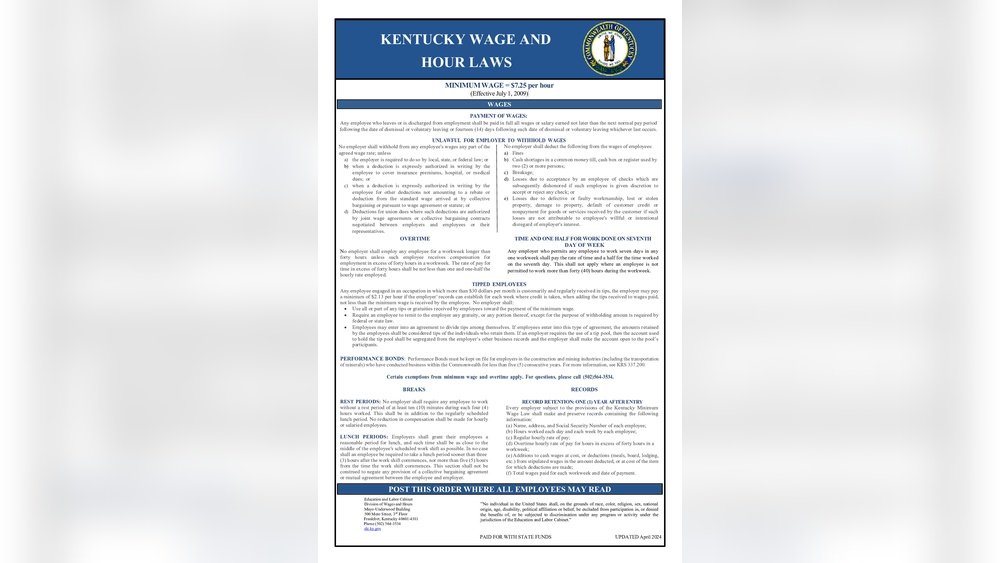
Kentucky law does not require employers to give meal breaks. Many workplaces still offer 30-minute or longer meal breaks. These breaks are usually unpaid if the employee is free to leave the work area. Meal breaks allow workers to eat and rest away from their tasks.
Rest Breaks
Rest breaks are short pauses during the work shift. Kentucky law does not mandate rest breaks either. However, many companies provide 10- to 15-minute paid rest breaks. These help workers recharge and stay alert. Rest breaks are often paid because workers stay on the job site.
Overtime Breaks
Overtime breaks come into play during extra hours worked beyond 40 in a week. Kentucky follows federal overtime rules requiring time and a half pay for those hours. The law does not require extra breaks during overtime. Employers may offer breaks to help workers manage longer shifts.
State Vs Federal Rules
Labor laws about breaks can be confusing because both state and federal rules exist. Employees and employers need to understand which law applies in Kentucky. The state law may offer different rights than federal law. Knowing the difference can help workers get proper break times.
Kentucky Labor Standards
Kentucky does not require employers to provide breaks for adult workers. There is no law mandating rest or meal breaks. Some jobs may have specific rules, but most workers rely on employer policies. Kentucky law focuses more on child labor and safety than on breaks.
Federal Labor Standards
The federal Fair Labor Standards Act (FLSA) also does not require breaks. It only sets rules for paying workers during short breaks. Breaks under 20 minutes are usually paid. Meal breaks longer than 30 minutes are unpaid if the employee is free from work.
Which Rules Apply
Federal rules apply across all states, including Kentucky. State laws add extra protections if they exist. Since Kentucky has no specific break law for adults, federal rules guide break time payment. Employers may offer breaks by policy, but they follow federal rules for pay.
Who Qualifies For Breaks
Understanding who qualifies for breaks under Kentucky labor laws helps workers know their rights. Break rules vary based on job type and work hours. Knowing these rules can make work hours more comfortable and fair.
Breaks are not always guaranteed by law but are often set by company policy or contracts. Kentucky follows federal laws but also has its own rules. These rules guide when and how breaks should be given.
Full-time Employees
Full-time workers usually work 30 hours or more each week. They often get more break options than part-time workers. Employers may offer paid or unpaid breaks to these employees. A common practice is a 30-minute meal break for shifts over five hours. Short rest breaks, like 10 or 15 minutes, might also be offered.
Part-time Employees
Part-time workers have fewer work hours, typically under 30 hours weekly. Their break entitlements can differ from full-time workers. Some employers do not require meal breaks for shifts under six hours. Rest breaks for part-time workers depend on company rules. Workers should check their employee handbook for details.
Exempt Vs Non-exempt Workers
Exempt workers do not qualify for overtime pay or certain breaks under federal law. These workers usually have salaried, professional, or managerial roles. Non-exempt workers must follow strict break and overtime laws. Kentucky follows the Fair Labor Standards Act rules here. Non-exempt workers generally have more break protections.
Credit: www.timetrex.com
Employer Responsibilities
Employers in Kentucky have clear duties about breaks for their workers. These rules help protect workers’ rights and ensure fair treatment. Knowing these responsibilities can prevent legal problems and create a better work environment.
Scheduling Breaks
Employers must plan breaks fairly. They should give workers time to rest during long shifts. Breaks should not harm the workflow but must allow workers to refresh. Kentucky law does not require breaks for all workers, but many employers offer them anyway.
Pay During Breaks
Short breaks, usually under 20 minutes, should be paid. Long breaks, like lunch breaks, often do not get paid. Employers must clearly tell workers if a break is paid or unpaid. This clarity avoids confusion and maintains trust.
Record Keeping
Employers must keep clear records of breaks. These records show when breaks happen and how long they last. Good record keeping helps during audits or disputes. It also ensures compliance with labor laws.
Employee Rights And Actions
Employees in Kentucky have specific rights to ensure fair treatment during work breaks. Knowing these rights helps workers protect themselves from unfair practices. Workers can take several steps if they believe their rights are violated. This section explains what actions employees can take to defend their break rights.
Reporting Violations
Employees should report any break violations to their employer first. This can be done verbally or in writing. Clear communication helps solve problems quickly. If the employer does not fix the issue, employees can seek outside help. Keeping records of missed breaks or denied rest times is important. Documentation supports claims and shows a pattern of violations.
Filing Complaints
Workers may file complaints with the Kentucky Labor Cabinet. This state agency enforces labor laws, including break regulations. Complaints must include details about the violation and employer information. The Labor Cabinet will investigate the claim and take necessary action. Filing a complaint is free and confidential. It helps protect workers from unfair treatment and enforces their rights.
Legal Protections
Kentucky law protects employees from retaliation after reporting violations. Employers cannot fire or punish workers for asserting their rights. Employees who face retaliation can take legal action against their employer. Courts may order compensation or reinstatement for wronged workers. Knowing these protections encourages workers to speak up without fear. Legal safeguards promote a fair and safe workplace for all.
Credit: www.minimum-wage.org
Frequently Asked Questions
What Are The Main Labor Laws In Kentucky?
Kentucky labor laws cover wages, hours, safety, and workers’ rights. They follow federal and state rules to protect employees. Employers must follow these laws to avoid penalties.
How Does Kentucky Handle Minimum Wage Regulations?
Kentucky uses the federal minimum wage of $7. 25 per hour. Some cities may have higher wages, but state law sets the baseline. Employers must pay workers at least this amount.
What Are Kentucky’s Rules For Overtime Pay?
Overtime is paid at 1. 5 times the regular wage for hours over 40 per week. This applies to most hourly workers. Salaried employees may have different rules.
Can Employees In Kentucky Take Paid Sick Leave?
Kentucky does not require paid sick leave by law. Some employers offer it voluntarily or through contracts. Workers should check their company policies for details.
Conclusion
Kentucky’s labor laws protect many worker rights. Knowing these rules helps avoid problems at work. Employers and employees both benefit from fair practices. Workers should speak up if laws are broken. Staying informed keeps workplaces safe and fair. This knowledge supports better jobs and peace of mind.
Always check the latest laws for updates. Understanding labor laws helps build respect and trust. It’s a key step toward a better work life.

Ismail Hossain is the founder of Law Advised. He is an Divorce, Separation, marriage lawyer. Follow him.