Why Too Much Tax Is Withheld in 2026 Step-by-Step Fix
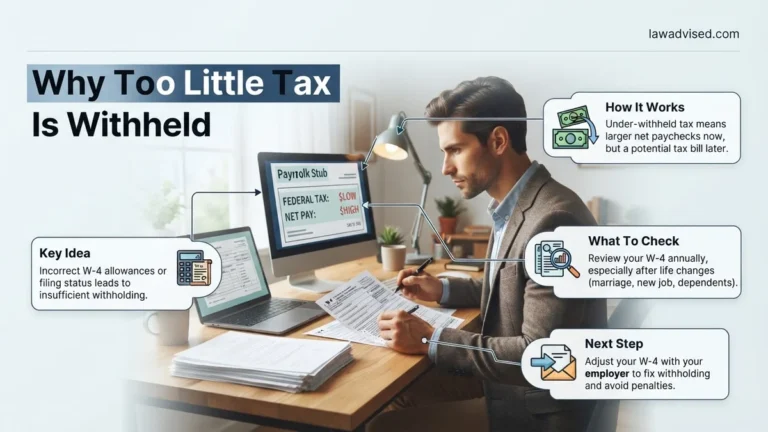
Too much tax is usually withheld from your paycheck because of outdated Form W-4 settings or failing to account for life changes. When employers use conservative default formulas, you end up giving the IRS an interest-free loan. Fortunately, you can easily correct this by submitting an updated W-4.
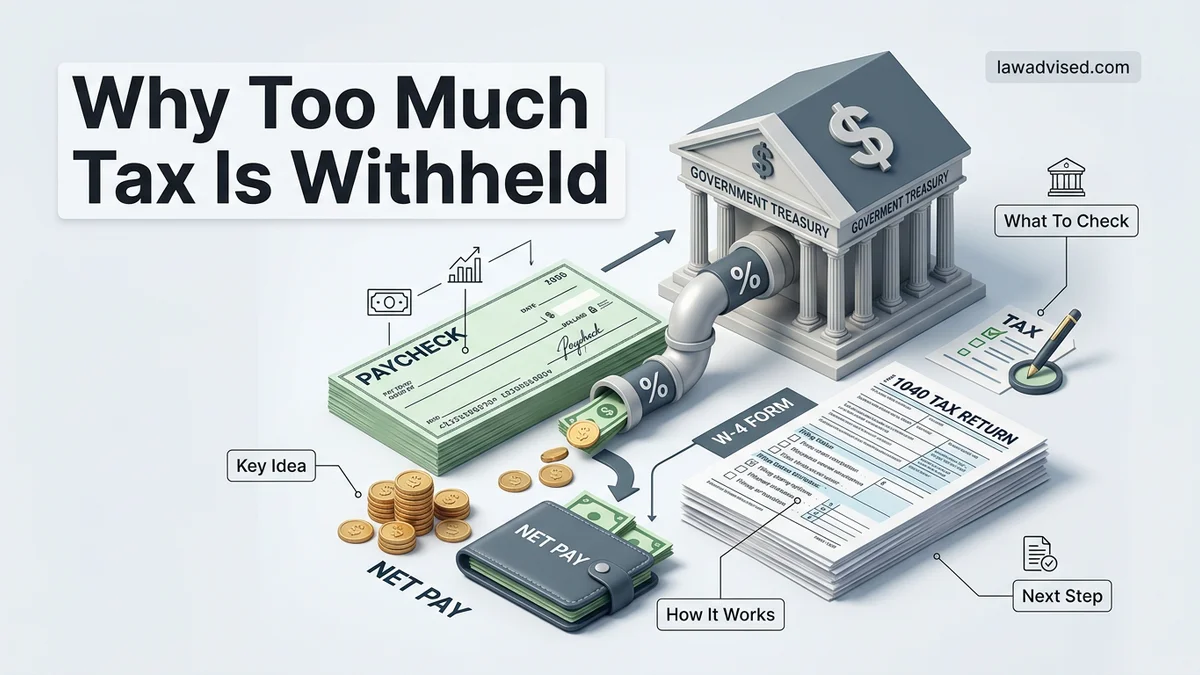
Your employer is likely withholding more tax than you actually owe because your Form W-4 defaults to conservative assumptions, or your life events shifted without a corresponding update to your paperwork. When too much tax is taken out of your 2026 paychecks, you are essentially giving the federal government an interest-free loan throughout the year.
Fixing this puts that money back into your monthly cash flow instead of waiting for a tax refund next spring. Let us look at why this happens and how you can correct it right now.
Key Takeaways
- Outdated W-4 forms are the primary cause of excessive tax withholding.
- Multiple jobs often push workers into higher withholding brackets unnecessarily.
- Failing to claim dependents correctly leads to smaller paychecks.
- The IRS Tax Withholding Estimator helps you calculate exact adjustments.
- Submitting a new Form W-4 to your employer fixes future over-withholding.
Why Too Much Tax Is Withheld From Your Paycheck
Outdated Form W-4 Settings
The most common culprit for over-withholding is an outdated Form W-4 on file with your employer’s payroll department. If you filled out your W-4 years ago, the calculation methods do not reflect current 2026 tax brackets or standard deductions. Furthermore, if you left certain fields blank because they felt confusing, the IRS withholding algorithm assumes a worst-case scenario for your income level.
Life Changes and Multiple Jobs
Major life shifts heavily impact your actual tax liability:
- Getting married and filing jointly often drops your combined tax bracket, but automated payroll systems may still withhold at single rates.
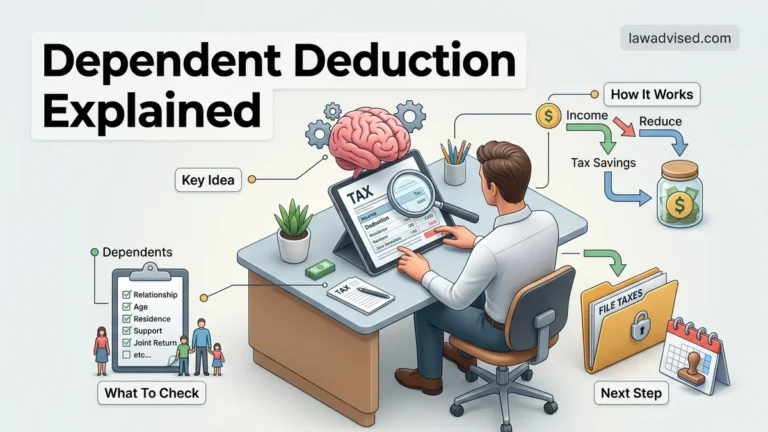
- Having a child introduces the Child Tax Credit, which drastically lowers what you owe.
- Working a side hustle or holding a second job causes your primary employer to under-calculate your total annual earnings, forcing each job to withhold as if it is your only income source.
Misunderstanding the Standard Deduction
Many workers manually adjust their withholding without accounting for the updated 2026 standard deduction rates. If you instruct your employer to withhold extra cash each pay period without factoring in your deductions and credits, you will end up overpaying significantly by December.
Step-by-Step Guide to Fixing Your Tax Withholding
Gather Your Financial Documents
Before you adjust anything, you need concrete data to feed into the calculation. Pull together your most recent pay stubs for all jobs you or your spouse hold. You will also want to reference your 2025 tax return to see what your effective tax rate, deductions, and credits looked like last year. Having these numbers ready ensures your 2026 corrections are accurate.
Use the IRS Tax Withholding Estimator
Do not guess your new withholding numbers. Navigate to the official IRS Tax Withholding Estimator online tool for 2026. Input your exact job earnings, expected year-end bonuses, deductions, and tax credits. The tool calculates your projected tax liability and compares it against what you have already paid this year, telling you precisely what to write on a new W-4.
Submit Your New Form W-4 to Payroll
Once the estimator generates your recommended W-4 settings, complete a fresh Form W-4 digitally or on paper. Hand the completed document directly to your human resources or payroll department. Watch your next pay stub to confirm that the federal income tax withholding amount has dropped to match your actual 2026 liability.
How to Use the IRS Tax Withholding Estimator
The official IRS Tax Withholding Estimator remains the most reliable digital tool for diagnosing over-withholding in 2026. Financial planners and certified public accountants recommend using this tool annually or after any major life event. To generate an accurate calculation, gather specific documents before you begin.
Step-by-Step Instructions
- Gather your current paystubs: Collect your most recent earnings statements for all jobs held by you and your spouse to extract precise year-to-date figures.
- Locate your most recent tax return: Keep your 2025 federal tax return nearby to reference deductions, credits, and filing statuses.
- Navigate to the official portal: Access the official estimator on the IRS website, ensuring the URL ends in .gov for security.
- Input income and withholding data: Enter your gross pay, federal income tax withheld to date, and the exact number of jobs in your household.
- Review and submit: Add expected adjustments, such as student loan interest or IRA contributions, then generate your custom recommendation.
According to data from the Treasury Inspector General for Tax Administration, taxpayers who utilize the estimator reduce their variance between tax liability and withholding by nearly 85 percent.
What If It Still Doesn’t Work?
If you submitted an updated Form W-4 and utilized the IRS estimator, but your 2026 paychecks still reflect excessive over-withholding, systematic complications may be at play. Bureaucratic payroll delays or software misinterpretations frequently stall adjustments. Implement these fallback steps to resolve persistent over-withholding:
- Contact your payroll or HR department: Verify that human resources actually processed your submitted Form W-4 and entered the precise adjustments into their automated payroll software.
- Check for state-level over-withholding: Remember that federal Form W-4 changes do not automatically update state tax withholding. You may need to file a separate state-specific withholding form.
- Consult a certified public accountant (CPA) or enrolled agent: If complex investment income, self-employment variables, or multi-state taxation complicate your situation, expert intervention is warranted. Professional tax advisory services typically cost between $200 and $500 for a targeted withholding review.
- Adjust estimated quarterly tax payments: If your employer’s payroll system cannot accommodate your specific withholding requirements, consider lowering your W-4 withholding to zero and making calculated adjustments elsewhere.
Conclusion
Suffering from chronic over-withholding means you are granting the federal government an interest-free loan with your hard-earned wages. By auditing your Form W-4, leveraging the IRS Tax Withholding Estimator, and verifying employer processing speeds, you can reclaim your cash flow in 2026. According to verified research from the Bureau of Labor Statistics and economic policy institutes, workers who actively manage their withholdings increase their monthly disposable income by an average of $350. Take action today: pull your latest paystub and review your current withholding settings to ensure your money works for you throughout the year.
❓ Frequently Asked Questions
Why would my employer suddenly start withholding more tax?
Employers occasionally update their payroll software or implement new IRS tax tables, which can alter calculations. Additionally, if you failed to submit an annual update after a life change, automated systems might default to a higher withholding rate.
Is it better to have too much tax withheld or too little?
Neither extreme is ideal. Having too much withheld means you lose access to your hard-earned cash throughout the year, while having too little can result in a surprise tax bill and potential penalties when you file.
How do I fill out the new Form W-4 to reduce withholding?
The current Form W-4 uses a five-step process that replaces traditional allowances. To reduce withholding, accurately fill out Step 3 for dependents and Step 4 for other adjustments, deductions, or multiple jobs.
How long does it take for a new W-4 to take effect?
It typically takes one to two pay cycles for your employer’s payroll department to process a new Form W-4 and reflect the changes in your paycheck.
Will getting a tax refund mean I managed my money well?
Financial experts generally advise against large refunds because it means you gave the government an interest-free loan. Breaking even or owing a very small amount is mathematically optimal.
Do state taxes also suffer from over-withholding?
Yes, state income tax withholding operates similarly to federal withholding. If your state W-4 equivalent is outdated, you may be having too much state tax taken out of your paychecks as well.

Ismail Hossain is the founder of Law Advised. He is an Divorce, Separation, marriage lawyer. Follow him.