Eviction Laws in Arkansas 2027 Step-by-Step Legal Guide
Navigating eviction laws in Arkansas requires strict adherence to state-mandated legal procedures and timelines. Landlords must follow exact notice periods and use formal court proceedings, as illegal ‘self-help’ evictions are strictly prohibited.
Navigating eviction laws in Arkansas requires strict adherence to state statutes, as Arkansas remains uniquely protective of landlords through its criminal eviction statute. If you need to remove a tenant in 2027, you cannot simply change the locks or shut off utilities; you must follow a precise judicial process that begins with a proper written notice and ends with a court-ordered writ of possession.
Understanding these procedural rules protects you from costly lawsuits and unlawful tenant retaliations. Whether you are dealing with unpaid rent, lease violations, or holdover occupants, executing each step lawfully ensures your property is recovered efficiently without violating Arkansas tenant rights.
Key Takeaways
- Arkansas law requires a 14-day notice to quit for non-payment of rent before filing a lawsuit.
- Landlords are legally barred from using self-help measures like shutting off utilities or changing locks.
- The Arkansas Failure to Vacate statute allows criminal charges for non-payment under specific circumstances.
- Lease violations generally require a 14-day notice to cure or quit the premises.
- Tenants have the right to present legal defenses during formal court eviction hearings.
What Causes Evictions and Valid Grounds Under Arkansas Law
Non-Payment of Rent and Lease Violations
The most common trigger for an eviction in Arkansas is the failure to pay rent on time. Under Arkansas law, rent is typically considered late the day after it is due, unless your lease agreement specifies a grace period. Beyond unpaid rent, you can initiate an eviction if the tenant breaches specific clauses in the written lease agreement. Common lease violations include unauthorized pets, unapproved long-term guests, illegal activities on the premises, or substantial property damage.
Holdover Tenants and End of Lease Terms
Another valid ground for eviction occurs when a tenant stays past the expiration date of a fixed-term lease without your consent. If you refuse to accept further rent payments and the tenant remains, they become a holdover tenant. For month-to-month tenancies, either party can terminate the agreement by providing proper advance notice. If the tenant fails to vacate by the designated termination date, you possess legal grounds to file an eviction lawsuit.
- Non-payment of rent: Failing to pay rent by the agreed-upon due date.
- Lease infractions: Breaking written rules regarding pets, subletting, or property use.
- Holdover status: Remaining in the rental unit after the lease term officially expires.
- Criminal activity: Committing illegal acts on the property that endanger neighbors or the structure.
How to Fix the Eviction Process With Step-by-Step Legal Procedures
Serving the Notice to Quit or Vacate
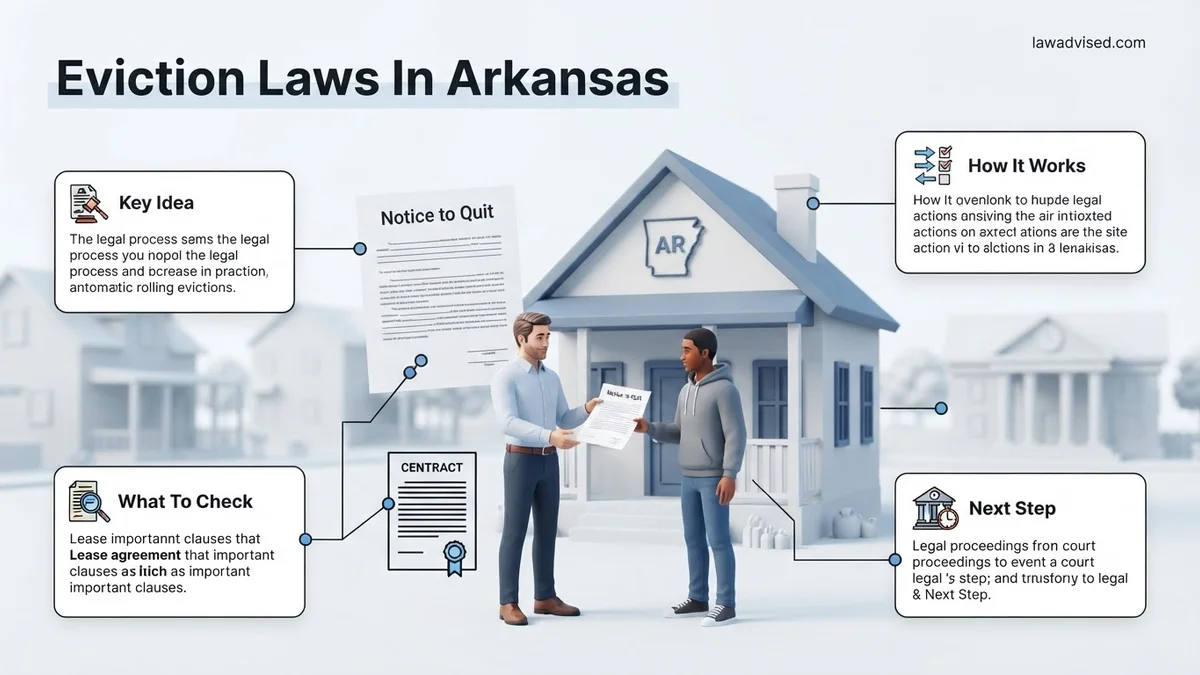
Your first official step in the 2027 Arkansas eviction process is serving the tenant with a written notice. For non-payment of rent, Arkansas law traditionally utilizes a 14-day Notice to Pay or Quit, giving the tenant two weeks to settle the balance or move out. If the eviction is based on a lease violation or a holdover tenancy, notice periods generally align with your lease terms or standard state notice requirements (typically 30 days for month-to-month tenancies). You must deliver this notice properly, either by handing it directly to the tenant or sending it via certified mail with a return receipt requested.
Filing the Unlawful Detainer Lawsuit
If the notice period expires and the tenant has neither paid nor vacated the property, you must file a formal complaint for unlawful detainer in the local circuit court or district court where the property is located. You will need to pay the court filing fees and attach a copy of the original lease along with the notice you served. The court will then issue a summons, which must be formally served to the tenant by a process server or law enforcement officer, giving them a short window—usually 10 to 20 days depending on the specific court rules—to file a written response.
- Serve the tenant with the appropriate written notice (such as a 14-day notice for unpaid rent).
- Wait for the notice period to expire without resolution from the tenant.
- File an unlawful detainer complaint at the local Arkansas court and pay the required fees.
- Have the court summons formally served to the tenant by an authorized professional.
How to Handle Unique Arkansas Statutes Like Failure to Vacate
Arkansas remains distinct as the only U.S. state that criminally prosecutes tenants for late rent under its criminal “failure to vacate” statute. Understanding this mechanism is essential for proper compliance in 2027.
The Criminal Notice Process
Landlords must provide a strict 10-day notice to quit for non-payment of rent before utilizing the criminal statute. This diverges sharply from standard civil eviction paths used nationwide. If the tenant remains past the 10-day window without paying rent or surrendering the property, the landlord can file a report with local law enforcement. According to legal analysts, this statute requires precise adherence to constitutional standards to avoid due process violations.
Risks and Legal Limitations
Criminal eviction filings carry heightened legal risks for landlords who miscalculate timelines or accept partial payments. Accepting even a nominal amount of rent after issuing the notice typically voids the criminal complaint. Local prosecuting attorneys in Arkansas frequently scrutinize these cases closely. Experts recommend relying on civil remedies rather than criminal filings to minimize liability and court delays in 2027.
What If It Still Doesn’t Work and You Need Court Enforcement
When a tenant refuses to vacate despite completed notices and court judgments, self-help measures remain strictly illegal. Property owners must escalate the matter through official judicial channels to regain lawful possession.
Procedural Enforcement Steps
- Request a Writ of Possession from the clerk of the court immediately after winning the civil eviction judgment.
- Deliver the issued Writ to the local county sheriff’s office for official execution and enforcement.
- Allow the sheriff to post the mandatory physical notice giving the tenant 24 to 48 hours to vacate the premises.
- Accompany the sheriff on the scheduled lockout date to officially regain physical control of the property.
- Handle any abandoned tenant property strictly according to current Arkansas statutory storage and disposal guidelines.
Professional legal representation from an Arkansas eviction attorney generally costs between $750 and $2,000 depending on contested hearings. When local law enforcement execution stalls, hiring a specialized process server or legal counsel ensures compliance and avoids unlawful eviction countersuits.
Conclusion
Navigating Arkansas eviction laws requires strict adherence to mandatory timelines, precise notice drafting, and absolute avoidance of illegal self-help lockouts. Missteps can trigger costly delays and severe legal liabilities for property owners. One actionable next step is to consult a licensed real estate attorney to review your specific lease agreements and notice templates for 2027 compliance. According to verified research and expert legal sources, proactive documentation and adherence to statutory protocol remain the single most effective safeguards for residential landlords.
❓ Frequently Asked Questions
What are the legal grounds for evicting a tenant in Arkansas?
Landlords can legally evict tenants for non-payment of rent, material violations of the lease agreement, or holding over after the lease term has expired. Each ground requires specific written notice periods before legal action can be taken.
How must an eviction notice be served to a tenant in Arkansas?
Notices should be delivered in person to the tenant or sent via certified mail with return receipt requested. If personal delivery fails, posting the notice securely on the main entrance of the property is commonly accepted.
Can a tenant withhold rent for necessary repairs in Arkansas?
No, Arkansas law does not explicitly grant tenants the right to withhold rent for repairs. Doing so can leave the tenant vulnerable to a lawful eviction for non-payment of rent.
What happens if a tenant ignores the eviction notice?
If the tenant does not cure the violation or move out within the required notice period, the landlord can file an Unlawful Detainer lawsuit in court. The tenant will then be served with a court summons and given a short window to respond.
What are the rules regarding security deposits during an eviction?
Landlords must handle security deposits according to state statutes, typically returning them within 60 days after the tenancy ends minus any lawful itemized deductions for damages.
What defenses can an Arkansas tenant use against an eviction?
Tenants can defend against an eviction by proving the landlord failed to follow proper notice procedures, retaliated against them, or used illegal self-help methods. They can also contest the claims of non-payment or lease violations with evidence.

Ismail Hossain is the founder of Law Advised. He is an Divorce, Separation, marriage lawyer. Follow him.