What are the Booster Seat Laws in California: Essential Safety Rules
Are you sure your child is riding safely every time you hit the road in California? Booster seat laws aren’t just rules—they’re designed to protect your little ones in the event of a crash.
But do you know exactly when your child needs to stay in a booster seat and when they can graduate to a regular seat belt? Understanding California’s booster seat laws can be confusing, yet it’s crucial for your child’s safety and for avoiding costly penalties.
You’ll get clear answers on the age, height, and weight requirements, plus tips on how to ensure the seat belt fits just right. Keep reading to make sure you’re doing everything you can to keep your child safe and legal every time you drive.
California Booster Seat Age Rules
California has clear rules about booster seat use for children. These laws focus on age and size to keep kids safe while traveling. Understanding these rules helps parents and caregivers follow the law and protect children in vehicles.
The state requires children to use booster seats until they reach a certain age or size. This ensures the seat belt fits properly, which is crucial for safety. The booster seat helps position the seat belt across the child’s body correctly.
Legal Age For Booster Seat Use In California
Children under 8 years old must use a booster seat in California. This rule applies unless the child is 4 feet 9 inches or taller. The booster seat is necessary to make the seat belt fit properly on smaller children.
Height And Weight Considerations
Besides age, height and weight affect booster seat use. Children who are 4 feet 9 inches or taller may no longer need a booster seat. Weight limits vary by booster seat type but generally support children up to 80 pounds.
Transitioning Out Of Booster Seats
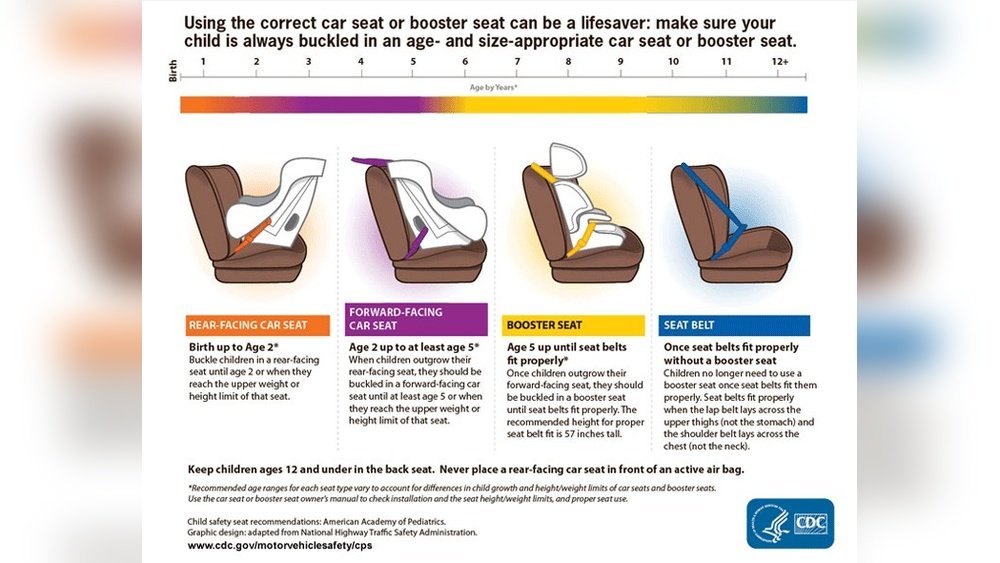
Kids can stop using booster seats once the seat belt fits correctly. The lap belt should lie low across the thighs, not the stomach. The shoulder belt must cross the chest, not the neck or face. The child should sit comfortably all trip long.

Credit: www.blind-guardian.com
Proper Booster Seat Fit
Proper booster seat fit is crucial for your child’s safety in the car. A well-fitted booster seat ensures the seat belt works as designed. It reduces injury risk during sudden stops or accidents. Parents must check seat positioning and belt placement carefully. These two factors help keep children secure and comfortable on every ride.
Seat Positioning
The child must sit all the way back against the vehicle seat. Their knees should bend comfortably at the edge of the seat. Sitting properly prevents the child from sliding under the seat belt. The booster seat should be placed in the back seat, which is the safest spot. Avoid front seats unless the vehicle has no rear seats or they cannot be used.
Belt Placement
The shoulder belt must cross the center of the child’s chest and shoulder. It should never touch the neck or face. The lap belt needs to lie low and flat across the upper thighs. It must not rest on the stomach area. Correct belt placement keeps the child secure without causing discomfort. The child should remain seated comfortably for the entire trip.
When Kids Can Stop Using Booster Seats
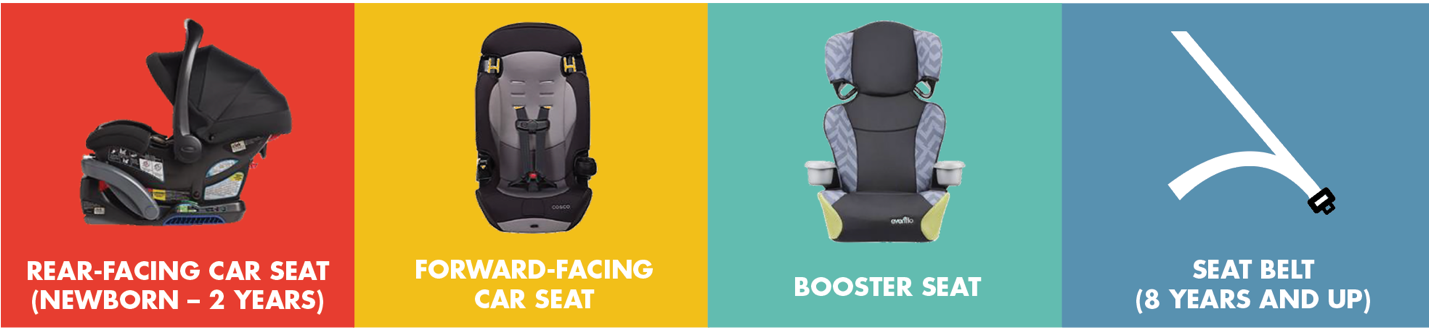
California law requires children to use booster seats until they are at least 8 years old or 4 feet 9 inches tall. Kids must sit properly with the seat belt fitting across the chest and lap for safety. These rules help protect children during car rides.
Booster seats help keep children safe in cars. They make sure seat belts fit children correctly.
In California, kids must use booster seats until they meet certain requirements. These rules keep kids protected during every ride.
Height And Weight Requirements
Children can stop using booster seats when they reach 4 feet 9 inches tall. They usually weigh between 80 and 100 pounds at this height.
Kids shorter or lighter than this must keep using booster seats. Proper fit is the key to safety.
Proper Seat Belt Fit
The seat belt must fit the child correctly before stopping booster use. The lap belt should lie flat across the upper thighs.
The shoulder belt must cross the center of the chest and shoulder. It must not touch the neck or face.
Comfort And Safety During The Ride
Children should sit all the way back against the car seat. Their knees should bend comfortably over the seat edge.
The child must stay in this position for the entire trip. This ensures the seat belt works as designed.
Credit: www.ots.ca.gov
Penalties For Violating Booster Seat Laws
Penalties for violating booster seat laws in California are strict. The state prioritizes child safety during car rides. These laws help protect young passengers from injury in crashes.
Drivers who fail to follow booster seat rules face fines. Law enforcement officers may issue citations during traffic stops. Each violation results in a monetary penalty that grows with repeated offenses.
Monetary Fines For Booster Seat Violations
The first offense can cost up to $100. Additional fees and court costs may increase the total amount. Repeat violations lead to higher fines, sometimes reaching several hundred dollars.
Points On Driving Record
California may add points to the driver’s record for booster seat violations. These points can affect insurance rates and lead to license suspension if too many accumulate. Safe driving habits help avoid these consequences.
Legal Responsibility Of Adults
Adults driving with children are responsible for proper restraint use. Parents, guardians, and caregivers must ensure children use booster seats correctly. Failure to comply can result in legal action beyond fines.
Resources For Booster Seat Safety
Finding the right resources helps keep children safe in cars. Knowing where to get accurate information makes booster seat use easier. Several official organizations provide clear guidance on California’s booster seat laws. These groups also offer tips on proper installation and safety checks.
California Highway Patrol
The California Highway Patrol (CHP) offers extensive support on booster seat safety. Their website explains the state laws in simple terms. Parents can find checklists to ensure correct seat use. CHP also runs car seat inspection events across California. Officers help caregivers install seats properly and answer questions. This support reduces the risk of injury during car rides.
Office Of Traffic Safety
The California Office of Traffic Safety (OTS) promotes child passenger safety statewide. Their resources include educational videos and brochures. OTS funds programs that train technicians in car seat installation. These experts assist families with booster seat choices. The office also shares updates on new laws and safety standards. This helps parents stay informed and compliant.
Child Passenger Safety Organizations
Many nonprofit groups focus on child passenger safety in California. Organizations like Safe Kids California provide hands-on workshops. They teach caregivers how to select and install booster seats. These groups often partner with local police and fire departments. Together, they offer free car seat checks and safety events. Joining these programs increases child safety on the road.
Credit: www.dennislawgroup.com
Frequently Asked Questions
At What Age Does A Child No Longer Need A Booster Seat In California?
In California, a child can stop using a booster seat when the seat belt fits properly. The lap belt must lie across the upper thighs, and the shoulder belt must cross the chest without touching the neck or face. This usually happens between ages 8 and 12.
Can I Put My 7 Year Old In A Backless Booster Seat?
You can use a backless booster for a 7-year-old if the seat belt fits correctly. The lap belt must lie low on the thighs, and the shoulder belt should cross the chest without touching the neck or face. The child must sit comfortably throughout the trip.
Can My 40 Lb 3 Year Old Sit In A Booster Seat?
A 40 lb, 3-year-old may sit in a booster seat if they fit the seat belt properly. The lap belt must lie low on the thighs, not the stomach. The shoulder belt should cross the chest, not the neck. The child must sit comfortably for the entire trip.
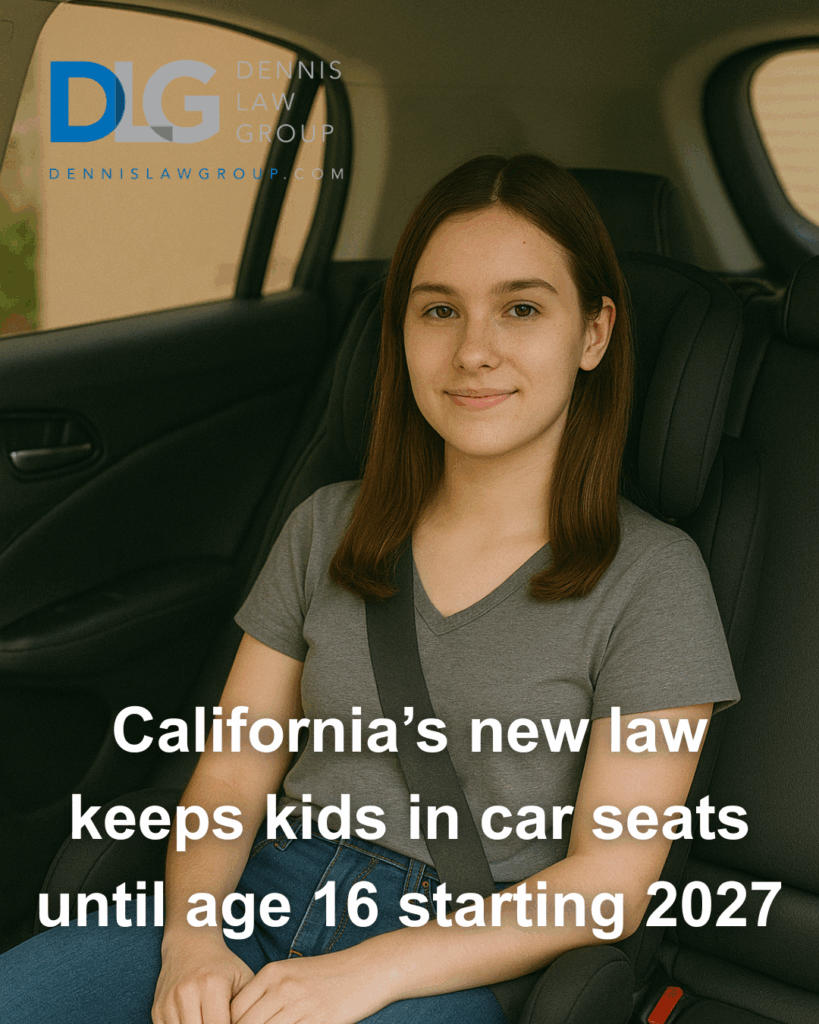
What Is The New Booster Seat Law In California 2027?
Starting in 2027, California requires children under 8 years old to use a booster seat unless they meet proper seat belt fit criteria.
What Age Must Children Use Booster Seats In California?
Children under 8 years old must use a booster seat in California. They should remain in a booster until they fit properly in a seat belt.
Conclusion
Booster seat laws in California keep kids safer on the road. Children must use a booster seat until they fit seat belts properly. This usually means being 8 years old or 4 feet 9 inches tall. The seat belt should lie across the chest and upper thighs, not the neck or stomach.
Following these rules helps protect children in crashes. Always check current laws to stay updated. Driving safely means protecting your little ones every trip.

Ismail Hossain is the founder of Law Advised. He is an Divorce, Separation, marriage lawyer. Follow him.