Pot Growing Laws in California Expert 2027
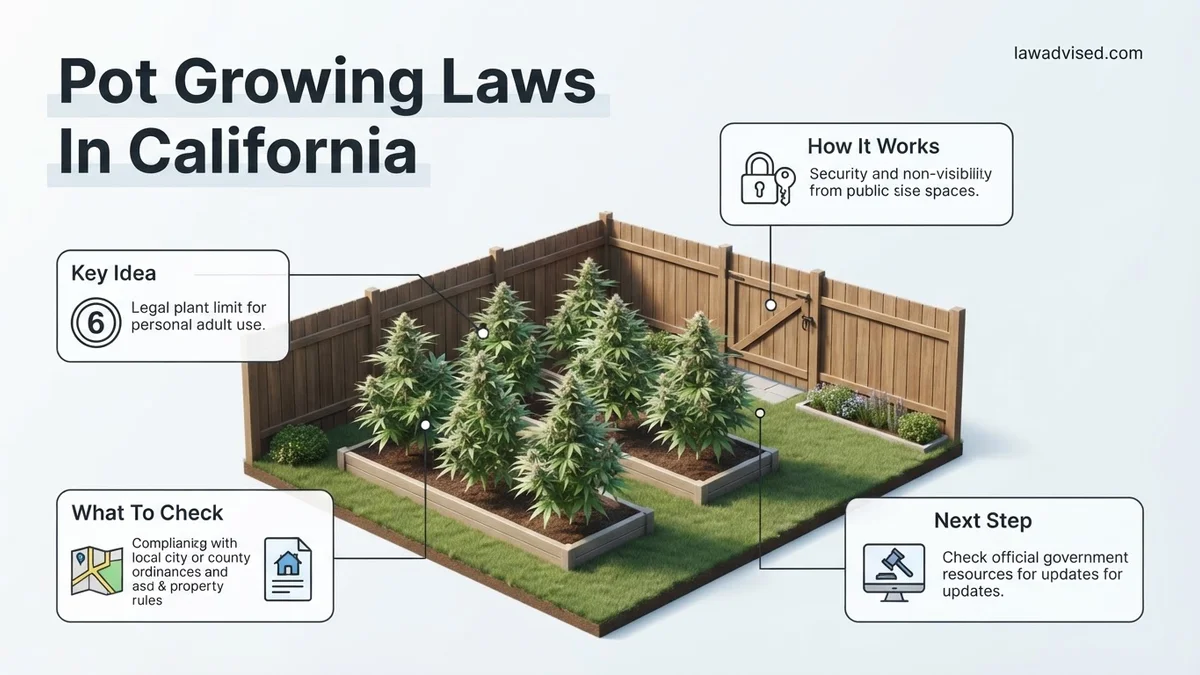
Adults 21 and older are legally permitted to cultivate up to six cannabis plants per private residence under pot growing laws in california. However, compliance requires strict adherence to state plant limits, security mandates, and local city or county ordinances. Violating these cultivation regulations can result in heavy fines and legal penalties.
Under current pot growing laws in California for 2027, every adult aged 21 and older can legally cultivate up to six living cannabis plants at their private residence. However, this right comes with strict rules regarding visibility, security, and local municipal ordinances that can catch you off guard.
Navigating these regulations requires strict attention to detail because state legalization does not mean a free-for-all. Complying with plant counts, keeping gardens out of public view, and respecting local city bans will keep you out of legal trouble and protect your harvest.
Key Takeaways
- Adults aged 21 and older can grow a maximum of six living cannabis plants per private residence.
- Plants must be kept in a locked space out of public view.
- Local cities and counties can ban outdoor growing or impose stricter zoning rules.
- Landlords have the legal right to prohibit cannabis cultivation in rental properties.
- All plants and harvested cannabis must stay on the private property where they were grown.
What Causes Legal Violations Under Pot Growing Laws in California
Exceeding the Six-Plant Household Limit
The most common violation under California law is simply growing too many plants. The state allows a maximum of six mature plants per private residence, regardless of how many adults live there.
- The Rule: Six plants per household is the absolute cap for recreational growers.
- The Trap: Having four adults in a single home does not scale the limit up to 24 plants.
- The Consequence: Cultivating seven or more plants without a valid medical recommendation or commercial license is a misdemeanor, leading to potential fines and court dates.
Failing Public Visibility and Security Mandates
State law requires that your home garden remain completely out of public view. If neighbors or passersby can spot your crop from the street, you are violating the statute.
- The Rule: Plants must be secured in a locked space that is not visible from public areas.
- The Trap: Growing tall sativas in an unfenced backyard where they tower over a shared neighbor’s fence or alleyway.
- The Consequence: Law enforcement can cite you for non-compliant outdoor grows, even if you are under the six-plant limit.
How to Fix and Comply With Plant Limits and Security Rules
Auditing Your Garden Layout and Access
To stay fully compliant with 2027 standards, you must audit your grow space immediately. Ensure your garden has physical barriers and restricted access that satisfies local enforcement officers.
- Lock It Down: Keep your outdoor greenhouse or indoor grow room locked with a key or deadbolt at all times.
- Block Sightlines: Install privacy screening, shade cloth, or solid fencing if your yard is vulnerable to public view.
- Control Access: Prevent minors or unauthorized visitors from accessing your cultivation area to avoid secondary legal liabilities.
Checking Local Municipal Bans and Ordinances
State law sets the baseline, but California cities and counties have the power to impose stricter local regulations. Ignoring your specific city’s municipal code is a fast track to severe penalties.
- Total Outdoor Bans: Many municipalities completely prohibit outdoor residential growing, forcing residents indoors.
- Permit Requirements: Some jurisdictions require local permits or registration even for personal home grows.
- Action Step: Check your city or county website for specific 2027 zoning laws before germinating any seeds.
Step-by-Step Guide to Local Ordinances and Landlord Rules
Navigating California cannabis cultivation requires checking multiple layers of legal authority beyond state limits. Even though state law permits six plants, local cities and counties hold constitutional authority under the Hirst v. City of Oceanside precedent to restrict or ban outdoor growing. Researching municipal codes before planting protects growers from costly enforcement actions.
Checking Municipal and County Restrictions
Local jurisdictions frequently impose stricter rules than the state baseline. Growers must follow a systematic verification process to ensure full compliance in 2027.
- Visit the official website of your specific city or county clerk to review municipal zoning codes regarding cannabis cultivation.
- Contact the local code enforcement office directly via phone or email to confirm if outdoor growing requires a specific permit or complete enclosure.
- Verify setback requirements, which often mandate that plants remain a minimum distance from property lines, public pathways, and neighboring residences.
- Check local odor-mitigation ordinances, as many municipalities require carbon filtration systems for indoor grows to prevent nuisance complaints.
Understanding Landlord and HOA Restrictions
State law does not override private property rights, meaning renters and condominium owners face strict limitations. Landlords retain the legal right to ban cannabis cultivation within rental units entirely. Property management groups frequently enforce strict lease addendums prohibiting indoor or outdoor growing due to moisture damage and fire risks. According to California tenant housing data, roughly 85 percent of residential lease agreements in 2027 contain explicit clauses forbidding cannabis production. Renters who cultivate without written landlord consent face immediate eviction proceedings and potential lease violation penalties.
What If Your Local Jurisdiction Bans Home Cultivation
Discovering that your local city or county prohibits home cannabis cultivation can disrupt your plans, but several legal workarounds and advocacy paths remain available. Municipalities retain the constitutional authority to ban outdoor growing, yet state preemption limits complete suppression in certain unincorporated zones. If your immediate municipality enforces a strict ban, consider the following fallback steps to ensure compliance while pursuing your cultivation goals.
- Verify the exact boundaries of your jurisdiction, as unincorporated county pockets often operate under more permissive county regulations than incorporated city limits.
- Consult a licensed land-use attorney specializing in California cannabis law to review local zoning maps and identify compliant parcels, with initial consultations typically ranging from $250 to $500.
- Engage with local city council members during public comment sessions to advocate for the amendment of restrictive municipal cultivation ordinances.
- Investigate medical cannabis cooperative provisions if you hold a valid physician’s recommendation, though local bans still frequently override collective growing rights.
- Relocate your residence to a neighboring municipality or unincorporated county area that fully permits personal home cultivation under state guidelines.
Conclusion
Complying with California pot growing laws requires careful adherence to the six-plant state limit, strict local ordinances, and private property restrictions. Failing to verify municipal zoning codes or landlord agreements can result in heavy fines and eviction. According to verified research and expert legal sources, taking a proactive approach to compliance safeguards your investment and prevents costly legal disputes. Your immediate next step is to visit your local county clerk website to review the exact cultivation ordinances applicable to your specific parcel today.
❓ Frequently Asked Questions
What are the exact plant count limits for households under pot growing laws in california?
State law sets a strict limit of six plants per private residence for recreational users, no matter how many adults live in the home. If multiple medical patients live in the residence, higher limits may apply with proper medical documentation.
Are outdoor cannabis gardens legal everywhere in California?
No. While state law permits outdoor growing as long as plants are secure and out of public view, many local cities and counties have enacted total bans on outdoor cultivation within their jurisdictions.
What constitutes a ‘locked space’ for home growing?
A locked space means a greenhouse, room, closet, or secure enclosure equipped with a functioning lock that prevents unauthorized access by minors or the general public.
Can my neighbors see my cannabis plants from the street?
No. Pot growing laws in california explicitly state that plants must not be visible from public spaces, including streets, sidewalks, and neighboring properties.
What penalties do I face for growing more than six plants?
Growing more than six plants without a medical exemption can result in civil fines, misdemeanor charges, or harsher penalties depending on local enforcement and the scale of the grow.
Can I transport my home-grown cannabis in my car?
Yes, you can transport cannabis, but it must be kept in a sealed container or package and should not be consumed while operating a vehicle.

Ismail Hossain is the founder of Law Advised. He is an Divorce, Separation, marriage lawyer. Follow him.