How To Become A Licensed Private Investigator In Oregon: Ultimate Guide
Are you interested in becoming a licensed private investigator in Oregon? Whether you’re drawn to solving mysteries, gathering important information, or helping people find the truth, this career path offers exciting opportunities.
But before you start, you need to know the exact steps to get your license and work legally in the state. You’ll discover clear, simple instructions to guide you through the process. By the end, you’ll have a solid plan to turn your interest into a professional career.
Keep reading to learn how to make it happen.
Credit: bondinvestigations.com
Licensing Requirements In Oregon
Becoming a licensed private investigator in Oregon requires meeting specific state rules. These rules ensure all investigators work professionally and legally. Understanding these requirements helps you prepare and apply correctly. Oregon’s licensing process focuses on age, background, education, and experience. Each part plays a key role in your eligibility.
Age And Background Criteria
You must be at least 18 years old to apply for a license. Oregon requires a clean criminal record for all applicants. Serious crimes, especially felonies, can block your application. The state checks your background for honesty and reliability. A good moral character is essential for trust in this job.
Education And Experience Prerequisites
Oregon needs proof of education or training in private investigation. High school completion is the minimum education required. Many applicants also complete special courses in investigation techniques. Experience in law enforcement or security work can count. Usually, at least three years of experience is needed. This ensures you understand the job and its risks well.
Application Process Steps
The application process is the first step to become a licensed private investigator in Oregon. It involves submitting your documents and undergoing checks. This ensures you meet state requirements to work legally.
Each part of the process must be completed carefully. Missing details can delay your license approval. Follow the steps below to understand what to expect.
Submitting Your Application
Start by filling out the official application form. You can find this form on the Oregon Department of Public Safety Standards and Training website. Fill it out completely and accurately. Include all required documents, like proof of education and experience.
Pay the application fee as stated. Fees are non-refundable, so double-check your form before submitting. Submit your application by mail or online, based on the instructions. Keep a copy for your records.
Background Check And Fingerprinting
After submitting your application, you must complete a background check. This step confirms you have no criminal record that would prevent licensing. Oregon requires fingerprinting for this process.
Visit an authorized fingerprinting location. Provide your fingerprints for electronic submission. The state will use this to run a thorough background check. Wait times vary, so plan accordingly.
Exam Preparation Tips
Preparing for the private investigator exam in Oregon requires clear focus and smart planning. Good preparation boosts confidence and helps you pass the test. This section shares useful tips to guide your study efforts and improve your chances of success.
Exam Content Breakdown
The exam covers several important topics. You will see questions on Oregon laws related to private investigation. Expect questions about ethics and professional conduct. You must know how to handle evidence and investigations properly. The test also includes questions on surveillance techniques and report writing. Understanding these topics well is key to passing.
Study Resources And Techniques
Start with the official Oregon private investigator handbook. It covers most exam topics clearly. Use practice tests to check your knowledge. They help identify areas needing more study. Join study groups or online forums for support. Flashcards work well for memorizing laws and terms. Take regular breaks to keep your mind fresh. Study in short sessions for better focus and retention.
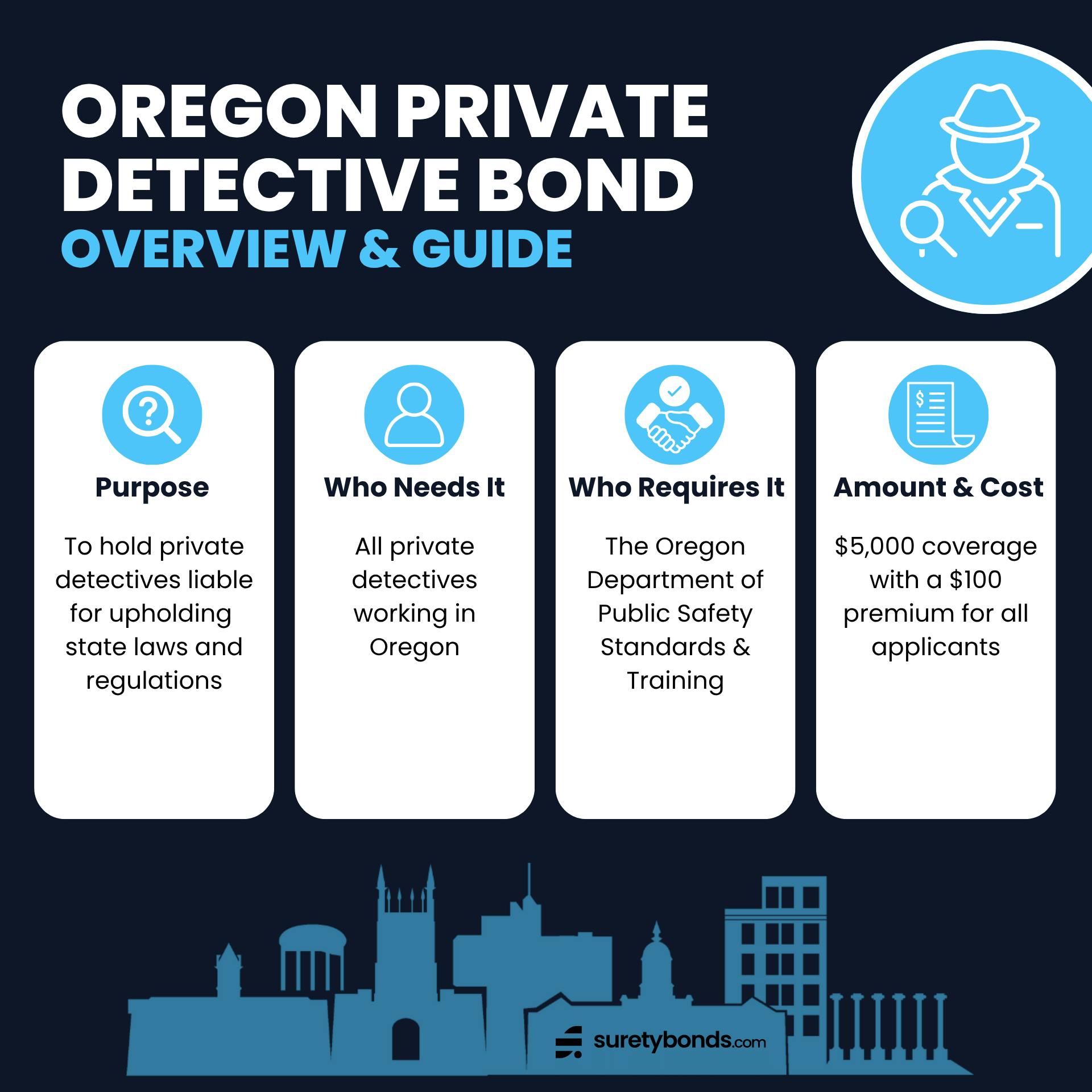
Credit: www.suretybonds.com
Maintaining Your License
Keeping your private investigator license active in Oregon requires regular attention. Staying compliant with state rules protects your license and career. You must follow specific steps to renew and improve your skills. This section explains how to maintain your license smoothly.
Renewal Procedures
Renew your license every two years in Oregon. The state sends a renewal notice before the due date. Submit your application and pay the renewal fee on time. Late renewal can cause delays or penalties. Keep your contact information updated to receive all notices.
Check your application for accuracy. Missing or wrong information can delay approval. Renew online or by mail, whichever suits you. Follow all instructions carefully to avoid mistakes.
Continuing Education Requirements
Oregon requires private investigators to complete continuing education. This keeps your knowledge current and skills sharp. You must finish at least 8 hours of approved training every renewal period. Choose courses related to laws, ethics, or investigative techniques.
Submit proof of completed education with your renewal. Without it, your license may not be renewed. Keep records of your courses for future reference. This ensures you meet all state requirements.
Career Opportunities And Growth
Career opportunities for private investigators in Oregon are diverse and growing. Many sectors need skilled investigators to find facts and gather evidence. This demand creates jobs in many fields. Experience and skills help you advance quickly.
Private investigation offers a chance to specialize or run your own business. Both paths have good growth potential and steady income. Learning about these options helps you plan your career well.
Specializations In Private Investigation
Private investigators can work in many areas. Common specializations include corporate investigations, background checks, and surveillance. Some focus on insurance fraud or missing persons cases. Each specialization needs different skills and knowledge.
Specializing lets you become an expert in one field. Experts often get higher pay and better jobs. Choose a specialization based on your interests and skills. Training and certifications may be needed for certain types.
Building A Successful Pi Business
Starting your own private investigation business is a popular option. It requires good planning, marketing, and client management. Building trust with clients is key to success.
Running a business also means handling finances and legal rules. Networking with lawyers and local agencies helps find new clients. A strong reputation leads to steady work and growth.
Credit: bondinvestigations.com
Frequently Asked Questions
What Are The Basic Requirements To Become A Private Investigator In Oregon?
You must be at least 18 years old and have a high school diploma or GED. Oregon requires you to pass a background check and complete training.
How Much Does An Oregon Private Investigator License Cost?
The license fee ranges between $100 and $300, depending on the application type. Renewal fees apply every two years to keep the license active.
How Long Does It Take To Get A Private Investigator License In Oregon?
The process usually takes 1 to 3 months. This includes submitting your application, background check, and waiting for approval.
What Training Or Education Is Needed For Oregon Private Investigators?
Oregon requires completion of a 40-hour training program approved by the state. This covers laws, ethics, and investigation techniques.
Can I Work As A Private Investigator In Oregon Without A License?
No, working without a license is illegal in Oregon. You must have a valid license to perform private investigations.
What Are The Main Duties Of A Licensed Private Investigator In Oregon?
They gather facts, conduct surveillance, and verify information for clients. Their work helps solve cases or support legal matters.
Conclusion
Becoming a licensed private investigator in Oregon takes clear steps and dedication. Start by meeting state requirements and completing necessary training. Pass the licensing exam to prove your skills. Keep your records updated and follow all rules carefully. Stay focused and work hard to build your career.
This path offers many chances to learn and grow. A strong commitment helps you succeed in this field. Take each step with confidence. Your goal is within reach.

Ismail Hossain is the founder of Law Advised. He is an Divorce, Separation, marriage lawyer. Follow him.