List Of U S Government Agencies: Comprehensive Guide to Key Departments
Are you curious about the many U.S. Government agencies that impact your daily life? Whether you’re looking for help, want to understand how decisions are made, or just want to know who does what, this list is for you.
Knowing these agencies can save you time and make dealing with the government easier. Keep reading, and you’ll discover the key players you should know about—and how they affect you directly.
Federal Executive Departments
The Federal Executive Departments are the main branches of the U.S. government. They handle different areas of public service and policy. Each department has a specific role to help run the country. These departments are led by secretaries who are part of the President’s Cabinet. They work together to serve the American people.
Department Of State
The Department of State manages the country’s foreign affairs. It builds relationships with other nations. It also protects U.S. citizens abroad and supports diplomats worldwide.
Department Of Treasury
The Treasury handles the nation’s money and finances. It collects taxes, manages debt, and produces currency. It also works to stop financial crimes.
Department Of Defense
The Defense Department oversees the military. It protects the country from threats. It supports soldiers and ensures national security.
Department Of Justice
The Justice Department enforces the law. It fights crime and protects citizens’ rights. It also runs federal prisons and legal affairs.
Department Of Interior
The Interior cares for natural resources and public lands. It protects wildlife and supports Native American tribes. It also manages national parks.
Department Of Agriculture
The Agriculture Department supports farmers and food safety. It works on farming policies and rural development. It also fights hunger in the country.
Department Of Commerce
The Commerce Department promotes economic growth. It supports businesses, trade, and technology. It also collects important data about the economy.
Department Of Labor
The Labor Department protects workers’ rights. It promotes safe workplaces and fair pay. It also helps with job training and unemployment benefits.
Department Of Health And Human Services
This department focuses on public health and welfare. It runs programs like Medicare and Medicaid. It also supports medical research and disease control.
Department Of Housing And Urban Development
HUD works to improve housing and communities. It supports affordable housing and fights homelessness. It helps cities plan and grow.
Department Of Transportation
The Transportation Department builds and maintains roads and transit. It ensures safe travel by air, road, and rail. It also regulates vehicle safety standards.
Department Of Energy
The Energy Department manages energy policies and resources. It supports clean energy and nuclear safety. It also funds scientific research.
Department Of Education
The Education Department supports schools and students. It promotes equal access to education. It also provides funding and sets policies.
Department Of Veterans Affairs
VA serves military veterans and their families. It offers healthcare, benefits, and support services. It honors their sacrifice and service.
Department Of Homeland Security
Homeland Security protects the country from threats. It handles immigration, border security, and disaster response. It works to keep Americans safe.
Independent Agencies
Independent agencies play a vital role in the U.S. government. They operate outside executive departments. This independence helps them focus on specific tasks. These agencies manage important areas like intelligence, environment, and finance. They serve the public with specialized knowledge and rules.
Central Intelligence Agency
The Central Intelligence Agency (CIA) gathers and analyzes information worldwide. It protects the country from threats. The CIA works quietly to support national security. It helps government leaders make informed decisions.
Environmental Protection Agency
The Environmental Protection Agency (EPA) safeguards the environment. It sets rules to reduce pollution. The EPA works to keep air and water clean. It promotes health by protecting natural resources.
Federal Communications Commission
The Federal Communications Commission (FCC) regulates radio, TV, and internet. It ensures fair access and competition. The FCC protects consumers from unfair practices. It manages the use of airwaves.
Federal Reserve System
The Federal Reserve System controls the U.S. money supply. It helps keep prices stable. The Fed supports economic growth and job creation. It manages interest rates and banking rules.
National Aeronautics And Space Administration
The National Aeronautics and Space Administration (NASA) explores space and aeronautics. NASA develops new technology and conducts research. It inspires innovation in science and engineering. Its missions expand human knowledge of space.
Securities And Exchange Commission
The Securities and Exchange Commission (SEC) protects investors. It oversees stock markets and financial firms. The SEC enforces rules to prevent fraud. It helps maintain confidence in the financial system.
Social Security Administration
The Social Security Administration (SSA) provides financial support to retirees and disabled people. It manages social security benefits. The SSA helps millions of Americans live with dignity. It ensures timely payments and services.
United States Postal Service
The United States Postal Service (USPS) delivers mail nationwide. It connects people and businesses. The USPS offers affordable and reliable mail services. It plays a key role in daily communication.
Regulatory Commissions
Regulatory commissions are key parts of the U.S. government. They create and enforce rules to protect people and businesses. These agencies work independently from other government branches. Their goal is to keep markets fair and safe for everyone.
Each commission focuses on a specific area. They watch over industries to stop unfair actions. They also make sure companies follow laws and standards. These agencies help maintain trust in the economy and public safety.
Federal Trade Commission
The Federal Trade Commission (FTC) protects consumers and promotes competition. It stops deceptive advertising and unfair business practices. The FTC also reviews mergers to prevent monopolies. Its work helps keep the marketplace fair and honest.
Nuclear Regulatory Commission
The Nuclear Regulatory Commission (NRC) oversees nuclear power plants and materials. It ensures safe use of nuclear energy. The NRC sets strict safety rules to protect people and the environment. It also monitors radiation levels and emergency planning.
Consumer Product Safety Commission
The Consumer Product Safety Commission (CPSC) works to keep products safe. It tests items like toys, appliances, and electronics. The CPSC issues recalls for dangerous products. Its mission is to prevent injuries and deaths from unsafe goods.
Equal Employment Opportunity Commission
The Equal Employment Opportunity Commission (EEOC) enforces laws against job discrimination. It protects workers from unfair treatment based on race, gender, or age. The EEOC investigates complaints and promotes workplace fairness. It helps create equal chances for all employees.
Commodity Futures Trading Commission
The Commodity Futures Trading Commission (CFTC) regulates futures and options markets. It keeps trading transparent and prevents fraud. The CFTC monitors market activities to avoid manipulation. Its work supports a stable and trustworthy financial system.

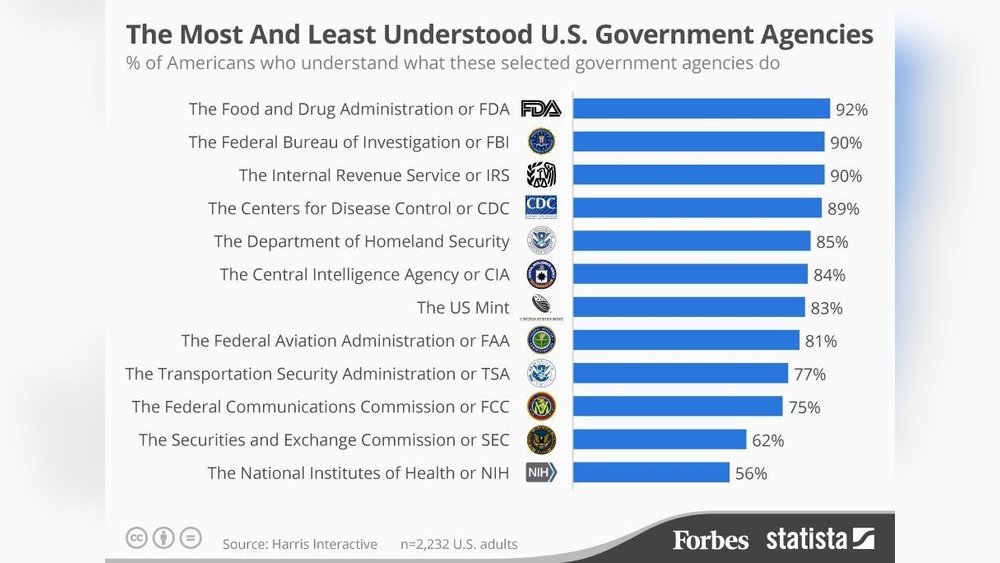
Credit: www.statista.com
Government Corporations
Government corporations are special agencies owned by the U.S. government. They run like private companies but serve public needs. These corporations provide essential services and help the government work efficiently. They often earn money by selling goods or services. This allows them to support their operations without relying fully on taxes.
Many government corporations have a big impact on daily life. They cover areas like transportation, energy, banking, and media. Each corporation has a unique role and purpose. Understanding these agencies helps people see how the government supports the economy and society.
Amtrak
Amtrak runs passenger trains across the United States. It connects cities and towns with rail service. The goal is to offer safe, reliable, and affordable travel. Amtrak helps reduce road traffic and pollution. Many people depend on it for daily commutes or long trips.
Tennessee Valley Authority
The Tennessee Valley Authority, or TVA, provides electricity to parts of seven states. It also manages flood control and land conservation. TVA helps improve the quality of life in rural areas. It builds power plants and maintains dams to generate energy.
Federal Deposit Insurance Corporation
The Federal Deposit Insurance Corporation, or FDIC, protects bank customers. It insures deposits in banks and savings institutions. If a bank fails, the FDIC ensures people do not lose their money. This builds trust in the banking system and keeps money safe.
Corporation For Public Broadcasting
The Corporation for Public Broadcasting supports public radio and television. It funds programs that educate and inform the public. CPB helps create content that is free from commercial pressure. Many popular educational shows and local stations receive CPB support.
Roles And Responsibilities
U.S. government agencies have clear roles and responsibilities. They work to serve the public and keep the country running smoothly. Each agency has specific tasks. These tasks help shape policies, protect citizens, support the economy, and provide essential services.
Understanding these roles helps you see how the government affects daily life. It also shows how agencies work together to meet national goals.
Policy Making And Enforcement
Agencies create rules that guide the country. They write policies based on laws passed by Congress. These rules help control activities like business, health, and safety. Agencies also make sure people and companies follow these rules. Enforcement keeps order and fairness in society.
Public Services And Infrastructure
Many agencies build and maintain public services. They manage roads, bridges, and public transport. Agencies also run postal services and manage water supplies. These services help communities function well every day. Safe and reliable infrastructure supports growth and wellbeing.
National Security And Intelligence
Some agencies protect the country from threats. They gather intelligence and monitor security risks. These agencies work to prevent attacks and protect citizens. They share information with other government parts to keep the nation safe. Their work is vital for peace and stability.
Economic Regulation And Support
Agencies regulate markets to ensure fairness. They oversee banks, stock markets, and businesses. Agencies also provide support to farmers and small businesses. Their work helps create jobs and steady prices. This support builds a strong and stable economy.
Social Welfare And Health Programs
Many agencies focus on helping people in need. They run programs for food, housing, and healthcare. These programs support the elderly, children, and low-income families. Agencies also work on public health issues like disease prevention. Their efforts improve quality of life for millions.
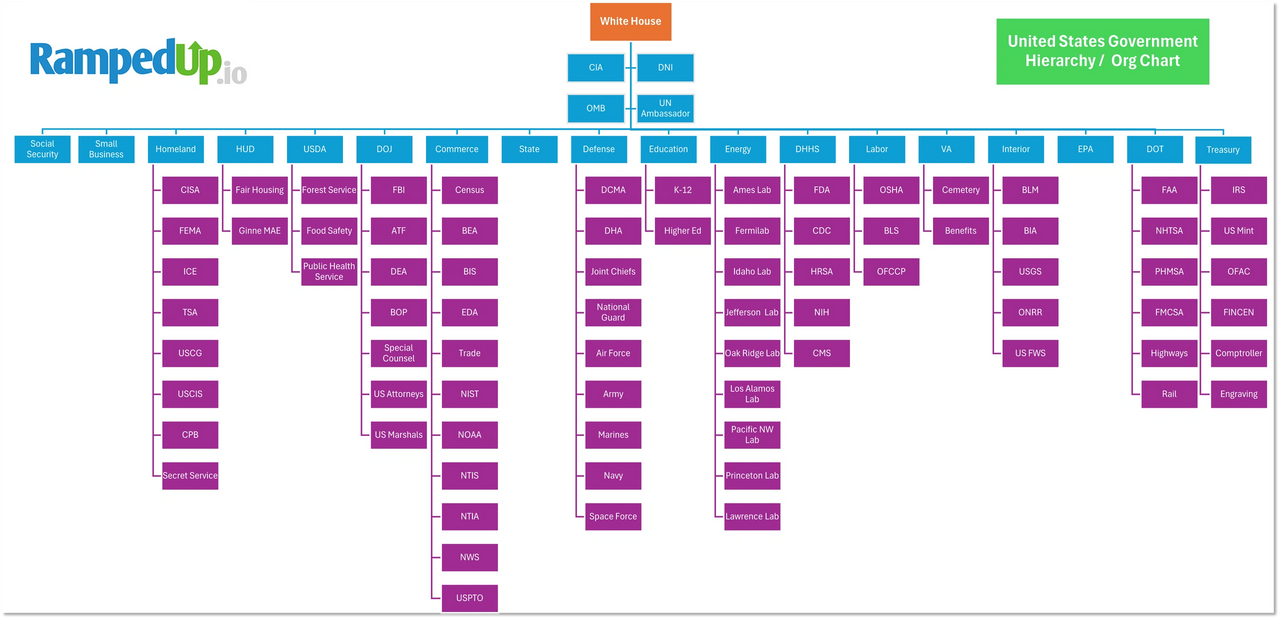
Credit: rampedup.io
How Agencies Collaborate
U.S. government agencies work together to solve complex problems. They share resources, knowledge, and skills. Collaboration helps agencies meet public needs more effectively. It also improves safety, security, and services across the country.
Interagency Task Forces
Interagency task forces bring experts from different agencies. They focus on specific issues like crime, health, or disasters. These teams plan and act together to reach goals faster. They avoid duplication and use each agency’s strengths. Task forces meet regularly to share updates and adjust plans.
Information Sharing Systems
Agencies use special systems to share important data. These systems protect sensitive information while allowing quick access. Sharing data helps agencies make better decisions and respond fast. It also helps spot trends and threats early. Secure platforms connect local, state, and federal agencies smoothly.
Joint Operations And Initiatives
Joint operations combine efforts from multiple agencies in the field. They work side by side during emergencies or special missions. These initiatives increase efficiency and reduce costs. Agencies train together to improve coordination and trust. Shared goals guide their actions for better public impact.
Accessing Government Services
Accessing government services can seem complex. The U.S. government has many agencies offering important help. Citizens can use various ways to reach these services. Knowing how to find and use them saves time and effort.
Online Portals And Resources
Many government services are available online. Websites provide easy access to forms and information. Users can apply for benefits, pay fees, or check status. These portals work 24/7. No need to visit offices in person.
Local And Regional Offices
Some services require visiting local offices. These offices serve neighborhoods and regions. Staff can provide personal help and answer questions. Locations include post offices, social service centers, and DMV. Hours and services vary by place.
Citizen Engagement And Feedback
The government values citizen opinions. Feedback helps improve services and policies. Many agencies offer surveys and comment forms. Town hall meetings allow direct conversations. Engaging helps shape better government programs.

Credit: www.researchgate.net
Frequently Asked Questions
What Are The Main U.s. Government Agencies?
The main U. S. government agencies include the FBI, CIA, EPA, and FDA. Each agency has a special job to protect and serve the public. They handle things like safety, health, and national security.
How Do U.s. Government Agencies Affect Daily Life?
Government agencies keep food safe, clean air, and protect public health. They also enforce laws and manage emergency responses. Their work helps keep communities safe and healthy every day.
Where Can I Find A Complete List Of U.s. Agencies?
A complete list is available on official government websites like usa. gov. These sites provide detailed info about each agency’s role and contact details. Easy to search and use for learning or help.
Why Are U.s. Government Agencies Important For Citizens?
Agencies provide services that protect rights, safety, and health of people. They make sure laws are followed and support public needs. Their work helps maintain order and improve quality of life.
Conclusion
The U. S. Government has many agencies that serve different roles. Each agency helps run the country in its own way. Knowing these agencies helps you understand how government works. They provide services, enforce laws, and protect citizens. This list is a good starting point to learn more.
Exploring these agencies can make government clearer and less confusing. Stay curious about how each one affects daily life. Understanding government agencies benefits everyone.

Ismail Hossain is the founder of Law Advised. He is an Divorce, Separation, marriage lawyer. Follow him.