How To Become A Licensed Private Investigator In California: Ultimate Guide
Are you ready to turn your curiosity and attention to detail into a rewarding career? Becoming a licensed private investigator in California can open the door to exciting opportunities where your skills make a real difference.
But how do you get started? This guide breaks down the exact steps you need to take to earn your license and start working confidently in this field. Keep reading to discover what it takes and how you can make it happen—your future as a private investigator begins here.
Credit: martinpi.com
License Requirements
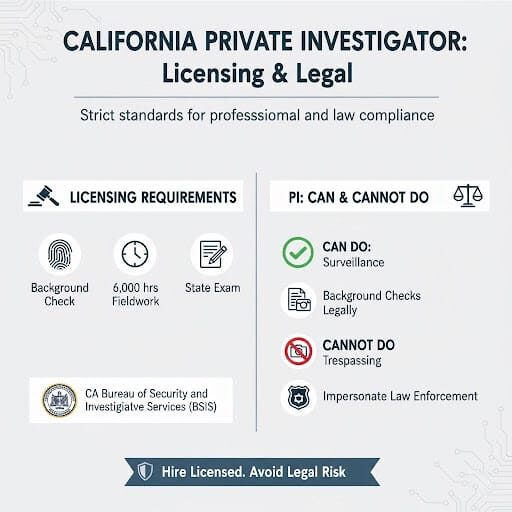
Becoming a licensed private investigator in California requires meeting specific rules. These rules ensure only qualified people get the license. The license requirements cover age, background, work experience, and education. Understanding these rules is the first step to starting your career.
Age And Background Criteria
You must be at least 18 years old to apply. A clean criminal record is essential. Serious crimes can stop you from getting a license. The state runs a background check to verify your history. Honesty and good character are key to approval.
Work Experience Needed
California requires two years of investigative work experience. This experience must be full-time and verified by an employer. Military service in investigative roles also counts. The work teaches real skills needed for private investigation. Without this, you cannot get the license.
Educational Qualifications
There is no strict college degree needed. However, a high school diploma or GED is required. Some applicants choose extra training in law or criminal justice. Training helps with the license exam and daily work. Education improves your chances to succeed.

Credit: www.filley.com
Application Process
The application process is the first step to becoming a licensed private investigator in California. It involves submitting forms, proving your identity, and paying fees. Each step is important to ensure you meet the state’s rules and standards. Understanding this process helps you avoid delays and mistakes.
Submitting Your Application
Start by filling out the official application form from the California Department of Consumer Affairs. Provide all required information clearly. Attach copies of your identification and work experience documents. Double-check your application for errors before sending it. Submit your application by mail or online, depending on the instructions.
Fingerprinting And Background Check
You must complete fingerprinting for a criminal background check. This step ensures you have no serious criminal history. The California Department of Justice and FBI will review your fingerprints. Schedule your fingerprinting at an approved location. Wait for the background check results before proceeding.
Application Fees
Pay the required fees when submitting your application. Fees cover processing, fingerprinting, and licensing costs. The amount may change, so check the latest fee schedule. Payments can be made by check, money order, or online. Keep your payment receipt as proof.
Examination Details
The examination is a key step to become a licensed private investigator in California. It tests your knowledge and skills needed for the job. Passing this exam proves you understand the laws and procedures involved in private investigation.
Below are important details about the exam content, how it is formatted, tips for preparation, and how to schedule it.
Exam Content And Format
The exam covers laws, regulations, and investigation techniques. Topics include California private investigator laws, evidence handling, and ethics. You also face questions on report writing and surveillance methods.
The test has multiple-choice questions. You must complete it within a set time, usually two hours. The exam is designed to check both your knowledge and practical skills.
Preparation Tips
Study the California Private Investigator Act and related rules. Use official study guides and practice tests. Focus on real-life scenarios and legal requirements.
Create a study schedule. Review one topic at a time. Practice writing clear, concise reports. Join study groups or online forums for extra help.
Scheduling The Exam
Apply through the California Bureau of Security and Investigative Services (BSIS). After your application is approved, you get instructions to schedule the exam. Choose a convenient date and location.
Book your exam early to get the best date. Arrive early on the test day with required ID and materials. Follow all exam rules to avoid disqualification.
Post-license Steps
After earning your private investigator license in California, certain steps follow. These steps keep your license active and valid. Staying compliant with the state’s rules ensures your career continues smoothly. Below are key post-license actions every investigator must take.
Maintaining Your License
Keep your license in good standing by obeying all laws. Avoid any criminal activity that may affect your status. Always carry your license while working on cases. Report any changes in your address or contact details to the state. Staying professional builds trust and protects your license.
Continuing Education
Complete required training courses every year. These courses update your skills and knowledge. California may require specific topics for education. Check the state’s guidelines for approved classes. Learning helps you stay sharp and effective in your work.
Renewal Procedures
Renew your license before it expires to avoid penalties. Submit renewal forms with any needed fees on time. Some renewals require proof of completed education hours. Keep track of your license expiration date. Early renewal prevents gaps in your ability to work.
Career Opportunities
Becoming a licensed private investigator in California opens many career paths. This field offers diverse roles and chances to grow professionally. Private investigators help solve cases, support legal work, and protect clients. The work can be exciting and rewarding. Below are key career opportunities for those entering this field.
Types Of Investigations
Private investigators handle many types of cases. Common areas include criminal investigations, fraud, and missing persons. Some focus on background checks or surveillance work. Others work on insurance claims or corporate investigations. This variety lets you find a niche that fits your skills and interests.
Starting Your Own Agency
Many investigators choose to start their own business. Running an agency gives control over clients and cases. It allows setting your own hours and fees. Building a trusted brand takes time and effort. Success depends on reputation, skills, and marketing.
Networking And Professional Growth
Networking is vital in this career. Joining local investigator groups helps meet peers and learn. Attending workshops boosts skills and knowledge. Good connections can lead to referrals and partnerships. Constant learning helps stay updated with laws and technology.
Credit: www.cali-pi.org
Frequently Asked Questions
What Are The Basic Requirements To Become A Pi In California?
You must be at least 18 years old and have a clean criminal record. Also, complete the necessary training and pass the state exam.
How Long Does It Take To Get A Private Investigator License?
The process can take several months. It depends on how fast you complete training and pass the exam.
What Training Is Needed For A California Pi License?
You need 40 hours of training from an approved school. This covers laws, ethics, and investigation techniques.
Is A Background Check Required For Pi Licensing?
Yes, a detailed background check is mandatory. It ensures you have no serious criminal history.
How Much Does It Cost To Get A Pi License In California?
License fees usually range between $100 and $200. Training and exam fees are extra.
Can I Work As A Private Investigator Without A License?
No, California law requires a license to work legally as a PI. Working without one is illegal and may cause fines.
Conclusion
Becoming a licensed private investigator in California takes clear steps. You need to meet age and experience rules first. Next, pass the required exams and background checks. Keep your license updated by following state laws. This career offers many chances to work in different fields.
Stay honest and professional to build trust with clients. With focus and effort, you can succeed as a private investigator. Start your journey today and take each step carefully. Your future in private investigation awaits.

Ismail Hossain is the founder of Law Advised. He is an Divorce, Separation, marriage lawyer. Follow him.