What are the Eviction Laws in Ohio: Essential Guide for Renters
Are you facing the threat of eviction in Ohio and don’t know where to turn? Understanding the eviction laws in Ohio is crucial to protect your rights and avoid costly mistakes.
Whether you’re a tenant worried about losing your home or a landlord wanting to follow the rules, this guide will give you clear, easy-to-understand answers. Keep reading to learn exactly what you need to know about eviction notices, timelines, and your legal options—so you can take control of your situation before it’s too late.
Ohio Eviction Basics
Ohio eviction laws protect both landlords and tenants. These rules ensure fairness during the eviction process. Knowing the basics helps tenants understand their rights. Landlords also benefit by following the correct steps. The eviction process starts with specific legal grounds and proper notice.
Grounds For Eviction
Landlords can evict tenants for several reasons. Nonpayment of rent is the most common cause. Lease violations, like having pets when not allowed, also justify eviction. Illegal activities on the property can lead to eviction. Sometimes, landlords want to end a month-to-month tenancy without cause. Each reason must be supported by evidence in court.
Notice Requirements
Ohio law requires landlords to give tenants notice before eviction. The type of notice depends on the eviction reason. For unpaid rent, landlords must give a 3-day notice to pay or leave. For lease violations, a 30-day notice to comply or leave is common. For month-to-month tenancies without cause, a 30-day notice is required. Notices must be clear and delivered properly. This step gives tenants a chance to fix the problem or prepare to move.

Credit: eforms.com
Eviction Process Steps
The eviction process in Ohio follows specific legal steps. Both landlords and tenants must understand these steps. This helps ensure the eviction is fair and lawful.
The process starts with the landlord filing a lawsuit. Next, the court schedules a hearing. Finally, the judge gives a decision. Each step has rules that must be followed carefully.
Filing The Eviction Lawsuit
The landlord begins by filing an eviction complaint. This complaint states why the tenant must leave. Common reasons include unpaid rent or lease violations.
The landlord must send a written notice to the tenant first. This notice gives the tenant time to fix the issue or move out. If the tenant does not act, the landlord files the complaint with the court.
Once filed, the tenant receives a copy of the complaint. This informs the tenant about the case and court date. The tenant can prepare a defense for the hearing.
Court Hearings And Judgments
The court sets a hearing date after the lawsuit is filed. Both landlord and tenant attend the hearing. They present their evidence and explain their side.
The judge listens carefully to both parties. Then, the judge makes a decision based on the law and facts. The decision can allow eviction or dismiss the case.
If the judge rules for eviction, the tenant gets a time frame to leave. If the tenant does not leave, the landlord can ask the sheriff to remove them. The sheriff enforces the court’s eviction order.
Tenant Rights During Eviction
Tenant rights during eviction in Ohio protect renters from unfair treatment. These rights ensure tenants receive proper notice and a chance to respond. Knowing your rights can help you handle eviction with confidence and fairness.
Right To Notice
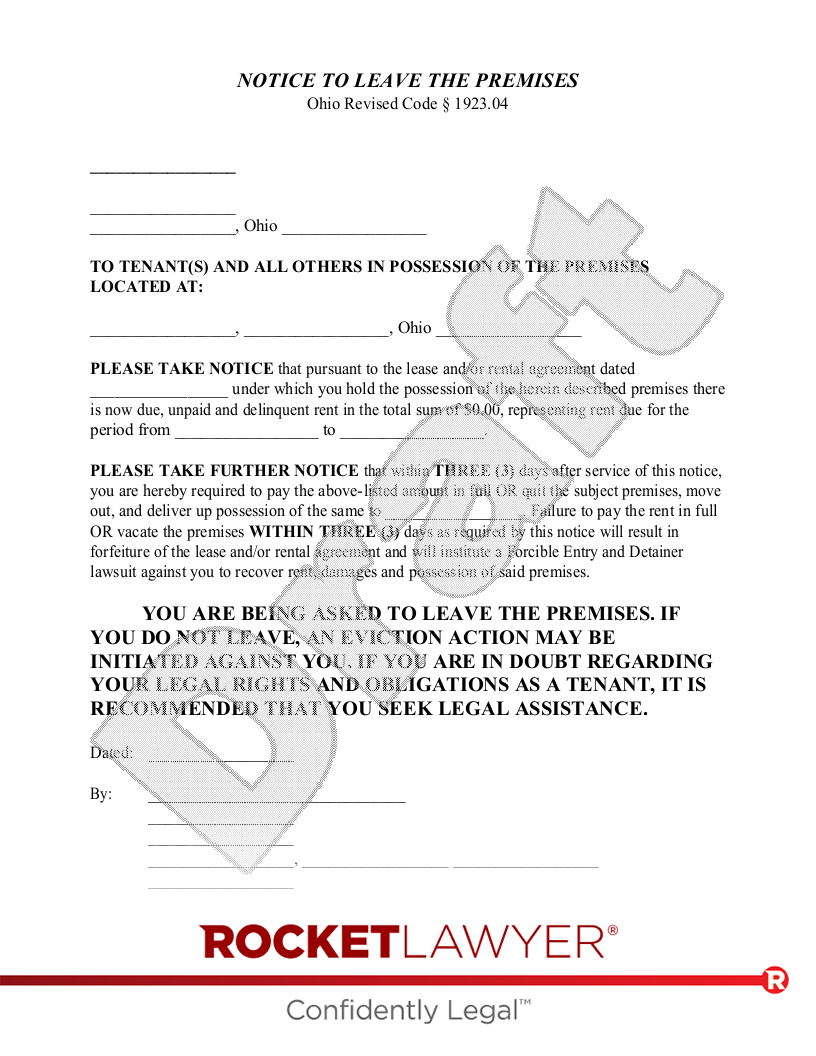
Ohio law requires landlords to give written notice before eviction. The notice must state the reason for eviction clearly. Tenants usually get at least three days to fix problems or move out. This notice period allows tenants time to prepare or find a solution.
Without proper notice, an eviction cannot proceed legally. Tenants should check if the notice meets Ohio’s rules. It must be delivered in a way the tenant can receive it.
Right To Contest Eviction
Tenants have the right to challenge an eviction in court. They can explain their side and present evidence. This can include proof of rent payment or repairs made. The court will decide if the eviction is fair.
Filing a response or appearing in court is important. Ignoring the eviction can lead to automatic loss. Tenants should seek legal advice if unsure about the process.
Credit: www.rocketlawyer.com
Avoiding And Handling Eviction
Avoiding and handling eviction in Ohio requires quick action and clear communication. Tenants must understand their rights and options to prevent losing their home. Acting early helps stop eviction from moving forward.
Tenants should try to solve problems with landlords before eviction starts. Open talks can lead to agreements that work for both sides. Knowing where to get help also makes a big difference.
Negotiating With Landlords
Start by talking with your landlord as soon as possible. Explain your situation honestly and calmly. Ask if you can pay late or in smaller amounts over time. Many landlords prefer this over starting eviction.
Put any agreement in writing. Include payment dates and amounts. This protects both you and the landlord. Keep a copy of all documents and receipts.
Negotiation can stop eviction papers from being filed. It shows you want to fix the problem. Be polite and respectful during all conversations.
Resources For Assistance
Ohio offers many resources to help tenants avoid eviction. Local housing agencies provide advice and support. They can explain tenant rights and options clearly.
Nonprofit groups may offer rental assistance or legal help. Some programs help pay rent or utility bills. Call these organizations quickly if you face eviction.
Legal aid clinics provide free advice for low-income tenants. They can guide you through court processes and paperwork. Using these resources increases your chances of staying in your home.

Credit: loio.com
Frequently Asked Questions
What Is The Eviction Process In Ohio?
Ohio eviction starts with a written notice from the landlord. If the tenant doesn’t fix the issue, the landlord files a court case. A judge then decides if eviction is allowed.
How Much Notice Does Ohio Law Require For Eviction?
Ohio law usually requires a 3-day notice for non-payment or lease violation. For other reasons, landlords must give a 30-day notice. Notice must be in writing and clear.
Can Tenants Stop An Eviction In Ohio?
Tenants can stop eviction by paying overdue rent or fixing lease problems. They can also attend court and explain their situation. Sometimes, judges may delay eviction.
What Reasons Allow Landlords To Evict Tenants In Ohio?
Landlords can evict for non-payment, lease violations, or illegal activities. They can also evict if the lease ends and the tenant won’t leave. Proper notice must be given each time.
Do Tenants Have Rights During An Ohio Eviction?
Tenants have the right to a court hearing before eviction. They can present evidence and ask for more time. Landlords cannot force tenants out without a court order.
Conclusion
Ohio’s eviction laws protect both landlords and tenants fairly. Tenants must follow rules to avoid eviction. Landlords must provide proper notice before action. Courts handle disputes to ensure justice. Understanding these laws helps prevent problems. Stay informed to protect your rights.
Knowing the process makes things clearer. Respecting rules leads to smoother living situations. Keep these points in mind always. Eviction can be stressful but knowing helps.

Ismail Hossain is the founder of Law Advised. He is an Divorce, Separation, marriage lawyer. Follow him.