Moped Laws in Arizona 2027 Expert Step-by-Step Guide
Navigating moped laws in Arizona requires understanding strict vehicle classifications based on engine displacement and maximum speed. Drivers must comply with specific licensing, registration, and operating rules to legally ride on public roads.
Navigating Arizona moped laws requires understanding that the state draws a strict legal line between motorized bicycles, mopeds, and traditional motorcycles. If you plan to ride a moped on Arizona public roads in 2027, you must meet exact engine displacement, speed capability, and licensing criteria to avoid hefty fines or vehicle impoundment.
State statutes group low-powered two-wheelers into specific categories that dictate whether you need a driver’s license, insurance, or a license plate. Getting these details right before you hit the pavement ensures your daily commute or weekend ride remains entirely legal and hassle-free.
Key Takeaways
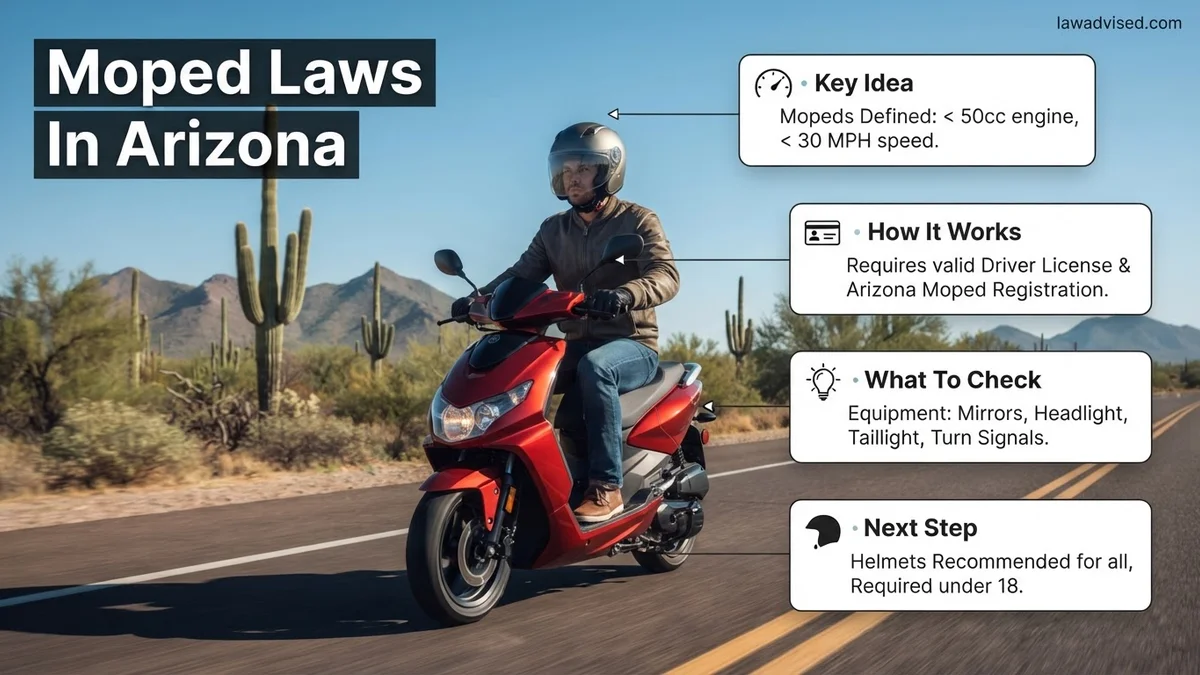
- Mopeds must feature an engine displacement under 50cc and a maximum speed of 30 mph.
- A valid driver’s license or motorized bicycle permit is legally required to operate a moped.
- Arizona law requires mopeds to be registered with the MVD, though annual insurance is optional.
- Riders under the age of 18 must wear a securely fastened protective helmet.
- Mopeds are prohibited from operating on interstate freeways and limited-access highways.
What Causes Moped Law Confusion Under Arizona Statutes
The primary source of confusion for Arizona riders stems from overlapping terminology between motorized bicycles, mopeds, and motor-driven cycles. Law enforcement and state statutes look at mechanical specs rather than marketing terms to classify your ride.
Understanding Arizona’s Moped Definition
Under Arizona law, a moped is defined as a motor-driven cycle equipped with two or three wheels, a helper motor with a maximum piston displacement of 50cc or less, and a maximum design speed of 30 mph on flat ground. If your vehicle exceeds either of these specifications—even by a fraction—it legally transforms into a motorcycle or motor-driven cycle, triggering an entirely different set of rules.
-
Engine displacement: Must not exceed 50 cubic centimeters (cc).
Top speed: Must be manufactured to a maximum speed of 30 mph.
Transmission: Typically features an automatic transmission or helper pedals.
The Motorized Bicycle vs. Moped Trap
Many riders confuse mopeds with motorized bicycles, which are governed by different rules. Motorized bicycles have helper motors that can be pedaled and cannot exceed 20 mph. Mopeds do not require functional pedals, but they do require specific equipment to operate legally on public streets. Failing to register your vehicle properly because you mistook it for a motorized bicycle will result in compliance penalties.
How to Fix Licensing and Registration Compliance for Your Moped
Once you confirm your vehicle meets the legal definition of a moped, you must address state requirements for operation. Ensuring compliance involves navigating Arizona Department of Transportation (ADOT) rules regarding paperwork and operator credentials.
Driver’s License and Endorsement Requirements
You do not need a motorcycle endorsement to ride a moped in Arizona. However, you do need a valid driver’s license of any class (such as a standard Class D operator’s license).
-
Minimum age: You must be at least 16 years old to operate a moped on public roads.
Suspended licenses: You cannot legally operate a moped if your standard driver’s license is currently suspended or revoked for DUI or other traffic violations.
Titling, Registration, and Insurance Mandates
Unlike motorized bicycles, true mopeds must be titled and registered through the MVD in Arizona. You will need a bill of sale or manufacturer’s certificate of origin to secure your license plate.
-
License plates: A distinct moped plate must be visibly attached to the rear of the vehicle.
Insurance: Arizona law requires liability insurance for any registered motor vehicle operated on public roads, including mopeds.
Inspection: Ensure your moped features working headlights, taillights, brake lights, and a rearview mirror to pass basic safety standards.
Step-by-Step Operating Rules for Arizona Streets and Bike Lanes
Operating a moped safely on Arizona roadways requires strict adherence to state transit statutes updated for 2027. Riders must follow a precise protocol to maintain complete compliance with local law enforcement agencies.
Riding in Bike Lanes and Traffic Flow
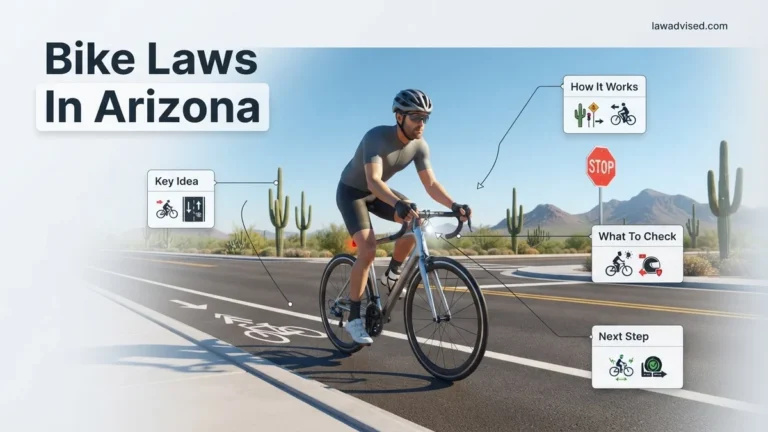
- Utilize bicycle lanes: Arizona law permits moped operators to use designated bicycle lanes, provided the vehicle does not exceed 30 mph and yields the right-of-way to bicyclists.
- Stay to the right: When operating on standard roadways without bike lanes, riders must stay as far to the right side of the road as safely practicable.
- Obey all traffic signals: Moped operators are fully subject to standard traffic control devices, including stop signs, traffic lights, and pedestrian crosswalk signals.
Safety Gear and Passenger Regulations
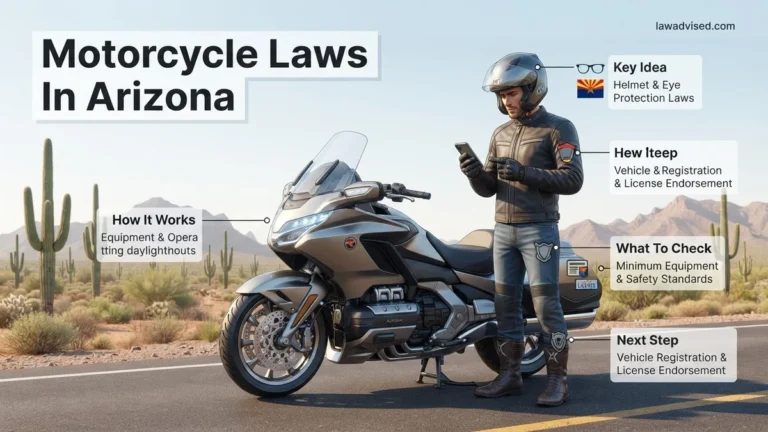
- Wear eye protection: Operators and passengers must wear protective eyewear unless the moped is equipped with an approved windshield.
- Follow helmet mandates: According to the Arizona Department of Transportation, any operator or passenger under the age of 18 must wear a DOT-approved safety helmet at all times.
- Verify passenger limits: Never carry a passenger unless the moped was factory-designed with a dedicated secondary seat and permanent footpegs.
What If Your Moped Exceeds Legal Limits and Requires Motorcycle Classification
If your motorized two-wheeler exceeds Arizona’s legal thresholds of 50cc engine displacement or 30 mph maximum flat-surface speed, it is legally classified as a motorcycle. Failing to register it correctly can result in heavy fines and vehicle impoundment.
Transitioning to Motorcycle Status
- Obtain a motorcycle license endorsement: Schedule and pass the Arizona MVD motorcycle written test and practical riding skills evaluation.
- Secure a bonded title and registration: Visit your local Arizona Motor Vehicle Division office to upgrade your vehicle registration status, which typically incurs state fees ranging from $15 to $100 depending on vehicle value.
- Purchase mandatory liability insurance: Procure a motorcycle-specific insurance policy that meets Arizona’s minimum liability limits of 25/50/15.
- Install required equipment: Equip the vehicle with operational turn signals, rear-view mirrors, and a proper license plate mounting bracket to pass mandatory safety compliance checks.
What If It Still Doesn’t Work?
If your moped fails compliance inspections or you encounter persistent registration and speed classification challenges, utilize these expert troubleshooting steps.
- Consult an authorized local powersports dealer to run an official dyno test, confirming exact engine displacement and top speed metrics. Expect professional diagnostic service fees ranging from $75 to $150.
- Contact the Arizona Department of Transportation executive customer service line for direct administrative guidance on disputed vehicle identification numbers (VIN).
- Hire a certified vehicle title and registration service to handle complex paperwork, bypassing extended MVD wait times for an average processing fee of $50 to $200.
- Engage a traffic attorney specializing in Arizona vehicle code if you are currently facing disputed citations regarding illegal moped modifications.
Conclusion
Navigating Arizona moped laws in 2027 requires strict attention to engine displacement, speed capabilities, and proper registration protocols. According to verified research and expert transit sources, compliance prevents costly fines and guarantees road safety. Your immediate next step is to verify your moped’s exact factory specifications against current state statutes before taking it out onto public roads.
❓ Frequently Asked Questions
How does Arizona legally distinguish between a moped and a motorized bicycle?
Under Arizona Revised Statutes, a motorized bicycle features helper pedals and a motor of 50cc or less, whereas a traditional moped may not require pedals but strictly adheres to the 50cc and 30 mph limits.
Is vehicle registration mandatory for mopeds in Arizona?
Yes, all mopeds driven on public streets must be registered with the Arizona Motor Vehicle Division (MVD) and display a valid license plate.
Can I ride my moped in Arizona bicycle lanes?
Mopeds are generally permitted to use bicycle lanes as long as they operate safely and do not impede bicycle traffic, though local city ordinances may apply specific restrictions.
What happens if my moped goes faster than 30 mph?
If your vehicle is capable of exceeding 30 mph on level ground, Arizona reclassifies it as a motor-driven cycle or motorcycle, requiring a proper motorcycle endorsement, safety equipment, and full insurance.
Do I need a special motorcycle endorsement to drive a moped?
No special motorcycle endorsement is required. A standard class D driver’s license or a basic motorized bicycle permit is completely sufficient.
Are passengers allowed to ride on a moped in Arizona?
Passengers are allowed only if the moped is specifically designed and equipped by the manufacturer with footpegs and a designated seat for a second rider.

Ismail Hossain is the founder of Law Advised. He is an Divorce, Separation, marriage lawyer. Follow him.