Pool Laws in Arizona 2027 Expert Guide to Safety & Fences
Understanding pool laws in Arizona is critical for homeowner liability and child safety, requiring strict adherence to barrier statutes. Property owners must comply with mandatory state and local regulations regarding fence heights, self-closing gates, and safety equipment. Failure to meet these legal standards can result in severe fines and increased liability risks.
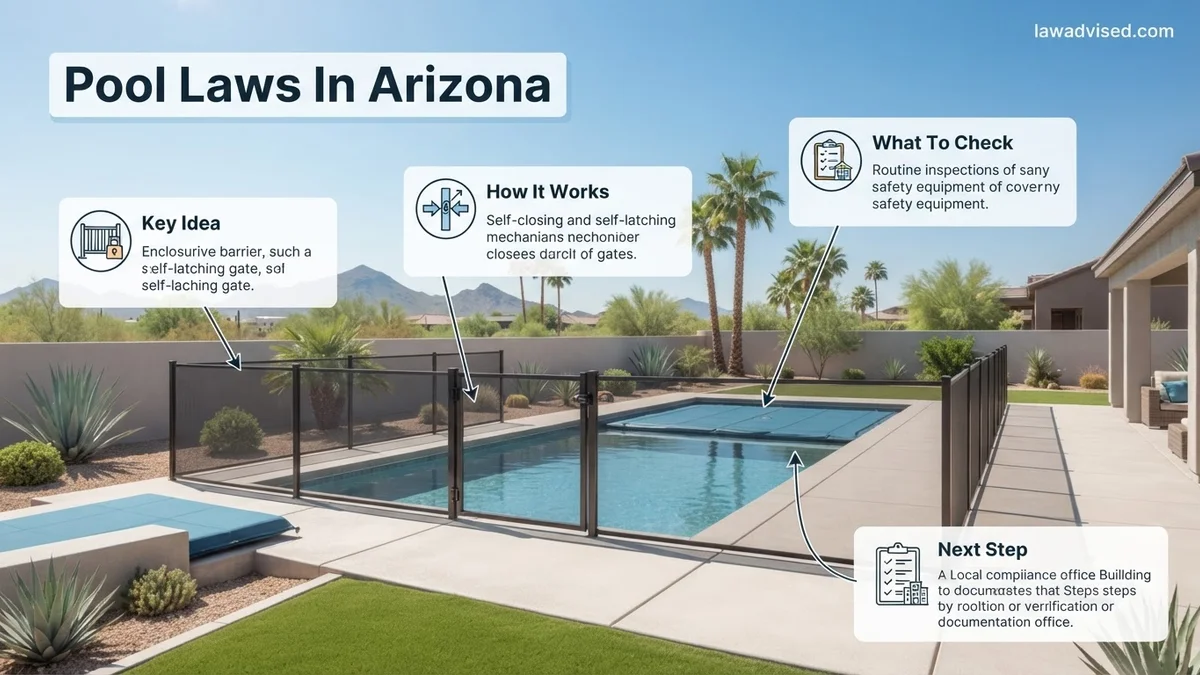
Arizona law requires every residential swimming pool to be completely enclosed by a secure barrier, usually a fence, that stands at least 60 inches high. These strict statutes aim to prevent tragic childhood drownings by establishing exact measurements for fence heights, gate swings, and vertical slat spacing across the state.
Failing to meet these standards can result in hefty municipal fines, canceled homeowners insurance policies, and severe legal liability if an accident occurs. Whether you are buying a home with an existing pool or updating your backyard for 2027, compliance is not optional.
Key Takeaways
- Arizona state law mandates a minimum 5-foot pool fence height.
- Gates must open outward and feature self-closing, self-latching mechanisms.
- Vertical slat spacing must not exceed 4 inches apart.
- Maricopa and Pima counties may enforce stricter municipal codes.
- Homeowners face severe legal liability for non-compliant pool barriers.
What Causes Pool Law Non-Compliance and Code Violations
Barrier Height and Ground Clearance Failures
Many homeowners unknowingly violate Arizona pool laws due to shifting soil or poor initial installation. The statute requires your barrier to be a minimum of 60 inches from the outside grade. If you install decorative landscaping, gravel, or pavers near the fence, you might inadvertently lower the effective height. Furthermore, the gap between the bottom of the fence and the ground cannot exceed 2 inches on solid surfaces, or 4 inches on unpaved dirt.
Faulty Gates and Latch Malfunctions
Inspectors cite pool gates more often than any other component. Arizona law dictates specific operational rules for gates:
- Gates must open outward away from the pool area.
- The self-closing and self-latching mechanism must function from any position.
- Release mechanisms on standard latches must sit at least 54 inches off the ground, or be shielded on the pool side at least 3 inches below the top of the gate.
How to Fix and Upgrade Your Pool Barrier to Meet Arizona Standards
Correcting Slat Spacing and Climbable Elements
If your current wrought iron or chain-link fence has vertical gaps wider than 4 inches, children can easily squeeze through. You must install vertical extensions or mesh screening to narrow those gaps. Additionally, look for horizontal rungs or nearby objects that act as climbing hazards. Arizona code requires that any decorative horizontal bars be placed on the pool side of the fence, spaced at least 45 inches apart, to prevent kids from using them as ladder steps.
Upgrading to Compliant Hardware and Mesh Fences
If your existing latches are broken or stick during humid monsoon seasons, replace them immediately with magnetic safety latches that resist jamming. For homeowners utilizing removable mesh pool fencing to comply with 2027 safety expectations, ensure the mesh meets ASTM International standards. The fence must tension tightly, lack foot-holds, and feature spring-loaded safety hooks that require adult dexterity to open and disconnect.
What If Your Local City Codes Are Stricter Than State Law
Navigating Arizona pool safety requirements involves understanding that municipal ordinances can heavily override minimum state standards. While the Arizona Revised Statutes establish the baseline framework for residential pool barriers, local building departments in 2027 retain the legal authority to enforce stricter regulations. Cities like Phoenix, Scottsdale, and Tucson frequently implement localized amendments that mandate higher fence clearances, specific gate latch placements, or mandatory pool alarm systems.
Understanding Municipal Overrides
State law typically mandates a minimum fence height of 5 feet, but certain local jurisdictions require 6 feet of vertical clearance. Homeowners must consult their specific city or county planning and zoning departments before beginning any construction or modification projects. Failing to align with local amendments can result in failed inspections, costly retrofits, and severe municipal fines.
Navigating HOA Restrictions
In addition to municipal codes, Homeowners Associations often enforce strict architectural guidelines regarding pool fencing materials, colors, and visibility. According to community management experts, HOA design review boards can legally require higher aesthetic standards than the state mandates. Property owners must secure both municipal permits and HOA architectural approval to achieve total legal compliance.
Proven Steps to Maintain Legal Compliance and Prevent Liability
Maintaining a legally compliant swimming pool requires a proactive risk management strategy. Property owners face substantial legal liability if an unauthorized child accesses an unsecured body of water. Implementing a structured compliance routine safeguards both neighborhood children and the homeowner’s financial assets from catastrophic premises liability claims.
- Conduct a monthly physical inspection of all barrier components, checking gate self-closing and self-latching mechanisms for wear and tear.
- Test all door and window alarms connected to the pool perimeter every thirty days to ensure optimal electronic functionality.
- Keep the area surrounding the perimeter fence clear of climbable objects, patio furniture, and dense foliage within a 4-foot radius.
- Schedule a formal safety audit with a certified pool inspector or municipal code enforcement officer every two years.
- Maintain meticulous written records of all barrier repairs, hardware replacements, and professional inspection certificates for legal protection.
What If It Still Doesn’t Work?
If DIY adjustments fail to bring your pool barrier into compliance with 2027 Arizona standards, immediate remediation is required. Try these fallback steps to resolve persistent code violations:
- Hire a licensed pool contractor to evaluate structural defects, with professional diagnostic consultations averaging between $150 and $300.
- Replace malfunctioning latches and hinges with heavy-duty, magnetic self-latching hardware designed specifically to pass municipal gate inspections.
- Contact your local city building department to request a preliminary pre-inspection walkthrough to identify exact code deficiencies before official citation.
- Install redundant secondary safety layers, such as ASTM-compliant motorized pool safety covers, which typically range from $1,500 to $4,000 installed.
Conclusion
Complying with Arizona pool laws protects vulnerable young lives and shields homeowners from devastating civil liability and municipal penalties. Upgrading your enclosure to meet strict 2027 safety codes requires diligence, precise measurements, and adherence to local municipal amendments. According to verified research and expert safety sources, proactive barrier maintenance is the single most effective defense against accidental childhood drownings. Take the next step today by scheduling a comprehensive safety audit of your pool perimeter to ensure total compliance.
❓ Frequently Asked Questions
What are the exact statutory height requirements for pool fences in Arizona?
According to Arizona Revised Statutes, pool enclosures must be a minimum of 5 feet in height measured from the exterior grade facing away from the pool. Additionally, the bottom clearance between the ground and the barrier cannot exceed 2 inches.
How must pool gate latches be positioned to comply with the law?
Gate latches must be placed on the pool side of the fence and located at least 54 inches above the ground, or be shielded so that small children cannot reach over or through the gate to open it.
Are above-ground pools subject to the same barrier laws in Arizona?
Yes, above-ground pools are regulated similarly to inground pools. If the pool walls act as the barrier, they must be at least 5 feet high, and any attached ladder or steps must be securely locked, removed, or enclosed by a compliant fence when not in use.
What additional regulations do Maricopa and Pima counties enforce?
While state law sets the baseline, local municipalities and counties like Maricopa and Pima often have stricter local ordinances regarding setback distances, specific latch heights, and mandatory inspection sign-offs during real estate transactions.
What is a homeowner’s legal liability if a drowning occurs in a non-compliant pool?
Homeowners can face severe civil and criminal liability under Arizona’s attractive nuisance doctrine and specific pool safety statutes if an unauthorized person accesses an illegal or non-compliant pool.
Do I need a building permit to install or modify a pool fence in Arizona?
Most local building departments in Arizona require a permit for constructing or altering pool enclosures to ensure the finished barrier strictly satisfies local and state safety codes.

Ismail Hossain is the founder of Law Advised. He is an Divorce, Separation, marriage lawyer. Follow him.