Dumb Laws in Arizona 2027 Real Weird Statutes Explained
Many states carry bizarre historical statutes, and dumb laws in arizona include some of the most genuinely strange and outdated rules found anywhere in the country. This guide breaks down the real statutes behind urban legends, separating fact from fiction regarding the Grand Canyon State’s most illogical ordinances.
Arizona is home to some of the strangest, most baffling legal statutes still lingering on the books. Even as we move through 2027, the Grand Canyon State maintains a reputation for bizarrely specific laws regulating everything from desert flora to domestic livestock. You might assume these odd rules are just harmless internet myths, but many of them were written into official state or municipal codes decades ago and technically never repealed.
Understanding these weird statutes gives you a fun glimpse into the state’s eccentric legislative history. Whether you are a lifelong resident or planning a trip to Phoenix or Tucson, knowing the reality behind these quirky laws helps you separate local folklore from actual legal codes.
Key Takeaways
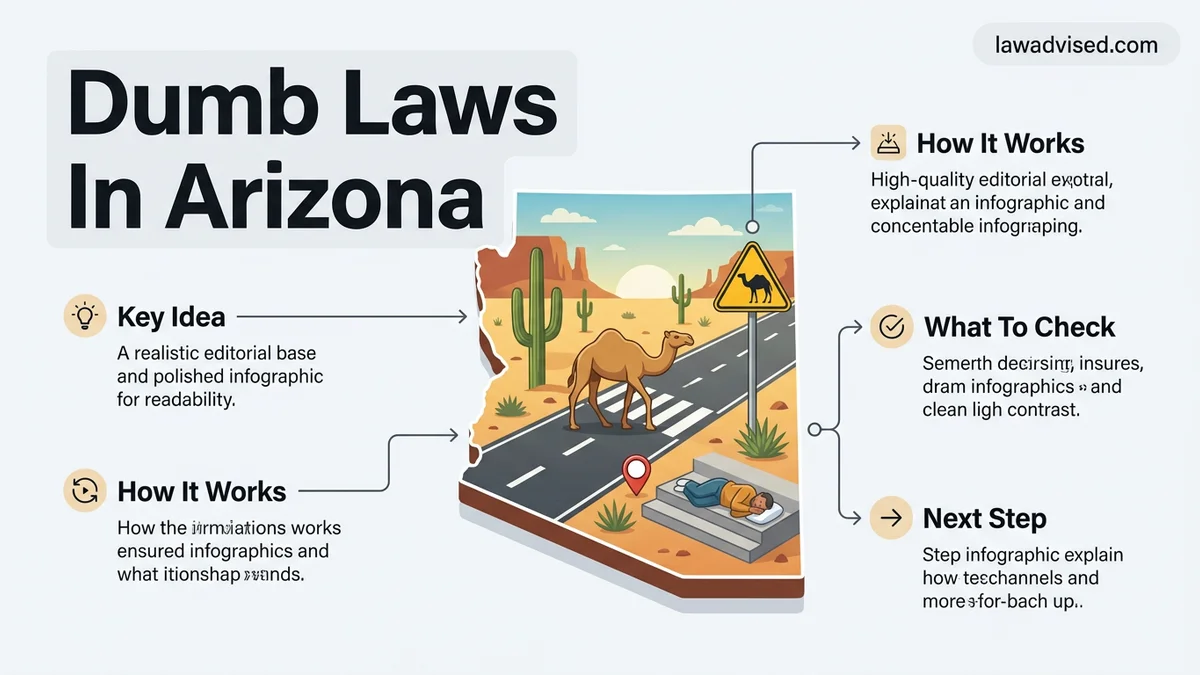
- Arizona historically prohibited hunting camels, a leftover from an 1800s military experiment.
- Cutting down a protected saguaro cactus carries severe felony-level penalties.
- Many viral internet laws are actually modern myths or misunderstood local ordinances.
- Local city codes often contain quirkier regulations than statewide penal codes.
- Outdated laws rarely get formally repealed unless they conflict with modern legislation.
What Causes Absurd Laws to Remain on the Books in Arizona
Legislatures pass thousands of bills every decade, but removing old laws is rarely a top priority. When specific local problems arise in the desert, lawmakers often react by drafting hyper-focused restrictions that quickly become obsolete.
Reactionary Legislation From a Different Era
Many weird Arizona laws stem from very specific, short-term historical events that no longer apply today. Lawmakers in the 19th and early 20th centuries drafted rules to solve immediate regional crises without considering how those laws would age. Once the crisis passed, the statute simply stayed embedded in the legal system.
- Outdated priorities: Statutes were often created to protect burgeoning industries, like cattle ranching or early tourism.
- Lack of housekeeping: State lawmakers focus their limited time on modern issues like water rights and technology rather than cleaning up antique code books.
- Low enforcement incentive: Police officers and prosecutors ignore these defunct rules because they carry no practical weight in modern 2027 courtrooms.
The Myth of Automatic Repeal
A common misconception is that old laws expire on their own. In reality, a statute remains legally binding unless the state legislature actively votes to repeal it or a court rules it unconstitutional. This legislative inertia is why you can still find astonishingly specific prohibitions regarding desert wildlife and household items sitting quietly in public databases.
How to Identify and Verify Real Versus Fake Arizona Statutes
The internet is flooded with fabricated legal claims designed to make southwestern states look foolish. If you want to know if a wild Arizona rule is actually real, you need to know where to look.
Navigating Official State Databases
You cannot trust social media lists or viral blogs to give you accurate legal information. To verify whether a strange statute exists, you have to dig into the primary sources provided by the state government.
- Check the Arizona Revised Statutes (A.R.S.): The official state code is searchable online and shows current, active laws.
- Look at municipal codes: Many of the weirdest rules are actually city ordinances in places like Yuma, Flagstaff, or Tucson rather than statewide laws.
- Look for repeal dates: Always check the history notes at the bottom of a statute to see if and when it was amended or struck down.
Distinguishing Urban Legends From Real Laws
Most viral internet lists attribute fake laws to Arizona just for comedic effect. If a statute sounds too absurd to be verified by an official government website, it is usually an urban legend born from a misunderstood city ordinance or a completely fictional meme.
Real outdated statutes are usually dry, technical, and boring, even when their subject matter—like cacti or livestock—is inherently funny. Learning how to cross-reference these claims keeps you from spreading misinformation about the state’s legal history.
Step-by-Step Guide to Researching Historical Arizona Ordinances
Verifying the accuracy of eccentric local statutes requires navigating municipal codes and state archives effectively. Digital research tools have evolved significantly by 2027, allowing citizens to access public legal databases with unprecedented ease. Following a structured methodology prevents the spread of misinformation regarding outdated Arizona laws.
- Access the Arizona Legislature Website: Navigate to the official state portal to review current Arizona Revised Statutes (A.R.S.) and check for active statutory text.
- Consult Municipal Code Libraries: Use platforms like Municode or American Legal Publishing to search city-specific ordinances for towns like Tucson, Phoenix, or Tombstone.
- Review Legislative History Logs: Check the Arizona State Library archives to determine if a specific municipal code has been repealed, superseded, or modified over the decades.
- Verify Enforcement Status: Cross-reference the discovered statute with local police department policy manuals or municipal prosecutor advisories for 2027 enforcement metrics.
What If It Still Doesn’t Work?
When online legal databases yield conflicting information or viral internet myths persist, resolving the ambiguity requires specialized legal intervention. Citizens facing municipal disputes over obscure or poorly understood ordinances should consider structured fallback strategies to protect their rights.
- Consult a Licensed Arizona Attorney: Contact a local municipal law specialist to review specific city codes. Initial legal consultations typically cost between $150 and $350 per hour depending on the firm.
- Contact the City Clerk’s Office: Submit a formal public records request to the relevant municipality to obtain the certified, up-to-date text of the local ordinance in question.
- Engage Legal Aid Societies: Qualified low-income residents can utilize Arizona-based pro bono legal services for assistance regarding unfair municipal citations or housing ordinance disputes.
- File a Public Clarification Inquiry: Request a formal advisory opinion from the local city attorney’s office regarding the active enforcement status of questionable historical statutes.
Conclusion
Distinguishing between actual Arizona statutes and persistent internet myths requires diligent research through official legislative databases and municipal portals. According to verified research and expert legal sources, most viral eccentric laws are either entirely fabricated, long-repealed, or misconstrued zoning regulations rather than active state crimes. The next practical step is to verify any questionable local ordinance directly through official platforms like Municode or by consulting a licensed Arizona attorney before sharing unverified legal claims.
❓ Frequently Asked Questions
What is the most famous weird law in Arizona?
The prohibition against cutting down saguaro cacti is widely considered the most famous, carrying strict environmental protection penalties that are actively enforced today.
Are there any weird traffic or vehicle laws in Arizona?
Certain municipalities have minor traffic or parking quirks, but most major driving regulations align closely with standard national uniform traffic codes.
Did Arizona ever actually ban donkeys from sleeping in bathtubs?
This famous urban legend stems from an old 1920s local ordinance in Tonopah enacted after a flash flood washed a miner’s donkey into a sunken tub.
Can police enforce laws from the 1800s?
Generally, if a statute has never been formally repealed by the state legislature, it technically remains on the books, though prosecutors rarely pursue them.
Where can someone read the actual text of Arizona laws?
The official Arizona Revised Statutes (ARS) are publicly accessible online through the Arizona State Legislature website for complete transparency.
Do local cities have stranger rules than the state government?
Yes, individual towns and cities often pass specific municipal codes regarding public nuisances, zoning, and local wildlife that sound much stranger than state laws.

Ismail Hossain is the founder of Law Advised. He is an Divorce, Separation, marriage lawyer. Follow him.