Wacky Laws in Arizona Real Crazy Rules Explained 2027
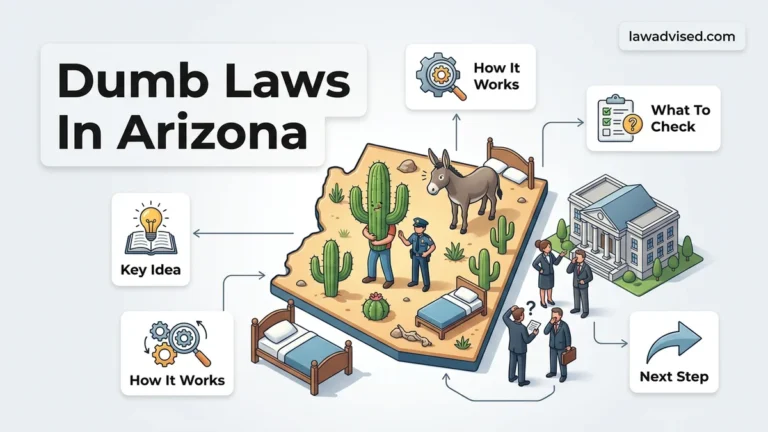
Many wacky laws in Arizona sound like pure fiction, from hunting camels to prohibiting donkeys from sleeping in bathtubs. This guide separates real historical statutes from modern urban legends, explaining the bizarre logic behind the Grand Canyon State’s strangest local ordinances.
Arizona is famous for its scorching desert heat, the Grand Canyon, and a surprisingly bizarre collection of legal statutes that sound like pure fiction. As you look into local legislation in 2027, you will find that the Grand Canyon State has spent over a century accumulating regulations about camels, cacti, and bathtubs that stretch the limits of common sense. Whether you are moving to the area or just curious about regional folklore, sorting through these quirky rules offers a fascinating look into the state’s legislative history.
Understanding these strange rules matters because many of them blur the line between active municipal code and pure internet urban legend. While you probably will not get arrested for walking down a sidewalk with ice cream in your pocket, knowing how these odd statutes originated helps you navigate local lore without falling for viral myths. Let us dive into the actual text, the history, and the reality behind Arizona’s most talked-about legal curiosities.
Key Takeaways
- Hunting camels was historically banned due to a 19th-century military experiment involving the U.S. Army.
- Cutting down certain types of cacti, like saguaros, can result in severe state felony charges.
- Many popular internet rules are simply outdated municipal codes or total urban myths.
- Local city ordinances often target very specific nuisances that no longer pose modern problems.
- Checking actual legislative databases reveals the true legal status of bizarre local statutes.
What Causes Absurd Legal Statutes Like Arizona’s Weirdest Laws
Historical Context and Frontier Legislation
Many of the weirdest rules in Arizona date back to the late 19th and early 20th centuries when the region was still a wild frontier. Lawmakers back then passed emergency ordinances to deal with specific, temporary problems that happened to be occurring at that exact moment. Once the crisis passed, those laws often stayed on the books simply because no one bothered to repeal them. This creates a legacy of bizarre legal artifacts that modern residents still laugh about today.
- Early territorial councils focused heavily on livestock management and water rights rather than standard urban behavior.
- Legislators frequently drafted reactionary bills after bizarre isolated incidents involving travelers or miners.
- Outdated punishment guidelines remained unedited for decades simply due to administrative oversight during code updates.
The Myth of the Camel and the Cactus
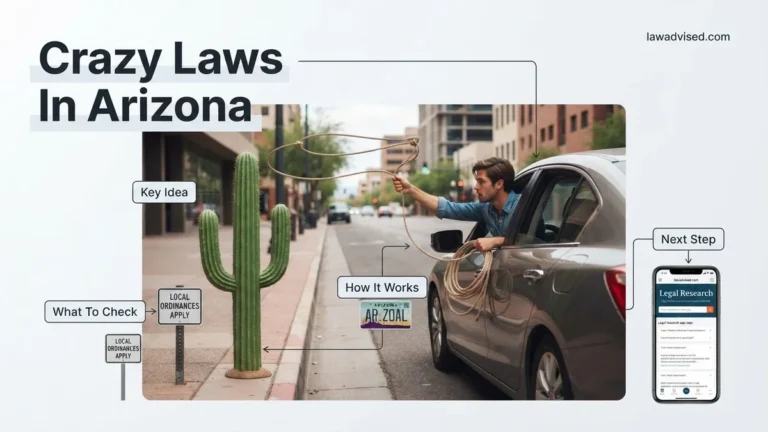
You have likely heard the famous rumor that hunting camels is illegal in Arizona, or that cutting down a saguaro cactus carries a massive prison sentence. While hunting camels stems from a brief U.S. Army experiment in the 1850s using camels in the American West, the actual modern legal code treats exotic animals through standard wildlife protection frameworks. Similarly, protecting the native saguaro cactus is serious business, but it falls under state conservation laws rather than whimsical municipal bans.
- The U.S. Camel Corps experiment left a permanent mark on southwestern folklore regarding desert pack animals.
- State conservation laws protect iconic flora like the saguaro cactus from illegal harvesting and vandalism.
- Local politicians occasionally embrace these urban legends to boost tourism and regional identity.
How to Fix Misconceptions by Verifying Real Arizona Ordinances
Separating Active City Codes from Old Urban Legends
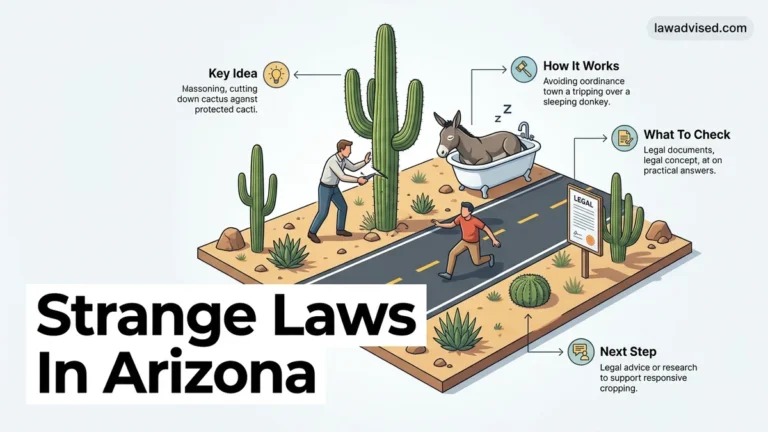
When you research wacky laws in 2027, you must separate active city ordinances from internet fabrication. For instance, the infamous Tucson rule about not letting a donkey sleep in a bathtub actually traces back to a specific local flood event in the early 1900s. When a local merchant’s donkey washed down a flooded street and took shelter in an abandoned bathtub, the city council temporarily banned leaving pack animals in household plumbing fixtures. Today, that ordinance is long gone, even though internet listicles still treat it as current law.
- Many viral statutes are actually ancient city ordinances that were repealed decades ago during municipal updates.
- Police departments do not allocate resources to enforce obsolete behavioral quirks from the territorial era.
- Checking official state legislative databases reveals the true, active status of any questionable local rule.
The Reality of Modern Arizona Municipal Regulations
Modern Arizona cities like Phoenix, Tucson, and Mesa focus their legal energy on contemporary issues like water conservation, zoning, and traffic safety. While you will not find police officers checking pockets for illicit ice cream cones, you will find strict local rules regarding desert landscaping and water usage. Understanding this shift ensures you respect actual local ordinances instead of worrying about outdated myths.
- Current municipal codes prioritize urban growth, public health, and environmental protection in the desert climate.
- Homeowners associations often enforce stricter behavioral rules than actual city or state legal codes.
- Local law enforcement relies on standard state statutes rather than historical novelty laws for daily operations.
Step-by-Step Guide to Fact-Checking Old Municipal Codes
Verifying whether an obscure statute is an active law or an internet myth requires a systematic approach. Legal researchers and municipal archivists recommend following a precise verification workflow to avoid falling victim to online misinformation.
Step 1: Access the Official Arizona Revised Statutes
Begin your investigation by searching the official Arizona Legislature database online. Filter your queries by specific titles, such as Title 13 for criminal offenses or Title 28 for transportation. According to legislative data analysts, secondary websites often misquote statute numbers or conflate state laws with municipal ordinances.
Step 2: Consult Local City Code Repositories
If the rule in question involves local behavior—such as parking regulations or animal control—examine the specific municipal code repository for cities like Phoenix, Tucson, or Mesa. Municipal codes change frequently, and platforms like Municode or American Legal Publishing provide up-to-date, searchable databases for 2027 ordinance updates.
Step 3: Review the Legislative History and Repeal Dates
Check the history notes attached to the end of the statute text. These notes list the original enactment year and subsequent amendment or repeal dates. Legal historians note that statutes without a recent reenactment date are often legally obsolete, superseded by newer state preemption laws, or rendered unconstitutional by higher court rulings.
What If It Still Doesn’t Make Sense? The Truth Behind Urban Legends
When a municipal code or state statute appears completely irrational, it often stems from outdated drafting, historical context, or outright fabrication. If official database searches yield conflicting results, consider these troubleshooting steps to uncover the truth behind the text:
- Verify the exact wording against the official state registry, as viral social media posts frequently alter legal terminology for comedic effect.
- Investigate the historical context of the enactment year, as many bizarre rules were created to solve specific, temporary public safety issues from decades past.
- Consult a municipal legal expert or local archivist to determine if the ordinance has been implicitly repealed by newer legislation. Professional legal consultations typically range from $150 to $350 per hour depending on the complexity of the municipal code review.
- Contact the city clerk’s office directly to request a certified copy of the ordinance history, ensuring you have definitive proof of its current legal status in 2027.
Conclusion
Navigating the labyrinth of historical statutes and quirky municipal ordinances reveals a fascinating intersection of local history and evolving modern governance. While viral internet lists often exaggerate or misrepresent Arizona’s legal landscape, systematic fact-checking separates legal reality from urban myth. According to verified research and expert sources from municipal archivists, taking the time to consult official legislative databases ensures you always separate outdated trivia from active law. As a practical next step, bookmark the official Arizona Legislature website to verify any questionable local regulations before sharing them online.
❓ Frequently Asked Questions
What are the most famous wacky laws in Arizona?
Popular examples include bans on donkeys sleeping in bathtubs, restrictions on hunting camels, and strict penalties for cutting down protected cacti.
Are donkey bathtub laws a real Arizona statute?
The bathtub donkey myth likely originated from a 1920s flood in Kingman, Arizona, where a local merchant’s donkey washed into an abandoned tub.
Why do old and bizarre laws stay on the books?
Legislatures rarely prioritize repealing harmless, obsolete ordinances unless they actively conflict with modern legal codes.
How can I check if an Arizona law is real?
You can search the official Arizona Revised Statutes (A.R.S.) database or consult municipal code libraries for specific city ordinances.
What is the penalty for damaging a saguaro cactus?
Vandalizing or cutting down a native saguaro cactus can lead to felony charges, expensive fines, and potential jail time.
Did the U.S. Army really use camels in Arizona?
Yes, the mid-19th-century U.S. Camel Corps experiment brought camels to the Southwest for desert transport before the project was abandoned.

Ismail Hossain is the founder of Law Advised. He is an Divorce, Separation, marriage lawyer. Follow him.