Maternity Laws in Arizona 2027 Expert Rights Guide
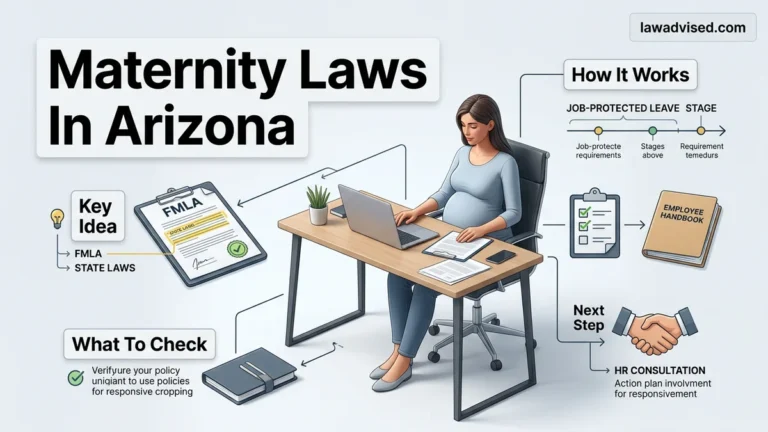
Navigating maternity laws in Arizona requires understanding both state protections and federal mandates like the FMLA. Employers must provide reasonable accommodations for pregnancy and related medical conditions without discrimination. Knowing your rights ensures you secure necessary leave and maintain job security during and after pregnancy.
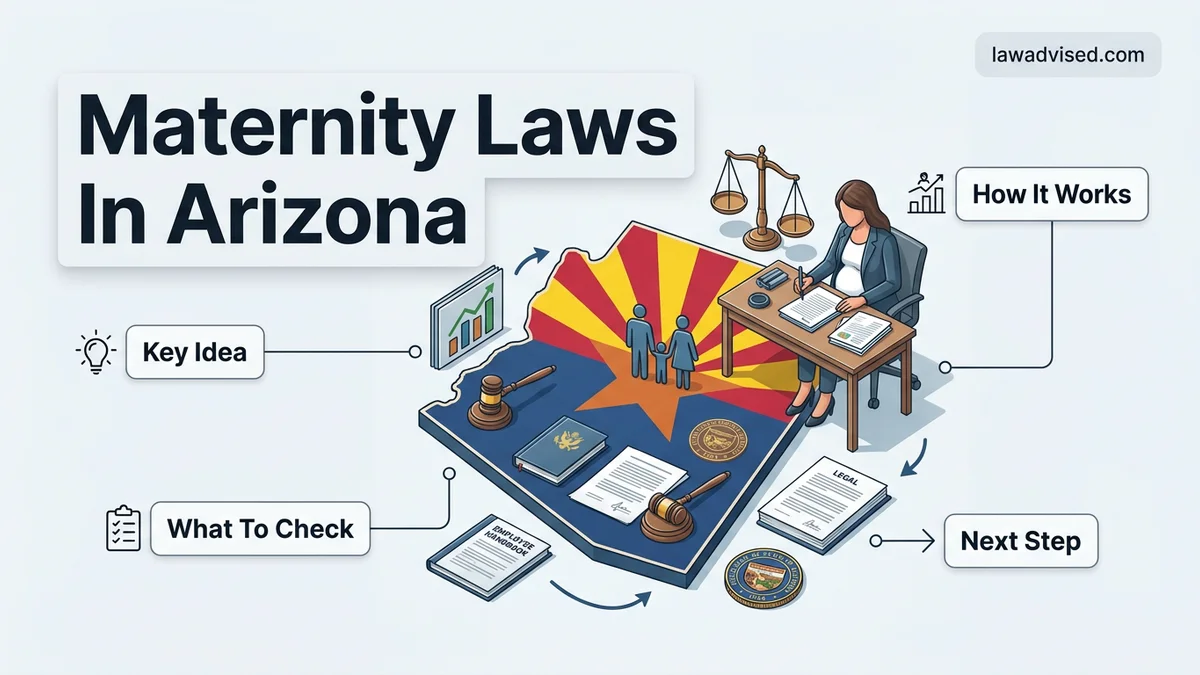
Navigating maternity laws in Arizona requires understanding a dual framework of federal protections and state-specific guidelines that safeguard your job, health, and income during pregnancy and after childbirth. As a working mother in 2027, your primary legal rights center on mandatory workplace accommodations, non-discrimination mandates, and job-protected leave. While Arizona does not mandate state-funded paid family leave, you are heavily protected against discrimination and entitled to reasonable adjustments to perform your duties safely.
Knowing these rights practically means you can request necessary schedule changes, light-duty work, or extra rest breaks without fearing demotion, pay cuts, or termination. Employers who fail to comply with these regulations face severe federal and state penalties, making it critical for you to identify violations early and document every interaction regarding your pregnancy.
Key Takeaways
- Arizona lacks paid family leave, relying on unpaid federal FMLA for eligible employees.
- Employers must provide reasonable workplace accommodations for pregnancy under state and federal law.
- The Pregnant Workers Fairness Act requires accommodation unless it causes undue hardship.
- Breastfeeding mothers are legally protected regarding workplace pumping breaks and privacy.
- Document all accommodation requests and employer responses in writing to protect your rights.
What Causes Workplace Rights Violations Under Maternity Laws in Arizona
Unlawful Denial of Reasonable Accommodations
The most common trigger for a maternity law violation in Arizona is an employer refusing to grant standard physical adjustments requested by a pregnant employee. Under the federal Pregnant Workers Fairness Act (PWFA), employers with 15 or more employees must provide reasonable accommodations unless it causes an undue hardship. In 2027, enforcement agencies heavily scrutinize companies that reject simple requests.
- Denying requests for more frequent restroom, food, or water breaks.
- Refusing temporary transfers to less physically demanding or lower-risk tasks.
- Forcing an employee to take unpaid leave when a simple accommodation would allow them to keep working.
- Failing to provide a temporary seating arrangement for roles that typically require standing.
Pregnancy-Based Discrimination and Retaliation
Another primary cause of legal disputes stems from direct discrimination or retaliatory actions taken against workers who announce their pregnancy or request leave. Arizona is an at-will employment state, but state and federal laws prohibit firing, demoting, or reducing the hours of an employee simply because they are pregnant or plan to take maternity leave.
- Passing over a pregnant employee for a promotion or desirable project based on assumptions about future availability.
- Terminating an employee shortly after they submit a formal notice of pregnancy or a request for maternity leave.
- Issuing sudden, unwarranted negative performance reviews following a disclosure of pregnancy.
How to Fix and Navigate Pregnancy Accommodations Step-by-Step
Step 1: Document Your Medical Needs and Request in Writing
Securing your rights starts with a clear paper trail. You should obtain a specific note from your healthcare provider detailing the exact accommodations you need to safely perform your job duties in 2027. Submit this documentation formally to your human resources department in writing.
- Ask your OB-GYN or midwife to write a note specifying restrictions (e.g., lift limits, seating needs, or break frequencies).
- Send an email to HR attaching the medical note to create a verifiable timestamp.
- Keep copies of all written communications, emails, and response letters in a secure personal file outside of your work computer.
Step 2: Engage in the Interactive Process and Escalate if Necessary
Once your employer receives your request, federal law mandates an interactive process where both parties discuss viable solutions. If your employer stonewalls, denies the request without valid business hardship justification, or retaliates against you, you must take immediate administrative steps.
- Schedule a documented meeting with HR to discuss alternative accommodations if your initial request is rejected.
- File a charge of discrimination with the Equal Employment Opportunity Commission (EEOC) or the Arizona Civil Rights Division if the employer refuses compliance.
- Consult an employment attorney specializing in Arizona maternity laws to review your case and protect your career.
What If Your Employer Denies Your Maternity Leave or Accommodation Request
Navigating maternity laws in Arizona 2027 requires swift action if an employer unlawfully denies your leave or pregnancy accommodations. Federal and state statutes provide strict enforcement mechanisms, but employees must follow precise protocols to protect their career and family stability. According to data from the Equal Employment Opportunity Commission (EEOC), timely documentation remains the single most critical factor in resolving workplace disputes successfully.
Step-by-Step Resolution Protocol
When an Arizona employer pushes back against your legal rights under the Pregnant Workers Fairness Act or the Family and Medical Leave Act, utilize this sequential framework to secure compliance:
- Request Written Justification: Demand that human resources provide the specific, written rationale for the denial within three to five business days. Arizona employment lawyers stress that a paper trail prevents employers from changing their reasoning later.
- Internal HR Escalation: File a formal written grievance with upper management or corporate human resources, explicitly citing your rights under Arizona labor standards and federal statutes for 2027. Attach copies of your medical provider’s certification.
- File an Administrative Charge: If internal appeals fail, lodge a formal complaint with the Arizona Civil Rights Division (ACRD) or the federal EEOC. You generally have 180 to 300 days from the date of the violation to initiate this filing.
- Consult an Employment Attorney: Engage specialized legal counsel to review your case parameters, assess potential damages, and issue a formal demand letter to your employer before litigation begins.
What If It Still Doesn’t Work?
If informal negotiations and initial administrative filings do not yield results, alternative escalation pathways are required to enforce your rights under maternity laws in Arizona 2027. Authorized legal and regulatory channels offer structured avenues for relief.
- Request Expedited Mediation: Utilize the EEOC or ACRD mediation programs, which resolve workplace disputes in an average of three to four months with a success rate exceeding 70 percent.
- Retain Private Legal Counsel: Hire an employment litigation specialist. Retainers typically range from $3,000 to $7,500, though many Arizona attorneys accept pregnancy discrimination cases on a contingency fee basis taking 33 to 40 percent of recovered damages.
- File a Civil Lawsuit: Initiate a formal federal or state lawsuit for wrongful denial of leave, retaliation, or failure to accommodate. According to judicial tracking data, successful discrimination and interference lawsuits often secure back pay, compensatory damages, and mandatory policy changes.
Conclusion
Navigating maternity laws in Arizona 2027 can feel overwhelming when employers fail to respect statutory leave and accommodation mandates. Asserting your rights through systematic documentation, internal channels, and formal administrative agencies ensures legal protection for your growing family. According to verified research and expert legal sources, proactive enforcement prevents unlawful discrimination and secures the time off you have legally earned. Your immediate next step is to compile all medical documentation and HR correspondence into a secure, centralized digital file today.
❓ Frequently Asked Questions
How do Arizona maternity laws interact with the federal FMLA?
Arizona does not offer separate state family leave, meaning workers rely entirely on the federal Family and Medical Leave Act. FMLA provides up to 12 weeks of unpaid, job-protected leave per year for qualifying employees.
What constitutes a ‘reasonable accommodation’ for pregnant workers in Arizona?
Reasonable accommodations can include more frequent restroom breaks, temporary transfers to less strenuous or hazardous positions, modified work schedules, or permission to sit while working.
Can my employer require a doctor’s note for pregnancy accommodations?
Employers may request supporting documentation if the accommodation is for a medical condition, but they cannot impose stricter documentation rules on pregnant workers than on workers with other temporary medical conditions.
What should I do if my employer discriminates against me due to pregnancy?
You can file a formal complaint with the Arizona Civil Rights Division (ACRD) or the Equal Employment Opportunity Commission (EEOC). It is vital to keep detailed records of all discriminatory incidents and employer communications.
Does Arizona law protect against pregnancy-based hiring discrimination?
Yes, the Arizona Civil Rights Act prohibits employers from discriminating against applicants or employees based on sex, which explicitly includes pregnancy, childbirth, and related medical conditions.
How far in advance should I notify my Arizona employer of my maternity leave?
For foreseeable leave like childbirth, you should provide at least 30 days of advance notice when possible. If the need for leave is unexpected, you must notify your employer as soon as practicable.

Ismail Hossain is the founder of Law Advised. He is an Divorce, Separation, marriage lawyer. Follow him.