Tint Laws in Arizona 2027 Expert Legal Guide
Navigating tint laws in arizona requires understanding specific Visible Light Transmission (VLT) limits for different vehicle windows. Arizona law allows front side windows to let in at least 50% of light, while rear windows can be tinted to any darkness level.
Arizona window tint laws under the 2027 regulations dictate strict Visible Light Transmission (VLT) percentages and reflectivity limits to ensure driver visibility and law enforcement safety. For sedans, your front side windows must allow more than 33 percent of light through, while multipurpose vehicles like SUVs and vans face specific rear exemptions. Navigating these rules prevents costly fix-it tickets and forced removal during traffic stops.
Getting your window tint right saves you from fines and failing annual safety inspections across the state. Whether you drive a passenger car or a heavy-duty truck, understanding how Arizona measures darkness and reflectivity prevents compliance headaches. Let us look at what causes legal violations and how to fix non-compliant glass.
Key Takeaways
- Front side windows must allow at least 50% of light inside.
- Rear windows and back windshields can use any darkness level.
- Windshield tinting is restricted to the top AS-1 line only.
- Reflective tint is limited to a maximum of 35% reflectivity.
- Medical exemptions allow darker tints with a signed doctor’s note.
What Causes Window Tint Failures and Legal Violations in Arizona
Sedan Versus SUV VLT Percentage Misunderstandings
Many drivers assume passenger car and SUV rules are identical, which leads to immediate citation. Under current 2027 standards, you must know the exact thresholds for your specific vehicle class:
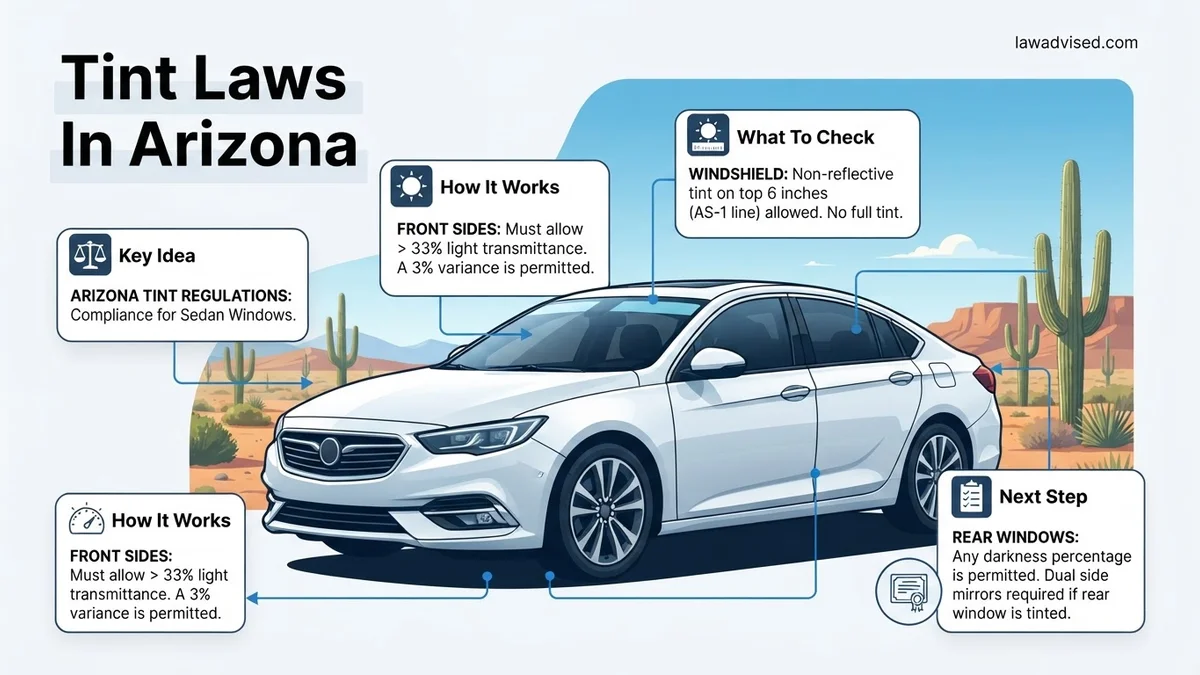
- Sedans (Passenger Cars): Front side windows require a minimum of 33 percent VLT. Back side windows and the rear window must also allow more than 33 percent light in.
- SUVs and Vans: Front side windows still require more than 33 percent VLT. However, your rear side windows and rear windshield can be tinted to any darkness level you choose.
- Reflectivity Limits: Neither sedans nor SUVs can use window tint that is more than 35 percent reflective on front or back windows to avoid blinding other drivers.
Windshield Tint and Color Restriction Violations
The windshield is subject to the strictest enforcement under Arizona law. Applying dark film across your entire front windshield is completely illegal.
- AS-1 Line Rule: You may only apply non-reflective tint above the manufacturer’s AS-1 line or the top six inches of the windshield.
- Color Bans: Red and amber tint colors are strictly prohibited on all windows because they mimic emergency vehicle lighting.
- Medical Exemptions: Drivers with specific skin or vision conditions can apply for an official Arizona medical waiver, allowing darker tint on front windows.
How to Fix Non-Compliant Window Tint to Meet Arizona Standards
Testing Your Existing Tint Before Removal
Before spending money on professional corrections, you need to verify your current window film darkness. Guessing by eye will not hold up if you get pulled over by state troopers.
- Professional Meter Test: Stop by a certified tint shop in Arizona to get your glass tested with a digital VLT meter.
- Factory Glass Baseline: Remember that modern factory glass already blocks some light, so adding a 35 percent film often results in a final reading below the legal 33 percent limit.
- Certificate Review: Check your original installation receipt to see the exact rated VLT percentage of the film currently on your car.
Stripping and Re-Applying Legal Film
If your current setup violates Arizona regulations, you must remove the illegal film and replace it with compliant material. Leaving even a small strip of old adhesive behind causes bubbling on your new installation.
- Chemical Removal: Use an ammonia-based window cleaner and a razor blade carefully to strip old film without damaging your rear defroster grid lines.
- Professional Replacement: Invest in high-grade ceramic or carbon film rated strictly at 35 percent or higher for your front side windows to stay safely legal.
- Re-Inspection: Keep your tint installer receipt in your glove box as proof that your new 2027 installation meets legal state guidelines.
Step-by-Step Guide to Applying Legal Window Tint in Arizona
Applying window tint that complies with Arizona regulations requires precision and attention to visible light transmission (VLT) percentages. Following a structured procedure prevents costly removal fees and ensures compliance with 2027 statutory standards.
Step 1: Verify Film Specifications
Before purchasing or cutting any material, verify the manufacturer’s certified VLT rating. Arizona law mandates that non-reflective front side windows allow more than 33 percent of light in. Always request a written certification from the installer or manufacturer confirming the exact VLT percentage.
Step 2: Clean and Prepare Glass Surfaces
Thoroughly wash the interior and exterior glass using a specialized automotive glass cleaner and a razor blade scraper to remove microscopic debris. Contaminants trapped beneath the film cause bubbling, which distorts optical clarity and can trigger a secondary equipment violation from law enforcement.
Step 3: Professional Application and Curing
Apply the tint film meticulously, working from the center outward to eliminate air pockets. Allow the adhesive to cure completely, which typically takes between three to five days depending on ambient desert temperatures and humidity levels. Avoid rolling down windows during this curing window to prevent peeling.
What If Your Tint Still Doesn’t Pass Inspection or Medical Exemptions
If your installed window film fails a roadside or safety inspection due to incorrect VLT measurements, specific legal remedies and corrective actions remain available under Arizona statute.
- Obtain a Medical Exemption Waiver: Drivers with documented photosensitivity or dermatological conditions can apply for an Arizona Department of Transportation medical exemption. This certificate permits VLT levels below the standard 33 percent threshold on specified windows.
- Consult a Certified Professional: Take the vehicle to a licensed tint shop to test the film using an authorized digital VLT meter. Professional removal and replacement services typically range from $150 to $300 depending on vehicle size and rear defroster considerations.
- Strip Non-Compliant Film: If no medical exemption applies, manually remove the illegal film using a heat gun and an adhesive remover. Replacing the material with a legal ceramic film costs between $200 and $500 for a full vehicle wrap.
- Request a Proof of Correction Sign-Off: If cited by law enforcement, strip the illegal tint and present the vehicle to a local law enforcement agency for a signed correction form to dismiss the fine.
Conclusion
Navigating Arizona window tint laws protects drivers from unexpected fines and ensures optimal cabin comfort in extreme desert climates. Adhering to the strict 33 percent VLT limit for front side windows and utilizing certified installation methods resolves compliance issues efficiently. According to verified research and expert sources from the International Window Film Association, upgrading to high-performance ceramic films provides maximum UV rejection while remaining fully compliant with current 2027 regulations. Schedule an appointment with a certified professional today to measure your current VLT levels and guarantee total legal compliance.
❓ Frequently Asked Questions
What happens if my window tint is darker than Arizona legal limits?
Law enforcement can issue a repair order or a fine for non-compliant window tint. You will typically be required to remove the illegal film and have the vehicle inspected to clear the ticket.
Does Arizona allow color restrictions on window tint?
Yes, Arizona law explicitly prohibits red or amber-colored window tints on any vehicle window. Using these restricted colors can lead to immediate citations.
How do medical exemptions work for window tint in Arizona?
Drivers with specific medical conditions—such as lupus or severe sun allergies—can obtain a signed statement from a licensed physician allowing darker tint. This document must be kept inside the vehicle at all times.
Are multi-purpose vehicles like SUVs and vans subject to different rules?
While front side window rules remain the same at 50% VLT, multi-purpose vehicles enjoy the same freedom to use any darkness level on windows behind the driver.
Does the 50% VLT rule apply to factory tinted glass?
Yes, factory-installed tint and aftermarket window film combined must still meet or exceed the 50% light transmission threshold on front side windows.
Is a compliance sticker required on tinted windows in Arizona?
Arizona law requires tint installers to affix a small certification sticker between the film and glass on the driver’s side window to verify legal VLT levels.

Ismail Hossain is the founder of Law Advised. He is an Divorce, Separation, marriage lawyer. Follow him.