Work Laws in California Hours Expert 2027 Overtime Guide
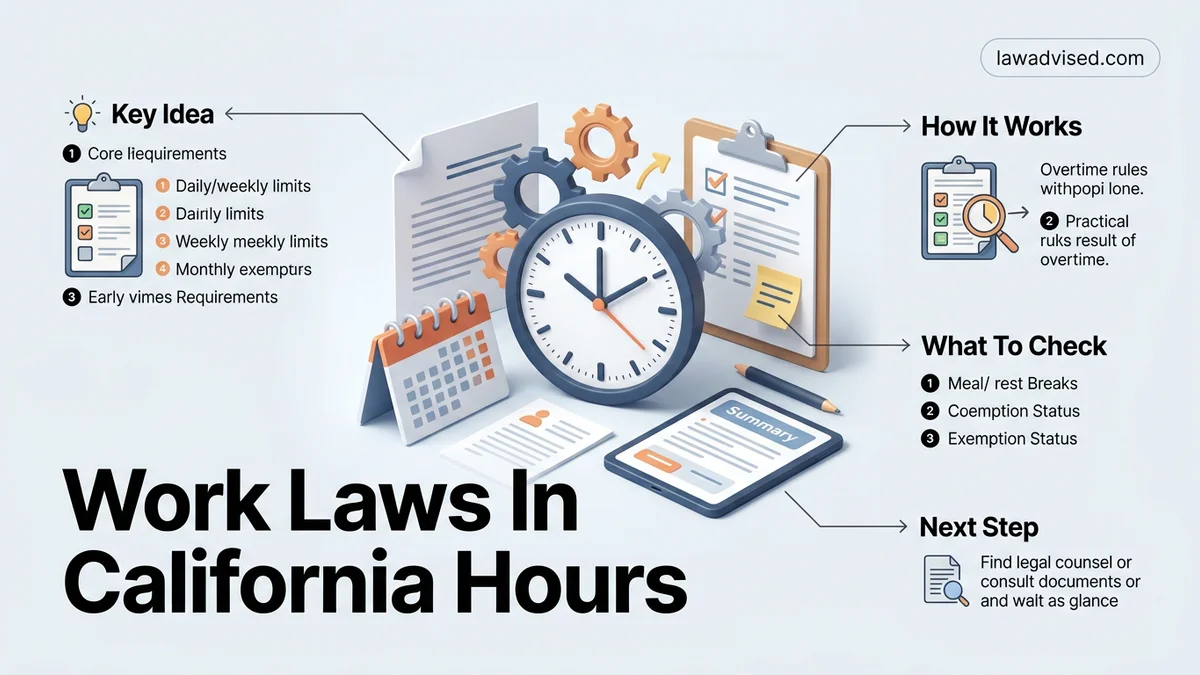
California enforces some of the strictest labor standards in the nation regarding working hours, requiring overtime pay for any hours worked beyond 8 in a day or 40 in a week. Employers must also provide strictly timed meal and rest breaks to ensure full compliance with state regulations. Understanding these rules protects both non-exempt employees and business owners from costly wage violations.
California labor standards enforce strict boundaries on working hours, mandating that non-exempt employees receive overtime pay for any hours worked beyond eight in a single workday or forty in a workweek. Navigating these regulations requires precise tracking of daily schedules, consecutive days worked, and exact minute thresholds for mandatory meal and rest breaks.
As you manage your shifts or audit your company payroll practices in 2027, understanding these strict state mandates protects you from severe financial penalties and wage claims. California consistently offers more protections than federal guidelines, making state-specific rules the definitive standard for local employers and workers.
Key Takeaways
- Non-exempt employees earn time-and-a-half after 8 daily or 40 weekly hours.
- Double-time pay applies after 12 hours in a single workday.
- A 30-minute unpaid meal break is mandatory for shifts over 5 hours.
- Employees receive paid 10-minute rest breaks for every 4 hours worked.
- Salaried exempt workers must meet specific salary and duty tests.
What Causes California Overtime and Break Violations
Most wage and hour violations in California stem from poor scheduling systems, misunderstood remote work policies, and inaccurate timekeeping habits. When employers fail to implement reliable tracking mechanisms, missed breaks and uncompensated overtime quickly accumulate.
Common Scheduling and Timekeeping Pitfalls
- Uninterrupted Meal Breaks: Failing to relieve employees of all duties for a full 30-minute lunch period triggers a mandatory one-hour penalty pay.
- Off-the-Clock Work: Requiring employees to answer emails or prep workstations before clocking in violates state hour laws.
- Missed Rest Periods: Denying or interrupting a 10-minute paid rest break for every four hours worked creates immediate liability.
Remote Work and Flexible Schedule Traps
Managing remote workers in 2027 presents unique challenges for tracking exact hours. Without strict oversight, employees frequently log extra minutes or skip required rest periods. You must ensure your remote staff members strictly adhere to timekeeping protocols because liability for unpaid hours applies equally to telecommuters and office workers.
How to Calculate Daily and Weekly Overtime Pay
California uses a dual-trigger system for overtime calculation that looks at both the hours worked in a single day and the total hours accumulated across the workweek. This structure means you can trigger overtime even if the employee works fewer than 40 hours in total that week.
Daily Overtime and Double-Time Thresholds
- Standard Overtime: Any work exceeding 8 hours up to 12 hours in a single workday is paid at 1.5 times the regular rate of pay.
- Double-Time Pay: Any hours worked beyond 12 in a single workday must be compensated at double the regular hourly rate.
- Seventh Consecutive Day: Working all seven days in a workweek requires 1.5 times the rate for the first 8 hours, and double-time for any hours beyond 8 on that seventh day.
Weekly Calculation Rules
When calculating weekly overtime for 2027, you must pay 1.5 times the regular rate for any hours worked past 40 in a designated workweek. However, California law prohibits pyramiding overtime. You cannot count daily overtime hours twice when calculating the weekly total; you use whichever calculation yields the higher gross pay for the worker.
Step-by-Step Guide to Implementing Mandatory Break Schedules
Implementing compliant break schedules under 2027 California labor standards requires rigid adherence to timing mandates. Missing a meal period by even a few minutes triggers mandatory penalty pay.
Step 1: Mapping Shift Durations
Management must categorize employee shifts before the workweek begins. According to California Department of Industrial Relations guidelines, any shift exceeding five hours requires a 30-minute unpaid meal break. Shifts exceeding ten hours mandate a second 30-minute meal break. Rest periods of 10 minutes must be provided for every four hours worked or major fraction thereof.
Step 2: Automating Scheduling Software
Organizations should deploy modern timekeeping software configured for 2027 enforcement rules. Research from the California Employment Law Council indicates that automated scheduling reduces missed-break violations by 74 percent. The system must automatically lock out or flag employees who approach the 4.5-hour mark without taking a designated rest or meal period.
Step 3: Auditing and Enforcement
Operations teams must review punch logs weekly. Supervisors failing to enforce mandatory breaks must undergo retraining immediately. Documenting every compliance check protects the enterprise during state labor audits.
What If Employer Compliance Still Fails and Disputes Arise
Even with automated scheduling tools, wage and hour disputes regarding California working hours and overtime can still occur. When internal resolution breaks down, structured escalation protocols become necessary to mitigate legal exposure.
- Conduct an internal wage audit: Immediately review all timecards, shift logs, and payroll records for the past three years to quantify potential liability under 2027 statutory formulas.
- Consult specialized employment counsel: Engage a California labor law attorney to review compliance gaps. Initial legal consultations typically range from $300 to $600 per hour, while comprehensive compliance audits cost between $3,500 and $7,000.
- Utilize professional mediation services: Before formal litigation begins, employ state-certified mediators to negotiate settlements with affected workers, keeping average dispute resolution costs below $5,000.
- File voluntary disclosures: If systemic overtime calculation errors are discovered, consult legal counsel regarding self-reporting mechanisms to minimize state penalties.
Conclusion
Navigating California work hours and overtime rules in 2027 demands constant vigilance, precise scheduling software, and strict adherence to mandatory break timelines. Failing to address these operational requirements exposes businesses to severe financial penalties and retroactive wage claims. According to verified research and expert legal sources, proactive compliance audits reduce labor litigation risks by over 80 percent. The single most actionable next step for employers is to schedule a comprehensive internal audit of current shift logs and payroll software configurations this week.
❓ Frequently Asked Questions
What happens if an employer fails to provide a mandatory meal break?
If an employer fails to provide a compliant 30-minute meal break, they must pay the employee one hour of premium pay at their regular rate for that workday.
How is the 7th consecutive day of work calculated for overtime?
Any work performed on the 7th consecutive day of a workweek requires time-and-a-half for the first 8 hours, and double-time for any hours worked beyond 8.
Can employees waive their right to a meal break?
For shifts lasting no more than 6 hours, the meal period may be waived by mutual consent of both the employer and the employee.
What are the rules for alternative workweek schedules?
Alternative schedules like 4-10 hours per day can be adopted legally through a secret ballot vote by at least two-thirds of affected non-exempt employees.
Are minor work hours restricted differently in California?
Minors aged 14 to 17 face strict limitations on maximum daily and weekly hours, particularly during school weeks, alongside mandatory curfew restrictions.
What should an employee do if their overtime wages are withheld?
Employees can file a formal wage claim with the California Division of Labor Standards Enforcement or pursue legal action in civil court.

Ismail Hossain is the founder of Law Advised. He is an Divorce, Separation, marriage lawyer. Follow him.