Breaks And Lunch Laws in California: Essential Guide for Employers
Are you clear about your rights when it comes to breaks and lunch periods at work in California? Knowing the state’s break and lunch laws isn’t just helpful—it’s essential for protecting your time and well-being on the job.
California has specific rules designed to ensure you get the rest you deserve during your workday. But what exactly are these rules, and how do they affect you? Whether you’re an employee wanting to understand your rights or an employer aiming to stay compliant, this guide will walk you through the key points of California’s breaks and lunch laws.
Keep reading to discover what breaks you’re entitled to, when you should take them, and what to do if your rights aren’t being respected. Your workday just got a little fairer—and it starts here.
Meal Break Rules
California has clear rules about meal breaks for workers. These laws ensure employees get time to eat and rest during their workday. Understanding these meal break rules helps workers know their rights. Employers must follow these rules to avoid penalties.
Duration And Timing
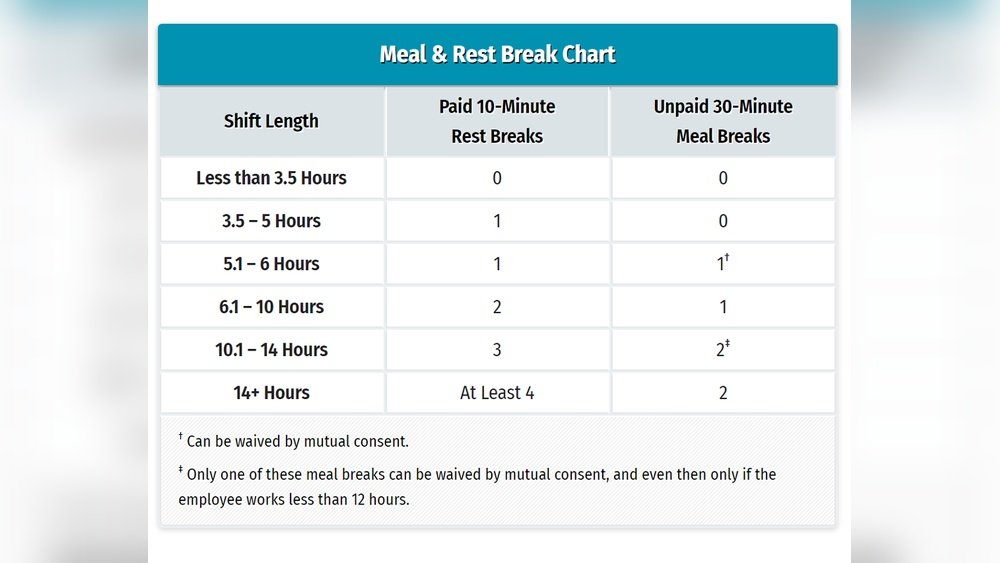
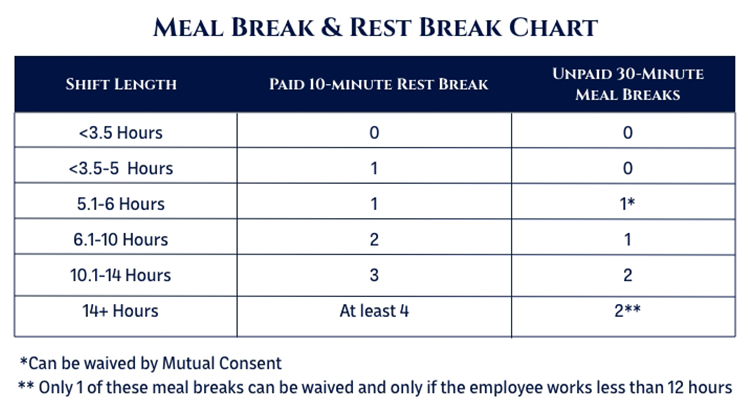
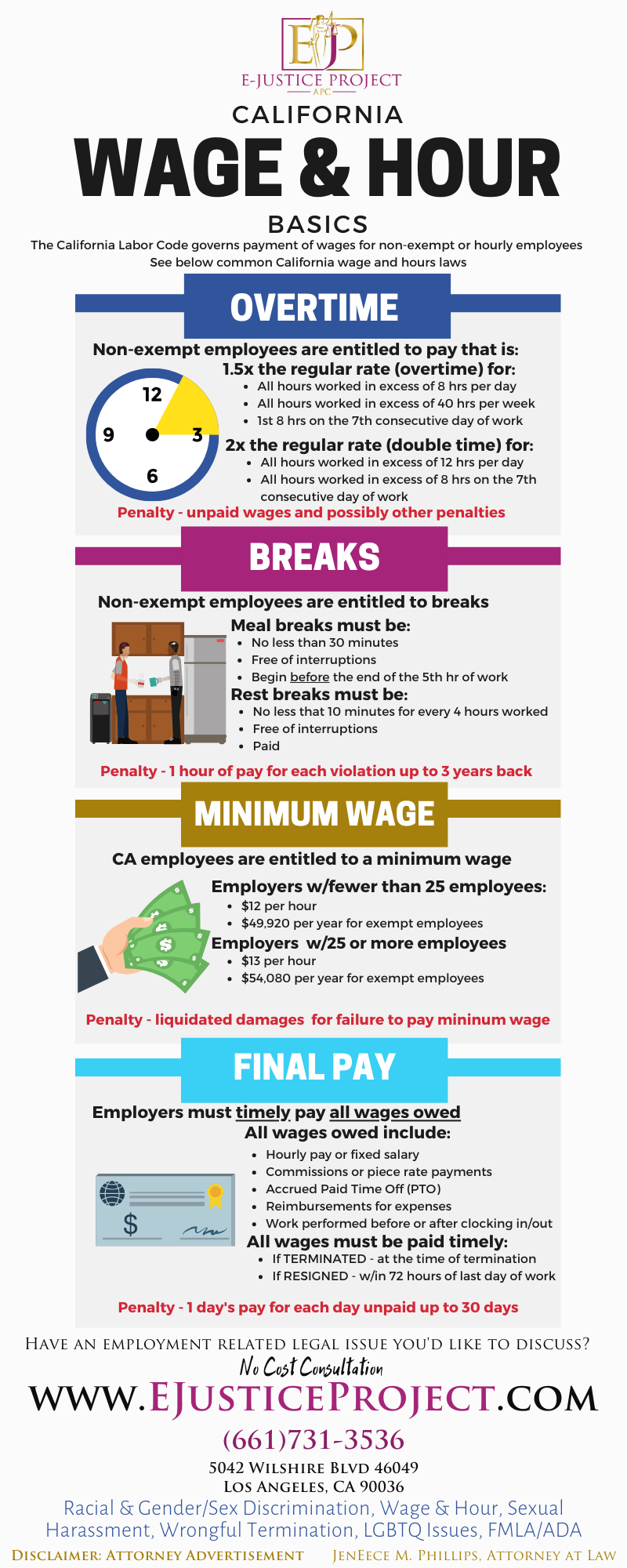
Workers must receive a 30-minute meal break. This break happens if the shift is more than five hours long. The break should start before the end of the fifth hour. For shifts over 10 hours, a second 30-minute meal break is required. Employers must let workers take these breaks without work duties.
Who Qualifies
Most nonexempt employees qualify for meal breaks. This includes full-time and part-time workers. Some jobs have exceptions, like certain healthcare workers. Employees paid on commission or certain truck drivers might have different rules. Generally, if you work more than five hours, you qualify for a meal break.
Unpaid Vs Paid Breaks
Meal breaks in California are usually unpaid. Employees must be free from all work during this time. If the worker does any work, the break must be paid. Rest breaks, which are different, are paid and last at least 10 minutes. Employers cannot force employees to work during meal breaks without pay.
Credit: www.sanilawfirm.com
Rest Break Requirements
Rest breaks are a key part of California’s labor laws. They help workers stay refreshed and productive. Employers must follow clear rules on rest breaks. These rules protect employees’ rights to short pauses during their workday. Understanding these rules helps workers know what to expect and ensures fair treatment at work.
Length And Frequency
California law requires a 10-minute paid rest break for every four hours worked. If an employee works less than three and a half hours, no rest break is needed. For shifts longer than six hours, two rest breaks must be given. These breaks must be separate from meal periods and counted as work time.
Scheduling Guidelines
Rest breaks should be scheduled in the middle of each work period when possible. Employers should avoid scheduling breaks at the start or end of shifts. Breaks must be spaced to give workers time to rest evenly. This scheduling helps maintain good work flow and employee well-being.
Restrictions On Work During Breaks
During rest breaks, employees must be relieved of all work duties. Employers cannot require workers to perform tasks or stay at their stations. Employees should be free to leave the work area during breaks. This ensures breaks serve their purpose of rest and recovery.
Employer Responsibilities
Employers in California carry clear responsibilities under state break and lunch laws. They must ensure employees receive proper rest and meal breaks during their shifts. These rules protect workers’ health and productivity. Employers must follow specific steps to comply with the law and avoid penalties.
Providing Breaks
Employers must give employees rest breaks and meal breaks as required by law. For every four hours worked, a 10-minute paid rest break is due. For shifts over five hours, a 30-minute unpaid meal break must be provided. These breaks must be scheduled properly and not skipped.
The timing of breaks should be reasonable. Meal breaks usually come near the middle of the work period. Rest breaks should also be spaced to allow workers to refresh. Employers must plan shifts to include these breaks without cutting hours.
Relieving Duty
During breaks, employers must relieve workers of all job duties. Employees should be free to leave their workstations and not be on call. Employers cannot require workers to perform tasks or remain available during breaks.
This relief from duty ensures employees can rest fully and return to work refreshed. If the employer fails to relieve duty, the break is not considered valid under California law. Employers must respect this rule to avoid wage claims.
Avoiding Pressure And Interference
Employers must not pressure employees to skip breaks or work through them. They cannot discourage taking breaks or create a work environment that interferes with rest. Workers should feel safe to take their full breaks without fear of negative consequences.
Supervisors should support break policies and allow employees to pause work. Any interference with breaks can lead to legal penalties and claims. Employers must create a culture that values health and compliance with break laws.
Credit: www.ejusticeproject.com
Penalties For Violations
California enforces strict rules on breaks and lunch periods to protect workers. Employers must follow these laws precisely. Violations can lead to serious penalties. Understanding these penalties helps both employees and employers stay compliant.
Fines And Penalties
Employers who break California’s break laws face fines. The Labor Commissioner can impose penalties per violation. Each missed meal or rest break can cost the employer hundreds of dollars. These fines increase if violations continue over time. Employers may also owe employees additional pay for missed breaks.
Common Violations
Many employers fail to provide proper meal or rest breaks. Common issues include not giving a full 30-minute meal break. Some workers are forced to skip rest breaks or work during breaks. Employers sometimes pressure staff to delay breaks. These actions violate California labor laws and trigger penalties.
Legal Consequences
Violating break laws can lead to lawsuits against employers. Workers can file claims with the Labor Commissioner’s Office. Courts may order employers to pay damages and back wages. Repeat offenders risk damage to their business reputation. Compliance avoids costly legal battles and protects employee rights.
Filing Complaints
Filing complaints about breaks and lunch law violations in California helps protect workers’ rights. Many employees face issues with unpaid or missed breaks. Reporting these problems ensures employers follow the law. The process is straightforward and designed to support workers.
How To Report Violations
Start by contacting the California Labor Commissioner’s Office. You can file a wage claim online, by mail, or in person. Provide clear details about the break violations. Describe what happened and when. The Labor Commissioner reviews your complaint and may investigate the employer.
Documentation Needed
Gather evidence to support your claim. Keep work schedules showing your hours and break times. Save pay stubs that reflect your wages. Notes about missed breaks or any employer communication are helpful. The more proof you have, the stronger your case.
Role Of Labor Commissioner
The Labor Commissioner enforces California’s break and lunch laws. They investigate complaints and can order employers to pay penalties or back wages. The office helps resolve disputes between workers and employers. Their goal is to ensure fair treatment and legal compliance in the workplace.

Credit: timeero.com
Frequently Asked Questions
Can I Work 8 Hours Without A Lunch Break In California?
California law requires a 30-minute unpaid lunch break for work periods over 5 hours. Working 8 hours without a lunch break is not permitted. Employers must provide this break duty-free. Violations can lead to penalties.
How Many Breaks Do You Get In California For A 12 Hour Shift?
California law requires two 10-minute paid rest breaks and one 30-minute unpaid meal break during a 12-hour shift.
Are Lunch Breaks Legal In California 2026?
Lunch breaks are legal in California in 2026. Employers must provide unpaid, duty-free 30-minute meal breaks for shifts over five hours. Employees must be fully relieved from work duties during these breaks. Employers face penalties if they deny or discourage lunch breaks.
Do You Legally Have To Have A Break On A 5 Hour Shift?
In California, employees working a 5-hour shift must receive a 30-minute unpaid meal break. This break is legally required unless the shift is no more than six hours and both parties agree to waive it. Employers must provide this break without pressure or work duties.
What Are California’s Meal Break Requirements For Employees?
California law requires a 30-minute unpaid meal break for every work period over five hours. This break must be provided no later than the end of the fifth hour. Employees must be completely relieved of duties during this time.
Conclusion
California’s break and lunch laws protect workers’ rights to rest during shifts. Employers must follow clear rules to provide timely breaks and meal periods. Workers should know their rights and speak up if breaks are denied. These laws help keep work fair and healthy for everyone.
Staying informed ensures you get the breaks you deserve.

Ismail Hossain is the founder of Law Advised. He is an Divorce, Separation, marriage lawyer. Follow him.