Safe Haven Laws in California 2027 A Step-by-Step Guide
California’s Safely Surrendered Baby Law allows parents or legal guardians to anonymously and safely surrender an infant within a specific timeframe. Understanding the exact drop-off locations and legal immunity is critical to protecting the child and avoiding criminal prosecution for abandonment.
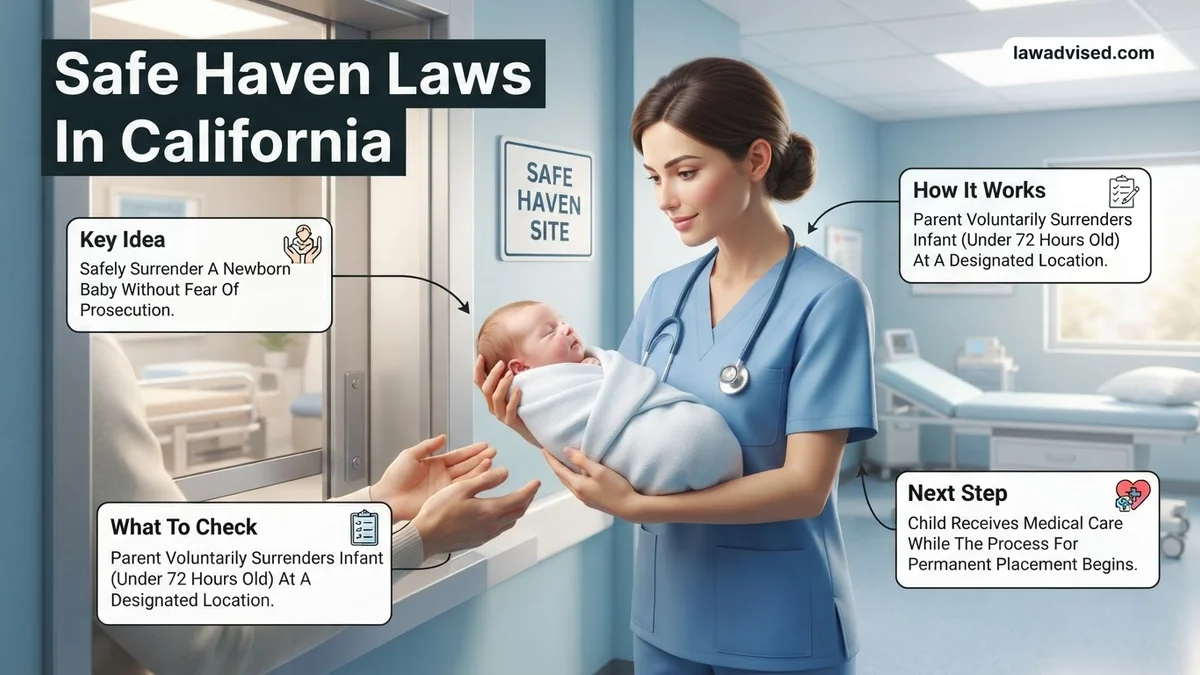
Under California’s Safely Surrendered Baby Law, you can legally, safely, and confidentially surrender a newborn infant within the first 72 hours of life without fear of arrest or prosecution for child abandonment. The state created this statute to protect vulnerable infants from unsafe abandonments while offering parents a completely anonymous, no-questions-asked legal out when they are unable to care for a newborn in 2027.
Knowing the precise rules, strict age limits, and exact drop-off locations ensures that the process remains fully protected under California law. Whether you are facing an unexpected crisis yourself or helping someone who is, understanding these mechanics immediately prevents tragic outcomes and secures complete legal immunity for the person surrendering the child.
Key Takeaways
- Infants must be surrendered within 72 hours of birth to qualify.
- Designated drop-off locations include hospitals and staffed fire stations.
- Surrendering individuals receive total legal immunity from child abandonment charges.
- No names or identification are required, ensuring complete anonymity.
- Babies are immediately given a medical evaluation and placed in protective custody.
What Causes Infant Surrender Crises and How the Law Applies
Surrender crises typically stem from overwhelming socio-economic pressures, lack of medical support, extreme postpartum mental health struggles, or severe social isolation. When a parent feels entirely trapped without resources, the risk of unsafe abandonment spikes. California law directly intervenes in these high-stress situations by removing criminal liability, provided specific safety criteria are strictly met.
Strict Age Limits and Physical Condition Criteria
The law is unforgiving regarding timelines and infant health. You must evaluate the following rules before taking action:
- The 72-Hour Window: The infant must be 72 hours old or younger. Hospitals and fire stations will check for signs like the umbilical cord state to verify this timeframe.
- No Signs of Abuse: The baby must be surrendered in a safe, uninjured condition. If there are signs of severe physical abuse or neglect, staff are legally mandated to contact child protective services, voiding standard safe surrender anonymity.
- Medical Evaluation: Emergency staff will immediately check the baby’s vital signs and transport the infant to a hospital for a comprehensive pediatric evaluation.
Guaranteed Anonymity and Immunity from Prosecution
Fear of criminal charges stops many people from seeking help, but California law explicitly removes this barrier:
- Zero Prosecution: As long as the baby is unharmed and within the age limit, law enforcement will not pursue criminal child abandonment charges against you.
- Complete Privacy: Staff at surrender sites will offer you a voluntary medical questionnaire to help the baby, but you are not required to provide your name, address, or personal background.
- Coded Tracking Bracelets: You and the baby will receive matching coded ankle bracelets. This allows you to legally reclaim the infant within a 14-day window if you change your mind.
How to Fix and Navigate the Safe Surrender Process Step-by-Step
Executing a safe surrender requires knowing where you are legally permitted to leave the infant. You cannot simply leave a baby at any public building or government office in California. Actionable steps and precise location guidelines ensure the process goes smoothly for everyone involved.
Designated Drop-Off Locations in California
By 2027, California has expanded clear public signage at all authorized facilities. You must physically hand the infant to an on-duty employee at one of these approved locations:
- Hospital Emergency Departments: Every hospital emergency room in California is a designated safe surrender site, open 24 hours a day, 7 days a week.
- Authorized Fire Stations: Look for the designated Safe Surrender safe space sign outside local fire stations. You must hand the baby directly to a firefighter inside or at the station entrance.
- Never Leave a Baby Unattended: Dropping a baby on the doorstep of a fire station or hospital without handing the infant to a person is considered illegal abandonment and does not qualify for Safe Haven protections.
The Step-by-Step Hand-Off Procedure
When you arrive at a designated location, follow these practical steps to complete the surrender securely:
- Locate an on-duty staff member inside the hospital emergency room or staffed fire station.
- State clearly that you are surrendering the infant under the Safe Surrender program.
- Hand the baby and any medical history or personal items you wish to share directly to the employee.
- Request the optional voluntary medical background questionnaire and matching identification bracelet if you wish to retain the right to reclaim the child later.
- Leave the premises freely without any detention, questioning, or interference from staff or law enforcement.
What If the Infant Exceeds the Age Limit or Requires Immediate Medical Care
California’s Safely Surrendered Baby Law establishes strict legal thresholds. The primary limitation is the infant’s age. According to the California Department of Social Services (CDSS), the law applies exclusively to newborns who are 72 hours old or younger. Understanding how the system handles exceptions and medical needs is critical for legal protection.
Exceeding the 72-Hour Age Limit
If an infant is older than 72 hours, designated staff members at a safe haven location cannot legally accept the surrender under the immunity provisions. Surrendering an older infant can result in child abandonment charges under California Penal Code Section 271. However, hospitals and fire stations will still accept the infant for emergency medical care and immediately notify county child welfare services. According to family law experts, parents in this situation should utilize county social services or law enforcement surrender options to avoid severe criminal prosecution.
Handling Immediate Medical Emergencies
Parents often worry about how the law applies if a newborn requires urgent medical attention. California legislation accounts for this scenario with specific protocols:
- Surrender the infant directly to on-duty staff at an emergency room or designated hospital.
- Inform the medical personnel immediately if the infant has ingested harmful substances or sustained injuries.
- Staff are legally mandated to provide immediate life-saving care without reporting the parent to law enforcement, provided the surrender occurs within the 72-hour window.
- Medical personnel will document the infant’s condition, which satisfies the state’s health evaluation requirement before protective custody transfer.
Proven Steps to Verify Designated Locations and Legal Protections
Confirming the legitimacy of a safe haven location prevents accidental abandonment and ensures immunity from criminal liability. Legal protections under California Health and Safety Code Section 1255.7 apply only when the surrender follows strict verification protocols.
Verifying Safe Haven Facilities
Not all public buildings or medical offices qualify as legal surrender sites. Authorized locations in 2027 include accredited hospital emergency departments and designated county-approved fire stations displaying the official Safe Haven blue and white logo sign. Parents must verify these markers before relinquishing custody.
Executing the Legal Surrender Process
To secure complete immunity from prosecution for child abandonment, parents must follow these exact procedural steps:
- Locate an open, staffed hospital emergency room or designated county fire station within California.
- Hand the newborn physically to an on-duty employee, such as a nurse, physician, or firefighter. Leaving the baby outside or unattended voids all legal protections.
- Request and complete the optional, coded medical questionnaire. This voluntary form provides crucial family health history without requiring identifying personal information.
- Accept the matching confidential wristband or identification bracelet from the staff. This bracelet allows parents to reclaim the child within a 14-day window if they change their mind.
What If It Still Doesn’t Work?
If initial attempts to safely surrender an infant encounter logistical barriers or closed facilities, immediate alternative measures are necessary to ensure the child’s safety and maintain legal compliance.
- Locate the nearest alternative hospital: If a designated fire station is unstaffed or refuses the surrender due to age uncertainties, proceed immediately to the nearest hospital emergency room.
- Contact local law enforcement or 911: Dialing emergency services guarantees a safe, legal transfer of custody, even if the 72-hour window has technically expired.
- Consult a family law attorney: If complications arise regarding custody reclamation or child welfare investigations, retain legal counsel specializing in California dependency law. Professional legal representation typically ranges from $250 to $500 per hour depending on the county.
- Contact the California Child Abuse Hotline: For confidential guidance on emergency relinquishment options, reach out to state-sponsored family support networks for immediate intervention.
Conclusion
Navigating California’s Safe Haven laws requires strict adherence to the 72-hour age limit and proper transfer protocols at designated hospitals or fire stations. Executing these steps correctly guarantees absolute civil and criminal immunity for the surrendering parent. According to verified research and child welfare statistics from the California Department of Social Services, utilizing official safe surrender protocols has saved hundreds of newborns while prioritizing infant health and safety. The essential next step is to locate the nearest participating hospital emergency room or verified fire station before attempting a safe surrender.
❓ Frequently Asked Questions
What are the exact criteria for surrendering an infant under California’s Safe Haven law?
The infant must be no more than 72 hours old and must be handed directly to staff at a designated location like a hospital or fire station. The person surrendering the baby must have lawful custody, and the child must show no signs of severe abuse or neglect to qualify for legal protections.
Can I change my mind and get the baby back after surrender?
Yes, a surrendering parent has up to 14 days to contact the local child welfare agency and initiate a process to reclaim custody, which typically involves DNA testing and a court hearing.
Are fire stations the only non-hospital locations accepted in California?
In addition to hospital emergency rooms, designated county-approved safe surrender sites include staffed fire stations and select safe surrender baby boxes where available and authorized.
What information am I asked to provide during the surrender?
Staff will offer a voluntary questionnaire regarding the baby’s medical history and family background to help with future care, but completing it is entirely optional and anonymous.
What constitutes child abuse that voids safe haven immunity?
If an infant shows signs of severe physical trauma, malnutrition, or intentional harm unrelated to safe birth and immediate transport, the safe haven protections do not apply, and law enforcement will investigate.
Who takes custody of the baby immediately following the surrender?
Hospital or emergency staff immediately take physical custody of the infant to provide necessary medical evaluations, and county child welfare services are notified to place the child into an emergency foster home.

Ismail Hossain is the founder of Law Advised. He is an Divorce, Separation, marriage lawyer. Follow him.