Common Taxes Paid by Americans in 2026 A Proven Guide
Navigating the U.S. tax system requires understanding the various levels of government that collect revenue from citizens. Federal income tax, FICA payroll taxes, state income taxes, sales taxes, and property taxes make up the primary financial obligations for most Americans. Knowing how these are collected helps individuals better manage their overall tax burden.
Every year, Americans navigate a complex web of financial obligations paid directly to federal, state, and local governments. These levies fund public infrastructure, defense, social programs, and local education systems. To manage your household budget effectively in 2026, you need to understand exactly where your hard-earned money goes.
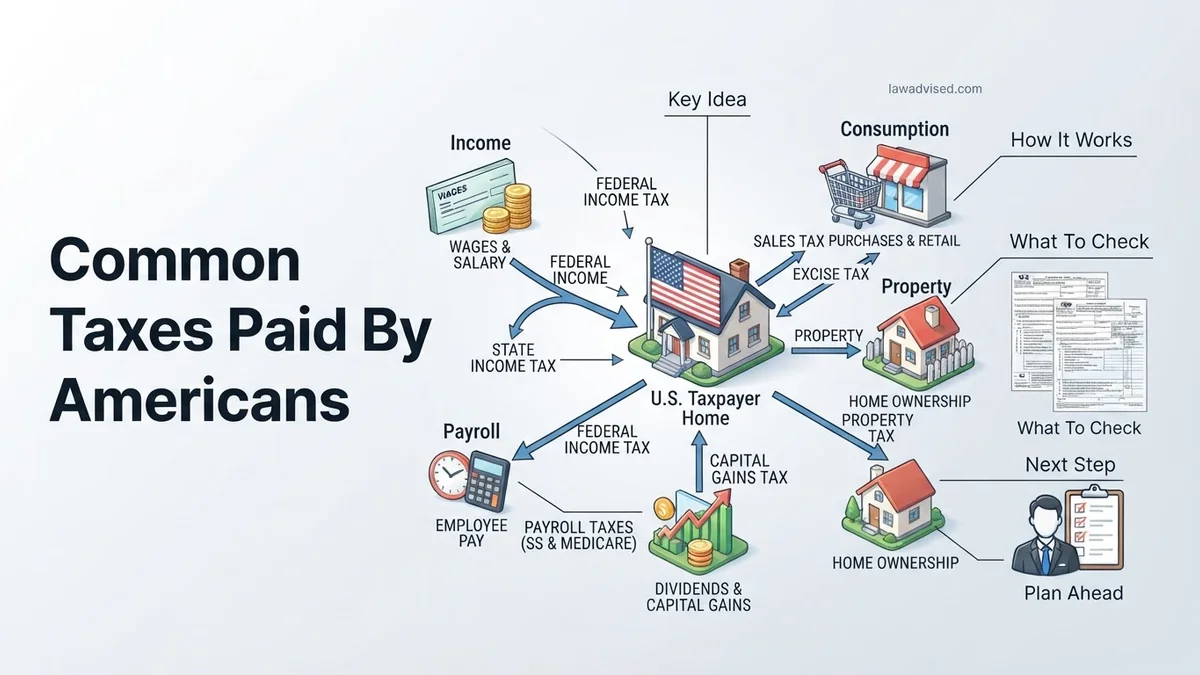
The primary taxes impacting the average American include federal income tax, payroll taxes for Social Security and Medicare, state income taxes, local property taxes, and consumption-based sales taxes. Each of these is collected differently and applies to distinct aspects of your financial life.
Key Takeaways
- Federal income tax is progressive, scaling with individual earnings levels.
- FICA taxes fund Social Security and Medicare directly from employee paychecks.
- Most U.S. states levy an independent state income tax alongside federal rates.
- Sales taxes are added at the register for everyday retail purchases.
- Property taxes fund local public services like schools and infrastructure.
What Causes High Tax Burdens for Americans
Progressive Tax Brackets and Earned Income
Your federal and state income taxes are the primary drivers of your overall tax burden. The United States uses a progressive tax system. This means your tax rate increases as your taxable income rises through specific marginal brackets.
- W-2 wage earners have these federal and state income taxes automatically withheld from each paycheck by their employers.
- High-earning individuals face steep federal marginal rates, which significantly reduce their take-home pay.
- Filing status—whether you file as single, married filing jointly, or head of household—directly alters which bracket applies to your income.
Payroll Deductions and Mandatory Contributions
Beyond standard income tax, every working American contributes mandatory payroll taxes under the Federal Insurance Contributions Act (FICA). These are flat-rate deductions that apply regardless of your personal deductions or tax credits.
- You pay a 6.2 percent Social Security tax on earnings up to the annual wage cap set for 2026.
- You pay a 1.45 percent Medicare tax on all earned income without a wage ceiling.
- Self-employed workers must pay both the employee and employer portions of these taxes through self-employment tax.
How to Identify and Calculate Major Taxes Paid by Americans
Property and State-Local Levies
Property taxes and state sales taxes represent the most common non-income levies you will encounter. Property taxes are assessed annually by local governments based on the estimated market value of your real estate holdings.
- Homeowners typically pay between 0.5 percent and 2.5 percent of their home’s assessed value annually, depending on the state and county.
- Sales taxes are charged at the point of sale on retail goods and certain services, combining state and municipal rates.
- States without a broad income tax often rely heavily on higher property or sales taxes to fund public budgets.
Consumption Taxes and Indirect Burdens
Indirect taxes add to your daily cost of living without appearing as a direct payroll deduction or end-of-year tax bill. These include excise taxes built into specific consumer goods.
- Gasoline, airline tickets, alcohol, and tobacco carry heavy federal and state excise taxes included in the retail price.
- State sales taxes range from zero in states like Oregon and New Hampshire to over 9 percent in municipalities within states like California and Washington.
- Tracking these consumption patterns helps you measure your true total tax burden accurately throughout the year.
Step-by-Step Guide to Managing Federal and State Tax Obligations
Navigating the complex ecosystem of American taxation requires a structured approach to ensure compliance and minimize liability. Managing federal income tax, state income tax, FICA, and property taxes simultaneously can quickly overwhelm even the most organized taxpayer.
Establish a Year-Round Tracking System
- Open a dedicated digital folder or cloud storage space specifically for financial documents, receipts, and W-2 or 1099 forms throughout 2026.
- Reconcile your income and withholding statements monthly to spot discrepancies before the filing deadline arrives.
- Update your W-4 form with your employer whenever a major life event occurs, such as marriage, the birth of a child, or a significant change in household income.
File and Pay Strategically
- Utilize IRS-certified free file software or reputable commercial tax preparation platforms by April 15, 2026, to prevent failure-to-file penalties.
- Review state-specific electronic filing portals to ensure your local income and property tax exemptions are properly claimed.
- Set up automated quarterly estimated payments if you are a freelancer or business owner to avoid underpayment penalties assessed by the federal government.
What If It Still Doesn’t Work?
If your calculated tax liability exceeds your budget or you encounter complex multi-state filing issues that standard software cannot resolve, standardized solutions may fall short. When standard budgeting and deductions fail to bridge a tax liability gap, consider these advanced escalation steps:
- Apply for an IRS Online Payment Agreement or an Offer in Compromise (OIC) if you qualify under strict financial hardship criteria.
- Consult a certified public accountant (CPA) or a federally authorized Enrolled Agent (EA) to audit your prior deductions and identify missed credits. Professional fees for these specialized consultations typically range from $300 to $1,500 depending on complexity.
- Contact a Low Income Taxpayer Clinic (LITC) if you earn below specific federal poverty guidelines and need representation to resolve disputes with tax authorities.
Conclusion
Managing the various federal, state, and local taxes paid by Americans in 2026 requires proactive organization, strategic withholding adjustments, and timely filing. By implementing a systematic approach to tracking liabilities throughout the year, taxpayers can successfully avoid costly penalties and reduce financial stress. According to verified research and expert financial sources, utilizing automated deduction tracking and consulting certified professionals when liabilities exceed projections remains the most reliable path to fiscal compliance. Take the next step today by reviewing your current paystub withholdings and adjusting your W-4 to match your actual 2026 financial reality.
❓ Frequently Asked Questions
What is the difference between federal income tax and FICA?
Federal income tax funds general government operations and defense, whereas FICA specifically funds Social Security and Medicare programs through dedicated payroll deductions.
How do excise taxes impact everyday consumers?
Excise taxes are hidden fees levied on specific goods like gasoline, alcohol, and tobacco, which are usually embedded directly into the retail price.
Are local taxes separate from state taxes?
Yes, local governments often levy their own income, property, or sales taxes to fund municipal services like police, fire departments, and public schools.
How does the federal tax bracket system work?
The federal income tax system is progressive, meaning different portions of an individual’s income are taxed at progressively higher marginal rates rather than a single flat percentage.
Do independent contractors pay different taxes than W-2 employees?
Yes, self-employed individuals and independent contractors must pay both the employee and employer portions of FICA taxes through the Self-Employment Contributions Act (SECA).
What happens if an American fails to pay required local or state taxes?
Failing to pay state or local taxes can result in financial penalties, interest charges, tax liens on property, or wage garnishment by government authorities.

Ismail Hossain is the founder of Law Advised. He is an Divorce, Separation, marriage lawyer. Follow him.